If you’re researching 2024 Mercedes EQB problems, you’ve probably noticed something odd: glossy professional reviews call it refined and practical, while a vocal slice of owners describe it as glitchy, under-ranged, and alarmingly expensive to own. Both can be true. The EQB is a compact luxury SUV with real-world versatility, and a set of issues you absolutely need to understand before you buy one used.
Quick take
Overview: How Worried Should You Be About 2024 EQB Problems?
The 2024 EQB sits in a strange place. On paper it’s appealing: a compact SUV with an available third row, familiar Mercedes interior, and a 70.5 kWh battery. Owner satisfaction, however, is more split. Some drivers report trouble‑free daily use, while others talk about repeated dealer visits for coolant warnings, sensor failures, and battery or powertrain faults. Consumer‑review scores hover around the middle of the pack, with styling and comfort praised, but reliability and value scoring noticeably lower.
Owner Sentiment Snapshot (Recent Model Years)
In other words: the EQB is not a guaranteed problem child, but the spread between “mine’s perfect” and “never again” is wider than you’d like for a luxury badge. If you’re shopping used, you need to look past the ambient lighting and into the service history, recall status, and how the previous owner actually used and charged the car.
High-Voltage Battery & Power Loss Issues
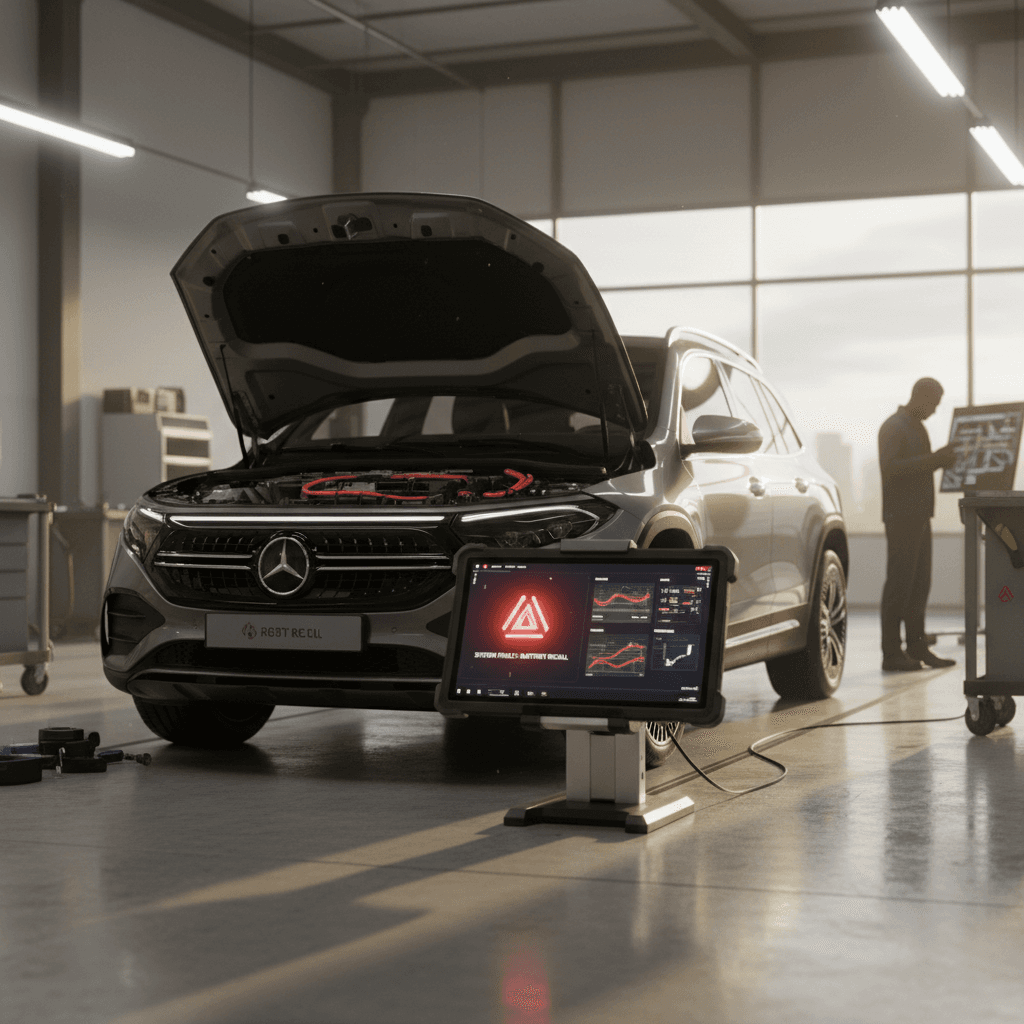
The heart of any EV is its battery pack, and this is where the most serious 2024 Mercedes EQB problems show up, not in range numbers on the window sticker, but in recalls and drivetrain behavior.
- High-voltage battery recalls on multiple EQB model years for internal faults that can, in rare cases, lead to a loss of power or even fire risk if not addressed.
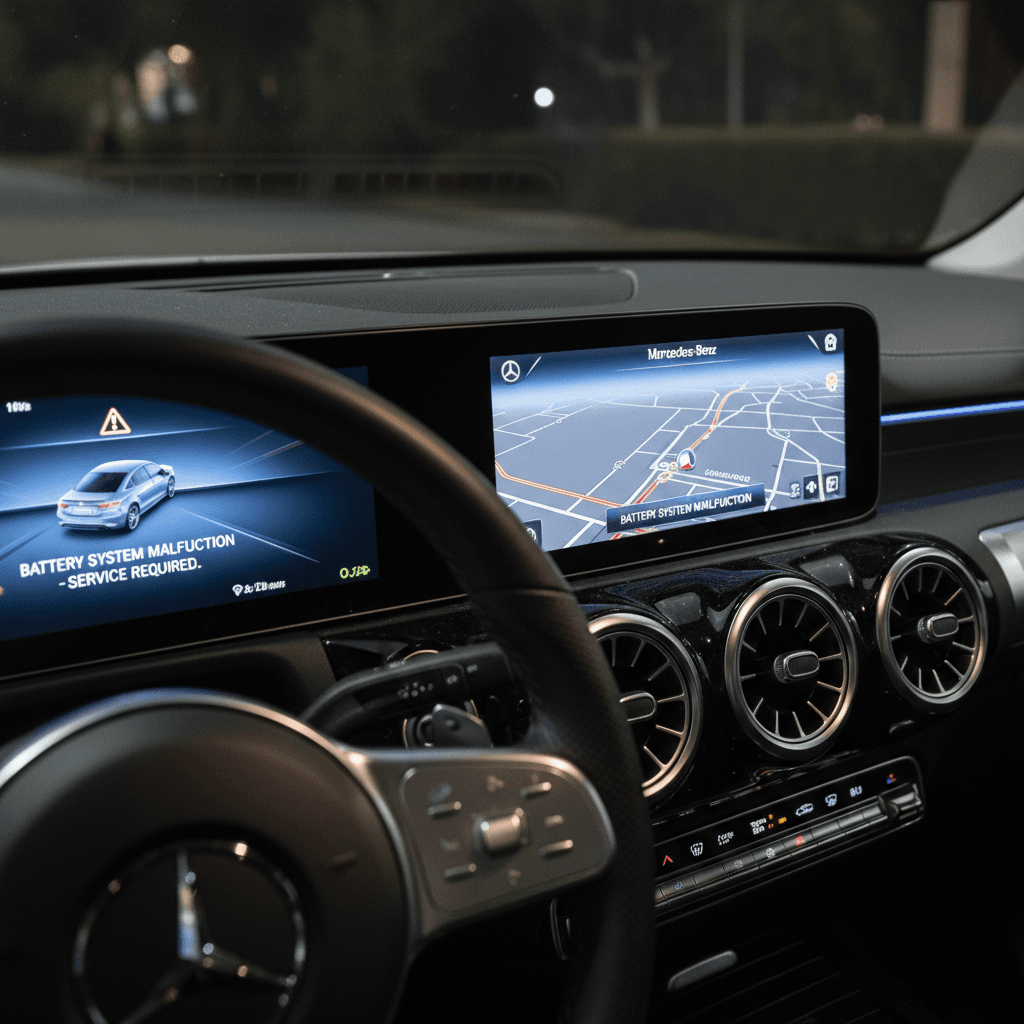
- Owner reports of “reduced power” or “limp mode” warnings, where the EQB suddenly limits speed and throws a Christmas tree of error messages until it’s rebooted or serviced.
- Coolant system alerts related to the battery or its thermal management system, sometimes requiring dealer visits for software updates, sensor replacement, or component repair.
Battery recall risk
Some EQB owners also describe high‑voltage battery fault codes discovered during unrelated service visits, things like “cooling system fault” or battery isolation warnings. In many cases Mercedes answers with software updates; in extreme cases, components or entire packs have been replaced under warranty.
How Recharged helps with EQB batteries
Charging Performance: Slow DC Speeds & Real-World Range
Even when the hardware is healthy, one of the most common 2024 Mercedes EQB complaints is that it simply doesn’t go as far, or charge as fast, as buyers expect, especially if they’re cross‑shopping a Tesla Model Y or Hyundai IONIQ 5.
Where the EQB Falls Short on Range & Charging
Fine for daily commuting, less impressive for long‑distance EV life
Modest real-world range
Official range for EQB trims hovers in the low‑200‑mile ballpark depending on configuration. But many owners see significantly less in mixed or cold‑weather driving, especially with passengers and cargo.
For a family‑oriented SUV, that means more frequent charging stops on road trips than competitors with similarly sized batteries.
Slow DC fast charging
The EQB tops out around 100 kW DC fast‑charging under ideal conditions. In practice, that puts it behind most newer rivals that comfortably pull 150–200 kW or more.
Expect roughly 10–80% in the low‑30‑minute range on a good fast charger, adequate, but not class‑leading.
None of this is fatal to the ownership experience if you mostly commute and run errands. But if you’re dreaming of effortless 500‑mile days on Electrify America, the EQB will make you work a bit harder on route planning.
Cold weather penalty
Software, Sensors & Glitchy Electronics
Like most modern Mercedes products, the EQB is thick with sensors and software. That’s great when it all works. When it doesn’t, you get what some owners describe: a luxury SUV with the nervous system of a beta app.
- Repeated sensor malfunctions leading to disabled driver‑assist features and warning lights.
- “Reduced power” modes tied to confusing combinations of traction control, ABS, or high‑voltage system errors.
- Infotainment bugs, including dropped phone calls over Apple CarPlay, random pop‑ups, and inconsistent EV‑specific displays.
- Complaints about the Mercedes app and complimentary charging integrations being confusing or unreliable with some public networks.
The software story isn’t all bad
From a used‑buyer standpoint, the key is to figure out whether you’re getting a car that’s already had its teething pains resolved, or one that’s still in the experimental‑therapy chapter of its life. A thick folder of software update invoices and recall completions is a good sign; a recent history of repeated unexplained faults, less so.
Noise, Ride Quality & Build Complaints
Mechanically, the EQB rides on a modified version of Mercedes’ compact SUV platform, not a clean‑sheet EV skateboard. That heritage shows up in a few ways owners notice over time.
- Knocking or clunking noises from the rear axle on some low‑mileage EQB 250/250+ cars, often traced to loose suspension bolts or drop links that need to be properly torqued.
- Clicking or ticking noises on start‑up or when unlocking, sometimes tied to HVAC blend doors, coolant pumps, or other actuators cycling.
- Road and wind noise that feels more “premium compact” than true luxury, especially on rough pavement or with the boxy roofline catching crosswinds.
Easy win on a test drive
To be fair, some of this is the tradeoff of stuffing three‑row versatility into a relatively short footprint. The EQB is cleverly packaged, but it’s not as vault‑quiet as larger Mercedes EVs, and the suspension tuning can feel busy on bad roads.
Interior, Tech & Everyday Usability Gripes
Step inside and the EQB looks like a modern Mercedes: dual screens, turbine vents, ambient lighting. But dig into owner feedback and you’ll find a list of smaller irritants that add up for some drivers.
Common EQB Interior & Tech Complaints
Not dealbreakers individually, but worth knowing going in
Flimsy-feeling seats
Some owners say the front seats feel thin or less robust than expected, especially compared with larger Mercedes models. Long‑distance comfort is very driver‑dependent, test a longer drive if you can.
Noisy rear camera mechanism
The reversing camera hides behind the rear Mercedes badge. Its little pivoting mechanism can make a noticeable mechanical noise each time it deploys, more of an annoyance than a failure, but often mentioned.
Tight third row
The optional third‑row seats are realistically for kids or very short hops. Adults will find legroom and access tight, which can disappoint buyers lured by the “7‑seat” pitch.
None of these are catastrophic “problems,” but together they explain why some buyers step into an EQB expecting S‑Class serenity and step out thinking, “This feels more like a fancy GLB with a battery”, which is exactly what it is.
Depreciation: Why Some EQBs Lose Value Fast
There’s one more 2024 Mercedes EQB problem that doesn’t show up on a scan tool: resale value. Like many early‑cycle EVs, the EQB has seen aggressive discounting on the new side and painful drops in residual value on the used side.
Real‑world stories include heavily discounted new EQBs that lost what looked like tens of thousands of dollars in perceived value within months. Combine that with the broader slide in used EV prices and you have a car that can put a big dent in a buyer’s equity if they put a large down payment on a lease or finance deal and try to exit early.
The flip side: opportunity for used buyers
This is exactly where a marketplace like Recharged shines. Because every EV we sell is benchmarked against real‑time market data and battery‑health diagnostics, you can see whether a “bargain” EQB is actually good value, or just cheap for a reason.
Used EQB Checklist: What to Inspect Before You Buy
If you’re still interested in a 2024 EQB, or any recent model year, the difference between a smart buy and an ownership headache is your inspection process. Here’s how to tilt the odds in your favor.
Pre-Purchase Inspection Checklist for a 2024 Mercedes EQB
1. Run the VIN for recalls and service history
Ask the seller for a dealer printout showing <strong>all recall campaigns completed</strong>, especially high‑voltage battery and battery‑management software updates. Confirm dates and mileage for each repair.
2. Get objective battery health data
Don’t rely only on the dashboard range guess. A proper diagnostic, like the <strong>Recharged Score battery test</strong>, can reveal whether the pack is aging normally or showing early signs of capacity loss or thermal‑management problems.
3. Test for power‑loss or warning‑light behavior
On a long test drive, watch for any “reduced power,” drivetrain, coolant, or battery‑related warnings. If the car suddenly limits acceleration or speed, walk away unless the seller can document a recent, verified fix.
4. Listen for suspension knocks and clicks
Drive slowly over speed bumps and rough roads with the windows up and stereo off. Knocking from the rear can indicate <strong>loose bolts or worn drop links</strong>. Have a shop check the rear suspension hardware.
5. Stress‑test the electronics
Pair your phone via Apple CarPlay or Android Auto, place and receive a few calls, and use navigation. Play with drive‑assist features. Glitches here aren’t necessarily dealbreakers, but repeated failures suggest a car that’s been frustrating to live with.
6. Evaluate range and charging behavior
If possible, start near 20–30% state of charge and visit a DC fast charger. Confirm the EQB actually reaches its expected charging power and doesn’t throw charging errors. Note how many miles of range you gain in 15–20 minutes.
7. Inspect glass and front‑end for damage
The distinctive glass above the windshield hides sensors and is expensive to replace. Look for chips, cracks, or prior repair. Misaligned front‑end panels can also hint at accident repair or sensor‑alignment issues.
8. Have a Mercedes‑savvy shop scan the car
A pre‑purchase inspection should include a full diagnostic scan of EV‑specific modules. Latent high‑voltage, isolation, or cooling‑system codes, especially recurring ones, are your cue to move on to a different EQB.
Should You Avoid the 2024 EQB or Just Shop Carefully?
If your question is “Are there 2024 Mercedes EQB problems I should know about?” the answer is yes, and you’ve just read them. If your question is “Should I automatically cross the EQB off my list?” the answer is more nuanced.
Who the EQB still makes sense for
- You want a compact, city‑friendly SUV with optional kid‑friendly third row.
- You value Mercedes design and the familiar MBUX interface more than bleeding‑edge range or charging speed.
- You’re buying used at a steep discount and can verify clean battery health and up‑to‑date recalls.
- You do most of your charging at home and treat road trips as occasional, well‑planned events.
Who should probably look elsewhere
- You’re hypersensitive to squeaks, knocks, or any hint of glitchy electronics.
- You want class‑leading range and 200+ kW fast charging for frequent long‑distance travel.
- You plan to put a lot of miles on the car and keep it beyond the factory warranty window.
- You’re allergic to dealer visits and want the simplest, most robust EV experience available.
The EQB is a charming idea executed with mixed discipline: a practical little electric brick with a Mercedes badge and some first‑generation EV rough edges. If you go in eyes‑open, armed with battery data, recall verification, and a ruthless test drive, it can still be a smart used buy. And if you’d rather not play defect roulette in a dealer showroom parking lot, shopping through Recharged means every candidate has already passed a battery‑health check and pricing sanity check before you ever click “schedule delivery.”