If you’re wondering how long a battery lasts in an electric car, you’re not alone. The battery pack is the most expensive component in an EV, and horror stories about replacements can spook even the most curious buyer. The good news: modern EV batteries are proving to be far more durable than early skeptics expected, especially when you understand what really affects their lifespan.
Quick answer
How long does a battery last in an electric car?
EV battery lifespan at a glance
There are two practical ways to answer the question of battery life: “How many years?” and “How much range will I lose?” Most owners will never see their battery suddenly “die.” Instead, they’ll notice that a car that once went 250 miles per charge now comfortably does 220–230. That’s normal, and it happens gradually over years.
Predictive modeling by major labs suggests that today’s EV batteries may last about 12–15 years in moderate climates, and roughly 8–12 years in very hot or very cold climates, before capacity drops to what automakers consider end-of-life. Many manufacturers set that end-of-life line around 70% of original capacity. Even then, the car still drives, it just won’t go as far on a charge.
Climate matters
Years, miles, and charge cycles: three ways to think about lifespan
Battery life isn’t just about the calendar. Engineers think in three dimensions: years, miles, and charge cycles. Understanding the basics makes the numbers much less mysterious.
Three ways to measure EV battery life
How engineers and drivers talk about the same battery from different angles.
| Measure | What it means | Typical number for modern EVs |
|---|---|---|
| Years | Time from new until battery hits ~70–80% capacity | 12–15 years in moderate climates |
| Miles | Distance driven before notable range loss or warranty triggers | 100,000–150,000+ miles is common |
| Charge cycles | Full 0–100% equivalents the pack can deliver | ≈1,000–2,000 cycles over its life |
Years, miles, and charge cycles overlap, your usage patterns determine which one dominates.
A charge cycle is basically one full use of the battery’s energy, but it doesn’t have to be in one go. Two days of driving from 80% to 30% and back adds up to one cycle. Most EV packs are designed for around 1,000–2,000 cycles. If your car goes 250 miles on a charge, even 1,500 cycles is roughly 375,000 miles of energy throughput, more than most cars will ever see.
How this looks in real life
What actually wears out an EV battery?
Lithium-ion cells don’t “remember” charges like old nickel-cadmium packs, but they do lose capacity over time. The loss is called degradation, and it happens because tiny chemical changes build up as the battery is charged, discharged, heated, and cooled thousands of times.
- High temperatures: Heat accelerates the chemical reactions that slowly eat away at capacity. That’s why Tesla, Hyundai, GM and others include thermal management systems to keep packs in a sweet-spot temperature range.
- Living at 100% or 0%: Batteries are most stressed at very high or very low state of charge. Parking at 100% for long periods, or frequently running near empty, can shave years off the battery’s most comfortable middle zone.
- Fast charging: DC fast charging puts more power (and heat) into the pack. Modern battery management systems are good at protecting the cells, but a steady diet of fast charging can add a bit more wear than mostly using Level 2 home charging.
- High mileage and hard driving: Lots of highway miles, aggressive acceleration, or frequent towing in heavier EVs all mean more energy in and out of the pack, which adds up over time.
- Cell chemistry and design: Different chemistries like NMC, NCA, and LFP age at different rates. LFP (often used in standard-range models) tends to be very robust, even with frequent fast charging; high-energy NCA cells can be a bit more sensitive and rely heavily on smart software to protect them.
Batteries age even when parked
Real-world examples: how well are EV batteries holding up?
We’ve had enough EVs on the road now to move beyond theory and look at actual aging. The pattern so far is reassuring: most modern EVs keep more than 85–90% of their original range after the first several years, even with regular fast charging mixed in.
- A major European car club ran a compact EV over about four years and more than 100,000 miles. Despite frequent fast charging and plenty of 100% top-ups, the car still retained about 91% of its original battery capacity.
- Fleet data aggregators tracking tens of thousands of EVs report that only a small share, on the order of a few percent, have required battery replacements due to natural aging, typically in early, first-generation models.
- Studies looking at real drivers (not just lab tests) increasingly show that when EVs are used in mixed daily driving, city traffic, occasional road trips, a lot of time simply parked, their batteries often last longer than conservative test protocols predicted.

"Your big electric battery is likely to outlive its warranty, and maybe even the life of your car."
EV battery warranties and when packs really get replaced
Battery warranties are the closest thing to a guarantee carmakers will give you on lifespan. In the U.S., most EVs come with at least an 8‑year or 100,000‑mile battery warranty, and some go longer or cover more miles. The fine print usually promises that the pack will retain at least 70% of its original capacity within that time window, or it will be repaired or replaced.
Typical EV battery warranty terms
Always check the exact terms for the specific model year you’re considering, but these patterns are common.
| Brand example | Years | Miles | Minimum capacity guaranteed |
|---|---|---|---|
| Most mainstream brands | 8 | 100,000 | ~70% |
| Select long-range models | 8 | 120,000+ | ~70% |
| A few extended warranties | 10 | 100,000+ | ~70% |
Some brands stretch to 10 years, but 8 years/100,000 miles is a practical baseline.
Good news on replacements
If you’re buying a used EV, this warranty cushion is important. A 3‑year‑old car with 40,000 miles often still has five years and 60,000 miles of battery coverage left. That dramatically lowers the risk that you, not the previous owner, will be the one paying for a rare battery replacement.
Things that make your battery last longer (or shorter)
Habits that help (and hurt) EV battery life
You can’t change the chemistry, but you can control how you treat it.
Helpful habits
- Use Level 2 charging at home or work as your default when possible.
- Keep daily charging in the 20–80% window unless you need a full charge for a trip.
- Precondition the battery in very hot or cold weather before fast charging.
- Park in the shade or a garage to avoid baking the pack in extreme heat.
- Update your car’s software; automakers constantly refine battery management.
Habits that speed wear
- Fast charging almost every time, especially to 100%.
- Regularly running down to near 0% before charging.
- Leaving the car parked for days at a time at 100% in hot weather.
- Frequent high‑speed driving with lots of hard acceleration and heavy loads.
- Ignoring warning messages about battery temperature or charging limits.
Don’t obsess over perfection
Buying a used EV? How to judge battery health
Battery life questions get sharper when you’re looking at a used EV. You’re not just asking “How long does a battery last in an electric car?”, you’re asking “How much life is left in this one, and how do I know?” That’s where real battery health data becomes more important than whatever the dashboard range estimate happens to say on a sunny afternoon.
Used EV battery health checklist
1. Look for a clear State of Health (SoH) number
Some brands display a health indicator (bars or percentage) in the infotainment system. Others hide it. Whenever possible, rely on an actual SoH value instead of guessing from range alone.
2. Avoid guessing from one “full charge” reading
Range estimates depend on recent driving conditions, not just battery health. A car driven gently in town will show a rosier estimate than one that just finished a long freeway slog.
3. Ask how the car was charged
A previous owner who mostly used home Level 2 charging and rarely parked at 100% probably treated the battery gently. Heavy DC fast‑charging road‑warriors might show a bit more wear, but that’s not always a dealbreaker if SoH is still high.
4. Get a professional battery health report
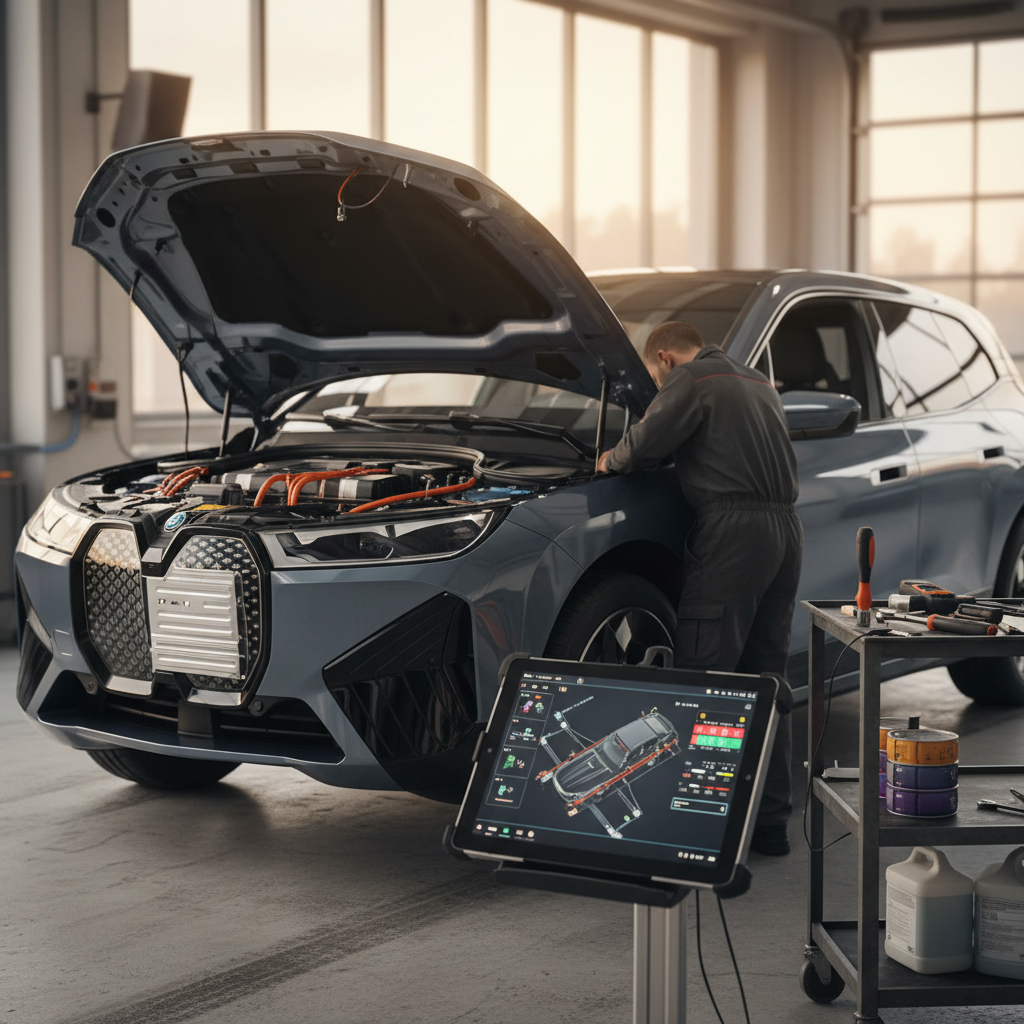
This is where a service like <strong>Recharged Score</strong> makes a difference. At Recharged, every used EV comes with a <strong>battery health diagnostic</strong> that measures real capacity, not just mileage or guesswork.
5. Cross‑check with remaining warranty
Even if a pack is down a bit from new, having years of battery warranty left can protect you from worst‑case scenarios. It’s especially valuable on higher‑mileage cars with otherwise good SoH numbers.
6. Compare price to battery health
A car at 90–95% SoH should be priced differently than one at 78–80%. Good marketplaces factor this into pricing; if you’re shopping privately, you need to account for it yourself.
How Recharged helps
Ready to find your next EV?
Browse VehiclesThe future: will tomorrow’s EV batteries last longer?
If you’re buying an EV today, you’re already benefiting from a decade of hard‑earned lessons. Early cars with air‑cooled packs and less sophisticated software taught engineers what not to do. Today’s EVs use better chemistries, more robust cooling, and smarter battery management, and research keeps marching on.
- Improved chemistries: Lithium iron phosphate (LFP) packs, increasingly common in standard‑range models, trade a bit of energy density for excellent longevity and stability.
- Smarter battery management systems (BMS): Software can limit peak charge rates, adjust usable capacity, and tweak how the pack is used as it ages, all in the name of preserving life.
- Adaptive fast‑charging strategies: New research focuses on charging patterns that maintain speed while avoiding the worst stressors on cells, potentially extending life even with frequent DC fast charging.
- Second‑life uses: Even when a pack is no longer ideal in a car, it may find a second life in stationary storage, reducing environmental impact and providing additional value.
How battery life might look over 15 years of EV ownership
Today’s typical buyer
Years 0–3: 95–100% of original range, mostly indistinguishable from new.
Years 4–8: Gradual loss into the high‑80s or low‑90s percent range for capacity.
Years 8–12: Still very usable; some drivers may notice they charge slightly more often.
Years 12–15: For many drivers, this is when a replacement or a different vehicle might be considered, depending on needs.
Long‑term keeper
Drive 8,000–10,000 miles per year with mostly home charging.
Avoid leaving the car at 100% for days at a time.
Keep software up to date so the BMS can do its job.
Plan for the battery to outlast your interest in the car, not the other way around.
FAQ: Common questions about electric car battery life
Frequently asked questions about EV battery lifespan
The bottom line: how long your EV battery will last
When you cut through the myths, the picture is encouraging. For most drivers, an electric car’s battery will last well beyond the 8‑year/100,000‑mile warranty window, with gradual, manageable range loss rather than sudden failure. Treat the pack reasonably, don’t bake it in heat, don’t live at 0% or 100%, mix in fast charging only when you need it, and your EV’s battery is likely to outlast your interest in the car.
If you’re shopping used, the key question isn’t just “How long does a battery last in an electric car?” It’s “How healthy is this particular battery today?” That’s why Recharged puts verified battery diagnostics at the center of every sale. With a clear Recharged Score Report, fair market pricing, and EV‑specialist support from first click to final delivery, you can choose your next EV with confidence and enjoy the years, and miles, of battery life still ahead.