If you’ve looked up how fast the Genesis GV60 depreciates, you’ve probably seen some scary numbers. Luxury EV + young brand + fast-moving tech is a recipe for dramatic early value loss. The twist is that what looks bad for first owners can be brilliant for you as a second owner, if you understand the curve.
The short version
Genesis GV60 depreciation at a glance
Genesis GV60 depreciation snapshot (early years)
To ground this in real numbers: pricing guides show 2024 GV60s that originally stickered in the low‑to‑mid‑$50,000s now trading in the high‑$20,000s to mid‑$30,000s in typical condition. Some higher‑MSRP trims that launched closer to $70,000 are already showing estimates in the low‑$40,000s or below only a few years on.

Why does the Genesis GV60 depreciate so fast?
Four big forces pushing GV60 prices down
None of them say the GV60 is a bad vehicle, they just shape the math.
1. EV tech is moving fast
2. Incentives hit the used market
3. Luxury badge, young brand
4. Battery anxiety, rational or not
Don’t confuse price drops with quality
3–5 year depreciation: how fast does a GV60 drop?
Depreciation doesn’t happen on a straight line. With the GV60, most of the drama is in the first three years, then things start to flatten as the market discovers a realistic used price floor.
Genesis GV60 illustrative depreciation curve
Approximate retained value and price ranges based on early resale data and forecast tools, assuming typical mileage and condition. These are directional, not guarantees.
| Age of GV60 | Mileage (approx.) | Estimated value loss | Typical price range | Notes |
|---|---|---|---|---|
| Brand new | 0 miles | 0% | $53,000–$70,000 | Original MSRP at launch, before discounts or incentives. |
| 1 year | 10k–15k miles | 25–35% | $35,000–$50,000 | Heavy early hit; lease deals and discounts accelerate the drop. |
| 3 years | 30k–40k miles | 45–55% | $27,000–$38,000 | Where many 2023–2024 GV60s are landing now, depending on trim. |
| 5 years | 50k–60k miles | 55–65% | $20,000–$30,000 | Forecast based on current luxury EV trends; can vary with incentives and battery confidence. |
Higher‑MSRP trims (Advanced, Performance) lose more absolute dollars but a similar or slightly steeper percentage than base models.
Notice what happens after year one: a huge chunk of depreciation is already baked in. By the time a GV60 is 3–4 years old, the curve tends to calm down. That’s exactly where total cost of ownership often looks best for a value‑minded buyer.
The sweet spot for value
GV60 vs Tesla Model Y and other rivals
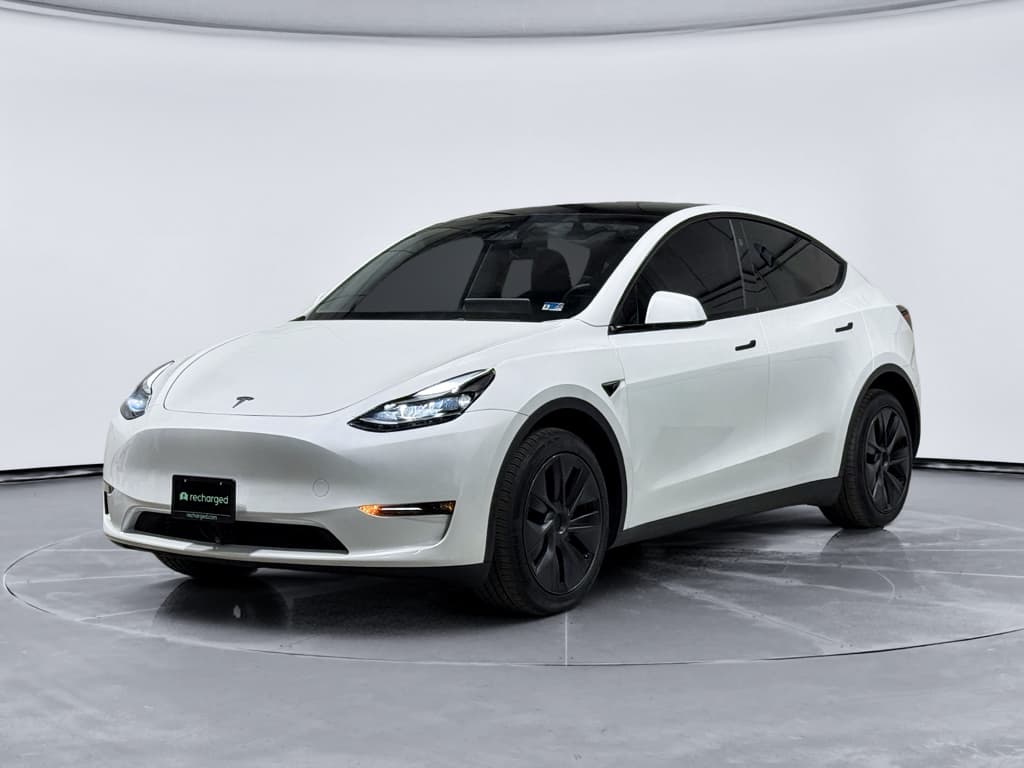
Tesla Model Y
- Historically one of the strongest‑resale EVs. Three‑year depreciation in many data sets is closer to 30–40% rather than 45–55%.
- Massive brand recognition, dense Supercharger network access, and rabid demand have propped up used values, though price cuts on new Teslas have recently tugged used prices down.
- In plain English: the Model Y usually holds value better than the GV60, but you’ll pay more to get into one used.
Other luxury EVs (iX, EQE SUV, Lyriq)
- Many luxury EVs from established brands are seeing equally aggressive or worse depreciation than the GV60 in the first 5 years.
- Examples: some early BMW iX, Mercedes EQE SUV, and Cadillac Lyriq builds show projected 5‑year value losses north of 60%.
- The GV60 is therefore not an outlier so much as a member of the "first‑wave luxury EV" club, all being repriced by a rapidly maturing market.
So, compared with a Tesla Model Y, the GV60 tends to depreciate faster but also cost less on the used market. Compared with other luxury EVs, it’s right in the noisy middle of a segment that’s repricing itself in real time.
Real-market used prices: what GV60s sell for today
If you scroll through nationwide listings, you’ll see a wide spread, but some patterns emerge:
- Lightly used 2024–2025 GV60 Standard models with under 10,000 miles often list around $30,000–$38,000.
- 2023–2024 Advanced and Performance trims with typical miles frequently land in the high‑$20,000s to mid‑$30,000s.
- Older or higher‑mileage examples can dip into the low‑$20,000s, especially if they’ve lived hard lives or lack desirable options.
How Recharged looks at GV60 pricing
Lease residuals: what the finance companies think
Lease residuals are a quiet verdict on depreciation. When a lease sets a lower residual percentage, the bank is essentially betting the vehicle will be worth much less at the end of the term.
Typical residual patterns for Genesis GV60 leases
Examples compiled from recent shopper reports and advertised programs. Exact numbers vary by region, lender, incentives, and trim.
| Lease term | Mileage per year | Reported residual % | What it implies |
|---|---|---|---|
| 36 months | 10k–12k | ~50–58% | Banks expect the GV60 to lose roughly half its value in three years. |
| 33–36 months (Performance) | 12k–15k | ~55% | Performance trims sometimes carry similar or slightly higher residuals but start from a higher MSRP. |
| Longer terms (48–60 months) | 12k–15k | Low‑50s% or below | Financing arms are cautious about 4–5 year‑old EV values, reflecting uncertainty about long‑term demand and incentives. |
A lower residual means the bank expects faster depreciation, but it can make lease payments more attractive when paired with strong incentives.
Watch the buyout number
How to use GV60 depreciation to your advantage
Strategies for shoppers who don’t want to be the one losing 50%
1. Let someone else take the first 2–3 years
Skip the new‑car honeymoon and shop for a <strong>3‑year‑old GV60</strong> instead. The lion’s share of depreciation is already in the rear‑view mirror, but you still get modern safety tech, DC fast‑charging, and that knockout interior.
2. Prioritize battery health over model year
A slightly older GV60 with a strong, verified battery can be a smarter buy than a newer one with an unknown history. At Recharged, the <strong>Recharged Score</strong> pulls in real battery diagnostics so you can compare vehicles on more than just odometer and paint shine.
3. Compare real monthly cost, not just price
A cheaper used GV60 with higher interest or shorter term can cost more per month than a slightly pricier example with better financing. Add insurance, charging costs, and expected repairs to get a true <strong>cost‑per‑month</strong> picture.
4. Consider CPO and third‑party warranties
Extended powertrain and battery coverage can help de‑risk a depreciated luxury EV. Just read the fine print: some plans carve out high‑voltage components. Recharged’s EV‑specialist advisors can help you interpret what’s actually covered.
5. Be trim‑agnostic if you care about value
The Performance trim is a riot, but it also shed a larger absolute dollar amount. If budget and resale trump 0–60 bragging rights, a <strong>Standard or Advanced</strong> trim at the right price can be the smarter play.
Protecting your GV60’s resale value
If you already own a GV60, or you’re about to buy one used, you can’t control the market, but you can control how your particular car shows up in it.
Six ways to slow depreciation on your GV60
Think of it as defensive driving for your wallet.
Maintain the battery well
Keep every service record
Fix cosmetic issues early
Choose wheels and tires wisely
Manage mileage
Sell through the right channel
Is the Genesis GV60 a good used buy?
Put bluntly: if you’re the first owner paying near‑MSRP, GV60 depreciation stings. If you’re the second owner buying at the right price, it can be one of the smartest luxury EV buys on the market.
Why used GV60s make sense
- You’re buying after a massive chunk of depreciation, often saving $15,000–$30,000 off original MSRP.
- The E‑GMP platform delivers excellent performance, fast‑charging capability, and a refined driving experience that still feels modern in 2026.
- Genesis interiors punch above their price class: materials, design, and tech age more gracefully than the price curves suggest.
Where to stay cautious
- Future EV incentives and price cuts could nudge values further; you’re not completely insulated, just less exposed.
- Battery health and software history matter; you want a car that’s been updated and not abused at fast‑chargers.
- Resale a few years later will still lag behind a Model Y, so buy a used GV60 because you want the car, not as a speculative asset.
How Recharged can help
Ready to find your next EV?
Browse VehiclesGenesis GV60 depreciation FAQ
Frequently asked questions about GV60 depreciation
The Genesis GV60 is a perfect example of how EV depreciation can look brutal on a chart but brilliant on a bill of sale. Early owners, lured by novelty and soft‑focus launch hype, did the expensive work of proving out the platform. You get to arrive later and scoop up a quick, beautifully built luxury EV for roughly half of what they paid. Understand the curve, buy at the right point on it, and the GV60’s depreciation stops being something to fear and starts becoming your opportunity.