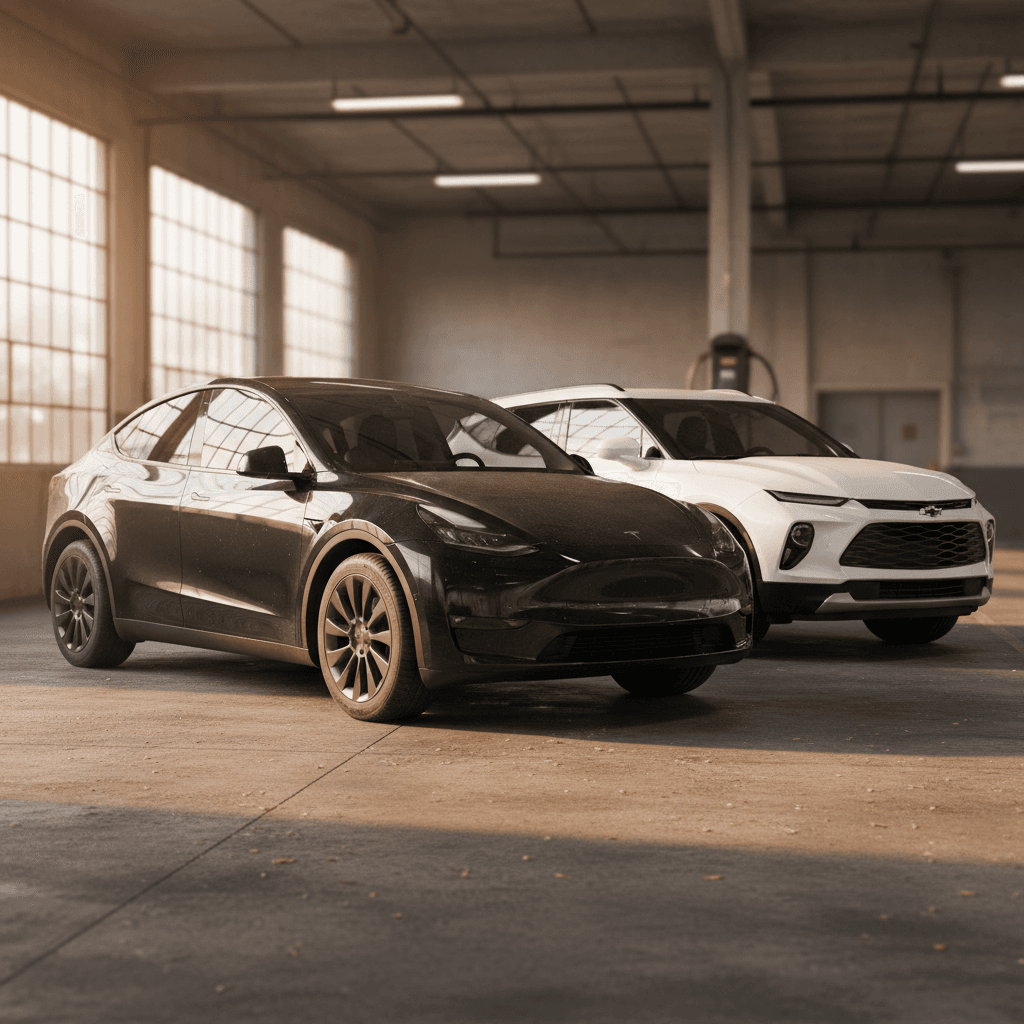
You’re shopping the used EV aisle and two loud, extroverted crossovers keep stepping into your line of sight: the Ford Mustang Mach‑E and the Chevy Blazer EV. Both promise muscle‑car swagger wrapped in family‑friendly practicality, but on the used market they’re not equal, on price, reliability, or peace of mind.
Context for 2026 shoppers
Overview: Used Mach-E vs Blazer EV in 2026
Ford Mustang Mach‑E (used)
- Launched: 2021 model year
- Positioning: Electric take on the Mustang idea; sporty, style‑driven compact SUV
- Strengths: Matured over several model years, broad trim mix, decent range, huge used supply and big discounts
- Weak spots: Early build quality gripes, some fast‑charge speed complaints, heavy depreciation
Chevy Blazer EV (used)
- Launched: 2024 model year
- Positioning: Larger, more premium EV SUV on GM’s Ultium platform
- Strengths: Strong power, competitive range, modern 800V‑class architecture feel, upscale RS trims
- Weak spots: Software and recall drama in early years, scarce used inventory, higher purchase prices
Think like a used‑car buyer, not a spec-sheet racer
Quick recommendations: who should buy which?
Used Mach‑E vs Blazer EV at a glance
Two electric SUVs, two very different sweet spots
Choose a used Mustang Mach‑E if…
- You want maximum value per dollar and don’t mind a slightly smaller SUV.
- You drive a mix of city and highway and need 250–300 miles of real‑world range.
- You care about fun-to-drive feel, not just appliance duty.
- You like lots of trim choices: Select, Premium, California Route 1 (older), GT, Rally.
- You want a model with a longer real‑world track record and more independent reviews.
Choose a used Chevy Blazer EV if…
- You prioritize a larger, more premium-feeling cabin and cargo space.
- You like GM’s Ultium platform and are comfortable buying a newer design.
- You want brisk performance and a more substantial, long‑wheelbase ride.
- You’re okay paying more up front for a newer, lower‑mileage used EV.
- Your driving is mostly commuting and road trips on DC fast chargers.
Range, battery & performance comparison
Big-picture range & power
On a used lot, you’re not comparing clean brochure numbers, you’re comparing how much real‑world range is left after a few years of fast charging, winters, and school runs. Both SUVs started life with healthy EPA figures, but condition and previous use now matter as much as the original spec sheet.
Typical used trims & headline specs
Representative specs for common used Mach‑E and Blazer EV configurations. Exact numbers vary by year and trim; always confirm the specific vehicle.
| Model | Common Used Trims | Battery (usable) | EPA Range when new | Drivetrain | 0–60 mph (approx.) |
|---|---|---|---|---|---|
| Ford Mustang Mach‑E | Select SR, Premium ER, GT | ~73–91 kWh | 260–320 mi (GT ~280 mi) | RWD or AWD | 5.5–3.5 s |
| Chevy Blazer EV | LT, RS, some 2LT/3LT | roughly mid‑80s to 100+ kWh est. | ~250–320 mi depending on trim | FWD or AWD | 6.0–4.0 s |
Use this table to understand where most used examples land, not to chase one perfect spec number.
Don’t over-shop the last 20 miles of range
Generally, a used Mach‑E Premium extended‑range RWD will give you the strongest blend of range and price, with 300+ miles when new and still very road‑trip‑viable a few years in. The Blazer EV counters with a bit more highway stability and long‑legged feel, especially in RS trims, but you’ll pay more to get into one and may not see a meaningful day‑to‑day range edge.
Charging: home, road trips & NACS access
By 2026 both Ford and GM have joined the Tesla‑led NACS (North American Charging Standard) party, which means used Mach‑E and Blazer EV owners alike can tap into select Tesla Superchargers with the right adapters and software support. That’s a big win for either choice, as long as you set up home charging correctly.
At home
- Both SUVs are happiest on a Level 2, 240V charger (think 40–48 amps) in your garage or driveway.
- Expect roughly 25–30 miles of range per hour of charging for both vehicles on a quality Level 2 unit.
- For apartment dwellers, look hard at whether your building or workplace offers Level 2, either SUV gets tedious on a 120V wall plug alone.
On the road
- The Mach‑E’s long‑range trims can DC fast charge at up to about 150 kW, good enough for road‑trip duty but not class‑leading.
- The Blazer EV’s Ultium hardware is designed for higher peak rates and can feel more relaxed on long fast‑charge days, provided software behaves.
- Both gain access to select Tesla Superchargers via NACS, expanding your fast‑charge map beyond traditional CCS networks.
Where Recharged fits in
Interior, tech & everyday comfort
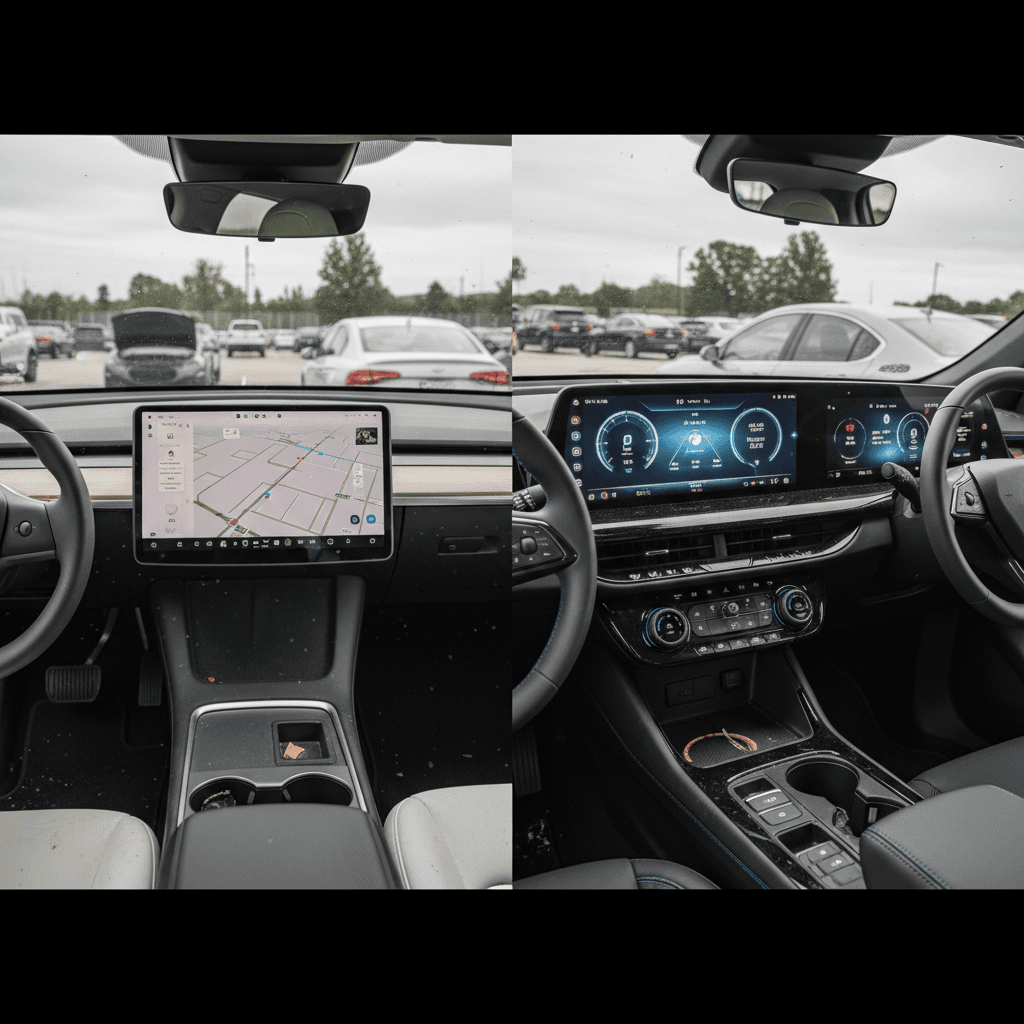
Inside, both of these SUVs are thoroughly modern: giant touchscreens, minimalist dashboards, and enough driver‑assist tech to make your old crossover feel like a landline phone. But they serve slightly different moods.
Cabin character: sport vs lounge
How it feels to live with these EVs every day
Mach‑E: sporty minimalist
- Clean, almost Scandinavian dash with a vertical touchscreen and physical volume knob.
- Front seats are supportive rather than cushy; rear seats fine for adults but not palatial.
- Cargo area plus a usable front trunk (frunk) make it road‑trip capable.
- Sync‑based infotainment is solid once you’re used to the layout, and Apple CarPlay/Android Auto make life easier.
Blazer EV: more SUV‑traditional
- Feels closer to a traditional midsize SUV inside: wider cabin, more shoulder room, and a heavier, more planted feel.
- Chevy’s Google‑based infotainment is slick when it works, with rich graphics and modern UX touches.
- Materials in RS and upper trims aim for near‑lux, with stylish ambient lighting and contrasting colors.
- The tradeoff: more physical size to park and slightly heavier curb weight to haul around.
Family-hauling reality check
Reliability, recalls & battery health on the used market
Used EVs live or die by two things: electronics that don’t brick the car and batteries that age gracefully. This is where the Mach‑E’s longer track record gives it an edge, even though neither SUV has been controversy‑free.
- Early Mach‑E models saw software issues and some build‑quality nitpicks, but by 2023–2024 most major bugs were ironed out with over‑the‑air updates and warranty work.
- The Blazer EV’s launch was rockier, with high‑profile software problems and temporary sales pauses. Many issues have been addressed by updates, but early-build used Blazers deserve extra scrutiny.
- Both vehicles carry 8‑year / 100,000‑mile battery warranties from new, meaning most used examples in 2026 will still be under battery coverage.
- Real‑world degradation on Mach‑E packs has generally been modest when the car is charged sensibly (home Level 2, not 100% every night). Ultium‑based Blazer EV data is newer but trending similar so far.
Why you should never skip a battery health report
Depreciation, used pricing & value
If you’re drawn to the Mach‑E, chances are depreciation brought you here. The Ford has shed value faster than its gasoline cousins, which is unpleasant for the first owner and a gift to the second.
What depreciation means for your wallet
Because the Blazer EV is newer with fewer examples in circulation, used pricing is still finding its level. Early adopters who paid top dollar new are just now starting to trade out, so you’re more likely to see lightly‑used Blazers at modest discounts rather than screaming deals. With the Mach‑E, screaming deals are the norm, especially on volume trims like Select and Premium.
Where Recharged can help on price
Ready to find your next EV?
Browse VehiclesInsurance, maintenance & real-world running costs
Day‑to‑day, both SUVs are far cheaper to feed than a comparable gas crossover. Electricity is usually less per mile than gasoline, and there’s no oil to change, no exhaust to rust, no transmission to flush. Still, there are differences worth noting.
Insurance & repairs
- Insurance premiums depend heavily on driver history, but EV‑specific repair costs (bodywork, sensors, battery cooling) can push rates higher than older gas SUVs.
- Mach‑E parts availability and independent repair familiarity are improving simply because the car’s been around longer.
- Blazer EV parts and technician experience are catching up, but complex Ultium hardware and lower volumes may mean longer waits for some repairs.
Maintenance & tires
- Both are heavy, quick EVs that love to chew through performance tires if driven hard, budget accordingly.
- Brake wear is generally low thanks to regenerative braking, though rust on seldom‐used rotors can be a nuisance in wet climates.
- Annual checkups focus on software updates, cooling systems, cabin filters, and mechanical inspections rather than traditional engine service.
Hidden cost: wheel & tire packages
How to choose between a used Mach-E and Blazer EV
Choosing between these two isn’t about which one is "better" in the abstract; it’s about which fits your life, driveway, and budget with fewer compromises. Start with use‑case, then filter by budget, then pick the best individual example you can find.
1. Your space & lifestyle
- Tight city parking? Mach‑E’s smaller footprint is a relief.
- Big family, big dog? Blazer EV’s extra space pays off.
- Garage length? Measure before you fall in love with the Blazer’s stance.
2. Your driving pattern
- Daily commute under 60 miles? Either SUV is overkill, in a good way.
- Frequent highway road trips? Favor trims with the longest rated range and faster DC charging.
- Mostly city driving? Mach‑E’s smaller size and playful handling shine.
3. Your risk tolerance
- If you want a known quantity with lots of owner data, pick Mach‑E.
- If you’re comfortable being an early adopter for GM’s latest EV tech, a Blazer EV can be compelling.
- Either way, insist on a battery health report and clear recall history.
Used EV inspection checklist for both SUVs
10 must‑do checks before you buy
1. Pull the battery health data
Ask for objective state‑of‑health information, not just “it seems fine.” With Recharged, this comes built into the Recharged Score Report so you can see usable capacity vs original spec.
2. Verify fast‑charging behavior
If possible, observe a DC fast‑charge session. Both SUVs should ramp quickly and hold a healthy charge rate without unexpected cutoffs or errors.
3. Check for outstanding recalls
Both Mach‑E and Blazer EV have had software and hardware campaigns. Run the VIN through manufacturer tools and confirm work has been completed.
4. Inspect tires & wheels closely
Look for curb rash, bent wheels, and uneven tire wear, all common on heavy, quick EVs. Budget for a new set if tread depth is low or wear is uneven.
5. Test all driver-assistance features
Verify adaptive cruise, lane‑keeping, parking sensors, cameras, and, for eligible trims, hands‑free or advanced assist systems. Glitches here can be expensive.
6. Listen for suspension and steering noises
On a test drive, pay attention over bumps and during low‑speed turns. Clunks or pops can hint at worn bushings or steering components.
7. Check charge‑port condition
Inspect the port for damage, corrosion, or loose covers. Wiggle the connector when plugged in; it should feel secure, not sloppy.
8. Evaluate interior electronics
Reboot the infotainment, pair a phone, run navigation, and cycle climate controls. Random reboots or frozen screens are a red flag on any used EV.
9. Review charging history if available
Some owners can show logs from apps that reveal how often the car was DC fast‑charged vs home‑charged. More home charging generally means gentler battery aging.
10. Get a third-party or Recharged inspection
Whenever possible, have an EV‑literate technician, or a Recharged vehicle expert, inspect the car before you sign. A second set of eyes pays for itself.
Frequently asked questions
Used Ford Mustang Mach‑E vs Chevy Blazer EV: FAQ
Bottom line: which used EV SUV is right for you?
If you’re value‑driven, range‑sane, and more interested in a great daily than in winning parking‑lot arguments, a used Ford Mustang Mach‑E, especially a well‑specced Premium or Select with documented battery health, is the smarter default choice. It’s widely available, heavily discounted, and now backed by several years of real‑world experience.
If you want a more substantial, fashion‑forward SUV feel and you’re comfortable living at the front edge of GM’s EV tech curve, a used Chevy Blazer EV in a well‑sorted LT or RS trim can be deeply satisfying. Just go in with eyes open on software history, recalls, and the realities of owning a newer, lower‑volume model.
Either way, the real comparison is never "Mach‑E vs Blazer EV" in the abstract. It’s this specific Mach‑E vs that specific Blazer EV, with their unique service histories, driving patterns, and remaining battery health. That’s where tools like the Recharged Score Report, expert EV guidance, and nationwide inventory make your life easier, so you can pick the right electric SUV and start enjoying the silence, torque, and low running costs that brought you to EVs in the first place.