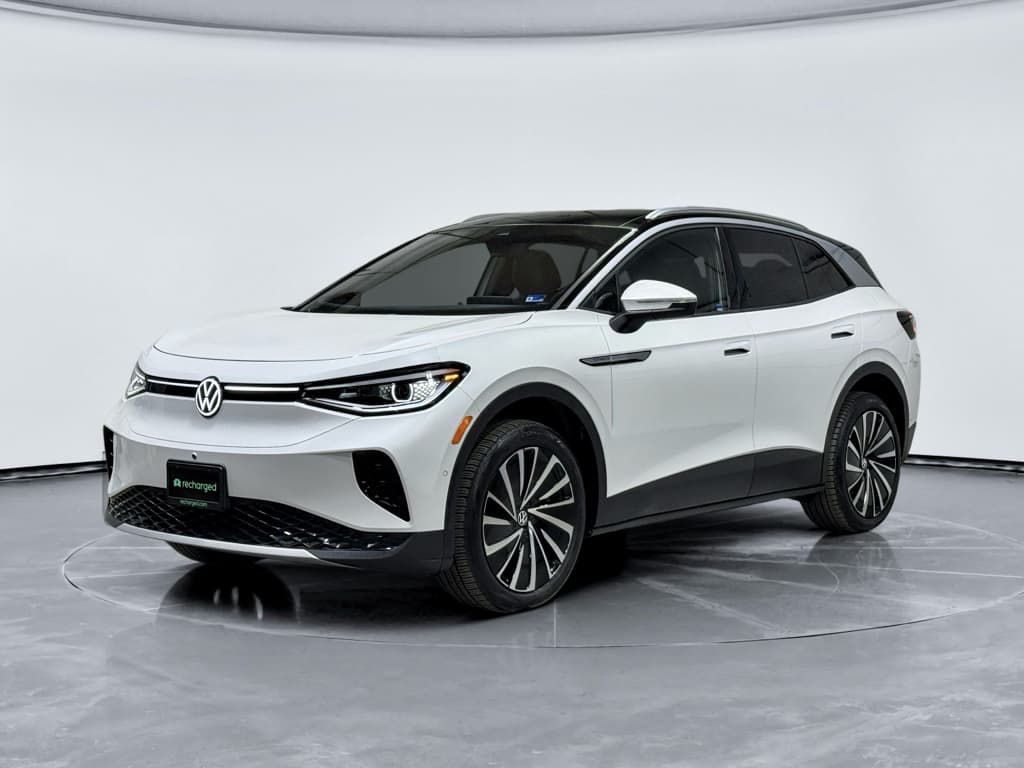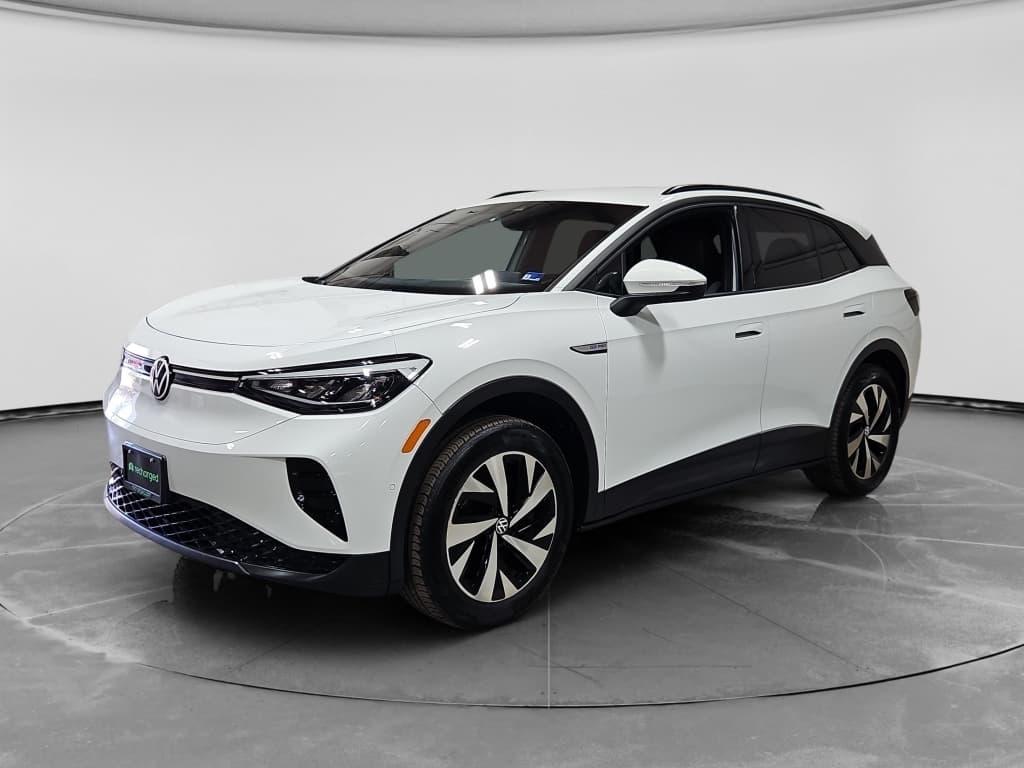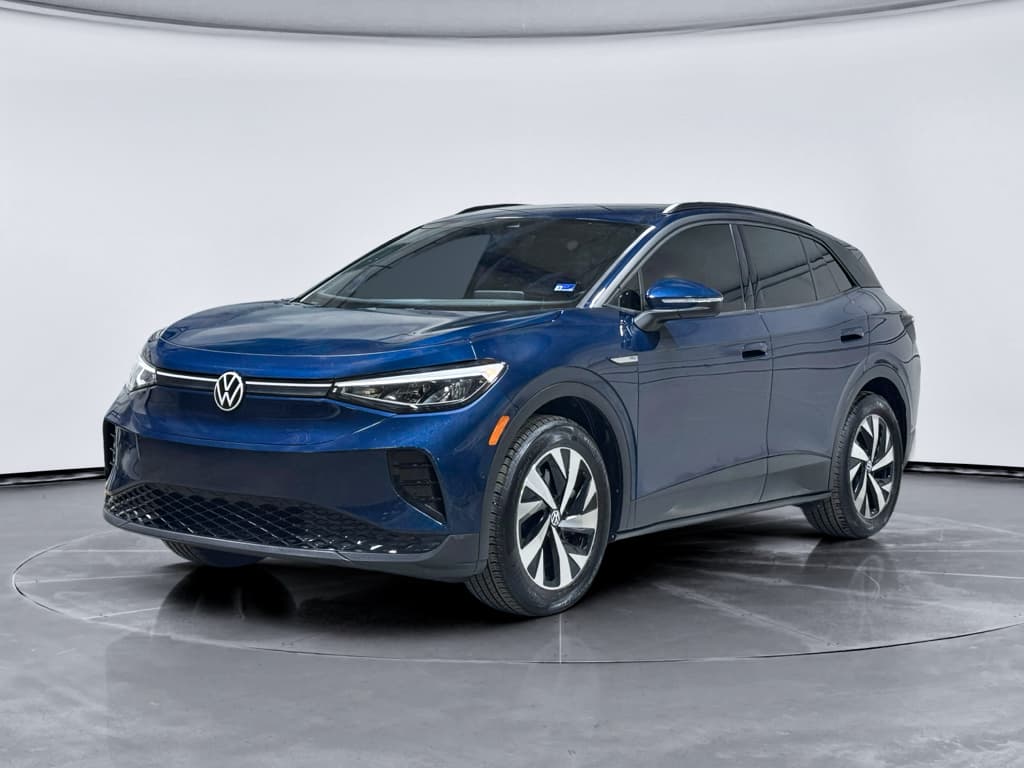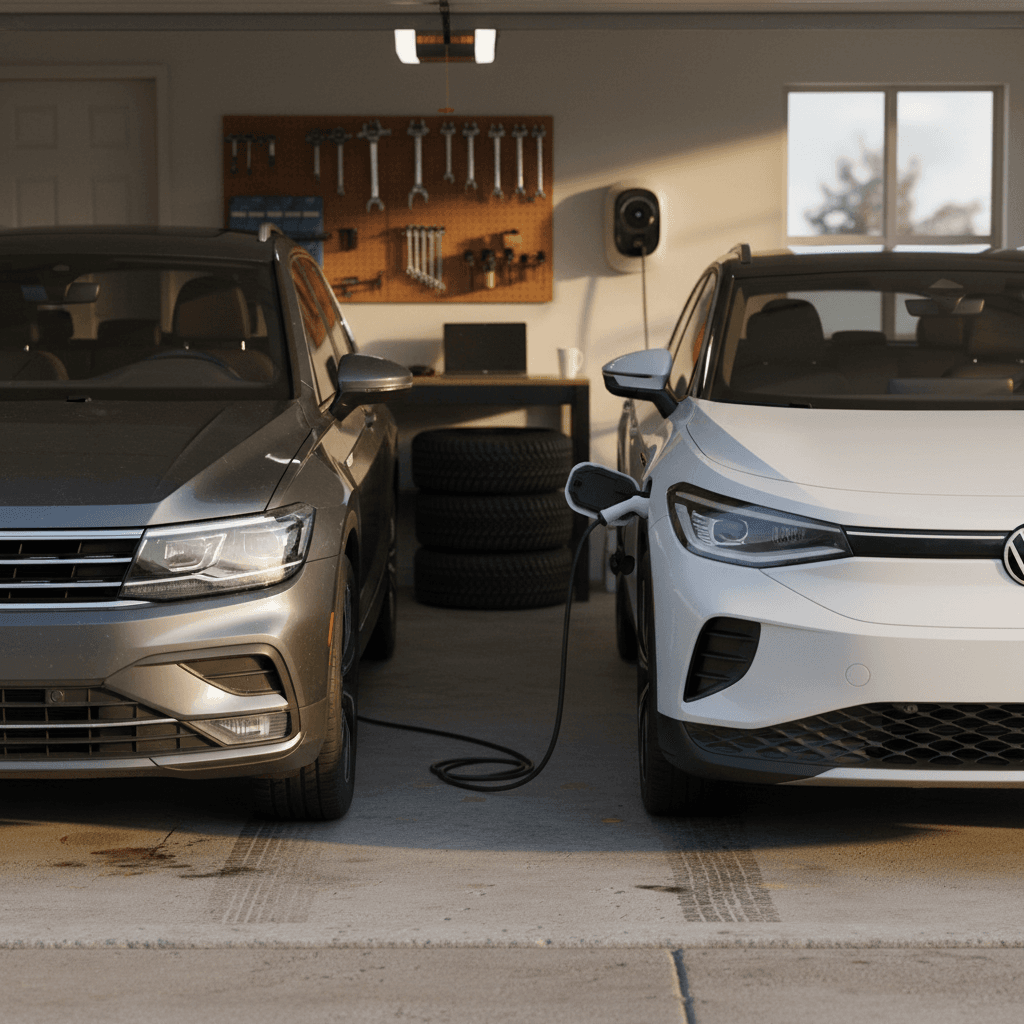
If you’re a Volkswagen Tiguan owner thinking about switching to the all‑electric Volkswagen ID.4, you’re not alone. VW has quietly been nudging exactly this move: same general size and vibe as your Tiguan, but with an electric powertrain, lower running costs, and a more modern interior. This review pulls together specs, cost data, and real‑world Tiguan‑to‑ID.4 owner experiences so you can decide if the jump makes sense for you.
Gas Tiguan to electric ID.4 in one sentence
Who this Tiguan to ID.4 review is for
- Current or recent VW Tiguan owners (or similar compact SUVs) comparing a new Tiguan to a Volkswagen ID.4.
- Drivers who like how their Tiguan drives and feels, but are curious about EV savings and smoothness.
- Shoppers eyeing a used ID.4 as a step into EVs without paying new‑EV prices.
- Households that use the Tiguan as a primary family car and want to know if the ID.4 can truly replace it.
We’ll focus heavily on what changes when you move from a gasoline Tiguan to an electric ID.4, space, comfort, charging, costs, tech, and day‑to‑day livability, rather than reviewing each model in isolation.
High-level takeaways: Tiguan vs. ID.4
Tiguan to ID.4 at a glance
Model‑year matters
Space, practicality and family duty
Tiguan: Classic crossover practicality
- Seating: Most U.S. Tiguans are two‑row, with good legroom and a more traditional driving position.
- Cargo: Boxy tailgate and squared‑off roofline make it easy to load strollers, gear, and bulky items.
- Cabin feel: Familiar analog controls, clear physical buttons for climate and audio, and a slightly higher, “SUV‑ish” driving feel.
ID.4: EV packaging advantages
- Flat floor: No driveshaft hump in RWD versions and a skateboard battery mean great rear foot space.
- Cargo: Similar cargo volume to a Tiguan with the seats up; the liftgate opening feels a bit more rounded but floor length is comparable.
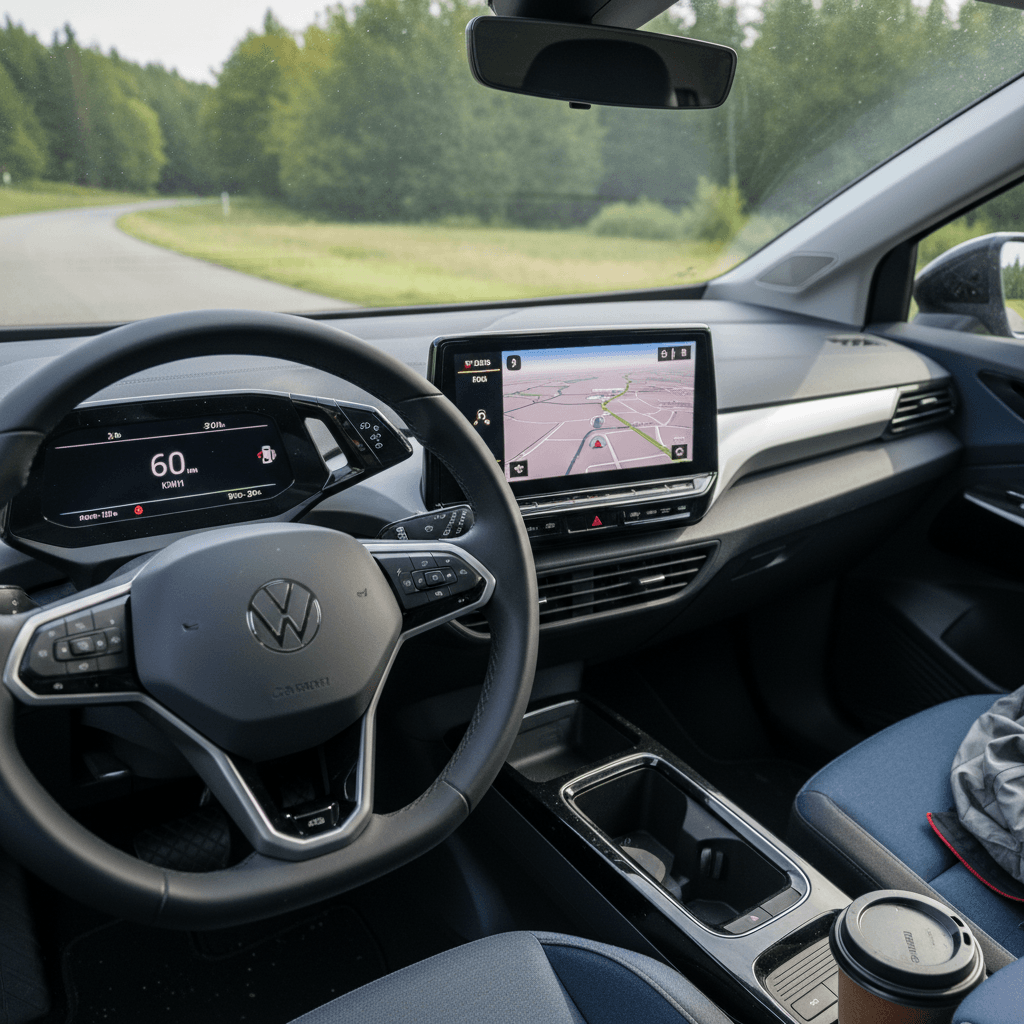
- Cabin feel: More minimalist, with a shorter hood and big windshield that make the ID.4 feel airy and easy to place in traffic.
Third‑row expectations
For most Tiguan owners who use their SUV as a two‑row family hauler, the ID.4 will feel very familiar in usable space. You may lose a bit of vertical, boxy cargo feel but gain a flatter floor, an easier step‑in, and better around‑town maneuverability thanks to its shorter front overhang and tight turning circle.
Driving experience: From turbo and gears to instant torque
If you like the Tiguan because it feels solid and secure rather than sporty, the ID.4 lands in a similar zone, but with a distinctly EV twist. Think quieter, smoother, and more effortless off the line, with less drama and fewer vibrations.
How the drive changes when you go electric
Same Volkswagen DNA, very different powertrain feel
Power delivery
The Tiguan’s turbo four needs revs and gears to build power. The ID.4 delivers instant torque from a stop, especially in the more powerful Pro and AWD versions, so it feels punchier in city driving even if 0–60 times are similar on paper.
Noise and refinement
The ID.4 eliminates engine noise and most vibrations. You’ll hear more wind and road noise by comparison, but overall it’s calmer and less tiring, especially in stop‑and‑go traffic.
One‑pedal-ish feel
The ID.4 doesn’t offer extreme one‑pedal driving like some EVs, but its regenerative braking in “B” mode gives a more relaxed, low‑effort feel once you get used to it.
Handling and ride
Where some ex‑Tiguan owners do notice a difference is in high‑speed passing and highway merging. If you’re used to the Tiguan’s turbo punch when you floor it, you’ll want to cross‑shop the more powerful 82 kWh RWD Pro or AWD ID.4 trims rather than the base battery versions, which can feel closer to a modestly powered Tiguan.
Charging vs. fueling: What Tiguan owners need to know
The biggest lifestyle change when you move from a Tiguan to an ID.4 is trading 5‑minute fuel stops for home charging and occasional DC fast‑charging. The upside: most of your “fueling” happens while you sleep. The downside: road‑trip planning and learning your local charging options.
Tiguan vs. ID.4: Fueling and charging experience
How day‑to‑day energy use compares when you switch to electric.
| Aspect | VW Tiguan (gas) | VW ID.4 (electric) |
|---|---|---|
| Daily use | Stop at gas station every 1–2 weeks depending on mileage. | Plug in at home most nights; wake up with a “full tank.” |
| Time commitment | 5–10 minutes per visit, but you have to go out of your way. | Most charging time is invisible, car charges while you sleep or work. |
| Home setup | No installation required. | Best with a 240V Level 2 circuit; you can start on 120V but it’s slow. |
| Road trips | Gas stations everywhere; refuel in minutes. | Needs route planning around fast chargers and 20–40 minute stops every few hours. |
| Weather impact | Range drops slightly in cold, but you rarely notice. | Cold weather can noticeably cut range; preconditioning and planning matter more. |
Your real experience will depend heavily on whether you can install a Level 2 charger at home or at work.
Start with your home situation
Most Tiguan owners who switch and love it treat fast charging like long‑trip refueling, not something they rely on every day. They plug in at home or work, drive all week, and only see a public DC fast charger when they’re headed out of town.
Ownership costs: Tiguan gas vs. ID.4 electric
On paper, the ID.4 often costs more to buy than a comparable Tiguan, especially new. But when you look at fuel, maintenance, and incentives, the equation changes quickly, particularly if you drive more than 10,000 miles per year.
Typical cost differences when you switch
Electricity vs. gas in the U.S.
Key cost questions before you swap your Tiguan for an ID.4
1. How many miles do you drive per year?
The more you drive, the more the ID.4’s lower energy and maintenance costs add up. If you only drive 6,000–8,000 miles per year, the financial advantage is smaller but still real.
2. What are your local energy and gas prices?
In areas with cheap residential electricity and expensive gasoline, the ID.4 wins big. If electricity is unusually pricey and gas is cheap, do the math with your actual rates.
3. Will you use public fast charging a lot?
Regular DC fast charging is convenient but more expensive and tougher on the battery. If you can mostly charge at home or work, your costs and battery health will be better.
4. Are there local or federal incentives?
Depending on your state and the model year, you may stack <strong>EV purchase incentives</strong> or HOV lane perks on top of fuel savings, further tilting the scales toward the ID.4.
Software, tech and everyday convenience
If your Tiguan has VW’s newer infotainment, the ID.4’s digital cockpit will feel like the next logical step, just with more of the car routed through screens and capacitive controls. That’s both a strength and a weakness depending on how you feel about touch‑sensitive buttons.
Living with Tiguan vs. ID.4 tech
Where the ID.4 leaps ahead, and where it can frustrate
Digital cockpit
The ID.4 leans heavily on configurable digital displays and a central touchscreen. It feels modern and can surface lots of EV‑specific info (range, charging, energy use).
Controls and HVAC
Later ID.4s improve physical controls, but some functions (like climate and drive modes) still live behind touchscreen layers. Coming from simple Tiguan knobs and buttons, expect a learning curve.
Connected features
Remote preconditioning, charge scheduling, and app‑based status checks are standard for EVs like the ID.4. Used smartly, they’re a serious convenience upgrade over a Tiguan.
Software maturity and updates
What Tiguan owners tend to love about the ID.4
- Refinement in traffic: Stop‑and‑go commuting is dramatically calmer without turbo flare‑ups and gear hunting.
- Home "fueling": Never detouring for gas during the workweek is a quality‑of‑life upgrade many owners underestimate.
- Running costs: Between fuel and maintenance, the ID.4 usually feels much cheaper to live with once the charging setup is dialed in.
- Quiet cabin: On school runs and errands, the lack of engine noise makes it easier to talk, listen to podcasts, or just decompress.
- Familiar VW feel: The seating position, steering weight, and general “solidness” feel very Volkswagen, which softens the transition to an EV.
Switching from a Tiguan to an ID.4 feels like going from DVD to streaming. Day one there’s a learning curve, but after a week you mostly wonder why it ever worked any other way.
What some Tiguan owners miss or dislike
Common pain points after switching from Tiguan to ID.4
Not deal‑breakers for everyone, but worth knowing upfront
Road‑trip friction
If your Tiguan does lots of cross‑state road trips, be realistic: an ID.4 turns one gas stop into several planned charging stops, each 20–40 minutes long. For some families this is a welcome rest; for others it feels like a downgrade.
Cold‑weather range
EVs, including the ID.4, lose more range in winter than gas SUVs. If you live in a very cold climate and routinely drive long distances with heat blasting, you’ll need to plan more carefully than you did in the Tiguan.
Touch controls
Some Tiguan owners are annoyed by the ID.4’s mix of touch sliders and screen‑based menus for simple tasks like adjusting climate or heated seats. Later model years improve this but don’t fully revert to old‑school knobs.
Home charging limits
Apartment and condo dwellers who can’t get reliable home or workplace charging often find the ID.4 frustrating. If you’re used to the universal convenience of gas stations, relying on public Level 2 can feel like a downgrade.
When you probably shouldn’t switch yet
Should you switch? How to decide
Tiguan → ID.4: A simple decision framework
1. Map your real driving patterns
Look at three months of your Tiguan mileage. How many days exceed 150–200 miles? If that’s rare, an ID.4 (especially with the larger battery) will cover your needs comfortably.
2. Audit your charging access
Confirm whether you can reasonably add a <strong>Level 2 charger</strong> at home or at work. Talk to your HOA or landlord if needed, and price an electrician visit before you buy.
3. Run a 5‑year cost comparison
Compare Tiguan fuel, oil changes, and brakes with ID.4 electricity and likely maintenance. Include potential incentives and any home‑charging installation costs. Many owners see the ID.4 pull ahead within a few years.
4. Test‑drive in your real conditions
Don’t just do a 10‑minute loop. Ask for an extended test‑drive or overnight demo in an ID.4. Try it on your commute, in your parking spot, and on your favorite stretch of highway.
5. Consider used vs. new
A <strong>used ID.4</strong> can offer big value, especially if you’re coming out of a paid‑off Tiguan. Just make sure you understand battery health, software status, and remaining warranty coverage.
How Recharged helps with a Tiguan to ID.4 switch
If you decide the Volkswagen ID.4 fits your life better than a Tiguan, the next question is how to switch without guesswork, especially around battery health and charging history, which you never had to think about with your gas SUV.
Making the jump from Tiguan to ID.4 simpler
Where Recharged fits into your EV transition
Verified battery health
Every used ID.4 on Recharged comes with a Recharged Score Report that measures real battery health, expected range, and fast‑charging history, so you’re not guessing about the most expensive part of the car.
Fair pricing & financing
Recharged benchmarks used ID.4 pricing against the market and offers EV‑friendly financing, so you can see how your monthly payment compares to hanging onto (or replacing) your Tiguan.
Trade‑in & instant offers
You can get an instant offer or consignment option for your Tiguan, roll its value into an ID.4, and complete the entire transaction digitally, with nationwide delivery and EV‑specialist support.
Try before you fully commit
Ready to find your next EV?
Browse VehiclesTiguan to ID.4 FAQ
Frequently asked questions from Tiguan owners about the ID.4
If you like your Tiguan because it’s honest, practical, and unpretentious, the Volkswagen ID.4 won’t feel like a radical departure, just a quieter, smoother, and ultimately cheaper‑to‑run evolution. The people who are happiest with the switch are the ones who go in with eyes open: they’ve thought through charging, range, and tech, and they’ve chosen the right trim for their driving. With solid planning, and the right partner helping you evaluate used examples, the move from Tiguan to ID.4 can feel less like a gamble and more like the obvious next step.