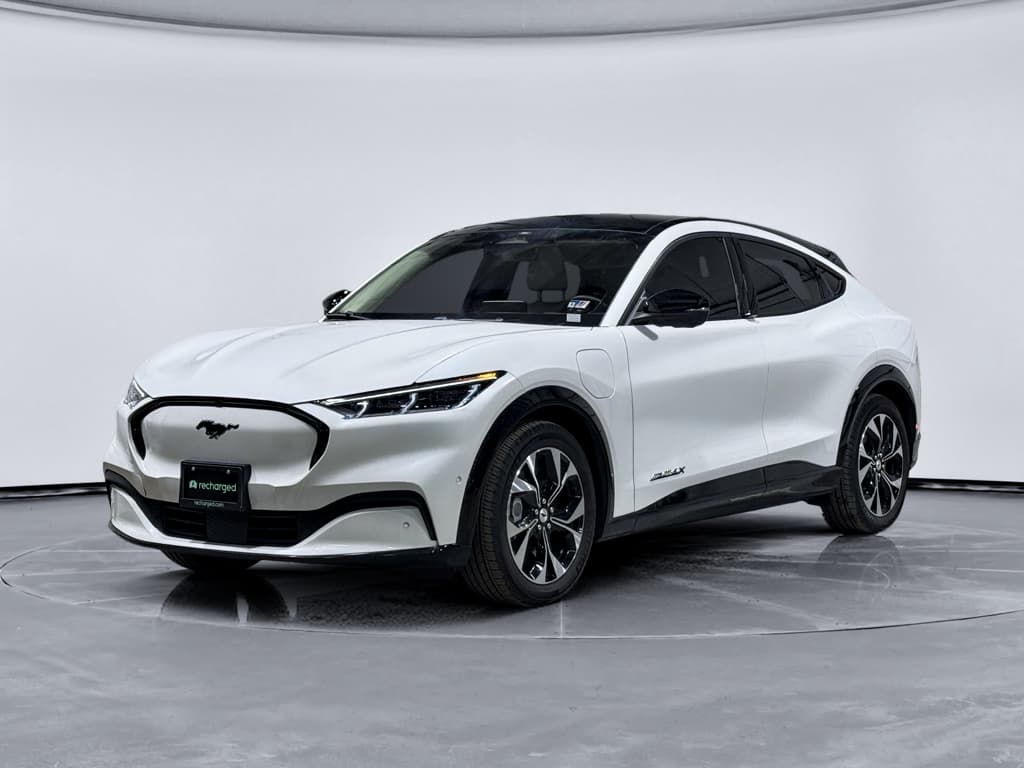
If you’re shopping used, it’s natural to ask which Ford Mustang Mach‑E years to avoid. The Mach‑E brought Mustang style into the EV age, but early model years had more than their share of recalls and software gremlins. Let’s walk through which years are riskiest, which are safe bets, and how to protect yourself if you fall in love with an early build.
Short on time? Here’s the gist
Quick answer: Mustang Mach‑E years to avoid used
- Most cautious buyers should avoid: First‑year 2021 Mustang Mach‑E builds, especially extended‑range and GT models that DC fast‑charge often.
- Use extra caution with: Early‑build 2022 models (before mid‑2022) that may still be affected by high‑voltage junction box/contactor issues if not properly remedied.
- Better used bets: 2023–2025 Mach‑E models, which benefit from running updates, fewer high‑impact recalls, and more real‑world data. Still, software and door‑latch recalls need to be confirmed as complete.
- Deal‑breaker conditions on any year: Unresolved high‑voltage battery recalls, repeat DC fast‑charging faults, gear‑selector/park module issues, or doors that don’t latch/unlatch correctly.
Important perspective
How reliable is the Mustang Mach‑E overall?
As a first‑generation EV from a legacy automaker, the Mach‑E followed a very typical curve: more issues in its first couple of years, then steady improvement. Early owner surveys and reliability scores gave 2021–2022 models below‑average marks, largely due to software bugs and high‑voltage battery contactor problems. Later years have fared better, particularly as Ford pushed over‑the‑air updates and redesigned key components.
Where the Mach‑E does well
- Battery capacity so far looks solid with modest real‑world degradation when properly cared for.
- Drivetrain and motors have not been common failure points versus some rival EVs.
- Driving experience, performance, ride, and quiet, is consistently one of the car’s strongest attractions.
Where owners report headaches
- Software glitches affecting infotainment, charging, and driver‑assist features.
- High‑voltage contactor/junction box issues on 2021–2022 that can cause sudden loss of power.
- Door latch and park‑module recalls that can create safety concerns if not fixed.
Model‑year breakdown: 2021–2025 Mach‑E
Mustang Mach‑E years at a glance
How each model year looks from a used‑buyer’s perspective
2021: First year – highest risk
The 2021 Mach‑E is the launch year. It carries the most service campaigns and early build issues.
- Multiple recalls for high‑voltage battery contactors and junction box replacement on some extended‑range and GT models.
- More reports of software instability and charging quirks.
- Recommendation: Only consider a 2021 if it has a perfect recall history, strong documentation, and a clean battery‑health report.
2022: Transitional year – proceed carefully
The 2022 model continues to see contactor and junction‑box recalls, especially on extended‑range builds produced before mid‑2022.
- Some units built in May 2022 still received suspect contactor parts.
- Software and infotainment bugs carry over from 2021 but gradually improve.
- Recommendation: Early‑build 2022s deserve the same caution as 2021. Late‑build 2022s with documented recall fixes are more attractive.
2023: Improving balance
By 2023, Ford had implemented many hardware and software corrections.
- Far fewer high‑impact recalls relative to 2021–2022.
- Owner complaints tend to involve minor electronics rather than core battery or drivetrain failures.
- Recommendation: A solid sweet‑spot for used buyers, as long as you confirm door‑latch and camera software recalls are complete.
2024–2025: Updated, but still check recalls
Later years benefited from more mature production and ongoing OTA updates.
- Newer safety recalls focus on things like rear‑camera software and integrated park module behavior rather than core battery design.
- Door‑latch software issues span 2021–2025, so they must be verified even on newer examples.
- Recommendation: Often the best mix of updated hardware, warranty coverage, and modern features, if your budget allows.
How to use this year‑by‑year guide
Major recalls and known issues to know about
When people talk about the “worst year” for a used Mustang Mach‑E, they’re usually reacting to a cluster of high‑profile recalls rather than catastrophic batteries failing left and right. Here are the issues that matter most when you’re choosing a model year.
Key Mustang Mach‑E recalls and which years they affect
Always run a VIN check and confirm that recall work has been completed before you buy.
| Issue | Primary model years | Why it matters to a used buyer | What you should verify |
|---|---|---|---|
| High‑voltage battery contactor / junction box overheating | 2021–2022 (some extended‑range & GT, early 2022 builds) | Can trigger warnings, reduced power, or complete loss of drive, especially after repeated DC fast‑charging. | Dealer documentation that the high‑voltage junction box was replaced and the latest software is installed. |
| Door latch software fault (rear doors may not unlock) | 2021–2025 | Rear passengers, especially kids, could be temporarily trapped if doors won’t unlatch after a low 12‑volt event. | Proof that the door‑latch software recall has been completed; test all doors from inside and outside. |
| Rearview camera software glitch | 2021–2025 (broad Ford recall) | Camera image may freeze or fail, affecting visibility when backing up. | OTA or dealer software update completed; verify camera works reliably in reverse. |
| Integrated park module / rollaway risk | 2024–2026 Mach‑E | In rare cases the vehicle may not fully engage Park, increasing rollaway risk. | Recall completion and that "Park" engages cleanly on test drives; always use the parking brake on slopes. |
| Misc. software/infotainment bugs | Mostly 2021–2022, but updates continue | Frozen screens, buggy driver aids, and charging‑screen glitches hurt everyday usability. | That the car is on the latest software and that key functions (HVAC, nav, CarPlay/Android Auto) behave during your test drive. |
This table is a simplified overview; individual vehicles may be affected differently based on build date, trim, and prior repair history.
When a recall is a deal‑breaker
Battery health and range on a used Mach‑E
The good news: despite the headlines about contactors and junction boxes, the Mustang Mach‑E’s battery packs themselves haven’t shown widespread, abnormal degradation in typical use. Most owners who charge reasonably (mix of home Level 2 and occasional DC fast‑charging) are seeing single‑digit percentage loss over the first several years.
- Standard‑range packs will feel the pinch of degradation sooner, especially if you do many highway miles.
- Extended‑range packs give you more buffer, but they’re also the ones tied to the early contactor recalls, so documentation matters.
- Repeated DC fast‑charging and frequent 100% charging will age any pack faster, regardless of brand.
Battery and charging realities for used Mach‑E shoppers
Why a third‑party battery check matters
Ownership costs and depreciation
If you’re looking at 2021–2022 Mach‑Es, you’ve probably noticed prices that seem almost too good to be true. That’s depreciation at work. Early EVs from every brand have dropped quickly as newer models with longer range and better tech arrive, and as headlines about recalls spook some shoppers.
Where you can win
- Early years (2021–2022) often list well below their original MSRP, sometimes undercutting newer mainstream EV crossovers.
- Electric running costs, especially if you can charge at home, remain far lower than a comparable gas SUV.
- If you buy a car with a clean bill of health, you’re letting the first owner absorb the steepest part of depreciation.
Where you must be cautious
- A tempting price can hide incomplete recall work or a history of repeated faults.
- Some early owners report more time in the shop than they’d like, lost time is a real cost.
- Insurance and tire costs are closer to a premium SUV than an economy crossover.
Smart shopper move
How to safely buy a used Mustang Mach‑E
Whether you’re considering a discounted 2021 or a nearly new 2024 Mach‑E, the buying process matters as much as the model year. Here’s a practical checklist to follow before you sign anything.
Must‑do checks before you buy a used Mach‑E
1. Run the VIN for recalls and campaigns
Use Ford’s recall lookup or the NHTSA tool to see every open campaign. Any <strong>high‑voltage battery or park‑module recall</strong> should be fully resolved before you buy, not promised “next week.”
2. Get a battery‑health and charging report
Ask for documented battery‑health diagnostics. At Recharged, every vehicle includes a <strong>Recharged Score Report</strong> with verified battery state of health and charging history red flags, so you’re not guessing.
3. Confirm software is fully up to date
On a test drive, check for pending software updates and make sure the infotainment system, rear camera, and driver‑assist features behave normally. Laggy, glitchy behavior can hint at poor maintenance.
4. Test every door and the park function
Open and close every door from inside and out, then engage Park on flat and sloped surfaces. You’re looking for <strong>smooth latching</strong>, no warning lights, and no rolling after you let off the brake.
5. Drive it like you’ll actually use it
If you do mostly highway miles, get the Mach‑E up to speed and watch efficiency and stability. If you’ll DC fast‑charge often, stop at a fast charger and see how the car behaves through at least one charging session.
6. Review service records and warranty status
Ideally, you’ll see consistent maintenance at Ford dealers, clear recall entries, and documentation for major repairs. Ask the seller to print a warranty status report so you know what’s still covered.
Private seller vs. curated marketplace
How Recharged helps you buy a better Mach‑E
If you like the idea of a Mustang Mach‑E but don’t want to gamble on recall history or battery health, buying through a specialist can de‑risk the process. That’s where Recharged comes in.
Why consider a Mach‑E from Recharged
Built specifically around making used EV ownership simpler and more transparent
Verified battery health
Transparent pricing & financing
Nationwide delivery & support
Ready to find your next EV?
Browse VehiclesYou don’t have to buy through Recharged to make a smart decision, but the combination of battery health data, recall verification, and expert guidance can turn a “worst year” question into a confident used‑EV purchase.
FAQ: Ford Mustang Mach‑E worst year to avoid used
Common questions about Mach‑E model years and reliability
If you remember nothing else, remember this: don’t obsess over a single “worst year” for the Ford Mustang Mach‑E. Instead, focus on how well a specific car has been updated, maintained, and driven. A carefully vetted 2021 can be a great value, and a neglected 2023 can still cause headaches. With the right homework, and ideally, a battery‑health report in hand, you can enjoy the Mach‑E’s style and performance without inheriting someone else’s problems.