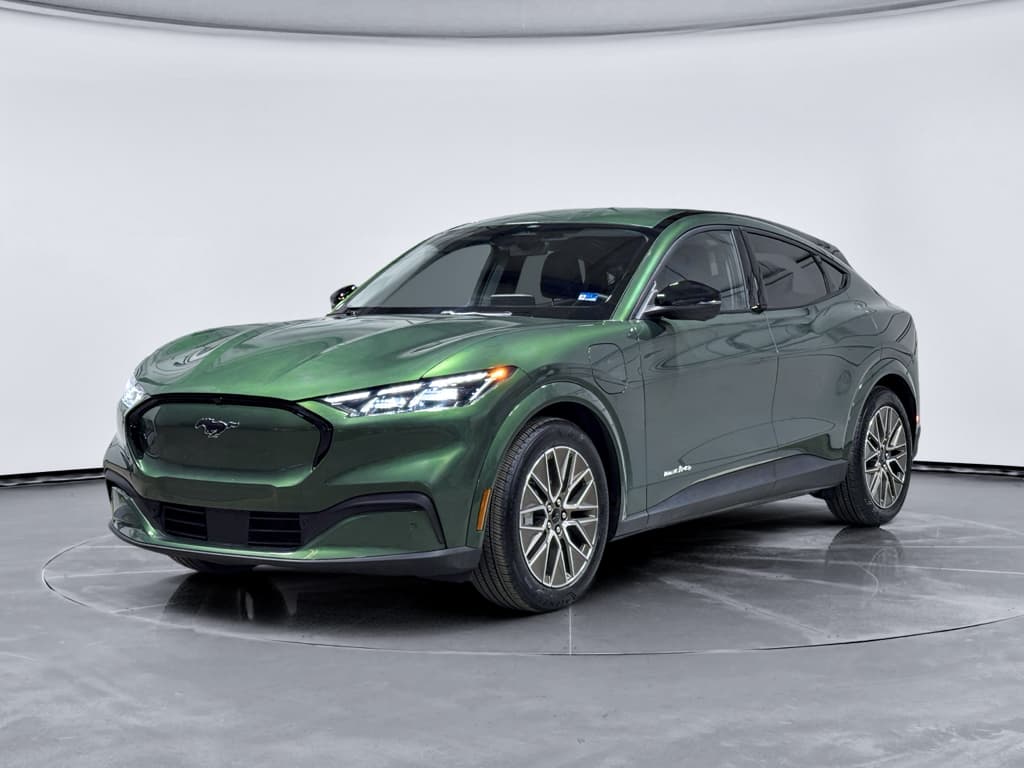
You’re torn between the Ford Mustang Mach-E and the Ford Escape Hybrid. One is a fully electric compact SUV with serious performance cred, the other a familiar gas–electric hybrid that sips fuel and feels instantly approachable. This Ford Mustang Mach-E vs Ford Escape Hybrid guide breaks down real-world costs, range and fuel economy, space, and long-term ownership so you can choose the SUV that actually fits your life, not just your driveway photos.
EV vs hybrid in one sentence
Overview: Ford Mustang Mach-E vs Ford Escape Hybrid
Ford Mustang Mach-E (all-electric)
- Powertrain: Fully electric, multiple battery and motor options
- Range: Up to about 320 miles with the extended-range battery and RWD
- Performance: 264–480 hp depending on trim, GT models can be genuinely quick
- Running costs: Electricity is usually cheaper per mile than gas, far fewer moving parts
- Best for: Daily commuters with home charging, performance-minded drivers, early EV adopters
Ford Escape Hybrid (gas–electric)
- Powertrain: 2.5L Atkinson-cycle 4‑cyl + electric motor, conventional hybrid (no plug)
- Fuel economy: Typically around mid‑30s mpg combined, depending on trim and driving
- Performance: About 192 hp system output, adequate, not sporty
- Running costs: Great mpg, but you’re still buying gas and doing engine oil changes
- Best for: Long‑distance drivers without charging access, first‑time hybrid owners, rural drivers
Start with your situation, not the spec sheet
Quick specs: Mustang Mach-E vs Escape Hybrid
Core specs comparison
High-level numbers for a typical Mustang Mach-E and Escape Hybrid shopper would cross-shop.
| Spec | Ford Mustang Mach-E (typical used 2023–2025 Premium) | Ford Escape Hybrid (typical used 2022–2024 Hybrid) |
|---|---|---|
| Powertrain | All-electric, single or dual motor | 2.5L I‑4 hybrid (gas + electric motor) |
| Horsepower | ~264–325 hp (non‑GT trims) | ~192 hp combined |
| Drivetrain | RWD or AWD | FWD or AWD |
| EPA range / mpg | Up to ~300–320 miles (extended-range), ~260 miles standard battery | Around mid‑30s mpg combined, slightly lower with AWD |
| Energy source | Electricity only (no gas tank) | Gasoline + small hybrid battery |
| Cargo volume (max) | Roughly ~59–60 cu ft seats folded | Roughly ~60–65 cu ft seats folded |
| Towing | Often not rated or minimal on most trims | Hybrid trims around 1,500 lbs; gas 2.0L up to 3,500 lbs |
| Home fueling | Level 2 charging strongly recommended | Standard gas station fill-ups |
| Incentives | Often qualifies as a used EV for state/local incentives and HOV perks (varies by region) | Occasionally qualifies for hybrid or high‑mpg incentives in some areas |
Exact specs vary by trim and model year; always verify details for the specific used vehicle you’re considering.
Efficiency and practicality at a glance
Driving experience and performance
These two Fords feel very different on the road. The Mustang Mach-E drives like a modern performance EV: instant torque, quiet cabin, and a planted feel from the battery pack mounted low in the chassis. Even non‑GT trims with roughly 264–325 hp have brisk acceleration, and GT models can sprint to 60 mph in the low‑4‑second to even low‑3‑second range depending on year and configuration. That’s serious speed for a family SUV.
The Escape Hybrid, with about 192 hp, trades excitement for predictability. It’s tuned for smoothness and efficiency, not drama. Around town, the hybrid system will glide on electricity at low speeds and switch on the gas engine when needed. Highway passing is acceptable, but you won’t mistake it for a Mustang.
How they feel from behind the wheel
Same brand, very different personalities.
Mustang Mach-E
- Instant torque and quick launches even in base trims
- Low center of gravity from the battery pack improves cornering stability
- Quiet, refined ride with the typical EV whoosh
- Available BlueCruise hands-free driving on many newer models
Escape Hybrid
- Comfort‑first suspension, tuned for commuting and family duty
- Engine can sound coarse when you demand full power
- More familiar feel for drivers coming from traditional crossovers
- Generally less road and wind noise than older Escapes, but not as serene as an EV
Who wins on performance?
Range vs fuel economy: how far will you really go?
The Mustang Mach-E and Escape Hybrid approach efficiency differently. With the Mach-E, you’re working with an electric range number: many trims land between roughly 240 and 320 miles on a full charge, depending on battery size, drivetrain, and driving conditions. Cold weather, high speeds, and heavy loads can trim that figure noticeably.
Escape Hybrid buyers think in mpg, not range. With a tank of gas and mid‑30s mpg combined for many trims, it’s easy to cover 400+ miles between fill‑ups, and refueling takes a few minutes. For drivers who regularly road-trip, that simplicity is a big point in the hybrid’s favor.
When range anxiety matters
- If most of your driving is under 60 miles a day and you can charge at home or work, the Mach-E’s range is more than enough.
- Frequent 300+ mile days with limited charging access favor the Escape Hybrid.
- In winter climates, plan on a range hit in any EV, including the Mach-E, often 15–30% depending on temperature and driving style.
Your cost per mile
- Mach-E: Electricity is usually cheaper per mile than gas. Off‑peak home charging and workplace charging make the gap even bigger.
- Escape Hybrid: Excellent mpg softens the blow of high gas prices, but you’ll still feel every spike at the pump.
Over several years, a Mach-E charged mostly at home can cost substantially less per mile to run than an Escape Hybrid, especially if local electricity rates are reasonable.
Don’t forget public charging costs
Charging vs fueling: time and convenience
The biggest lifestyle difference between the Mach-E and Escape Hybrid is how, and when, you “fill up.” With the Mach-E, your best ownership experience comes from installing or accessing a Level 2 charger (240V) at home. Many owners simply plug in overnight and wake up to a full battery. Around town, you may rarely need public chargers.
The Escape Hybrid keeps things old‑school: you’ll stop at gas stations like you always have, just less often thanks to the high mpg. There’s no plugging in, no apps, no waiting at chargers. If your housing situation or HOA makes installing a charger difficult, that simplicity can be decisive.
Questions to answer before you choose EV or hybrid
1. Can you reliably charge at home?
A dedicated 240V outlet or wall charger is close to a must‑have for enjoyable Mach-E ownership. Without it, the Escape Hybrid may be the safer bet.
2. How often do you road-trip?
Weekly long‑distance drives with limited fast chargers along your route favor the Escape Hybrid. Occasional road trips are easy enough in a Mach-E with some planning.
3. What are local electricity and gas prices?
In areas with cheap electricity and expensive gasoline, the Mach-E’s cost advantage grows. The opposite can tilt things toward the Escape Hybrid.
4. Are you comfortable with apps and new tech?
EV charging means apps, charge cards, and some trial and error at first. The Escape Hybrid is almost entirely set‑and‑forget.
Space, practicality, and towing
On paper, the Mustang Mach-E and Escape Hybrid are surprisingly close in interior room. Both are compact SUVs with two rows of seats and space for five. Both offer roughly 60 cubic feet of max cargo room with the rear seats folded, and around 29–30 cubic feet behind the second row. The Mach-E adds a usable front trunk (frunk) for small items, handy for road-trip snacks or charging cables.
Practicality highlights
How they work for families and gear.
Passengers
Both SUVs comfortably seat four adults, five in a pinch. Rear legroom is similar; tall passengers might find the Mach-E’s roofline slightly tighter than the Escape’s boxier profile.
Cargo and frunk
The Escape Hybrid’s squared‑off rear makes loading bulky boxes and strollers easy. The Mach-E’s hatch opening is generous and the frunk adds a hidden storage bonus.
Towing
The Escape Hybrid is typically rated around 1,500 lbs, enough for a small trailer or lightweight toys. Many Mach-E trims are not rated for meaningful towing in the U.S.; always check the specific vehicle’s manual.
Parking and maneuverability
Ownership costs, maintenance, and reliability
Over several years, the Mach-E and Escape Hybrid diverge on running costs. The Mach-E virtually eliminates engine-related maintenance: no oil changes, no spark plugs, no exhaust system. You’re mostly dealing with tires, brakes, cabin filters, and routine EV system checks. The Escape Hybrid still needs traditional engine service, though the hybrid system can reduce wear compared with a non‑hybrid gas Escape.
Typical ongoing costs
- Mach-E: Lower fuel cost per mile (especially with home charging), fewer scheduled services, but potential for higher tire wear due to weight and torque.
- Escape Hybrid: Excellent mpg helps control fuel spend, but regular oil changes and more complex drivetrain components add some maintenance over time.
Battery and hybrid system concerns
- Mach-E: The high-voltage battery is the heart of the vehicle. Ford generally backs it with an 8‑year/100,000‑mile warranty from new. Real‑world data so far suggests gradual, manageable degradation for most owners, but battery health on a used EV is critical to evaluate.
- Escape Hybrid: Hybrid batteries also carry long warranties. They’re smaller and cheaper than full EV packs, but replacement still isn’t pocket change. Many last well past 150,000 miles when maintained properly.
Recall awareness for used shoppers
How Recharged handles battery risk
Which is better for you: Mach-E or Escape Hybrid?
Match the SUV to your lifestyle
Use these scenarios to decide quickly.
Choose the Mustang Mach-E if…
- You can install or already have Level 2 home charging.
- Your daily driving is mostly under 60–80 miles, with only occasional long trips.
- You value smooth, quick acceleration and the feel of a modern EV.
- You want to minimize fuel spend and engine-related maintenance over time.
- You live where public charging is reasonably built out, or you’re comfortable planning fast‑charging stops.
Choose the Escape Hybrid if…
- You can’t easily charge at home (street parking, strict HOA, rental limitations).
- You regularly drive long distances through areas with sparse charging infrastructure.
- You prefer a low‑friction ownership experience that feels similar to your current gas SUV.
- You occasionally tow a small trailer or haul gear that benefits from a hybrid’s towing rating.
- You’re not quite ready for full EV ownership but want better fuel economy than a conventional gas SUV.
For many shoppers, the decision isn’t “EV vs hybrid” forever. It’s “Which one fits this phase of my life right now?”
How Recharged fits into your decision
If you’re cross‑shopping a used Mustang Mach-E against a used Escape Hybrid, the numbers, warranties, and battery questions can get complicated fast. That’s exactly the problem Recharged was built to solve.
- Every used EV on Recharged includes a Recharged Score Report with verified battery health, so you aren’t gambling on pack condition.
- You can compare fair market pricing across trims and model years to see whether a Mach-E or another EV offers better value than staying in a hybrid.
- Expert EV specialists walk you through home charging options, incentives, and real-world range so you understand how a Mach-E would fit your routine.
- If you’re trading out of a gas or hybrid SUV (including an Escape), Recharged can value your trade-in or offer consignment support and even arrange nationwide delivery for your next EV.
- Financing tools and pre‑qualification options help you understand your payment whether you go EV now or later.
Not ready for full EV yet?
Ready to find your next EV?
Browse VehiclesFrequently asked questions
Ford Mustang Mach-E vs Ford Escape Hybrid: FAQ
Choosing between the Ford Mustang Mach-E and Ford Escape Hybrid isn’t really about which spec sheet looks better, it’s about which drivetrain matches how and where you drive. If you can plug in at home and are ready for the EV learning curve, the Mach-E brings lower running costs, standout performance, and a future‑proof feel. If you need maximum flexibility with minimal lifestyle change, the Escape Hybrid continues to be a smart, efficient workhorse. Either way, going in with clear expectations about range, fuel economy, and long‑term costs is what turns a test drive into a confident purchase decision.