
If you’re looking at a used Chevy Bolt EV or thinking about selling yours, the big question is simple: how fast does a Bolt EV depreciate? Because the Bolt has lived through battery recalls, price cuts, and now a relaunch, its depreciation story is more dramatic than most EVs, great news if you’re buying, more complicated if you’re selling.
Quick takeaway
Why Chevy Bolt EV depreciation matters in 2026
Depreciation is the single biggest ownership cost for most EVs, and the Chevy Bolt EV is no exception. The Bolt has already been discontinued once and is scheduled to return for the 2027 model year, which means there’s a large pool of used cars on the market and a lot of confusion about what they’re really worth. Understanding the Chevy Bolt EV depreciation rate helps you decide whether a particular car is a bargain or a potential money pit.
Because EV technology moves quickly, an older Bolt is competing with newer models that charge faster, drive farther, and qualify for different incentives. That can drag down prices even if the car itself is still a solid commuter. On the flip side, aggressive new-car discounts and tax credits have already done much of the depreciation for you, especially on 2022–2023 Bolts, so you can sometimes buy a lightly used car for the price of a mid-level compact sedan.
Chevy Bolt EV depreciation rate at a glance
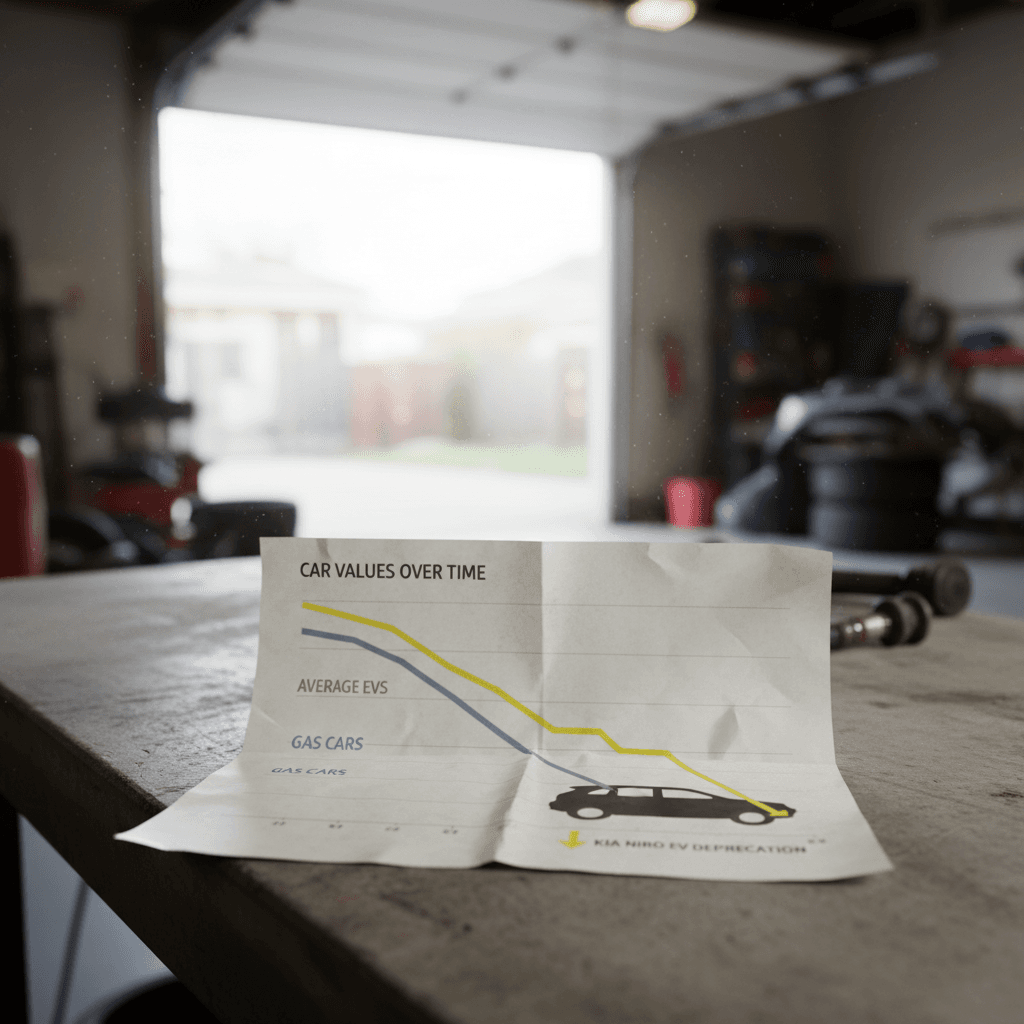
How fast does a Chevy Bolt EV depreciate over 3–10 years?
No two cars follow the exact same curve, but looking at pricing data for multiple model years gives a clear picture of the typical Chevy Bolt EV depreciation rate.
Estimated Chevy Bolt EV value retention over time
Approximate retained value for a typical Bolt EV in average condition and mileage, relative to its original MSRP.
| Age of vehicle | Typical retained value vs. original MSRP | Approximate depreciation |
|---|---|---|
| 1 year | ~65% | ~35% loss |
| 3 years | ~60% | ~40% loss |
| 5 years | ~40–45% | ~55–60% loss |
| 8 years | ~25–30% | ~70–75% loss |
| 10 years | ~30–32% (floor) | Depreciation largely flattens; condition matters more than age |
Real-world markets vary by region and incentives, but the pattern, steep early drop, slower later, is consistent.
You’ll notice something interesting in that table: past about 8–10 years, the curve flattens. A well‑maintained 8‑year‑old Bolt might not be worth dramatically less than a 10‑year‑old one, especially if both have healthy batteries. That’s common with EVs as they age: the market starts pricing the remaining life of the battery and features, not just the calendar year.
Depreciation can be lumpy, not smooth
What actually drives Chevy Bolt EV depreciation?
6 big levers that move Bolt EV resale value
Some you control, some you don’t, but all of them matter.
Model year & design age
Battery health & warranty
Mileage & usage pattern
Charging speed & tech
Incentives & MSRP cuts
Regional demand
When you put those factors together, you can see why the Bolt’s depreciation story isn’t as simple as “EVs lose value quickly.” The same model year can be either a screaming deal or overpriced depending on battery history, local incentives, and how eager a seller is.
Battery recall, new packs, and how they affect value
The Bolt EV’s high‑profile battery recall is one of the biggest reasons its depreciation looks worse on paper than some rivals, but it’s also a hidden opportunity for used‑car shoppers.
- Many 2017–2022 Bolts received brand‑new replacement battery packs under GM’s recall campaign.
- Those replacement packs restarted the battery warranty clock, often giving owners 8 years or 100,000+ miles of fresh coverage from the replacement date.
- Cars that haven’t yet received their replacement pack, or don’t have documentation, tend to sell for less and should be approached with more caution.
Check for proof of the recall
At Recharged, every vehicle includes a Recharged Score Report with verified battery diagnostics. For a Bolt EV, that means you’re not guessing about how the recall was handled or how much usable capacity the pack still has.
Chevy Bolt EV vs other EVs on resale value
Compared with other mainstream EVs, the Bolt EV typically sits in the middle of the pack on resale value. It doesn’t hold value like a Tesla Model 3, but it usually does better than early Nissan Leafs that lacked active battery cooling.
3‑year and 5‑year resale snapshots: Bolt vs. key rivals
High‑level comparison of typical resale performance for popular EVs in today’s used market.
| Model | 3‑year retained value | 5‑year retained value | Depreciation story |
|---|---|---|---|
| Chevy Bolt EV | ~60% | ~40–45% | Affordable new prices and recall headlines create steeper early drops, but cars with new batteries can be excellent used buys. |
| Tesla Model 3 | ~70% | ~55–60% | Brand strength, software updates, and charging access help it hold value better than most EVs. |
| Nissan Leaf | ~55% | ~30–35% | Shorter range and battery‑cooling concerns drag down older Leaf resale values significantly. |
| Hyundai Kona EV / Kia Niro EV | ~60–65% | ~45–50% | Solid range and warranties support decent resale, especially in EV‑friendly regions. |
Numbers are approximate and vary with trim, location, and incentives, but the relative ranking is consistent across most data sources.
Think in total cost, not just retention
Real-world used Chevy Bolt EV price ranges
Used prices move with incentives, interest rates, and new‑car discounts, but as of early 2026, here’s how Chevy Bolt EV pricing generally shakes out in the U.S. retail market:
Typical used Chevy Bolt EV asking-price ranges (early 2026)
Approximate transaction bands for average‑mileage cars in good condition. Local markets and equipment levels can push prices above or below these ranges.
| Model years | Typical miles | Common price band (retail) | Notes |
|---|---|---|---|
| 2017–2018 | 70,000–110,000 | $9,000–$13,000 | Often heavily depreciated; look for cars with replacement batteries and solid maintenance history. |
| 2019–2020 | 50,000–90,000 | $12,000–$17,000 | Sweet spot for budget commuters; many have new packs and updated safety tech. |
| 2021 | 40,000–70,000 | $15,000–$19,000 | Mid‑cycle updates and fresher interiors support stronger pricing. |
| 2022–2023 | 15,000–45,000 | $17,000–$24,000 | Started with lower MSRPs; heavy new‑car incentives mean some nearly new Bolts trade at surprisingly low prices. |
These ranges assume clean titles and documented recall work where applicable.
Don’t ignore trim and options
How to shop a used Chevy Bolt EV without overpaying
The Bolt’s depreciation curve can work in your favor, but only if you verify the right things before you sign. Here’s how to stack the odds in your favor when you’re comparing two Bolts with similar stickers but very different stories.
Used Chevy Bolt EV buying checklist
1. Start with battery health
Ask for a recent <strong>battery‑health report</strong> or capacity reading. A car that still holds close to its original kWh capacity will age better and depreciate more slowly from here.
2. Confirm recall and software history
Request service records that show the battery recall work and any key software updates. A Bolt that’s fully up to date is more marketable when you go to sell.
3. Compare to new‑car incentives
If new EVs in your area qualify for large rebates or tax credits, used prices must adjust. Before you commit, compare your used Bolt’s out‑the‑door price to what a discounted new EV would cost you.
4. Look at total cost of ownership
Don’t fixate on resale alone. Factor in <strong>energy costs, maintenance savings, and insurance</strong>. A slightly faster‑depreciating car can still be cheaper to live with over 5 years.
5. Use multiple value guides
Check at least two sources, online pricing tools, recent local listings, and EV‑focused marketplaces like <strong>Recharged</strong>, to see what comparable Bolts are actually selling for.
6. Consider financing impact
Because depreciation is front‑loaded, shorter loan terms or a solid down payment can keep you from being upside‑down on the loan if values dip faster than expected.
Where Recharged fits in
Ready to find your next EV?
Browse Vehicles7 ways to protect your Bolt EV’s resale value
If you already own a Bolt, or are about to, the right habits can slow depreciation from here. You can’t change what’s already happened, but you can influence how the car looks to the next buyer.
- Stay current on recalls and service bulletins; keep paperwork organized in a single folder.
- Avoid frequent DC fast charging when you don’t need it; home or workplace Level 2 charging is easier on the pack.
- Keep mileage reasonable for the age of the vehicle; buyers notice when odometer readings are far above peers.
- Repair cosmetic damage promptly, curbed wheels, dents, and worn interiors are resale killers on compact EVs.
- Consider high‑quality floor mats and regular detailing to keep the cabin feeling newer.
- If you add aftermarket accessories, avoid anything that can’t be reversed easily.
- When the time comes to sell or trade, get multiple offers, including instant offers from online buyers and EV‑focused marketplaces.
Biggest depreciation traps to avoid
Is a used Chevy Bolt EV a good buy today?
When a used Bolt EV makes a lot of sense
- You want an affordable commuter with low running costs and don’t need road‑trip‑grade fast charging.
- You find a car with a documented new battery and remaining warranty coverage.
- You live in an area with decent public charging and can install, or already have, Level 2 at home.
- You plan to keep the car at least 5 years, letting the sharpest early depreciation work in your favor.
When you might want to look elsewhere
- You need the best possible long‑term resale value and plan to sell again in 2–3 years.
- You road‑trip often and want faster DC charging than the Bolt can provide.
- You’re comparing to a newer EV that qualifies for major incentives, narrowing the price gap.
- You’re uncomfortable with any vehicle that has a complex recall history, even if fully repaired.
For many shoppers in 2026, the Chevy Bolt EV’s aggressive depreciation is exactly what makes it attractive. You’re picking up a practical, efficient EV after someone else has already taken the heaviest hit. If you focus on battery health, recall documentation, and realistic pricing, a used Bolt can deliver years of low‑cost driving, and still have life left in its resale value when you’re ready to move on. And if you’d like help decoding battery reports or comparing offers, Recharged’s EV specialists are there to walk you through the numbers, not pressure you into a decision.