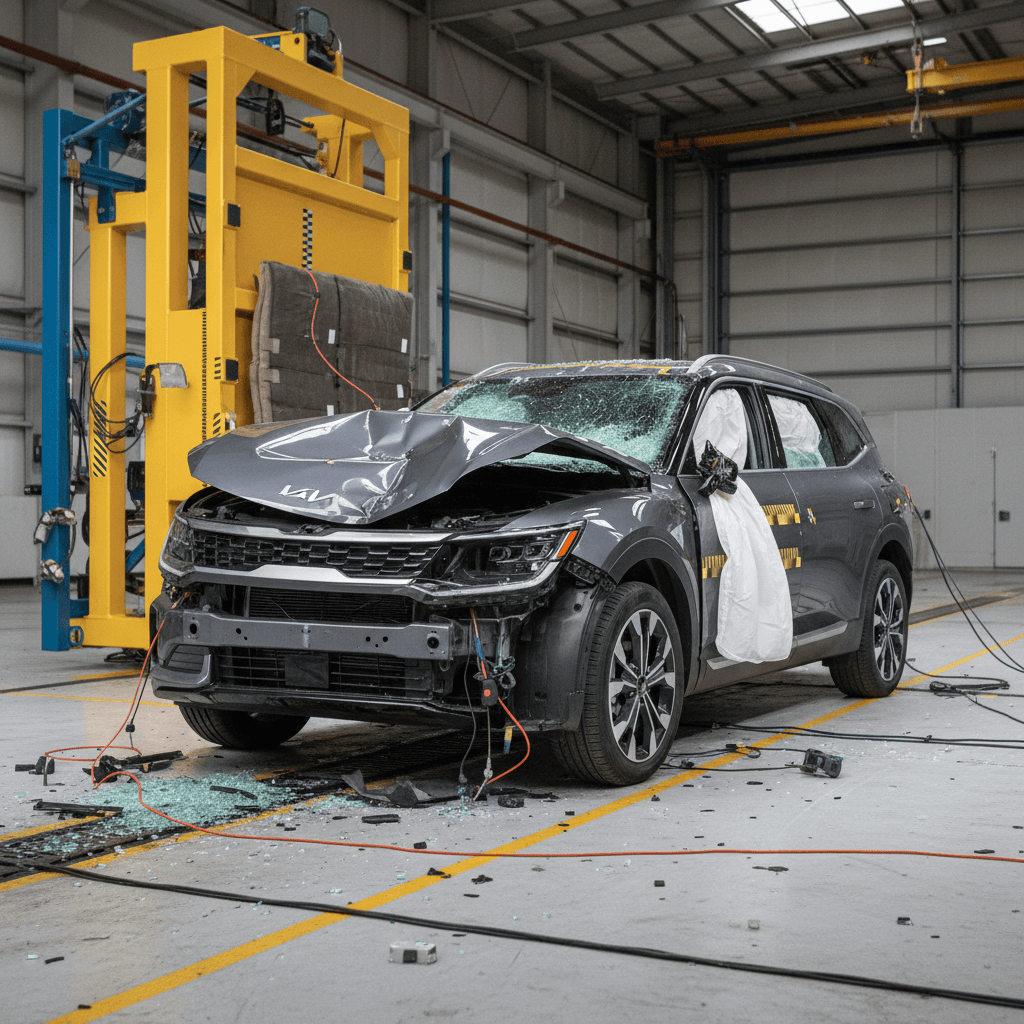
If you’re considering a Ford Mustang Mach-E, you’re probably asking two questions: **How safe is it in a crash**, and **what do the official safety ratings actually mean**, especially if you’re looking at a used EV. The good news is that the Mustang Mach-E has earned top marks from independent testers, but there are also some important caveats and recent recalls you should understand before you buy.
Headline verdict
Ford Mustang Mach-E safety overview
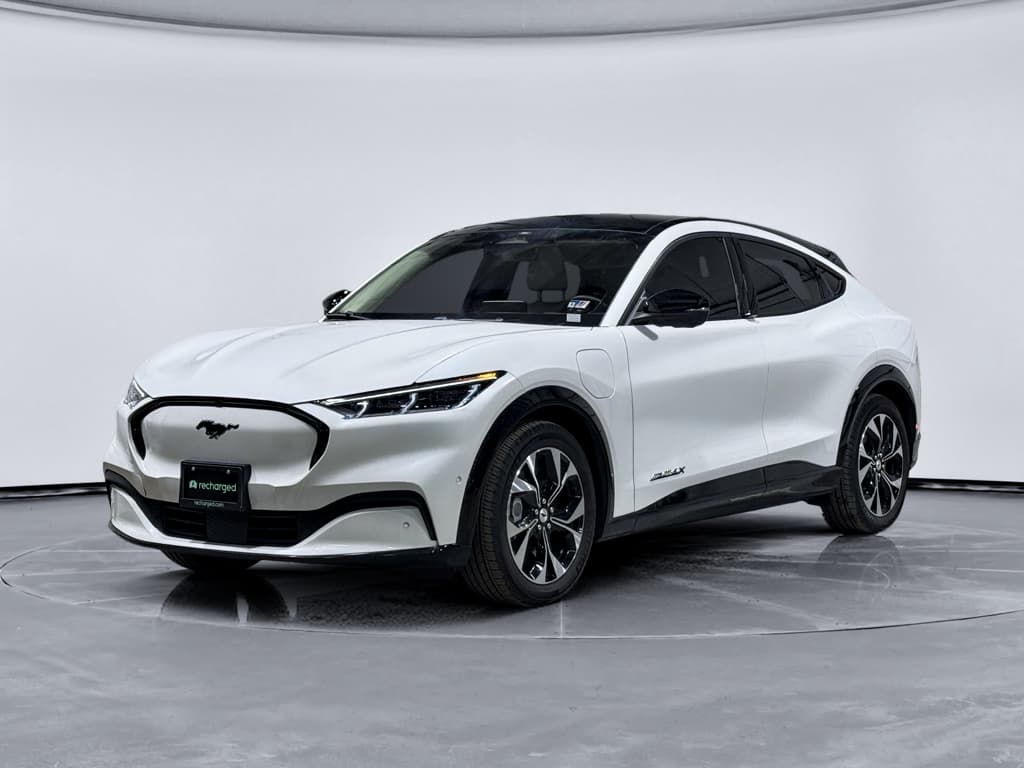
The Ford Mustang Mach-E launched for the 2021 model year as Ford’s first dedicated electric SUV, and safety has been central to its pitch from day one. Underneath the pony-badge marketing, you’re looking at a **mid-size electric crossover** with a low center of gravity, a rigid battery “skateboard” structure, and a full suite of active safety tech under the **Ford Co-Pilot360** umbrella.
Independent crash-test agencies have now tested multiple Mach-E model years. IIHS data show that the structure has held up well enough that its 2021 crash results still **carry forward to 2026 models** with updated evaluations, while Ford has steadily improved driver-assistance features like **BlueCruise** and pedestrian detection over time.
Ford Mustang Mach-E crash safety: fast facts
Crash test ratings at a glance
Ford Mustang Mach-E crash test ratings by program
How the Mach-E scores in major U.S. and European safety programs. Always verify by specific model year and build date when shopping used.
| Program | Scope | Overall Rating (recent Mach-E) | Notable Details |
|---|---|---|---|
| IIHS (U.S.) | Crash tests + crash avoidance | Top Safety Pick+ | 2024 and 2026 Mach-E earn top award with “Good” crashworthiness and “Good” pedestrian AEB; LATCH rated “Acceptable.” |
| NHTSA (U.S.) | 5-star NCAP ratings | Testing in progress/limited public data | Mach-E is on NHTSA’s 2024 test list; full star ratings may vary by model year and are not yet as widely cited as IIHS results. |
| Euro NCAP (EU, where applicable) | Crash tests + safety assist | Varies by EU spec | European-score specifics depend on market/trim; broadly consistent with strong EV SUV performance. If you’re importing, check regional data. |
Summary of publicly available ratings for core safety programs as of early 2026.
Model years and build dates matter
IIHS crash tests: Why the Mach-E is a Top Safety Pick+
The Insurance Institute for Highway Safety (IIHS) is often the most useful data point for U.S. shoppers because its tests have become more demanding, especially for SUVs. The **2026 Ford Mustang Mach-E** currently holds the **Top Safety Pick+** award, the Institute’s highest honor, with ratings that trace back to tests originally conducted on 2021 models and supplemented by newer, tougher side and moderate-overlap tests.
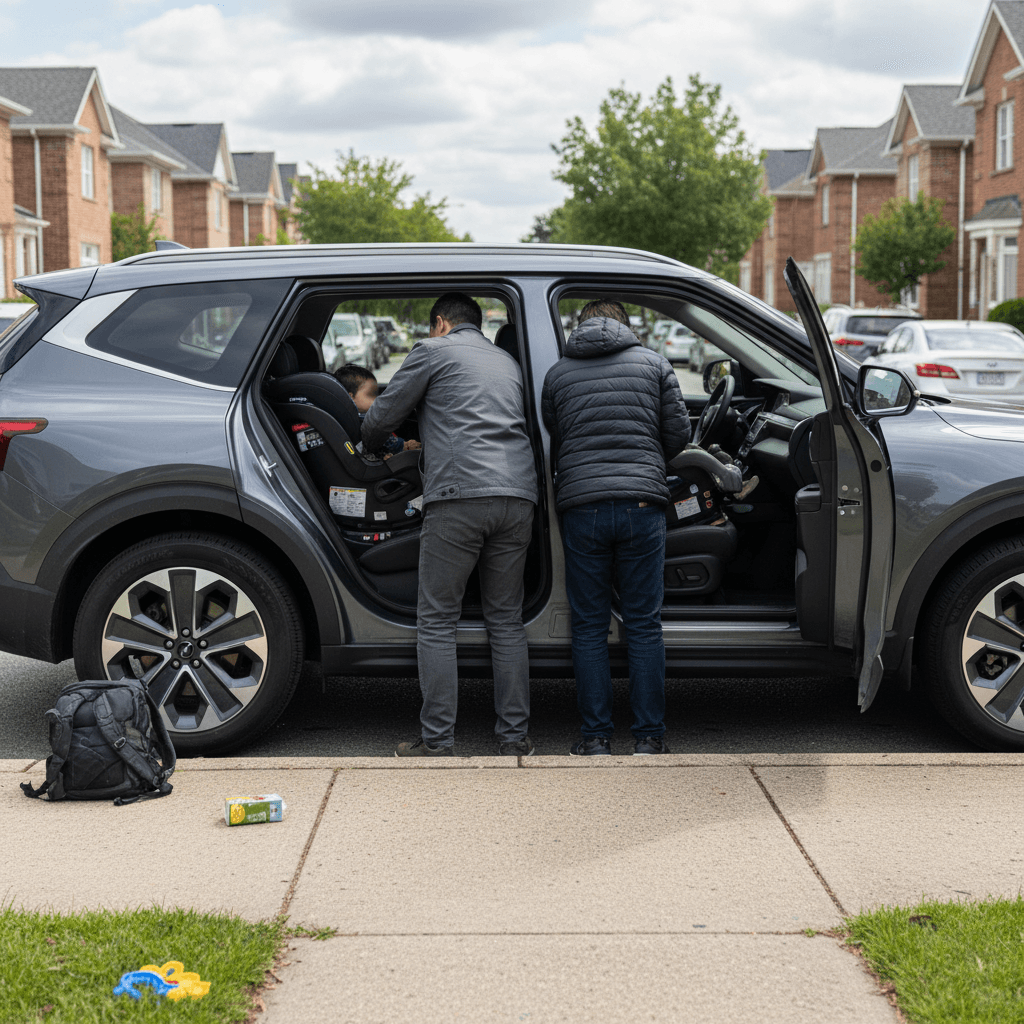
How the Mach-E performs in IIHS crash tests
Across 2021–2026 models, ratings are consistently strong with a few nuances worth understanding.
Small-overlap front
Moderate-overlap (updated)
Side-impact (updated)
About that rear door opening note
Beyond pure crashworthiness, the Mach-E’s **crash avoidance and mitigation** scores have only improved. Newer models (2025–2026) with the standard Co-Pilot360 system earn a **“Good” rating in pedestrian front-crash prevention**, including day and night scenarios at common urban speeds, a critical metric as regulators focus more on vulnerable road users.
NHTSA star ratings and recent safety updates
The National Highway Traffic Safety Administration (NHTSA) runs the U.S. government’s 5-Star Safety Ratings program. NHTSA selected the **Ford Mustang Mach-E SUV** for 2024 testing under its updated New Car Assessment Program, which is gradually being modernized for EVs and modern driver-assistance systems.
At the time of writing in early 2026, IIHS data is more complete and easier to interpret than NHTSA’s for the Mach-E. You’ll see Ford and many dealers lean on the **Top Safety Pick+ award** in marketing, while NHTSA’s star ratings and NCAP metrics for newer model years are still filtering into public databases and Monroney (window) stickers.
Where to check your specific VIN
Key Mustang Mach-E safety and driver-assist features
Crash-test scores tell you how a vehicle performs **once a crash happens**. The Mach-E’s standard **Ford Co-Pilot360** and available **Co-Pilot360 Active / BlueCruise** systems focus on avoiding those crashes in the first place. While packages and trial periods vary by model year and trim, the core toolkit is broadly similar from 2021 onward.
Core safety tech on the Mustang Mach-E
Many of these features are standard across trims; some are tied to option packages or subscriptions.
Blind Spot Information System (BLIS)
Lane-keeping & road-edge detection
Automatic emergency braking & pedestrian detection
Rearview camera & parking assist
BlueCruise hands-free driving
Family-oriented protections
EV-specific safety advantages
- Low center of gravity from the underfloor battery pack reduces rollover risk compared with many gas SUVs.
- A stiff battery enclosure can improve **side-impact performance** and help maintain a survivable cabin.
- No engine block up front can allow more controlled crash “crumple” in some frontal impacts.
EV-specific safety trade-offs
- EVs like the Mach-E are often heavier than comparable gas SUVs, which is good for occupants but can increase crash energy for others on the road.
- High-voltage systems require proper training for body shops and first responders, another reason repairs should follow OEM procedures.
- Range-focused tires may prioritize efficiency over all-weather grip; winter tires are still a smart choice in cold climates.
BlueCruise, investigations, and real-world crashes
A big part of the Mach-E story is **BlueCruise**, Ford’s hands-free highway driving system. Starting in 2021, Mach-E models equipped with the right hardware could enable BlueCruise via trial or subscription, and by 2025 the system had evolved to **BlueCruise 1.5** with automatic lane changes on many trims.
BlueCruise is classified as a **Level 2+ driver-assistance system**. It can steer, brake, change lanes, and maintain speed in its approved map, but you, as the driver, are still legally responsible and required to pay attention. A driver-monitoring camera checks that your eyes remain on the road.
Federal investigations you should know about
It’s critical to interpret these incidents correctly. A small number of crashes, especially on high-mileage fleet or early-adopter vehicles, doesn’t negate the everyday safety benefits of good driver-assist tech. But it does underline a key reality: systems like BlueCruise **do not replace a focused human driver**, and they have known limitations around stopped vehicles, complex work zones, and unusual lighting conditions.
How to use BlueCruise without over-trusting it
1. Treat it like advanced cruise control, not a chauffeur
Think of BlueCruise as a more capable version of adaptive cruise and lane centering, not an autonomous driver. Your hands can come off the wheel in some zones, but your eyes and brain cannot clock out.
2. Be extra cautious around stopped or slow traffic
Early investigations highlight challenges with stationary or very slow vehicles at night. When you see brake lights or hazard flashers ahead, be prepared to brake or steer well before the system intervenes.
3. Watch the driver-monitoring alerts
If the Mach-E starts nagging you to pay attention, don’t fight it. Those alerts are there because past crashes have shown how quickly humans can over-trust systems that appear competent most of the time.
4. Keep software updated
Ford continues to refine BlueCruise and other safety systems via over-the-air updates. Make sure your Mach-E is connected and that any available updates are installed promptly.
Recalls, door-latch issue, and other concerns
No modern vehicle, EV or otherwise, hits the market without recalls, and the Mustang Mach-E is no exception. The difference with a connected EV is that **many fixes are software-based** and can be handled via over-the-air updates if the owner stays engaged.
Notable Mustang Mach-E safety-related recalls
Always check an individual VIN to see which of these apply and whether they’ve been addressed.
Electronic rear door-latch issue (2021–2025)
Rearview camera glitches (2021–2024)
High-voltage and battery-related campaigns
Other software updates & TSBs
Why recall completion matters for used buyers
Safety checklist for buying a used Mustang Mach-E
If you’re evaluating a used Mach-E, whether through a private party, a traditional dealer, or a digital marketplace like Recharged, you should go beyond the generic "clean Carfax" claim. EVs bring **battery health, software state, and driver-assist calibration** into the safety conversation in ways that traditional used-car inspections often miss.
Used Mustang Mach-E safety checklist
1. Confirm model year and build date
Use the door-jamb sticker to verify the build month/year and cross-check it with IIHS notes. You want to know whether the vehicle is covered by the **latest crash-test evaluations** and any mid-cycle structural tweaks.
2. Run a full recall and campaign lookup
Enter the VIN on NHTSA’s site and Ford’s recall tool. Ensure fixes for the **rear door latch**, rearview camera, and any high-voltage or braking campaigns have been completed. Ask for documentation from the seller.
3. Check software and BlueCruise status
From the center screen, view software update history and BlueCruise subscription status. A Mach-E that’s **months behind on updates** may be missing important safety refinements. At Recharged, software state is part of the intake process and addressed before sale when possible.
4. Inspect cameras, sensors, and glass
Look for cracks in windshields (especially around the forward camera), damaged bumper covers near radar sensors, and misaligned cameras. Collision repairs that don’t follow Ford procedures can **compromise driver-assist performance** even if the car looks fine.
5. Evaluate tires and brakes
Good crash performance assumes adequate grip. Check for uneven tire wear, cheap replacement tires with poor wet ratings, or rotors that are grooved from infrequent use. Regenerative braking means pads last a long time, but they still age.
6. Ask for a professional EV-focused inspection
Traditional pre-purchase inspections rarely dive deep on EV-specific items like battery health and high-voltage safety. Every vehicle sold by <strong>Recharged</strong> includes a **Recharged Score Report** with verified battery health and a thorough mechanical and software review tailored to used EVs.
How the Mach-E’s safety compares to rival EV SUVs
The Mach-E doesn’t exist in a vacuum. If you’re cross-shopping with a Tesla Model Y, Hyundai Ioniq 5, Kia EV6, or Chevy Blazer EV, you’ll find that **most mainstream EV SUVs now hit very high safety bars**. That’s the upside of regulators and insurers turning up the heat: the average has moved closer to what used to be "top-tier."
Mach-E vs. rival EV SUVs: high-level safety snapshot
Not an exhaustive spec sheet, but a quick way to contextualize the Mach-E’s ratings alongside popular alternatives.
| Model | IIHS status (recent MY) | Notable strengths | Potential watch-outs |
|---|---|---|---|
| Ford Mustang Mach-E | Top Safety Pick+ | Strong crashworthiness; Good pedestrian AEB; robust Co-Pilot360 suite; OTA updates. | BlueCruise under investigation; several software-heavy recalls require owner follow-through. |
| Tesla Model Y | Historically strong; varies by year | Excellent crash structure; very low rollover risk; active safety improves via OTA updates. | Autopilot misuse risk; evolving IIHS headlight/LATCH scores by trim and year. |
| Hyundai Ioniq 5 | Top Safety Pick+ (recent) | Excellent updated side-impact performance; strong safety-assist; clear control layout. | Some trims may have varying headlight or LATCH ease-of-use scores. |
| Kia EV6 | Top Safety Pick+/Top Safety Pick | Good crash and safety-assist performance; long list of standard ADAS. | Aggressive lane-keeping tuning not to everyone’s taste; wheel/tire choices affect wet grip. |
| Chevrolet Blazer EV | Newer entrant; strong early data | Modern crash structure and ADAS tuned for U.S. NCAP; GM OTA capability. | Early-production software recalls remind buyers to monitor updates closely. |
Always verify current IIHS and NHTSA ratings for the specific model year and configuration you’re considering.
Bottom line on comparisons
Ford Mustang Mach-E safety rating FAQ
Frequently asked questions about Mustang Mach-E safety
Zooming out from the marketing and headlines, the Ford Mustang Mach-E lands in a reassuring place: **structurally robust, crash-tested to modern standards, and equipped with serious active safety tech**, but also subject to the same software recalls and driver-assistance question marks that increasingly define the EV era. If you go in with clear eyes, treating BlueCruise as a helper, insisting on recall completion, and verifying software health, you can end up with an electric SUV whose safety story holds up just as well as its performance and design.
If you’re shopping the used market, a platform like Recharged can simplify the hard parts: every vehicle includes a **Recharged Score Report** with verified battery health, fair-market pricing, and expert guidance on safety features and recalls. That way, you’re not just buying a fast, stylish EV, you’re buying one whose **safety rating and crash test performance** still mean something in the real world.