If you went looking for the best EV lease deals in Colorado in 2026 expecting $199/month offers everywhere, you’ve probably already discovered the bad news: the party’s mostly over. Federal incentives have been cut back, Colorado’s state credit is shrinking, and monthly payments are drifting up. But that doesn’t mean there are no smart plays left, it just means you have to be more strategic about which EV you choose, how you structure the lease, and whether leasing beats a used EV altogether.
First, a reality check for 2026
Why EV lease deals feel different in Colorado in 2026
From 2023 through late 2025, Colorado drivers enjoyed a rare overlap: generous state credits stacked on top of full federal incentives. Dealers could pass thousands of dollars of tax benefits into leases, creating eye‑catching sub‑$300 payments on everything from compact crossovers to long‑range sedans. By early 2026, that stack has thinned out. The federal “lease loophole” that let most leased EVs qualify for the full $7,500 credit has expired, and Colorado’s own Innovative Motor Vehicle Tax Credit is stepping down from its peak.
Colorado’s EV market landscape heading into 2026
This combination, mature demand, more EV models, and lower incentives, means Colorado shoppers in 2026 have plenty of choice but fewer “too good to be true” lease offers. Instead of assuming every EV lease is a steal, you now have to separate genuinely subsidized deals from simply average ones.
How Colorado’s 2026 EV tax credit actually works on a lease
Colorado’s Innovative Motor Vehicle Credit is still the cornerstone of EV affordability here, and it does apply to leases, if you meet the rules. Understanding those rules is the difference between a mediocre lease deal and a very competitive one.
High-level view: Colorado state EV credit on leases (2026)
These are directional guardrails for 2026 based on current law. Always confirm the exact credit amount and rules with a tax professional or the Colorado Department of Revenue before you sign.
| Factor | 2023 peak years | 2025 | 2026 trend | Why it matters for leases |
|---|---|---|---|---|
| Base credit (new EV under MSRP cap) | Up to $5,000 | Around $3,500 | Dropping toward low four figures (or lower) | Less automatic subsidy baked into your payment. |
| Lower‑price EV bonus (sub‑$35k MSRP) | N/A or limited | Up to roughly $2,500 extra | Likely maintained or slightly adjusted | Cheaper EVs may still lease very well if they qualify. |
| Lease term requirement | ≥ 24 months | ≥ 24 months | ≥ 24 months | Shorter leases generally don’t qualify for the state credit. |
| Refundability & assignment | Refundable; assignable to dealer | Refundable; +$600 if assigned | Refundable; dealer‑assignment structure may continue | You may see the credit as a line‑item discount instead of waiting for tax time. |
Colorado’s EV credit structure has changed quickly over the last few years; 2026 numbers are smaller than the 2023–2024 peaks.
Watch the 24‑month rule
- Point‑of‑sale discount: You assign the credit to the dealer or lender, and they reduce the capitalized cost of the lease by the credit amount.
- Refundable credit on your Colorado return: You keep the credit and file for it at tax time, which means the lease math itself may not show the discount.
Federal EV incentives after 2025: what Colorado lessees can still count on
Until September 30, 2025, leasing an EV was the easiest way around the maze of federal tax‑credit rules. Lenders could claim the commercial EV credit and quietly funnel much of that value into the lease as “EV bonus cash.” That changed with the federal policy shift taking effect for vehicles placed in service after the fall 2025 deadline.
Don’t assume $7,500 is built into your 2026 lease
- Some niche or lower‑volume manufacturers may still qualify for federal incentives in 2026, but mass‑market brands that sold well in the early EV wave likely do not.
- Any aggressive 2026 EV lease offer you see in Colorado is more likely to be driven by manufacturer marketing money than federal tax arbitrage.
- State incentives now do more of the heavy lifting, which is why Colorado remains more attractive than many neighboring states even in a post‑federal‑credit world.
What counts as a “good” EV lease deal in Colorado now?
In 2023–2024, “good” sometimes meant absurd, a large crossover for the price of an economy car. In 2026, you have to reset expectations. The floor has moved up, but relative value still exists.
Benchmarks for a strong 2026 Colorado EV lease
Not hard rules, but realistic targets for shoppers focused on value.
Payment vs. MSRP
For a mainstream EV, a solid deal often lands around 0.8–1.0% of MSRP per month on a sign‑and‑drive structure (little or nothing down). For example, a $42,000 EV leasing around $360–$420/month plus tax.
Drive‑off costs
In a true value‑focused deal, you’re only paying security deposit (if any), first payment, and fees. Heavy cap‑cost reductions (big down payments) make a lease look cheap but raise your risk.
Effective cost vs. gas car
Even if the payment isn’t eye‑poppingly low, you should see a clear total monthly cost advantage once you add fuel and maintenance savings compared with a similar gas SUV or sedan.
Use the 1% rule as a sanity check
EV segments most likely to have strong lease deals in 2026
With fewer blanket incentives in play, the “best EV lease deals” in Colorado in 2026 are clustered in a few specific corners of the market. Think about where automakers are under the most pressure to move metal and where Colorado’s state credit still bites hardest.
1. Compact and entry‑level EVs
If Colorado maintains or refines its extra credit for lower‑MSRP EVs, smaller hatchbacks and crossovers often pencil out best. These are the models most likely to:
- Slip under MSRP caps for bonus credits.
- See factory incentives when automakers overbuilt inventory.
- Offer realistic payments under $350/month with modest drive‑offs.
Think of the successors to today’s Bolt‑class cars and affordable Korean or Japanese EVs that trade flash for practicality.
2. Mainstream compact crossovers
In Colorado, the practical sweet spot is still the compact electric crossover: enough ground clearance for winter, space for a small family, and decent range for mountain trips.
When these models are newly launched, like the Equinox EV family, or facing competition from fresh rivals, captive finance arms often sweeten leases with hidden bonus cash. That’s when you’ll see a $45,000 EV leasing closer to $400/month rather than $550.
EV segments where the “deal” is mostly hype in 2026
Higher MSRP and weaker incentives make these harder to justify on a lease.
Big luxury SUVs
Three‑row luxury EVs look great in the Rockies, but once Colorado and federal incentives fade, payments can easily cross $900–$1,200/month even with money down.
Performance halo models
High‑performance trims with big wheels and massive batteries rarely lease well in a tight‑incentive environment. You’ll pay a lot for 0–60 bragging rights.
Full‑size electric pickups
Heavy, expensive, and still supply‑constrained in many cases. Unless you truly need truck capability, a dual‑motor crossover or used EV will almost always win on value.
Timing your EV lease in 2026–2027
In a world of shrinking incentives, timing matters more. You’re no longer just asking “What’s the deal this month?” but also “Where are state and federal policies headed, and how desperate are automakers right now?”
Smart timing strategies for Colorado EV leases
1. Watch model‑year changeovers
Lease programs often improve when a new model year is arriving and dealers want outgoing inventory gone. For a 2026 EV, look closely at late‑2026 and early‑2027 offers as 2027s hit the lot.
2. Track policy cliffs
Federal rules shifted sharply after September 30, 2025; state rules are stepping down on their own schedule. If Colorado announces another change (up or down) for 2027, lease programs may get temporarily aggressive just before or after the switch.
3. Shop the slow months
Colorado winters can be brutal for dealers. January and February, when foot traffic is thin, are historically good months to negotiate EV leases, especially if inventory piled up over the holidays.
4. Follow captive‑finance incentives
Some of the best deals in 2026 come from manufacturer‑owned finance arms quietly juicing residuals or money factors. Ask explicitly about <strong>lease cash, conquest offers, and loyalty rebates</strong> in addition to posted specials.
Local signal: Denver deal‑hunters
Lease vs. buy vs. used EV in Colorado
With incentives in flux, the old default of “just lease the EV” is breaking down. In 2026 Colorado, you should be comparing three paths side‑by‑side: lease new, finance new, or buy used, especially with used EV pricing and battery transparency improving.
Which strategy fits which Colorado EV shopper in 2026?
High‑level comparison; actual math depends on pricing, terms, and your driving habits.
| Profile | Best fit | Why it likely wins | Key risk |
|---|---|---|---|
| Payment‑sensitive commuter | Lease or used EV | Leasing spreads the hit of depreciation; a well‑priced used EV can undercut a new lease entirely. | Over‑miles charges on a lease, or faster‑than‑expected depreciation on a purchased used EV. |
| Early‑tech adopter | Lease | You offload long‑term battery and resale risk while the tech is evolving quickly. | Higher effective cost if you constantly roll from one lease to the next. |
| Long‑term owner planning 8–10 years | Buy new or buy used | Ownership lets you fully harvest fuel and maintenance savings after the loan is paid off. | You carry full battery‑health and resale risk, especially on first‑gen models. |
| Maximizing incentives and flexibility | Used EV (with state used‑EV rebates) or short, incentive‑backed lease | Colorado has experimented with rich used‑EV support; pairing that with a discounted used price can beat shrinking new‑car incentives. | Policy changes can shift the math quickly; you have to stay plugged into updates. |
As federal incentives shrink and Colorado credits step down, the used EV column is worth a much closer look.
How to compare EV lease offers like an analyst
The most common mistake in 2026 is fixating on the advertised monthly payment and ignoring how much of your own cash, and how many taxpayer dollars, are quietly holding that number down. Here’s how to stress‑test any “special” you see in Colorado this year.
6 steps to dissect any Colorado EV lease offer
1. Normalize to sign‑and‑drive
Convert any deal with a big cap‑cost reduction into a sign‑and‑drive equivalent. Roll the down payment into the monthly (divide by term and add to payment) so you’re comparing apples to apples.
2. Check MSRP vs. cap cost
Ask for the <strong>MSRP and capitalized cost</strong>. A deep discount from MSRP plus applied incentives tells you the dealer and lender are really leaning in, versus simply renting you the car at full price.
3. Ask where incentives come from
Is the discount funded by Colorado’s credit, any remaining federal support, captive‑finance programs, or dealer markdowns? The more it relies on temporary factory cash, the less likely it is to be repeatable later.
4. Scrutinize money factor
The money factor is effectively your interest rate. In 2026, with higher rates, this matters. Convert it to APR (MF × 2,400 is a rough rule of thumb) and see if you’re being overcharged compared with prevailing auto‑loan rates.
5. Check mileage and wear terms
Colorado drivers who ski, camp, or road‑trip to neighboring states can blow through 10,000 or 12,000 miles per year quickly. Factor in over‑miles fees and realistic usage before crowning any lease “cheap.”
6. Compare against a similar used EV
Before you sign, price out a <strong>3‑ to 5‑year‑old EV</strong> with similar range and space. In many 2026 scenarios, a quality used EV with transparent battery health will beat even a well‑subsidized new lease on total monthly cost.
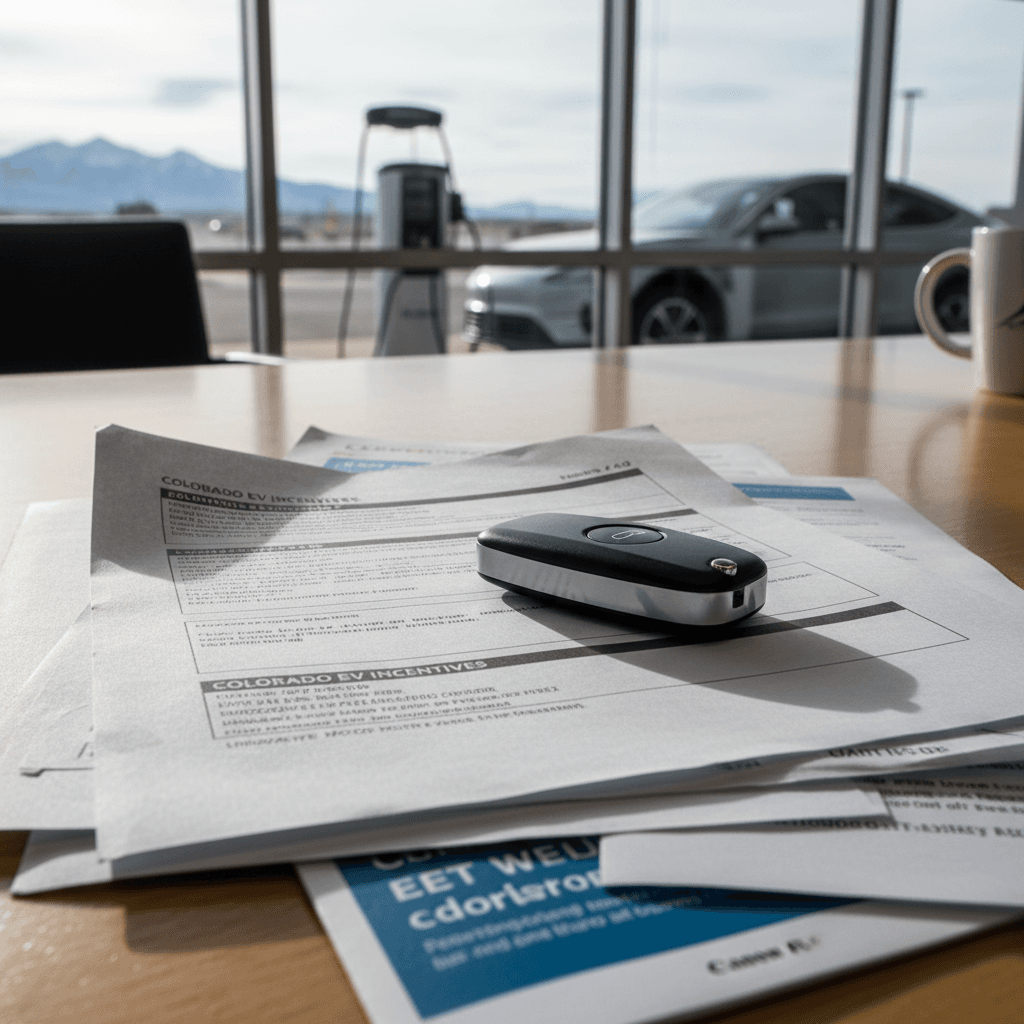
When a used EV makes more sense than chasing a lease special
As incentives thin out, the used EV market stops being an afterthought and starts becoming the main event. For many Colorado households in 2026, the best “EV lease deal” is actually a used EV with a low payment and verified battery health, especially if you’re not wedded to driving the latest model year.
Why used EVs are suddenly the value play in Colorado
Shrinking new‑car credits make used EV economics harder to ignore.
Known battery performance
With tools like the Recharged Score, you can see objective battery‑health data on a used EV. That transparency narrows one of the biggest historical gaps between leasing and buying.
Lower capital cost
Depreciation has already taken the biggest bite. Even with smaller monthly incentives, a $22,000 used EV with strong range can beat a $40,000 new EV lease handily on total monthly outlay.
Right‑sized range for Colorado
For Front Range commuters who only see I‑70 on occasional ski trips, yesterday’s 240–270‑mile EV is often more than enough, especially if it’s priced like a compact gas car.
Where Recharged fits in
Ready to find your next EV?
Browse VehiclesFor many Colorado shoppers in 2026, the smartest move looks like this: lease calculators open in one browser tab, used EV listings from a trusted marketplace in another, and a simple question, “For the next three years, which option gives me the most usable EV for the least real money out of pocket?”
FAQ: Best EV lease deals in Colorado for 2026
Frequently asked questions
Colorado in 2026 is no longer the wild west of nearly free EV leases. The best deals go to the shoppers who blend policy literacy, basic lease math, and a willingness to look hard at used EVs alongside new‑car specials. If you’re clear on your budget, range needs, and how long you truly plan to keep the car, you can still come out ahead, especially if you treat the Colorado EV credit as a lever to pull thoughtfully rather than a magic coupon. And if you decide that a well‑priced used EV with transparent battery health beats a shrinking lease incentive, Recharged is built to make that ownership path as simple and transparent as the best lease deal you almost signed.