If you’re eyeing a Ford Mustang Mach-E, you’re probably wondering what it really costs to live with one for 5–10 years. Sticker price is one thing; the long-term ownership cost, depreciation, charging, maintenance, insurance, and unexpected repairs, is where the story gets interesting.
What this guide covers
Ford Mustang Mach-E long-term cost: the quick take
Ford Mustang Mach-E 5-year ownership snapshot (new)
Across multiple 2024–2025 cost-to-own analyses, a new Ford Mustang Mach‑E lands around $56,000–$66,000 in total 5‑year ownership cost for an average U.S. driver putting ~12,000 miles a year on the clock. That number bakes in depreciation, charging, insurance, taxes, interest, maintenance and small repairs.
The punch line: the Mach‑E is inexpensive to run but not necessarily cheap to own new, because depreciation and insurance do a lot of damage up front. Where it gets compelling is used, once someone else has already paid off that early drop in value.
Rule of thumb
5-year Ford Mustang Mach-E ownership cost in numbers
Different trim levels and assumptions give you different answers, but the pattern is consistent. Looking at recent cost-to-own models for the Mustang Mach‑E, 5‑year totals for a new vehicle cluster in this neighborhood:
Typical 5-year cost breakdown: new Ford Mustang Mach-E (U.S. average)
Illustrative 5‑year ownership costs for a new Mustang Mach‑E, based on mainstream cost-to-own tools. Actual numbers vary by trim, state, and mileage.
| Category | Low estimate (5 yrs) | High estimate (5 yrs) | What it includes |
|---|---|---|---|
| Depreciation | $25,000 | $34,000 | Loss in value from new purchase price over 5 years. |
| Electricity ("fuel") | $2,600 | $6,300 | Home and some public charging for ~12,000 mi/year. |
| Insurance | $10,000 | $13,000 | Full-coverage policy, average-risk driver. |
| Maintenance | $2,600 | $3,600 | Tires, brake fluid, cabin filters, inspections, wipers. |
| Repairs (out-of-warranty) | $650 | $1,900 | Minor component failures, small fixes, not major battery work. |
| Taxes & fees | $2,600 | $3,000 | Sales tax, registration, title, EV fees where applicable. |
| Financing interest | $5,500 | $7,600 | Interest on a typical 5‑ or 6‑year loan. |
| Estimated 5‑yr total | $56,000 | $66,000 | All-in, including depreciation and operating costs. |
Use this as a ballpark, not a quote, local taxes, incentives, and driving habits can move these numbers significantly.
Notice where the heavy hitters live: depreciation, insurance and financing. Electricity and maintenance are the quiet cheap dates, their line items stay modest even as miles pile up.
Think in 5-year totals, not monthly payment
Depreciation: where most Mach-E money goes
If there’s a villain in the Mach‑E ownership story, it isn’t electrons or brake pads, it’s depreciation. Like most new EVs, the Mach‑E takes a big value hit early and then calms down.
- Expect roughly $25,000–$34,000 in value loss over the first 5 years from new, depending on trim and incentives at time of purchase.
- The steepest drop happens in years 1–3; after that, annual depreciation usually slows into the single-digit percentage range if mileage stays reasonable.
- EVs, including the Mach‑E, have seen faster price corrections than gas cars in 2023–2025 as used EV supply grows and new EV incentives shift. That’s bad news if you bought new, good news if you’re buying used now.
What this means in plain English
Scenario 1: Buy new, sell in 5 years
- Buy new Mach‑E for around $50,000–$55,000 after destination and options.
- 5‑year value drops by perhaps $25,000–$30,000.
- Effective depreciation cost: roughly $5,000–$6,000 per year.
Scenario 2: Buy used, keep 5–7 years
- Buy a 2–3‑year‑old Mach‑E in the mid‑$20,000s to low‑$30,000s.
- Another 5–7 years might only erase $10,000–$15,000 of value.
- Effective depreciation cost: often half what the original owner paid, sometimes less.
That’s why Mach‑E ownership cost stories split in two. New buyers pay for the privilege of first ownership. Used buyers, especially in 2025–2026, are getting the value play, EV technology with manageable depreciation and significantly lower running costs than a gas SUV.
Charging costs vs gas: what it actually costs per mile
The Mach‑E’s strongest financial argument is simple: electricity is cheaper than gasoline per mile for most U.S. drivers, especially if you can plug in at home overnight.
Fueling a Mach-E vs a gas SUV for 12,000 miles/year
Assuming typical U.S. energy prices and efficiency
Home charging Mach‑E
At ~3.0–3.5 miles/kWh and average residential rates, you’re often in the 3–5¢ per mile range.
That can mean roughly $350–$600 a year in electricity for 12,000 miles if most charging happens at home.
Public DC fast charging
Fast chargers can cost 2–3× home rates, pushing closer to 7–12¢ per mile.
Still competitive with gas, but frequent DC fast charging eats into the savings, and can stress the battery over time.
Comparable gas SUV
A compact or midsize SUV at ~25–28 mpg on $3.25–$3.75 gas lands around 11–13¢ per mile.
That’s $1,300–$1,600 a year in fuel at 12,000 miles, often 2–3× what a home-charged Mach‑E spends.
Annual "fuel" savings add up
Your exact cost per mile depends on your utility rate, time‑of‑use pricing, and how much you rely on public fast charging. But unless your electricity is unusually expensive and your gas remarkably cheap, the Mach‑E wins the fueling-cost fight by a wide margin.
Maintenance and repairs over 5–10 years
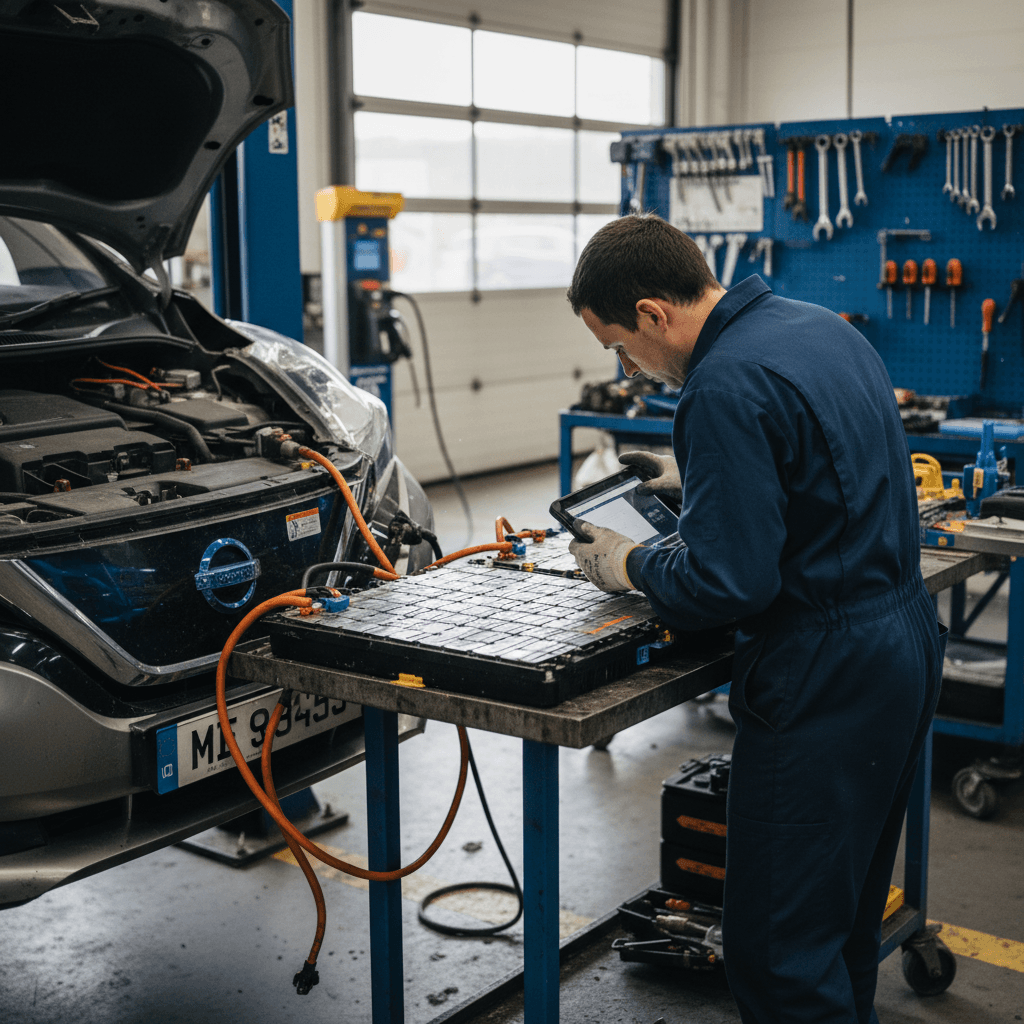
If you’re coming from a traditional Mustang or any gas SUV, the Mach‑E’s maintenance schedule feels almost eerily quiet. There’s no oil to change, no spark plugs, no exhaust system, no multi-speed automatic transmission with fluid services.
What you’ll actually maintain on a Mach-E
Tires (every 25k–40k miles)
EVs are heavy and torquey. Expect to pay for quality tires a bit more often than on a light sedan, think $800–$1,200 per full set, sometimes more for performance rubber.
Brake fluid and system checks
Even with regenerative braking, brake fluid still ages. Plan on a fluid service every 2–3 years, plus periodic inspections.
Cabin air filter & wipers
The unglamorous stuff: filters and wiper blades in the $30–$150 range at typical intervals.
Coolant for battery and drive units
The high-voltage system is liquid‑cooled. Ford sets specific intervals for coolant checks and changes, generally on a multi‑year schedule.
12‑volt battery
The little battery that runs accessories will age like any car’s, budget $150–$300 for replacement every few years.
Software updates & recalls
Over‑the‑air updates can fix bugs and improve features. Occasionally, you may visit a dealer for recall work, usually free, but do account for time.
Real-world cost data suggests annual Mach‑E maintenance averages a few hundred dollars a year over the first 5 years, substantially less than an equivalent gas SUV, which often runs $800–$1,200 annually once out of warranty.
The big outlier: high-voltage repairs
Insurance, taxes, and fees for a Mach-E
EVs like the Mustang Mach‑E often carry higher insurance premiums than comparable gas vehicles. The reasons are pretty straightforward: higher MSRP, expensive aluminum and high‑tech parts, and a still‑maturing repair ecosystem.
- Expect full‑coverage insurance for a new Mach‑E to land in the $1,800–$2,300 per year range for many typical U.S. drivers, depending heavily on your state and driving record.
- Used Mach‑Es can be slightly cheaper to insure simply because the insured value is lower, but not always, the trim level and your ZIP code often matter more than model year.
- EV-specific state fees or higher registration costs in some regions can add a few hundred dollars over 5 years, while certain states still offer reduced registration or HOV perks for EVs.
Ways to tame Mach-E insurance costs
On taxes and registration, the Mach‑E behaves like any other higher‑priced new car: sales tax at purchase and then a modest annual fee. Many of the juicy federal EV credits apply to new vehicles or specific dealer‑facilitated used sales; they’re worth checking, but you shouldn’t build your whole cost-of-ownership case on chasing a tax line.
Battery health, range loss, and big repair risks
The long-term wildcard for any EV is battery health. A Mach‑E’s high-voltage pack is designed to last well past 100,000 miles, and real‑world owners are generally seeing modest degradation, a slow, percentage‑point decline in usable range each year rather than a dramatic cliff.
- Many Mach‑E drivers report single‑digit percentage range loss over the first 3–5 years under normal use.
- DC fast charging is a blessing on road trips but can accelerate degradation if used constantly; a home Level 2 charger is much gentler for daily use.
- Ford’s battery warranty typically covers the high‑voltage battery for several years and a six‑figure mileage figure against excessive degradation or failure, details vary by model year, so always read the fine print.
“An EV’s battery isn’t like a smartphone you throw away in three years. Treated reasonably, it’s a powerplant that outlives most people’s appetite for the sheet metal wrapped around it.”
Why battery transparency matters on a used Mach-E
Why a used Mustang Mach-E often wins on cost
Put it together and the Mach‑E is a classic case of an EV that’s much more rational as a used buy than a new one. The car hasn’t changed radically year‑to‑year, but the market has: heavy early depreciation has pushed many used Mach‑Es into the price band of mainstream gas crossovers.
Used Mach-E: where the math turns friendly
How 3–6-year ownership can undercut a new gas SUV
Lower capital cost, similar running cost
Buy a 2–3‑year‑old Mach‑E and you’re starting from a far smaller check than new, while still enjoying those 3–5¢/mi “fuel” costs and lower maintenance.
Hold it 5 years and your total cost to own can undercut a brand‑new gas SUV you might otherwise cross‑shop.
Battery risk you can actually measure
With tools like the Recharged Score, you’re not guessing about battery health. You see measured degradation, fast‑charge history signals, and pricing aligned with the pack’s condition.
That transparency turns the Mach‑E from “EV gamble” into a knowable asset.
In a used‑EV‑friendly market, you’re often comparing a well‑equipped Mach‑E with strong range and tech to a brand‑new gas crossover with so‑so performance and a bigger fuel bill. From a long‑term cost point of view, that’s not a hard argument to resolve.
How Recharged lowers your Mach-E ownership risk
Recharged exists for exactly this moment in the EV market: where used electric vehicles like the Mustang Mach‑E offer terrific value, but buyers understandably worry about batteries, pricing games, and how these cars age.
What you get with a Mach-E from Recharged
Verified battery health with the Recharged Score
Every vehicle on Recharged comes with a <strong>Recharged Score Report</strong> that includes battery diagnostics, usable capacity estimates, and degradation insight, so you’re not buying blind.
Fair market pricing in a fast-moving EV market
Recharged benchmarks Mach‑E pricing against current EV and gas alternatives to keep your deal aligned with real-world market data, not just what a seller thinks they can get away with.
EV‑specialist support from search to delivery
You get human EV experts to help you compare trims, evaluate charging options at home, and understand long‑term costs for the exact Mach‑E you’re considering.
Flexible ways to buy and sell
Whether you want financing, a trade‑in, an instant offer for your current car, or a consignment‑style sale, Recharged can build a path that fits your budget and timeline.
Digital-first with real‑world backup
Search, compare, and complete paperwork online, then opt for nationwide delivery or visit the Recharged Experience Center in Richmond, VA if you want to see vehicles in person.
Turn the numbers into a specific Mach-E
Ready to find your next EV?
Browse VehiclesFord Mustang Mach-E long-term cost: FAQs
Frequently asked questions about Mach-E ownership costs
Bottom line: is a Mustang Mach-E cheap to own?
Over a full 5–10‑year run, the Ford Mustang Mach‑E is a fascinating split personality. As a new car, it’s a stylish, quick electric crossover with low running costs but a heavy dose of depreciation and insurance built into the ownership bill. As a used car, right now, in a buyer’s market for EVs, it becomes a much smarter financial play: someone else has paid for the early value drop, and you keep the savings on electricity and maintenance.
If you approach the Mach‑E like a spreadsheet and not a daydream, the winning strategy is usually this: shop used, verify the battery, and buy at a fair market price. That’s exactly the lane Recharged was built for, pairing transparent battery health data with EV‑savvy guidance so you can enjoy the Mach‑E’s performance and tech without losing sleep over the long‑term cost of ownership.