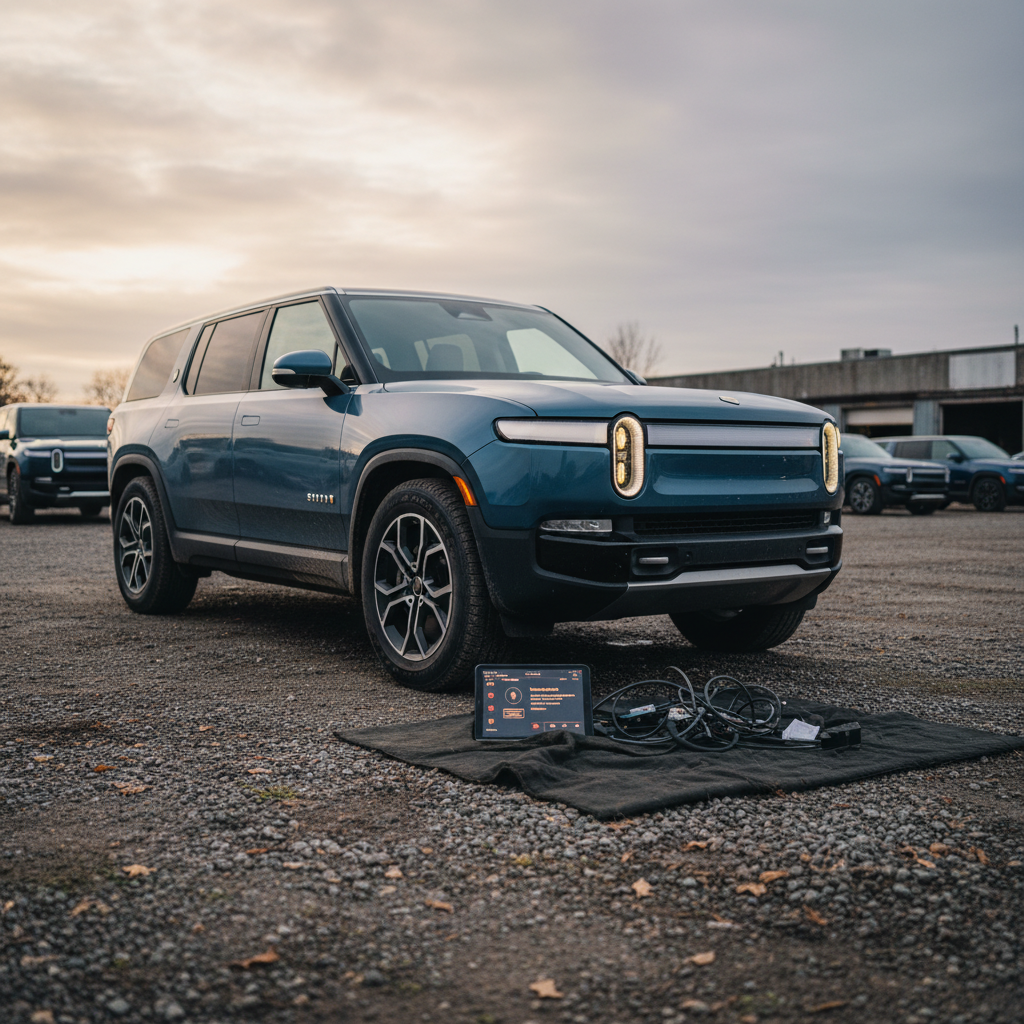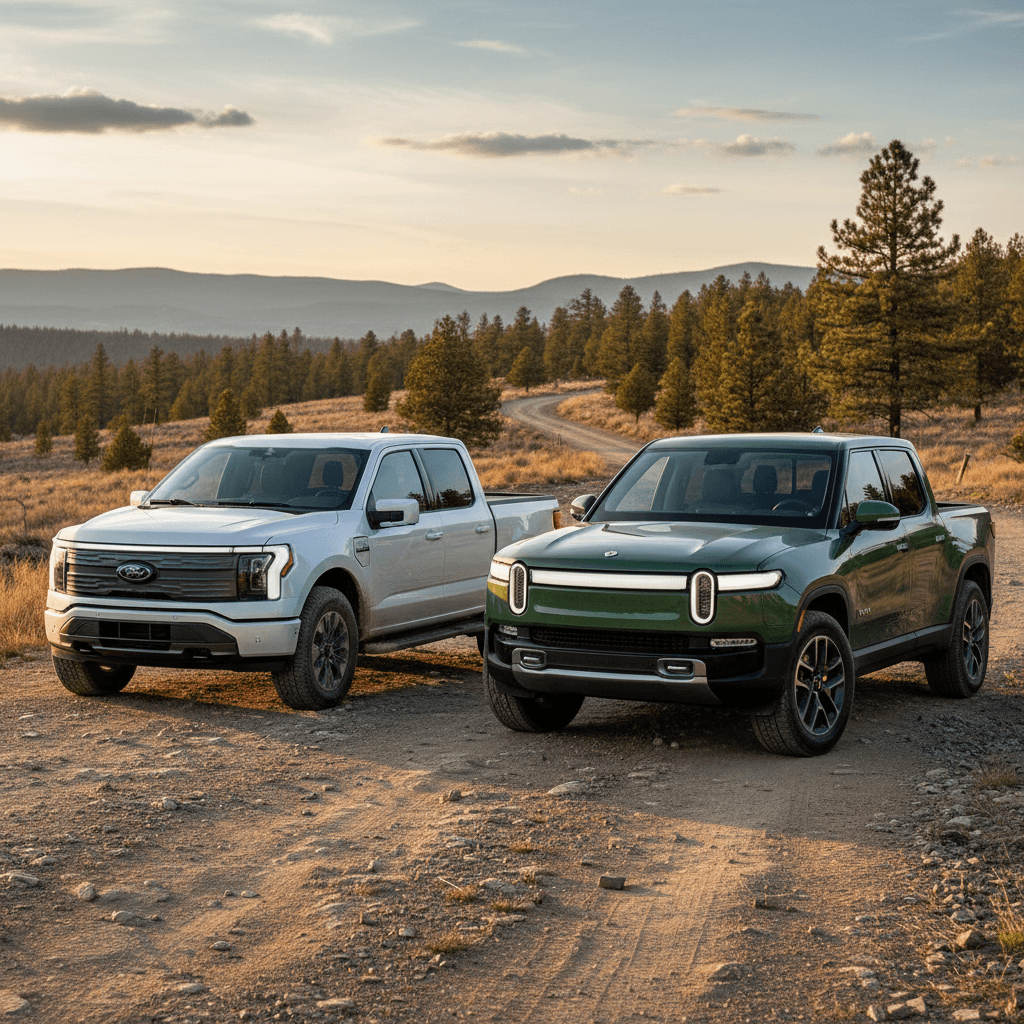
If you’re cross-shopping the Ford F-150 Lightning vs Rivian R1T and wondering which is better, you’re not alone. These are the two electric pickups most people actually see on U.S. roads, and on paper they overlap a lot, similar range, similar power, similar tow ratings. But they feel like very different trucks once you live with them.
Big picture
Ford F-150 Lightning vs Rivian R1T: quick overview
How these two trucks are positioned
Same idea, very different personalities
Ford F-150 Lightning: electric F-150 for daily life
The Lightning rides on the F-150 frame, feels familiar to anyone who’s driven a full-size Ford, and prioritizes cab space, bed length, and work-friendly features like Pro Power Onboard. It’s the better choice if you’re coming out of a conventional pickup and want that same vibe, just quieter and quicker.
Rivian R1T: adventure-first electric truck
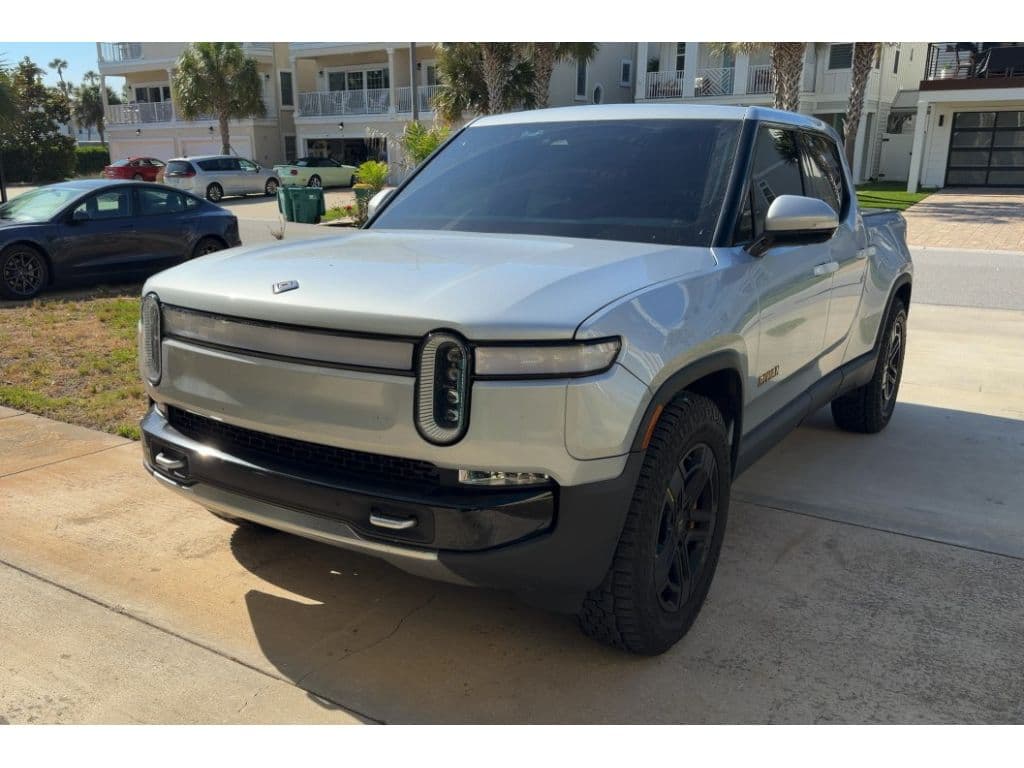
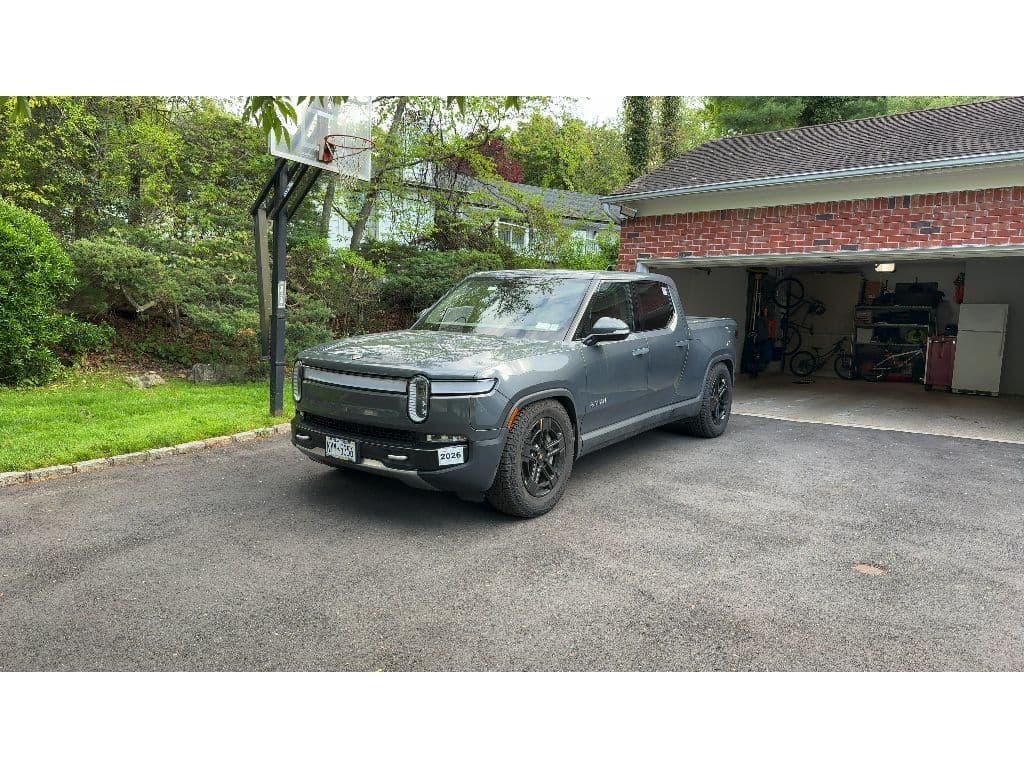
The R1T is shorter overall with a smaller bed but adds serious off-road hardware, clever storage like the gear tunnel, and a more futuristic cabin. It’s the truck for drivers who care more about trail capability and road-trip fun than maximizing bed volume.
Headline numbers that shape this matchup
Key specs at a glance
Ford F-150 Lightning vs Rivian R1T: key specs compared
Approximate specs for popular configurations. Exact numbers vary by model year, wheel/tire choice, and options.
| Spec | Ford F-150 Lightning (Extended Range) | Rivian R1T (Dual-Motor Max Pack) |
|---|---|---|
| Power | ~580 hp, AWD | ~533 hp, AWD |
| 0–60 mph | ~4.0 sec | ~3.5–3.7 sec (Performance), ~4.5 sec (Dual) |
| Max EPA range | ~320 mi | Up to ~410 mi |
| Max towing | 10,000 lbs | Up to 11,000 lbs |
| Bed length | 5.5 ft | 4.5 ft |
| Frunk volume | ~14 cu ft | ~11 cu ft |
| Max ground clearance | ~8.9 in | Up to ~14.9 in (off-road mode) |
| DC fast-charge peak | ~150 kW | Up to ~220 kW+ (pack-dependent) |
Always confirm exact specs for the specific truck you’re considering, especially on the used market.
Spec sheet vs reality
Range and charging: how far will they really go?
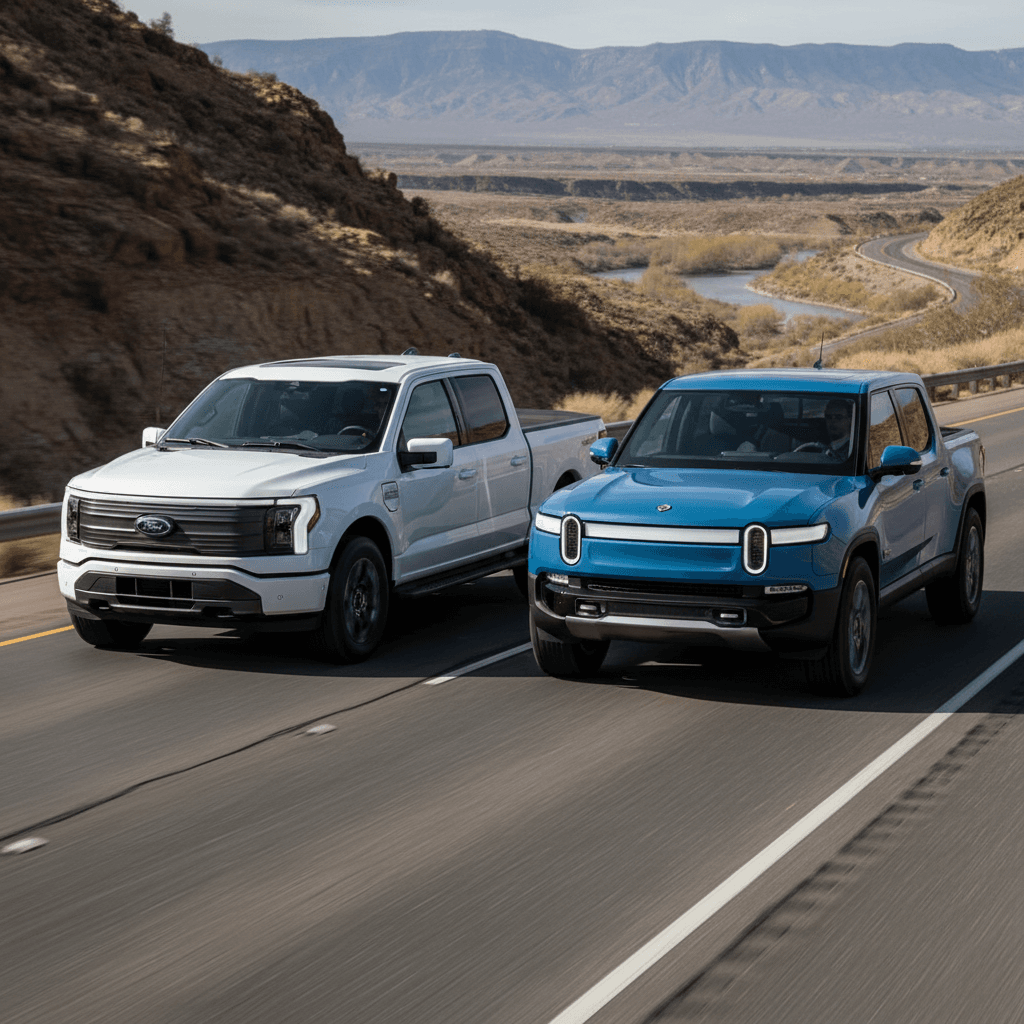
On paper, the Rivian R1T can simply be configured for more range. With the Dual-Motor powertrain and Max Pack battery, Rivian quotes roughly 400+ miles of EPA range in its most efficient trims. By contrast, an extended-range Ford F-150 Lightning hovers around 320 miles of EPA range when new, depending on trim and wheels. Real-world results will vary, but the R1T has the upper hand if your priority is absolute distance per charge.
Ford F-150 Lightning range reality
- Standard-range battery trucks are commuter-friendly but feel tight for long highway trips.
- Extended-range models can be comfortable in the 200–240-mile real-world window at highway speeds without towing.
- Towing heavy? Many owners report roughly half the rated range when pulling near max capacity, especially at 70+ mph.
- Ford’s routing and trip-planning tools have improved, but still feel more like a software update bolted to a traditional truck.
Rivian R1T range reality
- Standard and Large packs are broadly comparable to Lightning ER in usable highway range.
- The Max Pack Dual-Motor can offer genuinely long legs, 300+ miles at highway speeds is realistic when you’re not loaded down.
- Towing hits range here too, but the larger battery gives you more buffer before you reach “white-knuckle” territory.
- Rivian’s built-in trip planner and integration with charging networks feel more EV-native and polished.
Home vs public charging
- The Lightning is more dependent on large, easy-access public chargers that fit full-size trucks and trailers.
- The R1T’s smaller footprint makes it easier to maneuver into tight charging spots, especially in older stations.
Towing, hauling, and real-world truck utility
If you think “truck” and immediately picture a trailer in the mirror or sheets of plywood in the bed, read this section twice. Both the Lightning and R1T can tow and haul real weight, but they serve very different use cases.
How they handle work and weekend duty
Payload, towing, and bed usability
Ford F-150 Lightning: real full-size bed
- 5.5-foot bed with a familiar F-150 footprint, much easier for 4x8 sheets, landscaping supplies, or dealer-installed bed accessories.
- Higher payload in many trims than the R1T, but still lower than comparable gas F-150s because of battery weight.
- Up to 10,000 lbs towing when properly equipped, with BlueCruise available on some trims for hands-free highway assist.
- Range takes a beating with heavy trailers, but Ford’s trailer profiles, weight estimates, and tow-specific drive modes help make it predictable.
Rivian R1T: big towing, smaller bed
- Tow rating up to 11,000 lbs in certain configurations, impressive for a mid-size-ish footprint.
- Shorter 4.5-foot bed is fine for bikes, coolers, and camping gear, but less ideal as a daily work truck.
- Air suspension can level the truck with a trailer hooked up, improving stability and comfort.
- Still suffers the same EV-towing range penalty as Ford, but extra Max Pack capacity helps cushion the hit.
The EV towing reality check
On-road comfort vs off-road capability
Here’s where these trucks really diverge. The Lightning is tuned like a comfortable highway cruiser with a big cab, soft ride, and predictable steering. The R1T was engineered from the start to go places most owners will never take it, with multi-mode air suspension, advanced traction control, and serious underbody protection.
Lightning: quiet, familiar, confidence-inspiring
- Feels like a well-optioned F-150 that just happens to be extremely quick and quiet.
- Excellent for family road trips and long interstate runs; rear seat space rivals or beats many full-size SUVs.
- Lower ground clearance and more modest off-road hardware mean it’s happiest on pavement, dirt roads, and mild trails.
- Turn-in and body motions are predictable, which matters when you’re not used to the weight of an EV pickup.
R1T: legit off-roader with sports-car punch
- Height-adjustable suspension offers massive ground clearance in off-road modes and hunkers down on the highway.
- Available quad-motor setups (on older builds) and tuned dual-motor systems can send power precisely where it’s needed on loose surfaces.
- Shorter overall length and wheelbase make it easier to maneuver on tight trails and in city parking garages.
- The trade-off is a slightly busier ride on some surfaces and less rear-seat stretch-out room than the Ford.
Adventure winner: Rivian R1T
Interior, tech, and clever storage
Climb inside and you’ll see the philosophy split again: Ford leans on F-150 familiarity with big knobs and a traditional truck layout, while Rivian gives you something closer to a design-forward luxury EV.
Cabin feel and storage tricks
Both are practical, but they solve problems differently
Cabin design
Lightning: Feels like a modern F-150 with a big central screen, physical controls, and straightforward materials that hold up to family life and job sites.
R1T: Minimalist dash with dual screens, high-end finishes, and a more lounge-like vibe. It feels special, but some drivers miss physical buttons for core functions.
Frunk and bed
Lightning: Huge, deep frunk that excels as a mobile cooler or lockable storage; 5.5-foot bed is work-ready.
R1T: Smaller frunk but still handy; 4.5-foot bed is fine for adventure gear but not ideal for construction runs.
Clever extras
Lightning: Pro Power Onboard turns the truck into a rolling generator, great for job sites, tailgates, and power outages.
R1T: Gear tunnel, available camp kitchen (on some builds), and integrated accessory ecosystem make it a basecamp on wheels.
Think about how you really use storage
Pricing and value, especially on the used market
Sticker prices have bounced around a lot since both of these trucks launched, and by early 2026 Ford has ended production of the current all-electric Lightning in favor of a future extended-range version. That makes the used market more important than ever if you want either truck without waiting for the next generation.
Ford F-150 Lightning pricing reality
- Early Pro and XLT trucks started in the $40k–$50k range when new, but later years crept higher as equipment and batteries evolved.
- On the used market, you’ll see a wide spread based on battery size, trim (Pro vs XLT vs Lariat vs Platinum/Flash), and whether features like Pro Power and Max Tow are included.
- Because Ford sold more Lightnings than Rivian sold R1Ts, there’s usually more inventory and more price variation to choose from.
Rivian R1T pricing reality
- New builds skew expensive, especially with Large or Max Pack and upgraded motors.
- Used R1Ts still carry a premium in many markets because supply is limited and demand among enthusiasts is strong.
- Adventure and Launch Edition trucks with quad-motor setups often sit at the top of the used-price ladder, while dual-motor trucks can be more approachable.
Depreciation and value
Ownership experience, reliability, and support
Electric trucks are still early in their lifecycle, so we don’t have 15 years of data the way we do with gas pickups. But we do know some patterns from owner surveys and early reliability reports.
- Both trucks have powerful battery packs and dual-motor or quad-motor drivetrains that so far look robust, but software bugs and minor hardware issues are more common than major powertrain failures.
- The Lightning benefits from Ford’s huge dealer network, which can be a lifesaver if you live far from a big city, even if every dealer isn’t EV-perfect yet.
- Rivian has fewer service centers and relies more on mobile service and over-the-air updates, but owners often praise the brand’s responsiveness and constant software improvements.
- Insurance on both trucks can be higher than comparably priced gas pickups because of repair complexity and parts costs, worth getting quotes before you buy.
- In recent EV-owner satisfaction surveys, both the Lightning and R1T score strongly for comfort and driving enjoyment; owners tend to love how they drive even if they have gripes about charging or software quirks.
Battery health on used trucks matters
Which is better for you: F-150 Lightning or Rivian R1T?
You can’t answer “which is better” in a vacuum. You answer it in your driveway, your job site, your trailhead. Here’s how to match each truck to a real owner, not a spec sheet.
Quick guide: which electric truck fits you?
You daily-drive a truck and haul family more than gear
Pick the <strong>Ford F-150 Lightning</strong>. The full-size cab, longer bed, and conventional ergonomics make it an easier transition from a gas F-150. It’s ideal if most of your miles are commuting, kid duty, and weekend projects with only occasional towing.
You live for camping, overlanding, and trailheads
Pick the <strong>Rivian R1T</strong>. Adjustable air suspension, serious off-road modes, and clever storage like the gear tunnel make it perfect for kayaks, mountain bikes, and remote trailheads. Think of it as an electric adventure rig that happens to have a bed.
You tow heavy, but not very far
Either truck can work, but the <strong>Lightning</strong> may be easier to live with if you value bed space and dealer support. Just accept that you’ll be planning your charging stops carefully and keeping tow distances modest in a single day.
You road trip long distances without towing
Leaning toward the <strong>R1T</strong>, especially with the Max Pack. The extra buffer of range plus a still-growing charging network makes it less stressful to string together long days at highway speeds.
You’re budget-conscious and want maximum truck for the money
A <strong>used F-150 Lightning</strong> often delivers more space and capability per dollar than a used R1T, simply because there are more of them on the market and Ford ran more aggressive pricing at times.
You want something that feels special every time you walk up to it
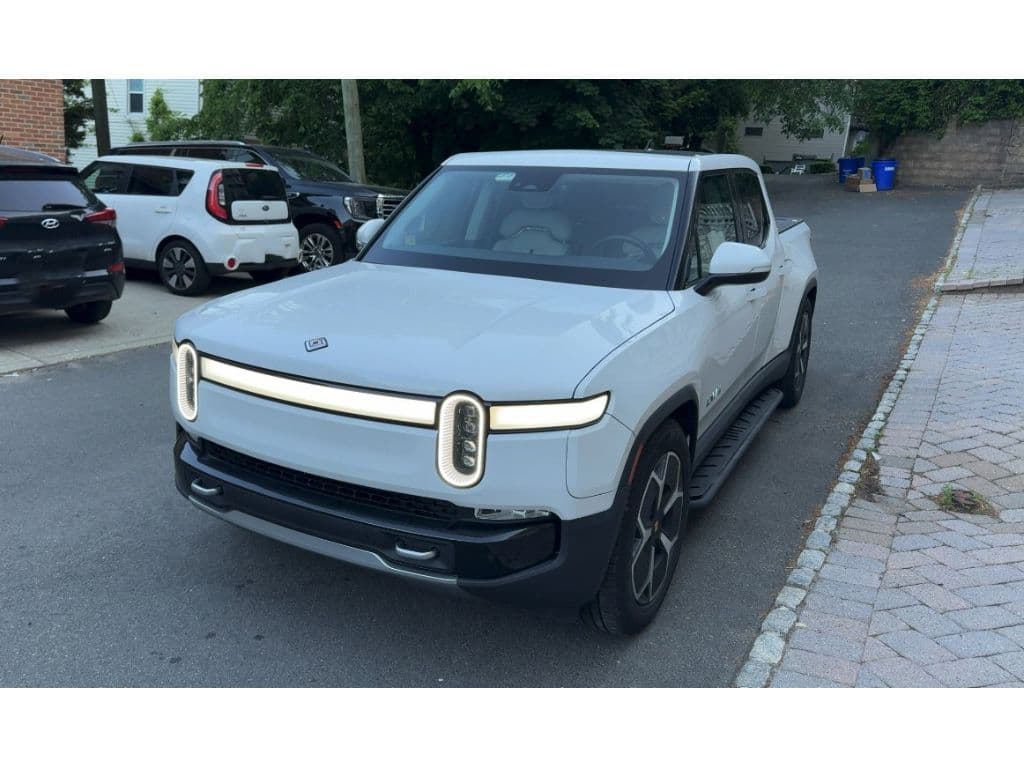
That’s the <strong>Rivian R1T</strong>. From the lighting signature to the interior design and software experience, it feels more like a purpose-built EV than an electrified version of a traditional truck.
Buying a used Lightning or R1T with confidence
Because the current Lightning has ended production and Rivian continues to iterate its hardware and software, the used market is where many shoppers will land, especially if you want value or specific early features like quad-motor R1Ts. This is exactly where a little extra diligence pays off.
What to look for in a used electric truck
Beyond a quick test drive
Battery health and range today
Ask for documentation of current usable range and any battery work. Range estimates at 100% charge, trip logs, and any diagnostic reports tell you more than odometer miles alone.
At Recharged, every truck gets a Recharged Score and battery health report so you can see how the pack is holding up before you sign anything.
Options, software, and support
With these trucks, software and options matter as much as paint color. Confirm whether key packages, tow, Pro Power, off-road upgrades, driver-assist features, are actually on the VIN you’re considering.
A marketplace that specializes in used EVs, like Recharged, can help you decode trims, options, and over-the-air update histories so you know exactly what you’re buying.
How Recharged can help
Ready to find your next EV?
Browse VehiclesFord F-150 Lightning vs Rivian R1T FAQ
Frequently asked questions
In the end, there is no universal winner in the Ford F-150 Lightning vs Rivian R1T debate, only the truck that best matches how you actually live. The Lightning is the electric F-150 you already know how to use, brilliant for daily life with a bed full of lumber or a cab full of kids. The R1T is the adventure rig with the bigger personality and bigger potential range, built to go places you used to reserve for gas 4x4s. If you want help making that call on a real truck with a real VIN, Recharged can put both options on the same screen, battery health, pricing, and ownership costs included, so you can choose with your head and your gut.