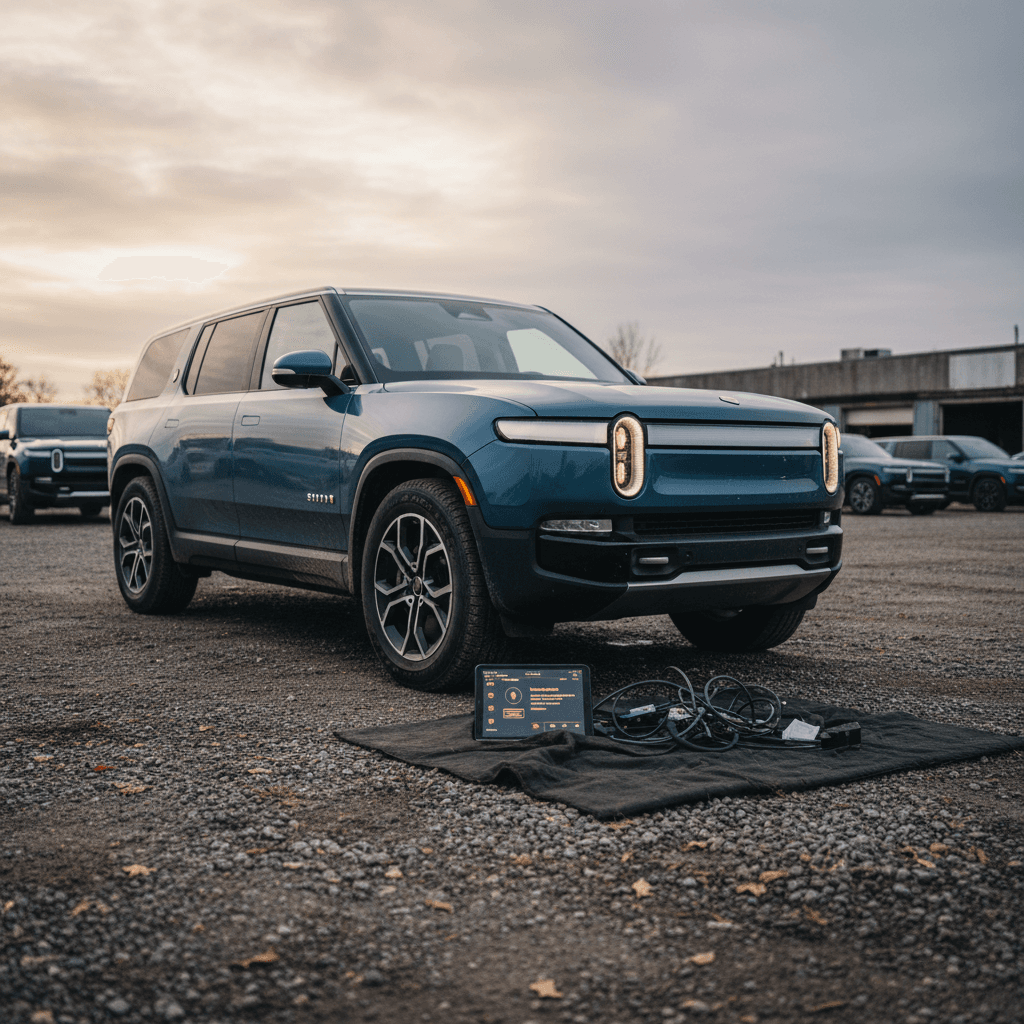
If you’re eyeing a used 2023 Rivian R1S, you’ve probably also heard about early Rivian teething issues, everything from recalls and software bugs to suspension wear and trim problems. The good news: most 2023 R1S problems are manageable if you know what to look for. This guide walks through the biggest concerns, what’s been fixed by recalls or software updates, and how to shop a used R1S with confidence.
Snapshot: 2023 Rivian R1S reliability in 2026
Should you worry about 2023 Rivian R1S problems?
Rivian is still a young automaker, and the 2023 R1S sits near the front of the company’s learning curve. Consumer reliability surveys put Rivian at or near the bottom of brand rankings in 2025, and the R1S has accumulated multiple recalls in a short window. At the same time, owner satisfaction scores are high, many drivers genuinely love the way the R1S drives, looks, and functions as a family adventure SUV.
So the right way to think about 2023 Rivian R1S problems is risk management, not panic. If you understand the common issues, verify that recall work is complete, and get objective battery and mechanical data, a used R1S can still be a smart buy, especially as prices soften in the used EV market.
2023 Rivian R1S reliability at a glance
How reliable is the 2023 Rivian R1S?
Big‑picture, most data points to the 2023 R1S having average mechanical reliability but below‑average overall reliability once you include software, electronics, trim, and the number of recalls. Independent surveys show the R1S roughly in the middle of the pack for its model year, even as Rivian as a brand ranks near the bottom due to issues across its lineup.
The pattern looks familiar if you’ve watched Tesla’s early years: innovative EV hardware paired with first‑generation manufacturing and software that still need refinement. Problems are rarely catastrophic failures of the main battery or drive units; they’re more often annoyances, warranty items, or safety defects addressed via recall or over‑the‑air (OTA) updates.
Reliability lens for a used R1S
2023 Rivian R1S recalls and safety issues
By early 2026, the R1T/R1S family has been the subject of a string of recalls, several of which apply directly to 2023 R1S models. These cover everything from lighting to airbag trim and driver‑assist software. Most are fixed either at no cost at a Rivian Service Center or via OTA updates, but you absolutely want proof that any used R1S you’re considering is up to date.
Key recalls that may affect 2023 Rivian R1S models
This is not an exhaustive list; always run the VIN through NHTSA and Rivian before you buy.
| Issue | Model years affected (incl. 2023) | Risk if unfixed | Typical fix |
|---|---|---|---|
| Reverse light visibility | 2022–2023 R1S | Reduced rear visibility to other drivers when backing up | Repair or replace reverse lights to meet standards |
| Headlight aim / performance | 2023–2024 R1S/R1T/EDV | Insufficient road illumination; could increase crash risk at night | Inspect and adjust headlight alignment |
| B‑pillar / C‑pillar trim clips | 2022–2024 R1S/R1T | Trim may interfere with side curtain airbag deployment | Replace pillar trim panels |
| Hands‑Free Highway Assist (HWA) software | Later R1S/R1T years (primarily 2025) | Lead vehicle may not be detected properly while HWA is active | OTA software update to driver‑assist system |
| Defrost/defog controls disabled by software | 2022–2023 R1S/R1T | Loss of defrost/defog can reduce visibility | OTA update to restore HVAC control functions |
| Rear suspension toe‑link service procedure | 2022–2025 R1S/R1T | Improper reassembly could lead to toe‑link separation and loss of control | Inspection and replacement of rear suspension parts using new procedure |
Ask for documentation that these recalls have been completed before finalizing a used purchase.
Don’t skip the VIN recall check
Most common 2023 Rivian R1S problems
Owner forums, survey data, and service records paint a fairly consistent picture of 2023 Rivian R1S problems. Below are the main categories you’re likely to see mentioned, and what they mean for a used buyer.
Software and driver‑assist bugs
Software is both a strength and a weak point for the R1S. Rivian pushes frequent OTA updates, which can add features and fix issues, but occasionally introduce new problems. Owners have reported bugs that impact climate control, charging settings, and driver‑assist behavior. Later recalls even targeted Highway Assist software because of how it detected lead vehicles.
- Glitches in the HVAC interface, including defrost/defog controls that could be deactivated by a bad software build (later addressed via OTA recall).
- Driver‑assist systems (like adaptive cruise and lane‑keeping) behaving inconsistently after certain updates until Rivian pushed follow‑up patches.
- Infotainment lag, random reboots, and occasional Bluetooth or camera quirks, annoying more than dangerous, but something you’ll feel on a daily commute.
What to test on your drive
Suspension, half shafts, and steering
The R1S is heavy, fast, and often driven in its higher‑load ride modes. That’s fun, but it also puts stress on the suspension and driveline. Some 2023 R1S owners have reported premature wear in half shafts, dampers, and control arms, sometimes leading to repeated replacements under warranty.
Common suspension and steering complaints
Not every 2023 R1S has these problems, but they’re worth screening for.
Half‑shaft clicking or vibration
Repeated reports of front half‑shaft noise, especially under acceleration or in certain height modes. Some owners have had multiple sets replaced under warranty.
Air suspension behavior
Isolated cases of droop overnight, uneven ride height, or harshness until software or hardware updates were applied.
Alignment & tire wear
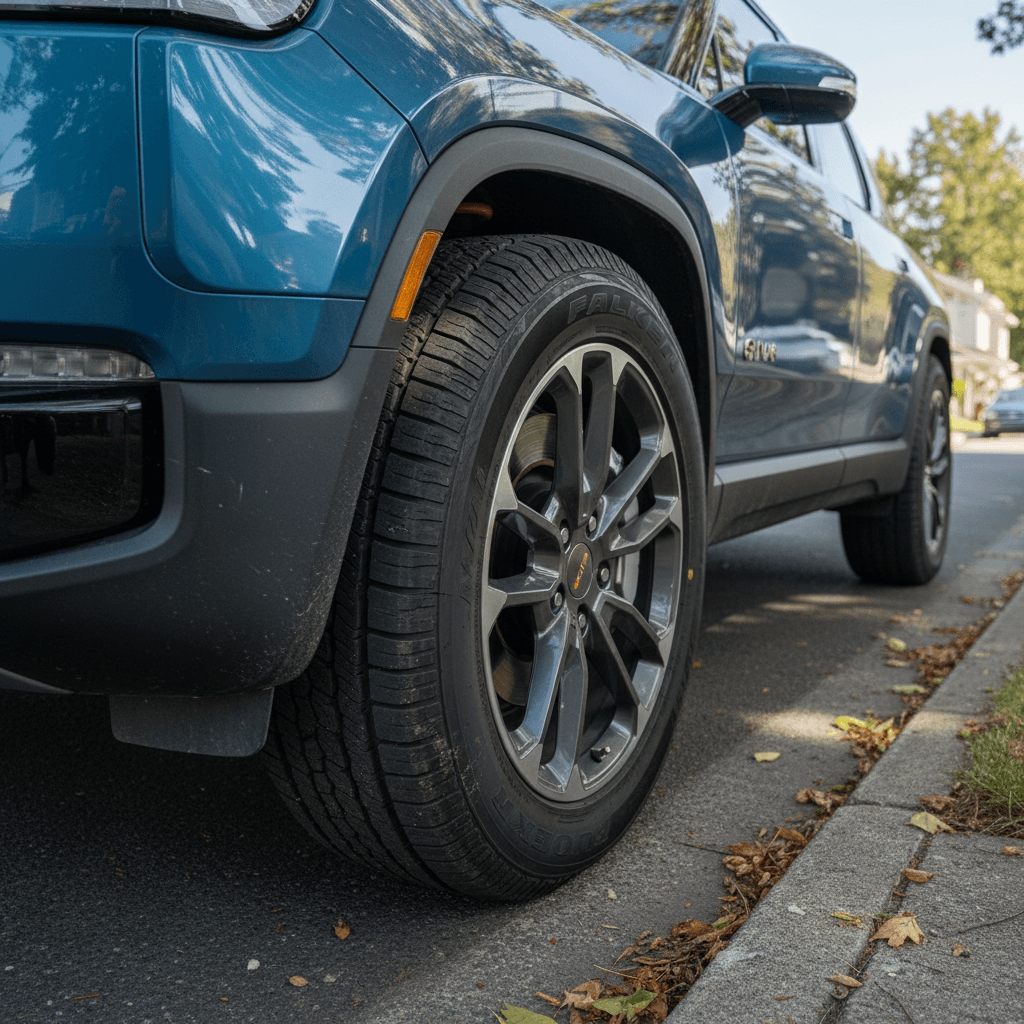
Heavy curb weight plus powerful torque can amplify alignment issues. Uneven tire wear or drift on the highway are red flags on a test drive.
How to check suspension health
Fit and finish issues, noises, and water leaks
Early Rivians were known for inconsistent panel gaps, rattles, and wind noise, and those issues haven’t disappeared completely by 2023. Owner anecdotes include loose trim, misaligned hatches, dash rattles, and, more seriously, instances of water intrusion around the driver’s floor area or doors after heavy rain.
What you might see
- Panel alignment: Tailgate or doors sitting slightly proud or recessed, sometimes chipping paint at the edges.
- Wind noise: Whistling around the A‑pillars, mirrors, or panoramic glass at highway speeds.
- Interior rattles: From the dash, rear hatch, or third‑row area over bumps.
Why it matters
- Cosmetic vs. structural: Some issues are purely cosmetic; others can lead to water leaks or long‑term rust if ignored.
- Warranty leverage: Many trim and seal problems are still covered on a 2023 under Rivian’s basic warranty, if they’re documented in time.
- Resale value: Clean bodywork and a quiet cabin help preserve value in a growing used‑EV market.
Watch for water under the mats
Charging and EV‑specific complaints
Most 2023 R1S models charge as advertised, but owners still flag a few pain points: compatibility quirks with certain home chargers, slow Level 1 charging expectations, and the occasional DC fast‑charging session that stalls or underperforms versus the station’s rating.
- Some owners with third‑party Level 2 wall boxes (including Tesla Wall Connectors using adapters) have seen charge rates fall after certain software updates, requiring workarounds in the Rivian app or charger settings.
- Public DC fast chargers, especially older 50 kW units, may deliver slower real‑world speeds than the station advertises, which can be mistaken for a vehicle problem when it’s really a network limitation.
- Level 1 (120‑volt) charging can feel painfully slow on such a large battery; getting only 0.5–2 miles of range per hour is normal, not necessarily a defect.
Normalize your charging expectations
Battery health and long‑term durability
So far, there’s no widespread evidence of catastrophic battery failures specific to the 2023 R1S. Reported issues tend to involve range estimation and charging behavior rather than dead packs. Later Rivian generations introduced new LFP battery options with their own calibration quirks, but those are mostly on newer (Gen 2) vehicles rather than 2023s.
- As with any large EV, some gradual capacity loss is normal. A healthy 2023 R1S with 30,000–40,000 miles might realistically deliver less range than the original EPA sticker, especially in cold weather or at higher speeds.
- Range‑estimate swings after software updates are common in the EV world. Distinguish between calibration issues (software learning your use) and true degradation (battery losing capacity).
- Rivian’s high‑voltage battery warranty (8 years / 175,000 miles for many configurations) provides important protection, but you still want independent data on current battery health.
Why an independent battery test matters
2023 Rivian R1S vs. other used luxury EV SUVs
If you’re cross‑shopping a used 2023 R1S against other electric SUVs, think Tesla Model X, Mercedes EQS SUV, BMW iX, or Kia EV9, you’re really trading off reliability risk against capability and character.
How the 2023 R1S compares in the real world
A simplified, shopper‑focused view, not a lab test.
Off‑road & adventure
The R1S is arguably best‑in‑class off road, with impressive clearance, drive modes, and real‑world trails capability. Most rivals skew more street‑luxury than dirt‑ready.
Daily livability
Cabin layout, storage, and third‑row access are solid. Some German and Korean competitors feel more refined inside, with fewer rattles and more traditional controls.
Reliability risk
Expect the R1S to have more software quirks and trim/suspension issues than mature brands. In exchange, you get unique design and capability, but you should lean on warranty and inspection data.
Who the 2023 R1S is best for
Pre‑purchase checklist for a used 2023 Rivian R1S
Before you buy any used R1S, especially a 2023 build, run through a structured checklist. That’s how you separate a well‑sorted truck from one that’s about to move its problems from the previous owner to you.
Used 2023 Rivian R1S inspection checklist
1. Verify recall completion
Use the VIN to pull NHTSA and Rivian recall records. Confirm that lighting, airbag‑trim, HVAC, and any suspension‑related campaigns show as completed, and ask for service receipts where possible.
2. Review full service history
Look for repeated visits for the same complaint, especially suspension noise, water leaks, or software bugs that required multiple attempts to solve. A clear, documented history is a good sign.
3. Get a professional underbody and suspension inspection
Have a shop familiar with EVs check half shafts, control arms, bushings, shocks/struts, and toe‑links, plus tire wear patterns and alignment. The goal is to catch any expensive wear items early.
4. Test software and driver‑assist systems
On your test drive, fully exercise Highway Assist, adaptive cruise, lane‑keeping, cameras, parking sensors, and the infotainment system. Note any glitches, lag, or warning messages.
5. Check for water leaks and wind noise
Inspect under mats for dampness, look at door and hatch seals, and listen for whistles or buffeting above 65 mph. Minor noise can be subjective; obvious leaks are not.
6. Confirm healthy charging behavior
Charge on Level 2 if possible and watch the rate. Try a DC fast charger if convenient. Make sure the vehicle negotiates expected speeds and doesn’t throw charging errors.
7. Demand objective battery‑health data
Ask the seller for any prior battery reports, and use a marketplace like <strong>Recharged</strong> that includes an independent health report with every EV. Don’t rely on a dashboard range guess alone.
How Recharged evaluates used Rivian R1S models
Because the 2023 Rivian R1S is such a high‑interest but high‑complexity vehicle, Recharged bakes extra scrutiny into every R1S we list on our marketplace. Our goal is to surface the genuine gems and clearly flag anything that needs attention, so you’re not buying blind.
What’s different about buying a used R1S on Recharged
Every vehicle gets a Recharged Score report and EV‑specialist review.
Recharged Score battery diagnostics
We run specialized tests on the high‑voltage pack to assess capacity and health, and summarize the results in an easy‑to‑understand Recharged Score so you can compare one R1S against another.
EV‑focused inspection
Our inspections go beyond a generic multi‑point checklist to look at common Rivian trouble spots, suspension components, seals, software behavior, charging performance, and more.
Digital buying, delivery, and support
You can search, finance, and complete your purchase entirely online, trade in your current vehicle, and get nationwide delivery, with EV specialists on hand to answer questions about R1S ownership.
Ready to find your next EV?
Browse VehiclesWhy that matters for a complex EV
2023 Rivian R1S problems: FAQ
Common questions about 2023 Rivian R1S problems
Is a used 2023 Rivian R1S worth it?
If you’ve read this far, you know that 2023 Rivian R1S problems are real, but they’re also nuanced. This is a remarkably capable, enjoyable electric SUV that happens to come from a young automaker still maturing its manufacturing, software, and service model. For the right buyer, that trade‑off is absolutely worth it.
The key is to avoid rolling the dice. Make sure recalls are closed, get a thorough EV‑focused inspection, and insist on objective battery‑health data rather than gut feelings. If you’d rather not assemble all of that yourself, start with R1S listings on Recharged, where every vehicle includes a Recharged Score report, fair‑market pricing, financing options, and expert guidance from first click to delivery. That way, you can enjoy the R1S’s personality and performance, without losing sleep over what might be lurking under the surface.