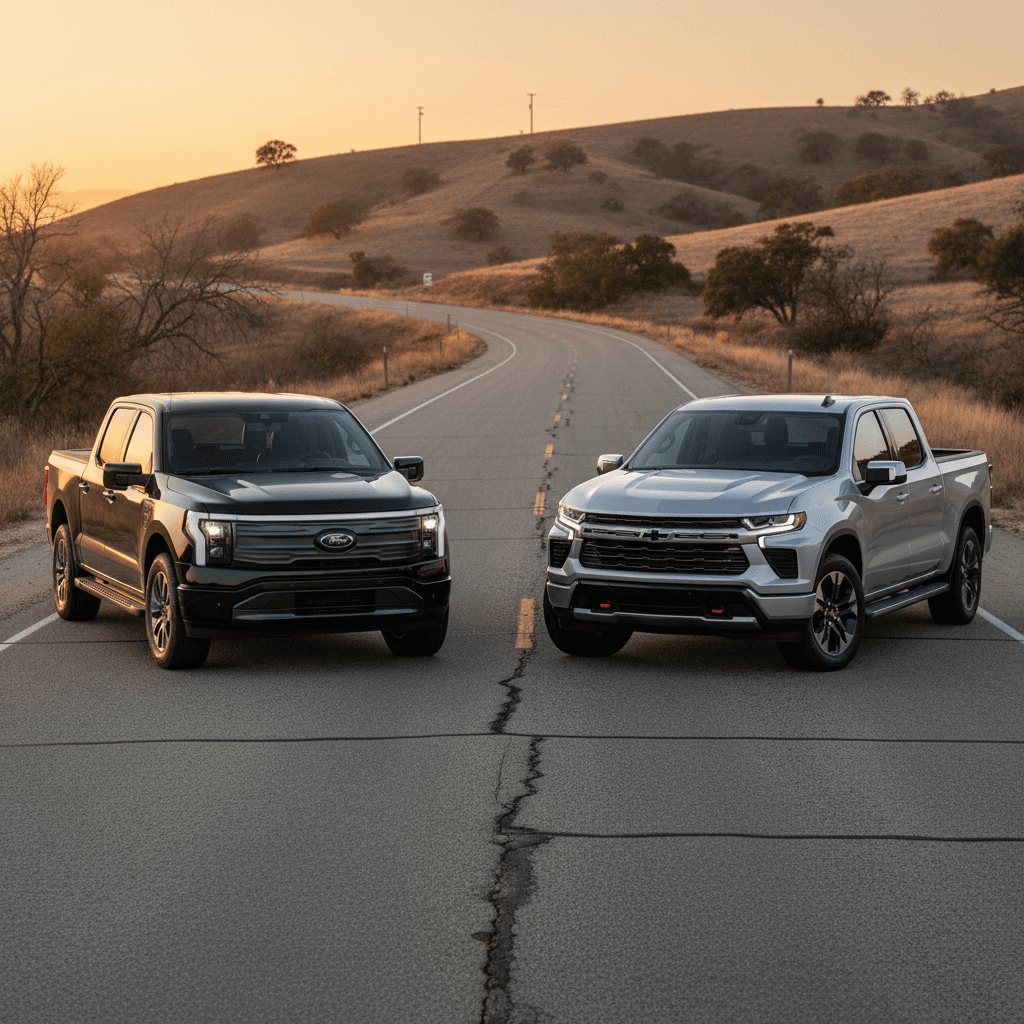
If you’re cross-shopping the Ford F-150 Lightning vs Chevrolet Silverado EV, you’re not just choosing between Ford and Chevy. You’re choosing between two fundamentally different takes on the electric pickup: one that starts with the familiar F-150 formula, and one that blows up the traditional truck playbook with a clean-sheet EV platform.
The short version
Overview: F-150 Lightning vs Silverado EV in 2025
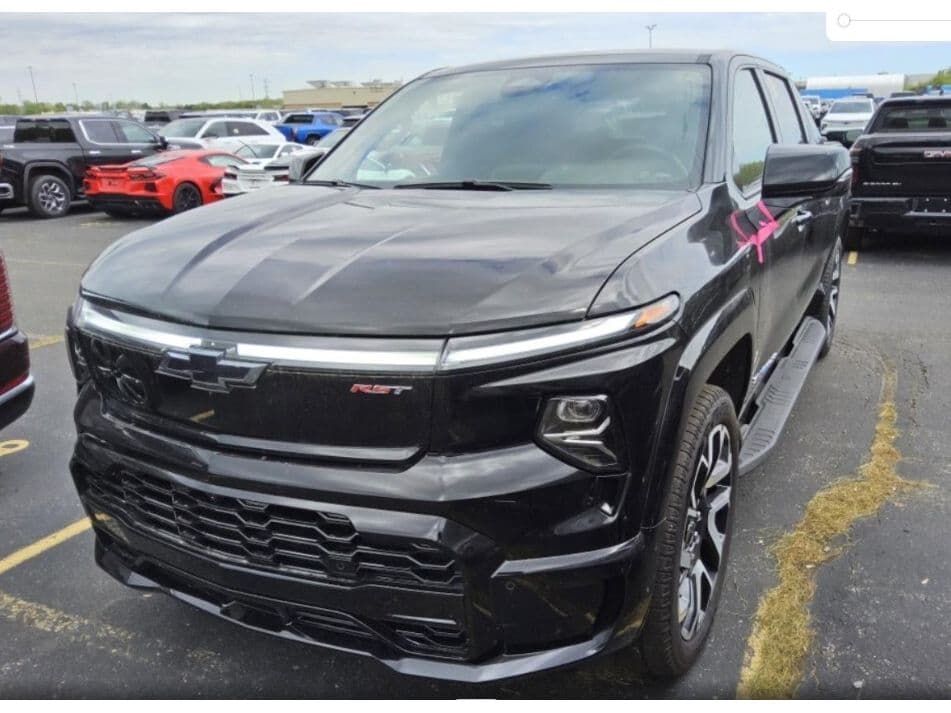
By early 2025, the F-150 Lightning has been in customer hands for several model years and has a meaningful used market footprint. You’ll find Pro, XLT, Lariat and Platinum trims in a range of mileages and configurations. The Silverado EV, by contrast, is newer and rarer: most trucks on the road today are WT work trucks and RST First Edition models, with more trims (like Trail Boss and LT) ramping up through 2025.
Ford builds the Lightning by adapting the aluminum F-150 body and frame for an EV drivetrain. Chevy went the other way, putting a Silverado-style body on GM’s dedicated Ultium skateboard platform, shared with vehicles like the Hummer EV. The result is that the Lightning feels instantly familiar to truck traditionalists, while the Silverado EV leans into long range, huge wheelbase, and a very un‑F‑150‑like midgate and cabin layout.
Production and availability are moving targets
Core Specs at a Glance
Exact numbers vary by model year and trim, but most shoppers are really choosing between a mid‑200s to low‑300s‑mile F-150 Lightning and a 300–400+‑mile Silverado EV. Here’s a simplified snapshot using representative 2024–2025 configurations you’re likely to encounter:
Ford F-150 Lightning vs Chevrolet Silverado EV: Key Specs
Representative specs for common 2024–2025 trims you’re likely to see new or used. Always confirm exact numbers for the specific truck you’re considering.
| Truck / Configuration | Battery (approx) | EPA Range (best listed trim) | 0–60 mph (best listed) | Max Towing (when properly equipped) | Max Payload (approx) |
|---|---|---|---|---|---|
| F-150 Lightning ER XLT/Lariat | ~131 kWh usable | Up to ~320 miles | Mid‑4s seconds | Up to ~10,000 lb | ~2,000 lb |
| F-150 Lightning SR Pro/XLT | ~98 kWh usable | ~230–240 miles | ~5 sec range | Up to ~7,700 lb | ~2,000 lb |
| Silverado EV WT (larger pack) | ~200 kWh est. | ~450 miles | Quick but work-focused | 10,000 lb | ~1,400–1,800 lb |
| Silverado EV RST (Max pack) | Up to ~200+ kWh | ~390–450 miles depending on year | Sub‑4 seconds | 10,000+ lb (higher on some trims) | ~1,300–1,600 lb |
Approximate specs only; wheels, options, and conditions materially change range and capability.
How to read these specs
Range and Batteries: Silverado EV’s Big Advantage
If range is your primary concern, the Silverado EV is objectively the stronger play. Work Truck (WT) versions with the larger Ultium pack have been quoted at roughly 450 miles of range in light‑duty use, and newer RST/Max Range configurations are advertised around the high‑300s to low‑400s. That’s not just slightly more than the Lightning, it’s a different class of battery entirely.
The F-150 Lightning, on the other hand, tops out around 320 miles of EPA range in extended‑range trims, with many configurations realistically landing in the 240–300‑mile window before you load them up with passengers, gear, and accessories. For local work and commuting, that’s plenty. But if you want to tow or road‑trip long distances, the Silverado EV’s huge pack gives you more headroom before compromises stack up.
- F-150 Lightning batteries: typically two options, a standard‑range pack around the high‑90s kWh usable and an extended‑range pack around 130+ kWh usable.
- Silverado EV batteries: GM’s Ultium modules scaled up to very large packs (roughly 200 kWh on higher‑range trucks), trading weight and cost for serious highway range.
Battery chemistry and degradation
Towing and Payload: Which Truck Actually Works Harder?
On paper, both trucks boast serious towing numbers. Properly spec’d F-150 Lightnings and Silverado EVs both target the 10,000‑lb towing neighborhood, with some Silverado EV trims projected higher as GM rolls out max‑tow packages. But that spec sheet hero number hides what actually matters: how much range you have left once the trailer is hooked up.
How towing changes the F-150 Lightning vs Silverado EV calculus
The spec sheet number is only step one; usable range under load is where these trucks diverge.
F-150 Lightning under tow
- Max tow ratings around 7,700–10,000 lb depending on battery and package.
- Real‑world experience shows roughly 40–50% range loss towing moderate loads at highway speed.
- With a 300‑ish‑mile truck, that can mean 100–150 useful miles between DC fast‑charge stops when pulling a big travel trailer.
Silverado EV under tow
- Work Truck and higher trims rated up to 10,000 lb, with some trims and future packages targeting higher figures.
- Similar % range loss when towing, but you’re starting from a much larger battery.
- Dropping 50% from 400–450 miles still leaves you with 200+ practical miles between charging stops.
Don’t fixate on peak tow ratings
Payload is more nuanced. Because the Silverado EV is carrying such a large battery pack, some trims give up payload relative to equivalent ICE half‑tons and can end up similar to or slightly below a comparably equipped Lightning. If your world is pallets, tools, and tongue weight more than 4‑digit trailer ratings, you’ll want to look at the actual payload sticker on the door jamb of any specific truck, not just the brochure.
Bed Utility, Midgate, and Storage
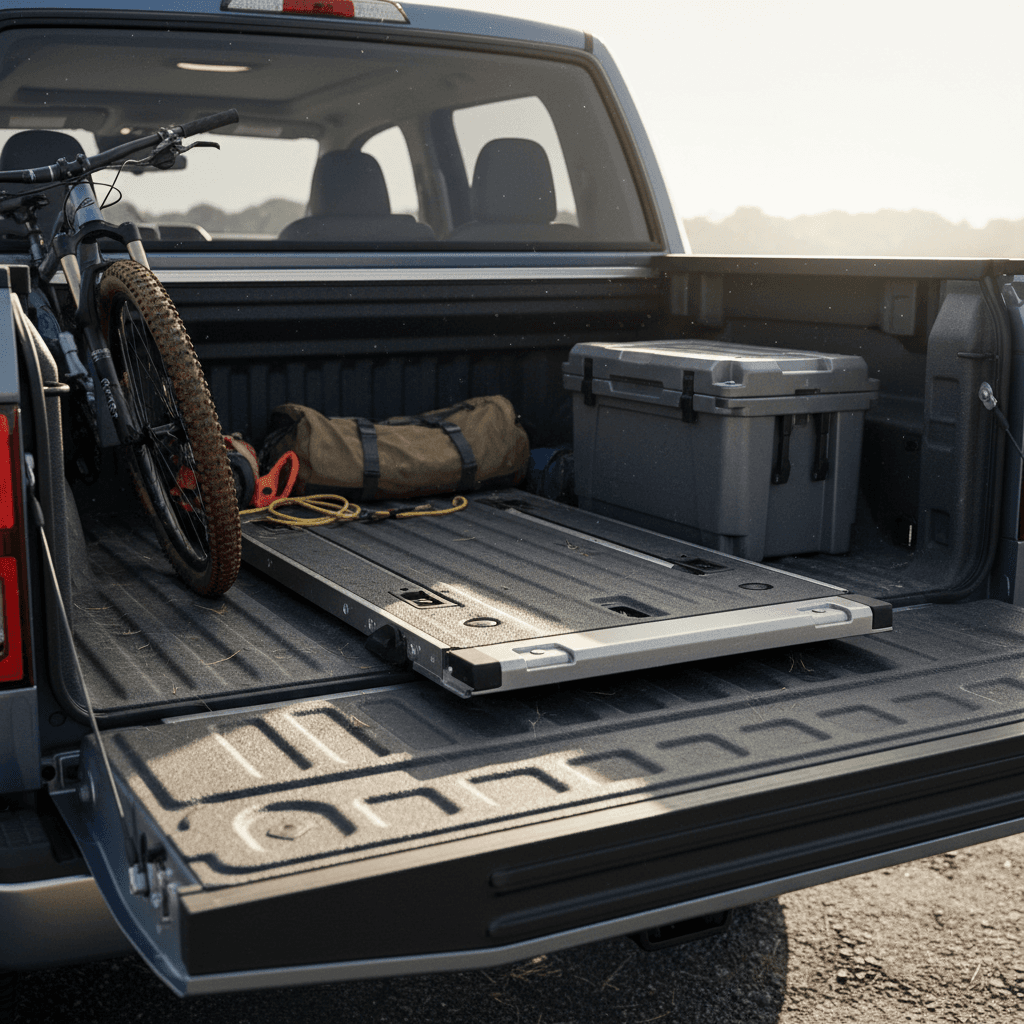
Traditional F-150 owners will feel right at home in the Lightning’s bed. It’s fundamentally an F‑Series box with the clever addition of the power front trunk (frunk), multiple power outlets, and integrated tie‑downs. If you’ve built your life or business around F‑150 bed dimensions and accessories, the Lightning is an easy transition.
The Silverado EV takes a very different approach. Its party trick is the midgate: a folding wall between the bed and cabin that lets you extend cargo space forward, or fold seats and panels in different combinations. Pair that with a long bed floor and you can carry items like lumber, kayaks, or construction materials that would otherwise demand a trailer. There’s a small frunk up front too, though it’s not as cavernous as the Lightning’s.
- F-150 Lightning strengths: huge frunk, familiar bed, strong Pro Power onboard outlets, excellent for contractors who live out of the bed and cab.
- Silverado EV strengths: midgate flexibility, long load floor without a trailer, four‑wheel steering that helps maneuver a big wheelbase in tight lots.
If bed flexibility is your top priority
Driving Experience, Ride, and Off-Road
Electric pickups all share some core traits: instant torque, quiet operation, and a planted feel thanks to the battery in the floor. But the Lightning and Silverado EV go about it differently enough that they feel distinct from behind the wheel.
F-150 Lightning on the road
- Feels very much like a well‑optioned F‑150 with way more torque and no gear changes.
- Suspension tuning is biased toward comfort and familiarity; if you’ve driven late‑model F‑150s, the learning curve is minimal.
- Some trims offer off‑road‑oriented packages, but the core mission is work, family, and light trail duty, not rock crawling.
Silverado EV on the road
- Ultium platform plus independent rear suspension deliver a very composed ride, especially on highway.
- Available four‑wheel steering and air suspension (on higher trims) make a very long truck surprisingly maneuverable.
- Performance‑oriented RST versions are legitimately quick, with 0–60 mph times deep into sports‑car territory when max power mode is enabled.
Off-road reality check
Charging and Road-Trip Viability
Both the F-150 Lightning and Silverado EV support DC fast charging and Level 2 AC charging at home or work. For U.S. buyers, the bigger story in 2025–2026 is the shift toward the North American Charging Standard (NACS) plug and access to Tesla’s Supercharger network, either natively or via adapters, depending on model year and hardware.
Charging experience: what matters day to day
For most owners, home charging habits matter more than maximum DC fast‑charge speed.
Home charging
Both trucks are happiest when you can reliably plug in overnight on a 40–80A Level 2 circuit. A used Lightning or Silverado EV paired with a quality home charger can easily recover a full day’s commuting and errands while you sleep.
DC fast charging
Silverado EV’s huge battery lets you add big chunks of range per stop, but also takes longer to fill completely. The Lightning has a smaller pack but typically adequate peak speeds; either way, plan around charging from ~10–60%, not 0–100%.
Road trips and coverage
The combination of larger packs and expanding DC networks is finally making cross‑country EV truck travel reasonable, but you still need to plan routes. The Silverado EV’s extra range gives you more flexibility when charger spacing or uptime is less than ideal.
Think in trips, not just kWh
Tech, Interiors, and Everyday Usability
Inside, both trucks lean heavily into giant screens, connected services, and app‑based ownership. The differences are more about philosophy than raw feature count.
Inside the F-150 Lightning
- Cabin layout mirrors the gas F‑150, which is great if you already know where everything is.
- Available large portrait‑style center screen and digital cluster, plus a full suite of driver‑assist features.
- Ford’s Pro Power Onboard turns the truck into a rolling generator for tools, tailgates, and backup power.
Inside the Silverado EV
- Feels more like a tech‑forward Ultium EV than a traditional Silverado: wide screens, software‑heavy UX, and fewer legacy switchgear cues.
- Some trims offer hands‑free driver assist on mapped highways and extensive camera views for towing and parking.
- Cab packaging is influenced by the midgate and long wheelbase, giving a spacious feel but with a different seating and storage layout than a conventional half‑ton.
Software and updates
Ownership Costs, Depreciation, and Used Market Reality
Why used electric pickups are getting interesting
Because both the F-150 Lightning and Silverado EV launched at relatively high prices and into a still‑forming segment, early depreciation has been significant. That’s painful for first owners, but a real opportunity if you’re shopping used between 2024 and 2026.
The F-150 Lightning has a head start here: there are simply more of them in circulation, which means more selection on year, mileage, trim, and price. You can already find clean, lower‑mileage extended‑range Lightnings for much less than original MSRP, especially if you’re flexible on color and options. Silverado EV inventory is thinner, so used pricing is still working its way toward a stable normal.
How Recharged de-risks used EV trucks
Operating costs can favor either truck depending on how you use it. The Silverado EV’s big pack and excellent efficiency per kWh can make long‑distance towing less painful in both time and energy cost, but that large battery is also more expensive to replace out of warranty. The Lightning’s smaller pack means cheaper full charges and potentially lower long‑term replacement cost, but you may find yourself charging more often if you lean heavily on towing or long highway runs.
Which Electric Truck Should You Buy? Key Scenarios
Best‑fit truck by real‑world use case
Daily driver + light duty work
You mostly commute, run errands, and occasionally haul home‑improvement loads or small trailers.
You value a familiar half‑ton driving experience and huge frunk storage.
Verdict: a used <strong>F-150 Lightning</strong>, especially an extended‑range XLT or Lariat, hits a very sweet balance of price, comfort, and capability.
Serious towing and long trips
You tow campers, equipment, or toys at highway speed for hundreds of miles at a time.
You’re willing to plan around DC fast charging but don’t want to stop constantly.
Verdict: the <strong>Silverado EV</strong>, particularly with its larger battery configs, is the better long‑haul workhorse. The extra usable range under tow is a game‑changer.
Mixed personal and fleet/work use
Your truck does double duty as a job‑site tool and family vehicle.
Upfit options, bed familiarity, and service network depth matter as much as top‑line specs.
Verdict: F-150 Lightning has the edge today simply because there are more configurations and more dealers familiar with the platform, but expect Silverado EV fleet presence to ramp steadily.
Max tech and future‑leaning design
You’re drawn to clean‑sheet EV design and want the most advanced packaging.
The midgate and Ultium platform appeal to you more than tradition does.
Verdict: the <strong>Silverado EV</strong> feels like the more radical, future‑oriented truck, while the Lightning is the comfortable bridge from today’s pickups to tomorrow’s.
Checklist for shopping a used F-150 Lightning or Silverado EV
1. Verify battery health and warranty
Confirm remaining battery warranty term and get an objective health read. On Recharged, the Recharged Score includes pack diagnostics so you can see if capacity has meaningfully declined.
2. Ask how the truck was used
Frequent towing, DC fast charging, or heavy job‑site use won’t automatically disqualify a truck, but you’ll want that context when comparing two similar candidates.
3. Inspect for payload and towing hardware
Make sure the truck you’re considering actually has the hitches, brake controllers, bed lighting, and tie‑downs your use case requires. Swapping trucks is easier than trying to retrofit the wrong one.
4. Confirm charging connector and adapter situation
Depending on model year, your truck may use CCS, NACS, or an adapter for certain networks. Factor in the cost and availability of home charging equipment when comparing deals.
5. Test real‑world comfort and visibility
These are big, heavy vehicles with different packaging than their gas cousins. Take a long test drive on familiar roads, with parking and tight turns, before you commit.
At a high level, the Ford F-150 Lightning is the familiar, proven, and increasingly affordable electric truck that fits neatly into existing F‑150 use cases, especially if most of your driving is within a couple hundred miles of home. The Chevrolet Silverado EV is the more radical, long‑range workhorse that makes long‑distance towing and unique cargo scenarios far more realistic, at the cost of more weight, complexity, and currently a thinner used inventory.
If you’re trying to decide between them, start with your use case and geography rather than brand loyalty. Then, look for a truck whose battery health, equipment, and price line up with that reality. Recharged was built to make that process less opaque: from transparent battery diagnostics and fair market pricing to EV‑specialist guidance and nationwide delivery, the goal is simple, help you get into the right electric truck, not just any electric truck.