If you’re shopping for a used electric car in North Carolina in 2026, you’ve probably heard about federal tax credits, IRA incentives, and utility rebates, and you may also have heard that **a lot of them just expired**. This guide breaks down the real story on North Carolina used EV incentives in 2026: what ended in late 2025, what’s still on the table, and how to line up the remaining programs so your used EV costs less to buy and own.
Key timing note
Overview: North Carolina used EV incentives in 2026
Snapshot: incentives that matter for NC used EV buyers in 2026
So in 2026, **North Carolina used EV incentives are less about the car itself and more about your charging setup**. The biggest savings now come from: - Federal incentives for charging equipment (through mid‑2026) - Duke Energy and other utility rebates or rate programs - Home upgrade and efficiency programs that may bundle EV-ready wiring You can still benefit from the older federal used EV tax credit if you already bought a qualifying vehicle before October 1, 2025, but that ship has sailed for new 2026 purchases.
Quick answer: What’s actually available now?
What NC used EV buyers can and can’t get in 2026
Use this at-a-glance view before we dive into the details
Available in 2026 (most NC buyers)
- Federal home charger tax credit through June 30, 2026, for qualifying EV charging equipment.
- Duke Energy charger prep credit / smart charger rebates in many NC territories.
- Selective time-of-use EV rate plans that lower your off-peak charging cost.
- Potential Energy Saver NC or other home-upgrade rebates that include EV-ready wiring.
- Inspection and emissions-test savings because EVs skip the emissions portion in NC.
No longer (or not) available
- No state of North Carolina rebate or state income-tax credit for buying a used EV.
- No federal used clean vehicle credit for vehicles purchased after Sept. 30, 2025.
- No free public charging mandate; NC has even limited free charging at publicly funded sites.
Watch your purchase date
Federal used clean vehicle credit: timeline and 2026 status
For a couple of years, the **federal previously owned clean vehicle credit (Internal Revenue Code Section 25E)** was the headline incentive for used EV buyers. It offered up to $4,000 (30% of the sale price) when you bought a qualifying used EV from a dealer, subject to income caps, price caps, and vehicle requirements.
Key rules of the former federal used clean vehicle credit (25E)
These rules applied to qualifying purchases before the program sunset for vehicles placed in service after September 30, 2025.
| Rule | Requirement (historical) |
|---|---|
| Who could claim it? | Individuals only; no business purchases. |
| Income caps (MAGI) | Up to $75,000 (single), $112,500 (head of household), $150,000 (married filing jointly). |
| Vehicle price cap | Sale price had to be $25,000 or less. |
| Model year | At least 2 model years older than the year of purchase. |
| Where you bought | From a licensed dealer; private‑party sales didn’t qualify. |
| Frequency | You could claim it only once every 3 years. |
| Credit size | 30% of sale price, capped at $4,000. |
Reference only for buyers who purchased a used EV before October 1, 2025.
Congress later changed course. Under 2025 tax law changes, the used clean vehicle credit and related clean vehicle purchase incentives **stopped applying to vehicles purchased after September 30, 2025**. The credit itself hasn’t vanished from the tax code overnight, but for a North Carolina driver shopping in calendar year 2026, you should assume **there is no federal purchase credit on a used EV** unless your tax advisor tells you otherwise based on a pre‑October‑2025 purchase.
What if I bought my used EV in 2025?
North Carolina state-level used EV incentives
Here’s the unvarnished truth: **North Carolina does not offer a state-funded purchase rebate or state income‑tax credit for buying a used EV** in 2026. That was true before the recent federal changes, and it’s still true today.
- No state rebate at the point of sale for used EVs.
- No additional North Carolina income‑tax deduction or credit for used EV purchases.
- No state-run low‑income used EV purchase voucher at this time.
Don’t confuse charging money with car money
Utility and local programs: Duke Energy and beyond
While the state itself doesn’t chip in on your used EV purchase, several **utility‑side programs** can save you money if you live in Duke Energy territory or a participating municipal/co‑op system. These programs change frequently, so always confirm current terms, but here’s what a typical North Carolina used EV shopper might encounter in 2026.
Common EV programs in North Carolina utility territories
Exact availability and amounts vary by service area and year
Duke Energy charger prep credits
Smart charger / managed charging rebates
EV time-of-use (TOU) rate plans
Programs can open and close quickly
Home charger & electrical upgrade incentives
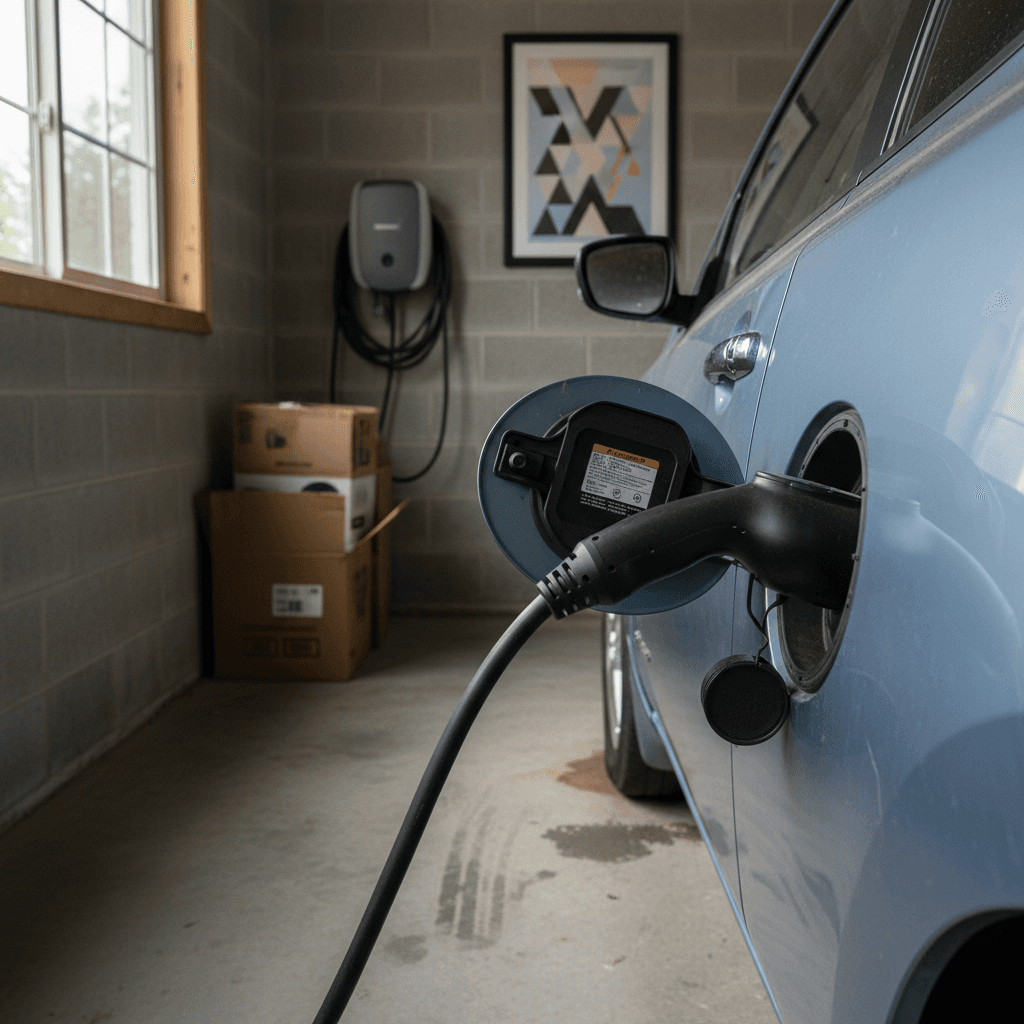
If you’re buying a used EV in North Carolina in 2026, the biggest financial win you can still line up is usually a **Level 2 home charger combined with incentives**. There are two main buckets: federal tax credits and state/utility or home‑upgrade programs.
Checklist: how to maximize incentives on your home charger
1. Confirm federal home charger eligibility
Under current rules, qualifying residential EV charging equipment placed in service by June 30, 2026 can still be eligible for a federal tax credit worth a percentage of hardware and installation costs, up to a set cap. The exact benefit depends on your location and whether your home is in an eligible census tract, so review IRS guidance or speak with a tax pro.
2. Check Duke Energy’s current EV charger offers
Visit your specific Duke Energy (Carolinas or Progress) EV page and look for programs like <strong>charger prep credits</strong>, <strong>EV Complete</strong>, or <strong>Smart Charger</strong> rebates. Note application deadlines and whether you need pre‑approval before hiring an electrician.
3. Ask about Energy Saver NC and local efficiency programs
North Carolina’s Energy Saver NC initiative focuses on home efficiency upgrades and electrification. In some areas, EV‑ready wiring or electrical panel upgrades may be covered or discounted when bundled with heat pumps or weatherization.
4. Get an itemized quote from an EV‑savvy electrician
Make sure your installer breaks out <strong>labor, materials, permits, and charger hardware</strong>. You’ll need this detail to properly document costs for federal and utility incentives.
5. Choose a smart, utility‑approved charger when possible
Some rebates require a <strong>Wi‑Fi connected charger that the utility can control</strong> during demand events. Buying from the program’s approved list can be the difference between a small check and having most of your installation paid for.
6. Time the work before June 30, 2026
Because key federal EV charging incentives are scheduled to end for equipment placed in service after June 30, 2026, aim to have your charger installed and operational well before that date to lock in eligibility.
Realistic savings example
Non-cash perks for used EV owners in North Carolina
Not every benefit shows up as a check or credit on your tax return. North Carolina offers several **structural advantages** that quietly save used EV owners money over time.
- No emissions inspection test for EVs: All‑electric vehicles in North Carolina skip the emissions portion of the annual inspection. You still need a safety inspection, but you avoid potential emissions‑related repairs and testing fees that gas cars face in many counties.
- Lower fuel cost per mile: With sensible off‑peak charging and the right rate plan, many NC drivers cut their per‑mile energy cost to a fraction of gasoline, especially if they live in a Duke Energy TOU area.
- Growing fast‑charging network: Federal NEVI funds and private investment are filling in DC fast‑charging along interstates and rural corridors, improving the practicality and resale value of capable used EVs.
Why this matters for used EV value
How to stack savings when you buy a used EV
Even without a live federal used-vehicle credit, you can still make a used EV purchase in North Carolina pencil out nicely if you think in terms of **total cost of ownership** instead of just today’s sticker price.
Step 1: Start with the right used EV
- Prioritize solid battery health and enough real‑world range for your daily driving.
- Look for models with DC fast‑charging and widely supported connectors (NACS or CCS).
- Check that the car qualifies for your utility’s EV rate or managed‑charging program.
Step 2: Map every incentive you can use
- Federal home charger tax credit (through June 30, 2026).
- Duke Energy or local utility charger prep / rebate programs.
- Energy Saver NC or municipal efficiency rebates that touch electrical work.
- Ongoing savings from TOU rates and avoiding emissions tests.
Ownership-side savings most NC used EV shoppers overlook
Run a 3–5 year cost-of-ownership comparison
Compare a used EV you’re considering against a similar gasoline car on payment, insurance, energy, and maintenance. In many NC use cases, lower fuel/maintenance costs offset a slightly higher purchase price in just a few years.
Use workplace and public charging strategically
If you can charge for free or cheaply at work or at a trusted public charger, treat that as an additional incentive. It reduces the load on your home system and stretches every dollar.
Plan for tires and brakes realistically
EVs are easier on brakes but can be harder on tires. Budget for quality replacement tires and alignment just as you would on a comparable gas car, and include that in your cost comparisons.
Think about resale timing
Because incentives have shifted around, certain used EV model years may hold value differently. Consider purchasing a car you’d be comfortable keeping at least 5–7 years rather than banking on short‑term flips.
Avoid overpaying just because "EVs used to have credits"
How Recharged helps North Carolina buyers maximize incentives
When incentive programs get complicated, and then change again, it helps to have someone in your corner who tracks the details. That’s where Recharged comes in if you’re shopping for a used EV from North Carolina.
Why to consider buying your used EV through Recharged
Battery clarity, fair pricing, and guidance on incentives, without the dealership games
Recharged Score battery health report
Fair, transparent pricing
EV‑specialist guidance on incentives
Ready to find your next EV?
Browse VehiclesFinancing and trade‑ins built for used EVs
Because Recharged focuses on electric vehicles, our financing partners understand EV depreciation patterns, battery warranties, and resale values. That can help you secure competitive rates without having to educate a traditional lender about why a 7‑year‑old EV is still a smart bet.
If you’re moving out of a gasoline car, you can trade it in or get an instant offer through Recharged to roll directly into your used EV purchase.
Digital buying, local‑friendly delivery
You can complete the entire shopping and buying process online, from browsing vehicles with verified battery health to signing paperwork. Then choose nationwide delivery to your North Carolina address or visit our Experience Center in Richmond, VA if you’d like an in‑person walkthrough.
That means you’re not limited to whatever your local dealer happens to have on the lot this week.
FAQ: North Carolina used EV incentives in 2026
Frequently asked questions
Bottom line for North Carolina used EV shoppers
North Carolina used EV incentives in 2026 aren’t as simple, or as generous, as the headlines from a few years ago. The big federal purchase credits that once knocked thousands off used EV prices are gone for new 2026 purchases, and the state still doesn’t offer its own rebate. But that doesn’t mean you’re out of luck.
If you’re smart about **home charging incentives, utility programs, and total ownership costs**, a used EV can still be one of the lowest‑cost ways to drive in North Carolina over the next 5–10 years. Combine a solid vehicle with verified battery health, a well‑timed Level 2 installation that taps remaining federal and utility incentives, and realistic expectations, and you’ll be positioned to enjoy the benefits of EV ownership long after the old tax credits fade from memory.
And if you’d like help finding that vehicle, Recharged can connect you with **used EVs that have transparent battery health, fair pricing, expert support, and delivery to North Carolina**, so you can focus on driving, and let the incentives and savings follow.