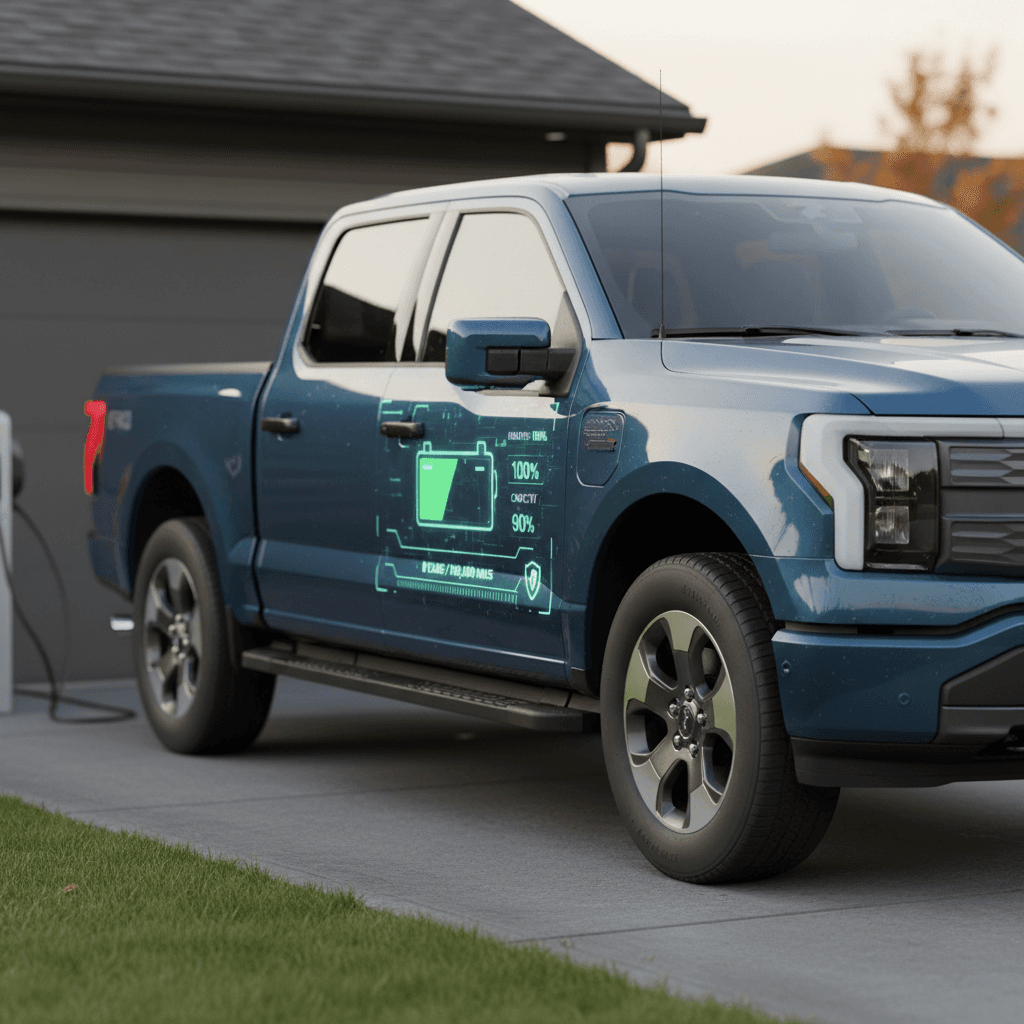
If you own, or are eyeing, a Ford F-150 Lightning, the question behind all the horsepower and Pro Power Onboard party tricks is simple: what happens if the battery goes bad? Ford’s F-150 Lightning battery warranty details are more generous than many people realize, but there are also fine‑print limits around degradation, abuse, and time. Let’s unpack what 8 years/100,000 miles actually buys you, and what it means if you’re shopping used.
Big picture
Ford F-150 Lightning battery warranty at a glance
2025 F-150 Lightning factory warranty snapshot
Ford wraps the F-150 Lightning in the same New Vehicle Limited Warranty structure it uses for its other EVs, with a special layer just for the high‑voltage bits. For battery shoppers, two pieces matter most: the Electric Vehicle Component Coverage (8 years/100,000 miles) and the capacity retention promise (70% or better over that span). Together, they’re Ford’s way of saying, “the pack should easily outlast your loan term, and probably your patience for monthly payments.”
How long the F-150 Lightning battery is covered
Ford’s official language is straightforward: the F-150 Lightning’s high‑voltage battery and other EV components are covered for eight years or 100,000 miles from the warranty start date, whichever comes first. The warranty start date is usually the day the truck was first put into service (sold, leased, or put into demo use by a dealer), not the day you bought it used.
- Coverage period: 8 years / 100,000 miles from in‑service date
- Applies to: high‑voltage battery and designated EV components
- Good for: manufacturing defects and excessive capacity loss below Ford’s threshold
- Valid for: original and subsequent owners (it’s fully transferable)
Quick way to check your remaining coverage
What the EV component warranty actually covers
The Electric Vehicle Component coverage on a Lightning is broader than “just the big box of cells.” It generally includes the high‑voltage battery pack plus the hardware that moves electrons between the charge port, pack, and motors. In human terms: the expensive stuff.
Core components typically covered under Ford’s EV warranty
Not an exhaustive legal list, but a practical owner’s guide
High‑voltage battery assembly
- Battery pack enclosure and internal modules
- Battery Energy Control Module (BECM)
- Thermal management hardware directly tied to the pack
- Defects that cause failure or excessive capacity loss (>30%) within the warranty period
High‑voltage drive & charging hardware
- eDrive units (electric motors and integrated gearboxes)
- Onboard charger and DC/DC converter
- High‑voltage wiring harnesses and contactors
- Control electronics like the Inverter System Controller (ISC)
Exact coverage is defined in the official warranty booklet for your model year, but this is the family of components Ford calls out as EV‑specific.
New, remanufactured, or refurbished parts
Battery capacity and degradation coverage explained
All lithium‑ion batteries lose some capacity over time, that’s not a defect, that’s physics. Ford’s F-150 Lightning battery warranty draws a line between normal degradation and what it calls excessive capacity loss. That line is set at roughly 70% of the battery’s original usable capacity within the 8‑year/100,000‑mile window.
How Ford interprets Lightning battery capacity loss
Where normal wear ends and warranty coverage begins
| Scenario | Battery health vs. new | Mileage & age | Is it likely covered? |
|---|---|---|---|
| Mild early loss | 92–98% capacity after 1–3 years | Under 50,000 miles | No – considered normal wear |
| Moderate aging | 80–90% capacity after 4–7 years | 50,000–90,000 miles | No – still above 70% threshold |
| Borderline case | 70–75% capacity within 8 years / 100k miles | 60,000–100,000 miles | Maybe – dealer must verify and confirm methodically |
| Excessive loss | Below 70% capacity within 8 years / 100k miles | Any mileage under 100,000 | Yes – generally triggers repair or replacement if other exclusions don’t apply |
This is a simplified reading of Ford’s capacity coverage language; always defer to your specific warranty booklet.
For Lightning owners, the practical takeaway is this: Ford isn’t promising zero degradation. They’re promising the battery won’t fall off a cliff. If your usable range shrinks a bit over the years, that’s normal. If it suddenly feels like you’ve lost a third of the truck’s stamina while still well inside the 8‑year/100k window, that’s when the warranty is designed to step in.
What’s not covered under the Lightning battery warranty
No automaker will cover every conceivable battery woe, and Ford is no exception. The factory F-150 Lightning battery warranty is aimed at defects and abnormally fast degradation, not at cleaning up after abuse, accidents, or modifications.
Common exclusions and gray areas Lightning owners should know
Damage from accidents or impacts
Collision damage, road‑debris punctures, or off‑road mishaps that injure the pack are handled like any other crash damage, through insurance, not the battery warranty.
Water intrusion beyond design limits
The Lightning’s pack is sealed and rated for serious puddle duty. But deep flooding or improper off‑road fording that defeats the seals can fall outside warranty coverage.
Unauthorized modifications or repairs
Aftermarket tuning of the battery management system, DIY high‑voltage repairs, or non‑Ford reconditioning work can give Ford grounds to deny battery claims.
Normal wear items & unrelated parts
Tires, brakes, 12‑volt battery, and cabin hardware are not part of the high‑voltage battery warranty, even if range symptoms show up around the same time.
Abuse, neglect, or misuse
Routinely overheating the pack, ignoring warnings, or using the truck in ways specifically prohibited in the owner’s manual can limit coverage.
Read the fine print before heavy towing or upfitting
Other Lightning warranties that affect real-world range
Battery warranty details don’t live in a vacuum. Ford stacks several other coverages around the Lightning that indirectly shape your ownership experience and your confidence in the truck’s range over time.
How the rest of the Lightning warranty stack fits together
Not strictly battery warranties, but very relevant to range and drivability
Bumper‑to‑bumper: 3 yrs / 36k
- Covers most non‑wear items, infotainment, HVAC, cameras, ADAS sensors
- Helps if your range estimates, nav routing, or BlueCruise features misbehave due to component failures
- Pairs with over‑the‑air updates to keep software in line with hardware (when applicable)
Powertrain & roadside: 5 yrs / 60k
- Powertrain coverage for electric drive units and related components
- Roadside assistance if you run out of charge or have a driveline failure
- Tow to an EV‑certified Ford dealer where technicians can properly diagnose battery vs. non‑battery issues
How this plays with a Recharged purchase
Ready to find your next EV?
Browse VehiclesMaintenance habits that protect both battery and warranty
Ford can’t, and doesn’t, void a warranty just because you didn’t baby your Lightning. But the owner’s manual and EV battery care guides strongly suggest certain habits. If you follow them, you’ll slow degradation and reduce the odds of a messy debate with a service writer later.
- Avoid living at 100% charge on NCM Lightning packs. Ford generally recommends setting a daily limit around 90% and reserving 100% for road trips.
- Use DC fast charging when you need it, not every single day. High, repeated fast‑charge heat cycles are harder on any lithium‑ion pack.
- Keep the truck within normal temperature bands when you can, garage parking helps in both hot and cold climates.
- Update your software. Battery management refinements often ship via over‑the‑air updates and can improve both longevity and range prediction.
- If possible, don’t let the pack sit at very low states of charge for days. Long‑term storage is happiest somewhere in the middle.
Know your chemistry
How the warranty works on a used F-150 Lightning
Good news for second and third owners: Ford’s F-150 Lightning battery warranty is fully transferable. There’s no fee and no special enrollment, coverage simply follows the truck by VIN until whichever comes first: 8 years or 100,000 miles from that original in‑service date.
What carries over to you
- Remaining portion of the 8yr/100k EV component and capacity warranty
- Any remaining bumper‑to‑bumper or powertrain coverage (if within time/mileage)
- Eligibility for Ford Protect extended plans in many cases
What you should still verify
- Exact in‑service date and documented mileage history
- Evidence of proper maintenance and software updates
- Any previous high‑voltage repairs (and whether genuine Ford parts were used)
How Recharged de‑risks used Lightning shopping
When to worry, and how to start a battery warranty claim
You don’t need a lab‑grade multimeter to know when your Lightning’s battery might be misbehaving. You live with the truck; you feel the range shrink. The key is to separate imagination from evidence and to engage Ford the way their process expects.
Step-by-step: raising a Ford battery capacity concern
1. Document your real-world range
Over a few weeks, note your typical routes, charge level at departure, climate conditions, and miles driven. If your real‑world range suddenly drops far below earlier patterns, that’s a signal.
2. Check for software updates and warnings
Make sure the truck is current on over‑the‑air updates and note any warnings in the instrument cluster or FordPass app related to the high‑voltage system.
3. Schedule with an EV‑certified Ford dealer
Not every Ford shop is equal. Choose a dealer certified for EV service so they have the right tools and training to run formal battery capacity and fault diagnostics.
4. Bring your observations and records
Arrive with your range notes, charging habits, and any service history. The dealer’s scan tools will do the heavy lifting, but context helps them replicate your concern.
5. Let Ford determine repair vs. replacement
If diagnostics show <strong>capacity below the 70% threshold</strong> (within 8yr/100k) or a defect, Ford decides whether to repair, recondition, or replace the pack or related components under warranty.
Don’t ignore serious battery warnings
FAQ: Ford F-150 Lightning battery warranty details
Frequently asked questions about F-150 Lightning battery coverage
The F-150 Lightning’s battery warranty doesn’t promise a magic, never‑aging pack. What it does offer is eight years and 100,000 miles of protection against manufacturing defects and truly abnormal capacity loss, backed by a clear 70% capacity line in the sand. If you respect the truck’s limits and follow basic battery‑care habits, you’re unlikely to ever meet that line, whether you bought your Lightning new or picked it up gently used.
If you’re considering a used Lightning and want confidence that reaches beyond the brochure, Recharged can help. Our Recharged Score battery diagnostics, fair‑market pricing, EV‑savvy advisors, and nationwide delivery take the mystery out of high‑voltage ownership, so you can enjoy silent torque and tailgate bragging rights without quietly stressing over the pack beneath your feet.