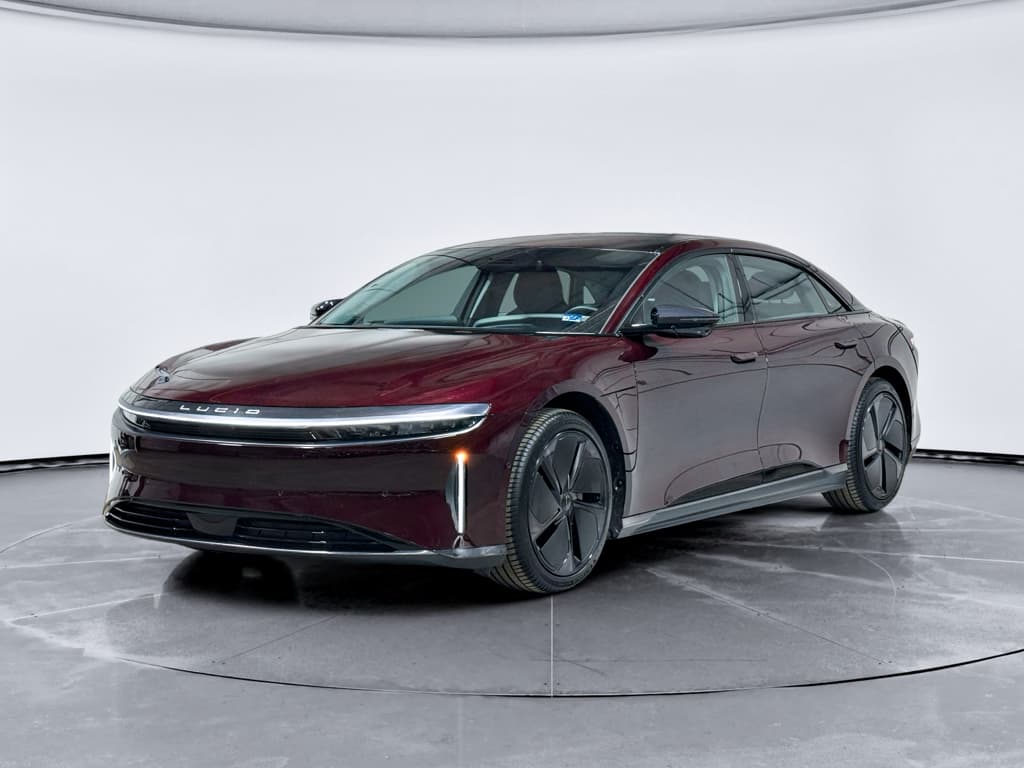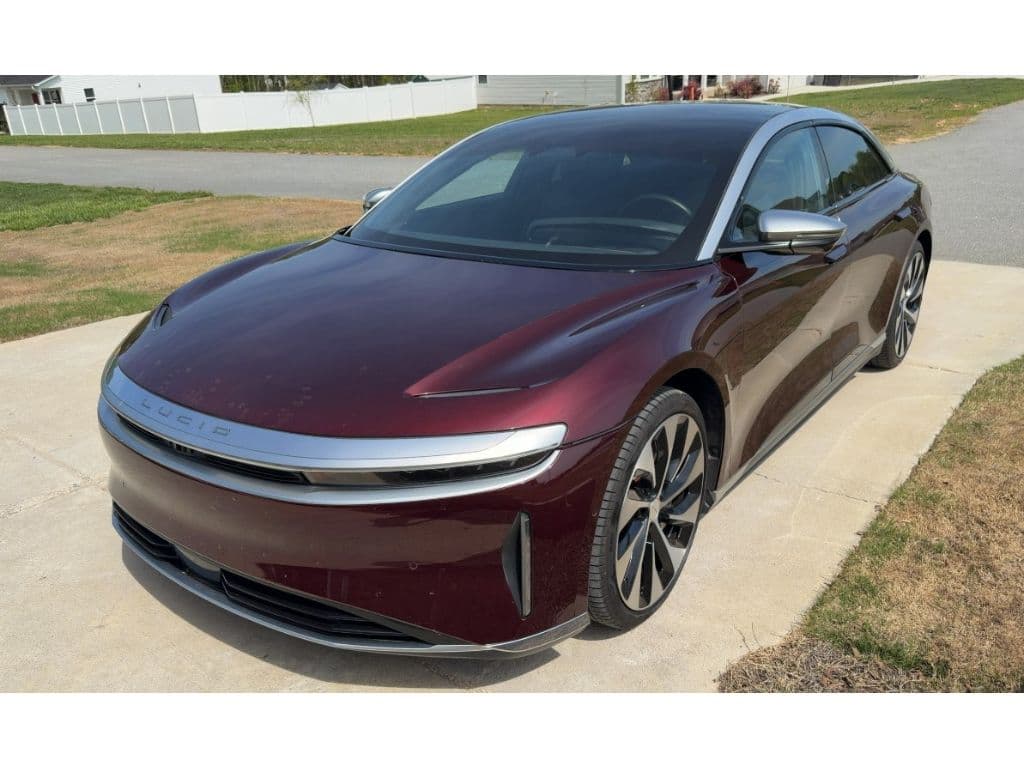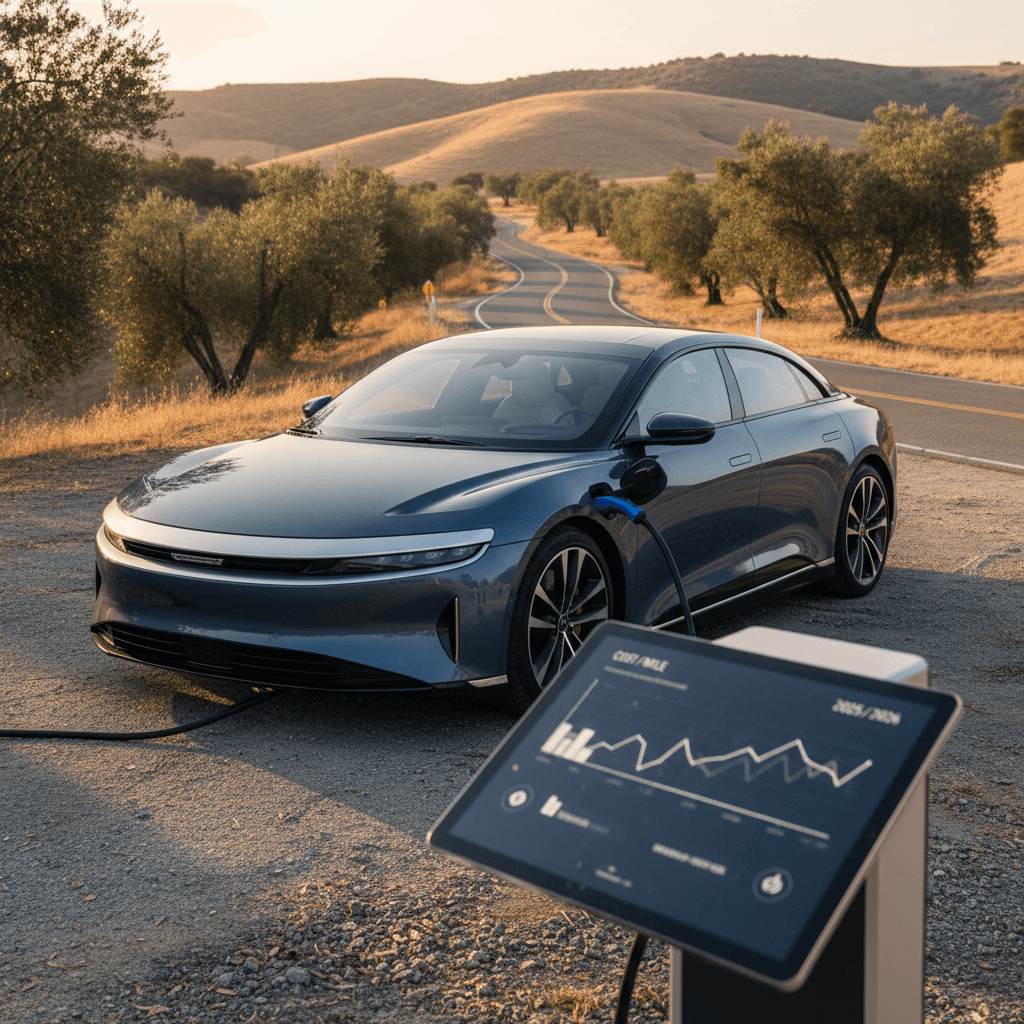
If you’re eyeing a Lucid Air, especially on the used market, you’re probably wondering what it actually costs per mile to drive. The headline efficiency numbers sound great, but what does that translate to in everyday dollars given today’s electricity prices? This guide breaks down Lucid Air cost per mile to drive using current U.S. electricity rates and real-world efficiency so you can budget with confidence.
Key takeaway up front
How much does a Lucid Air cost per mile to drive?
You can estimate cost per mile for any EV with a simple formula:
- Find the car’s efficiency in miles per kWh (or kWh per 100 miles).
- Find the electricity price you actually pay in $ per kWh.
- Cost per mile = (Electricity price per kWh) ÷ (Miles per kWh).
Lucid builds some of the most efficient EVs on the road. Recent data for the Air Pure and Touring shows EPA efficiency in the neighborhood of 4.0–5.0 miles per kWh, depending on wheels and configuration, with the Pure RWD on 19-inch wheels rated up to about 5 mi/kWh in ideal spec. Real owners commonly report mid–3s to high–4s in everyday driving.
On the electricity side, recent U.S. residential data puts the average home rate in the high-teens cents per kWh. To keep the math realistic for 2025–2026, this guide uses $0.18 per kWh as a typical national average, then shows how things change if you pay more or less, or use public DC fast charging.
Lucid Air efficiency: miles per kWh by trim
Lucid doesn’t advertise efficiency as loudly as range, but you can back into it from EPA numbers and battery size, and several outlets have already done the math. Here’s a simplified view you can use for cost-per-mile planning:
Approximate Lucid Air efficiency by trim
EPA-based and media-tested efficiency figures rounded for easier cost-per-mile math. Actual results vary with wheels, options, climate, and driving style.
| Trim (recent model years) | EPA ballpark efficiency (mi/kWh) | Real-world everyday planning number (mi/kWh) |
|---|---|---|
| Air Pure RWD (19" wheels) | Up to ~5.0 mi/kWh | 4.5 mi/kWh |
| Air Pure AWD / 20" wheels | ~4.4–4.7 mi/kWh | 4.2 mi/kWh |
| Air Touring (dual motor) | ~4.0–4.4 mi/kWh | 4.0 mi/kWh |
| Air Grand Touring | ~3.6–4.0 mi/kWh | 3.7 mi/kWh |
Use the mid-range "real-world" numbers if you drive mostly at normal U.S. highway speeds with mixed conditions.
EPA vs your real commute
Electricity prices: what we use in the math
Electricity prices jumped over the past few years as utilities upgraded the grid and fuel costs rose. Recent federal data puts the average U.S. residential rate in the high-teens cents per kWh, with many states clustered between $0.14 and $0.22, and outliers well below or above that range.
Electricity price assumptions in this guide
Check your real rate
Lucid Air cost-per-mile calculations
Let’s put the pieces together. We’ll start with home charging at $0.18/kWh and the “real-world” efficiency numbers from earlier.
Estimated Lucid Air cost per mile (home charging)
Based on $0.18/kWh electricity and realistic efficiency for each trim.
Air Pure RWD (19" wheels)
Assumed efficiency: 4.5 mi/kWh
Cost per mile:
- $0.18 ÷ 4.5 ≈ $0.04 per mile
- 100 miles ≈ $4.00 in electricity
That’s roughly the cost of a fancy coffee to drive from one major metro to another.
Air Pure AWD / larger wheels
Assumed efficiency: 4.2 mi/kWh
Cost per mile:
- $0.18 ÷ 4.2 ≈ $0.043 per mile
- 100 miles ≈ $4.30
Heavier trims and larger wheels nibble away at efficiency but still keep energy costs very low.
Air Touring
Assumed efficiency: 4.0 mi/kWh
Cost per mile:
- $0.18 ÷ 4.0 = $0.045 per mile
- 100 miles = $4.50
A dual-motor luxury sedan with this kind of efficiency is still exceptional against most EVs.
Air Grand Touring
Assumed efficiency: 3.7 mi/kWh
Cost per mile:
- $0.18 ÷ 3.7 ≈ $0.049 per mile
- 100 miles ≈ $4.90
Even the high-performance Grand Touring stays under five cents per mile at typical home rates.
Put simply, if you charge mostly at home, you’re usually looking at 4–5 cents per mile in energy cost, across the Lucid Air lineup.
Quick rule of thumb
Home charging vs DC fast charging cost per mile
Road trips and apartment living can change the math. Public DC fast charging is dramatically more expensive than off-peak home charging, but you’re buying speed and convenience.
Home Level 2 charging
- Typical all-in cost: ~$0.14–$0.22/kWh depending on state
- Best case with off-peak or EV rates: sometimes under $0.12/kWh
- Lucid Air cost per mile: often in the 3–5¢/mi range
Home remains the lowest-cost way to feed a Lucid, especially if you can shift charging to off-peak hours.
Public DC fast charging
- Many networks now price around $0.28–$0.40/kWh for pay-as-you-go sessions
- Some stations charge idle or session fees on top
- Lucid Air cost per mile: commonly 7–9¢/mi depending on price and efficiency
You still pay far less per mile than in a comparable gas car, but regular DC fast charging can easily double your energy cost per mile versus home charging.
Be careful using DC pricing for daily cost estimates
Lucid Air vs gas luxury sedans: cost per mile
To judge whether a Lucid Air is “cheap” to drive, you need a benchmark. Let’s compare it to a mid-size gas luxury sedan getting about 25 mpg combined, think BMW 5 Series, Mercedes E-Class, Audi A6.
Energy cost per mile: Lucid Air vs gas luxury sedan
Compares a Lucid Air at home and DC fast-charging rates to a 25-mpg gas luxury sedan at $3.50 and $5.00 per gallon.
| Scenario | Assumptions | Energy cost per mile |
|---|---|---|
| Lucid Air home charging (typical) | 4.2 mi/kWh, $0.18/kWh | ≈ $0.043/mi |
| Lucid Air home charging (cheap power) | 4.2 mi/kWh, $0.12/kWh | ≈ $0.029/mi |
| Lucid Air mostly DC fast charging | 4.0 mi/kWh, $0.30/kWh | ≈ $0.075/mi |
| Gas luxury sedan (lower fuel price) | 25 mpg, $3.50/gal | $3.50 ÷ 25 = $0.14/mi |
| Gas luxury sedan (higher fuel price) | 25 mpg, $5.00/gal | $5.00 ÷ 25 = $0.20/mi |
Even with pricey fast charging, Lucid Air energy costs typically beat gasoline by a wide margin.
So even in the “expensive” DC fast-charging scenario, a Lucid Air’s energy cost per mile is about half that of a traditional gas luxury sedan at $3.50 per gallon, and closer to one-third at $5.00 per gallon.
Real-world factors that change your cost per mile
What actually moves your Lucid Air cost per mile up or down
Efficiency and electricity prices are only the starting point.
Speed and driving style
Above about 65 mph, aerodynamic drag climbs dramatically. A Lucid Air driven at a steady 60–65 mph can sit near EPA efficiency; run 80–85 mph and you may drop into the low–3s mi/kWh, nearly doubling your cost per mile versus gentle highway cruising.
Temperature & climate control
Cold weather forces the battery, motors, and cabin heater to work harder. Short winter trips with lots of warm-ups can significantly raise consumption. Expect cost per mile to rise in harsh winters and fall in mild shoulder seasons.
Wheel size and tire choice
The most efficient Lucid Air setups pair smaller wheels with low-rolling-resistance tires. Bigger, stickier rubber looks great and helps handling, but it costs you efficiency, and therefore raises your cost per mile.
Charging where you live
Electricity is inexpensive in some states and very expensive in others. A Lucid Air in Washington or Texas can be almost half as expensive per mile to energize as the same car in Hawaii or parts of California.
Home vs fast-charger mix
A commuter who charges at home 95% of the time and only fast charges on road trips will usually have a very low overall cost per mile. Rely heavily on fast charging and you move closer to the 7–9¢/mi end of the range.
Battery health over time
Mild battery degradation has less impact on cost per mile than you might think. Even if usable capacity shrinks a bit with age, efficiency per kWh can remain excellent. What matters most is that the pack is healthy and charging normally.
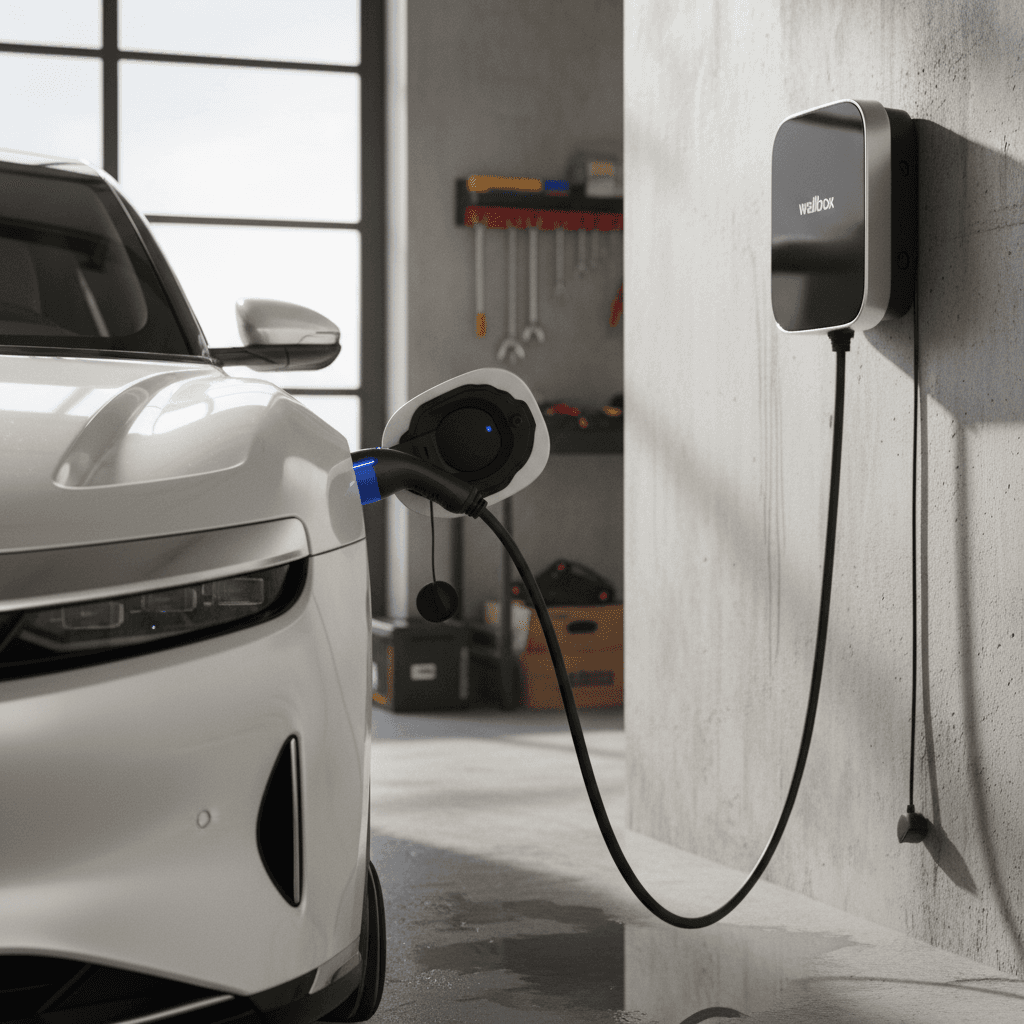
Used Lucid Air ownership: battery health and cost per mile
If you’re shopping for a used Lucid Air, cost per mile isn’t just about electricity, it’s about whether the car is still delivering the range and efficiency it left the factory with. A healthy pack means you can continue to exploit Lucid’s class-leading efficiency and keep your operating costs low.
Where Recharged fits in
Why battery health matters for cost per mile
- A significantly degraded pack reduces usable range, which may push you into more frequent fast charging if you road trip often.
- Frequent DC fast charging can be more expensive and less convenient than fewer, longer sessions on a healthy battery.
- A car with strong battery diagnostics lets you plan realistically around range and charging stops.
How Recharged helps used Lucid shoppers
- Recharged Score battery report so you can compare one used Air to another.
- Transparent pricing, so any battery-related value differences are reflected in what you pay.
- EV-specialist guidance if you’re cross-shopping Lucid, Tesla, Mercedes EQS and other luxury EVs on total cost of ownership, not just sticker price.
Checklist: how to estimate your own Lucid Air cost per mile
Build a personal Lucid Air cost-per-mile estimate
1. Pull your actual electricity rate
Open your latest utility bill and find the total cost per kWh, including delivery and fees. That’s the number to plug into cost-per-mile calculations, not just the energy-supply line.
2. Decide your home vs public charging mix
Estimate what percent of your charging will be at home vs public DC fast chargers. Many owners end up around 80–90% home and 10–20% fast charging over a full year.
3. Choose a realistic efficiency number
If you’re buying an Air Pure, use 4.5 mi/kWh as a default planning number. For Touring or Grand Touring, 3.7–4.0 mi/kWh is a good starting point unless you drive very conservatively.
4. Calculate your home-charging cost per mile
Use the formula: <strong>home cost per mile = (home $/kWh) ÷ (mi/kWh)</strong>. For example, $0.16 ÷ 4.0 = $0.04/mile.
5. Estimate your DC fast-charging cost per mile
Grab a recent receipt from a public fast charger or check app pricing in your area. Then calculate <strong>DC cost per mile = (DC $/kWh) ÷ (mi/kWh)</strong> using the same efficiency number.
6. Blend the two into a yearly average
Multiply your home cost per mile by the share of miles you expect to do on home charging, and your DC cost per mile by the share you expect on fast charging. Add them together to get a blended, realistic long-term cost per mile.
7. Compare to your current car
Take your current mpg and typical fuel price and compute cost per mile (fuel price ÷ mpg). Seeing $0.15–$0.20/mi for gas versus $0.04–$0.06/mi for a Lucid Air puts the savings in sharp focus.
FAQ: Lucid Air cost per mile and ownership costs
Frequently asked questions about Lucid Air cost per mile
Bottom line: is a Lucid Air cheap to drive?
When you boil the numbers down, the Lucid Air is very inexpensive to energize per mile. On typical U.S. home electricity, most trims fall into the 3–5¢/mi band; even frequent DC fast-charging users usually land well below the per-mile fuel cost of a comparable gas luxury sedan.
Where the Lucid Air differs from a conventional car is that your real cost per mile depends heavily on where you charge and what you pay for electricity. If you have access to affordable home charging and you’re willing to use the car’s efficiency to your advantage, the numbers work out in your favor very quickly.
If you’re considering a Lucid Air, especially a used one, the smart move is to pair this cost-per-mile math with a clear picture of battery health and total ownership costs. That’s exactly the gap Recharged is built to fill, with Recharged Score battery reports, transparent pricing, and EV-focused support. With the right car and the right charging setup, the Lucid Air can deliver world-class comfort and range while staying impressively cheap to drive mile after mile.