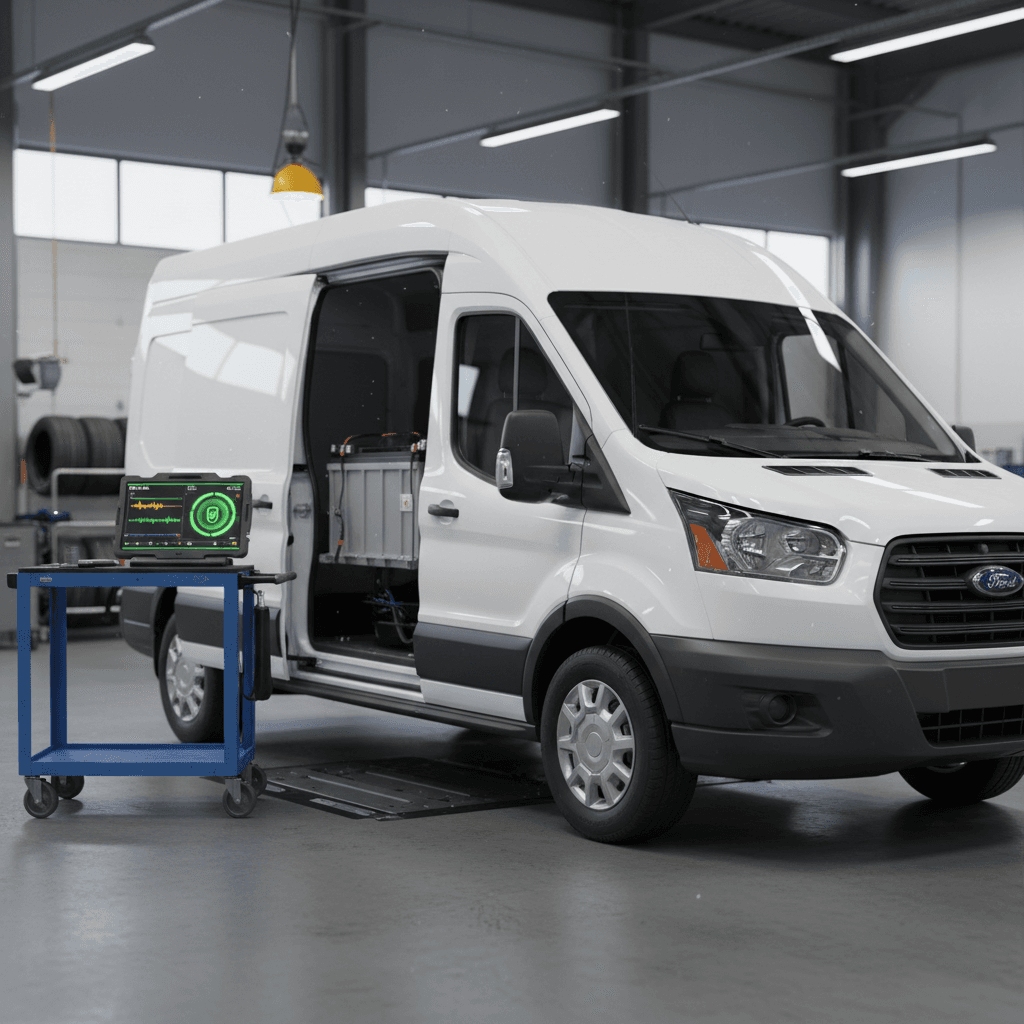
If you run a business around deliveries, trades, or shuttle work, the Ford E‑Transit’s battery is your livelihood. Understanding the Ford E‑Transit battery warranty, what the 8‑year/100,000‑mile coverage really means, what it does not cover, and how it transfers when you buy used, is crucial to protecting your cash flow and avoiding unexpected downtime.
Quick take
Ford E-Transit battery warranty at a glance
E-Transit warranty snapshot
Ford’s official guidance for hybrid and EV batteries in the U.S. is straightforward: the high‑voltage pack is covered for 8 years or 100,000 miles, whichever comes first, from the warranty start date. That same rule applies to the E‑Transit’s large traction battery. On top of that, your E‑Transit also gets a 3‑year/36,000‑mile limited warranty and a 5‑year/60,000‑mile powertrain warranty, just like other Ford commercial vehicles.

Pro tip for quick checks
How long does the Ford E-Transit battery warranty last?
For U.S. buyers, Ford’s hybrid and electric vehicle policy covers the E‑Transit’s high‑voltage battery for 8 years or 100,000 miles, whichever comes first. The key phrase is “whichever comes first”, many high‑mileage fleet vans will hit 100,000 miles well before year eight, while low‑mileage operators may time‑out on age instead of miles.
- Coverage starts on the Warranty Start Date (the original in‑service date of the van).
- It ends when either 8 years have elapsed or the odometer passes 100,000 miles.
- Coverage is tied to the VIN, so it can transfer to subsequent owners as long as the limits have not been exceeded.
- The warranty applies to defects in materials and workmanship for the high‑voltage battery and related components.
Don’t confuse calendar year with warranty year
What the E-Transit battery warranty actually covers
Ford’s language can sound broad, “hybrid and electric vehicle batteries”, but the E‑Transit battery warranty is focused on defects, not on guaranteeing you a brand‑new battery at year eight. In practical terms, coverage centers on three buckets: the high‑voltage battery pack itself, the high‑voltage hardware that supports it, and excessive loss of usable capacity.
Main pieces of E-Transit battery coverage
What’s in and what’s generally out of scope
High‑voltage battery pack
Covers the E‑Transit’s large traction battery if it fails due to defects in materials or workmanship.
- Internal cell/module failures
- Battery pack electronics
- Pack enclosure issues not caused by damage
High‑voltage components
Typically includes key high‑voltage parts that make the pack usable.
- Contactors & relays
- High‑voltage wiring (non‑wear damage)
- Battery management & control units
Excessive capacity loss
Ford explicitly notes that the EV battery warranty includes excessive capacity loss.
That doesn’t mean every mile of range lost is a claim, it’s aimed at abnormal degradation versus normal aging.
Where owners sometimes get surprised is what’s not covered. The battery warranty typically doesn’t pay for damage caused by collisions, flooding, unauthorized modifications, or neglect. It also doesn’t act as an all‑risk insurance policy against every range complaint; Ford will look for evidence of abnormal failure rather than normal wear.
Repairs out of warranty get expensive fast
Battery warranty vs. overall E-Transit warranty
High-voltage battery & EV components
- 8 years / 100,000 miles from in-service date.
- Covers defects in the traction battery and related high-voltage components.
- Includes coverage for excessive capacity loss (abnormal degradation).
- Coverage is similar across Ford’s EV lineup, including Mustang Mach-E and F‑150 Lightning.
Rest of the van
- 3 years / 36,000 miles bumper-to-bumper limited warranty.
- 5 years / 60,000 miles powertrain warranty and roadside assistance.
- Corrosion coverage typically runs 5 years with unlimited mileage.
- Wear items (brakes, tires, wiper blades) and damage from misuse are excluded.
Think of it this way: the rest of your E‑Transit’s warranty looks a lot like a conventional Transit’s, while the high‑voltage pack and EV hardware live under a separate, longer umbrella. When you’re buying used, you have to evaluate both clocks: how much basic warranty is left, and how much battery coverage remains.
Capacity loss, degradation and real-world range
Ford makes a point of stating that the hybrid and EV battery warranty includes excessive capacity loss. That matters, because every lithium‑ion pack will lose some capacity over time, especially in a commercial van that’s charged hard and driven heavily. The warranty is there to catch abnormal degradation, not to freeze your battery at day‑one performance.
- Moderate, gradual loss of range over years is considered normal aging.
- Sudden, sharp drops in usable range, or modules that fail outright, are more likely to be treated as defects.
- Operating environment matters: repeated DC fast charging from 0–100% and high heat can accelerate degradation.
- Commercial telematics data (like Ford Pro E‑Telematics) gives fleets hard evidence of how the battery has aged.
How to document range loss
How the battery warranty works for fleets and used buyers
The E‑Transit is a work van first and an EV second, which means many early vans were sold into fleets that rack up miles quickly. That creates a split market: some used E‑Transits will be only a few years old but already out of battery warranty on mileage, while others will have low miles and years of coverage left.
Common E-Transit use cases and what they mean for warranty
High-mileage fleet van
Think parcel delivery or regional logistics.
- May hit 100,000 miles in 3–4 years.
- Battery warranty can expire early on mileage even though the van is relatively new.
- Great candidates for rigorous battery health checks if bought used.
Low-mileage trade van
Think electricians, plumbers, or local service companies.
- May accumulate fewer than 12,000 miles per year.
- More likely to time-out at 8 years before hitting 100,000 miles.
- Battery could still have plenty of usable life left plus warranty coverage.
If you’re shopping used, you need to go beyond the Carfax basics. Confirm the original in‑service date, current mileage, and whether any battery or high‑voltage repairs were already done under warranty. That tells you not only how much coverage is left, but also how the van has been treated.
Where Recharged fits in
Ready to find your next EV?
Browse VehiclesHow to avoid voiding or limiting your battery warranty
Ford’s EV warranties are generous by traditional commercial‑vehicle standards, but like any warranty, they come with conditions. The easiest way to lose leverage in a claim is to operate outside the guidelines in the owner’s manual or to modify the high‑voltage system.
Checklist: stay in Ford’s "good graces"
1. Follow charging recommendations
Ford recommends avoiding constant 100% charges on NCM batteries for daily use and keeping the van plugged in when parked. Aggressive habits like repeatedly fast‑charging from very low state of charge to full can weaken your position if there’s a dispute.
2. Protect the pack physically
Deep water crossings, underbody impacts, and improper lifting can all damage the battery enclosure. Accident damage is usually an insurance claim, not a warranty repair.
3. Skip DIY high-voltage work
Aftermarket tinkering with the high‑voltage system, tapping power, bypassing safety systems, non‑approved repairs, can give Ford a reason to deny coverage. High‑voltage work should go through a qualified EV technician.
4. Keep software current
Ford pushes software updates that can affect charging behavior, thermal management, and diagnostics. Staying current shows you’re maintaining the vehicle as designed.
5. Document maintenance and issues
Retain service records, especially for any high‑voltage inspections or fault codes. For fleets, exporting telematics data can be invaluable during a warranty review.
Mind state and local rules
Warranty isn’t battery health: why independent checks matter
An 8‑year/100,000‑mile warranty can sound like permission to stop worrying about the battery entirely. In reality, the warranty is a safety net for failures, not a guarantee that your E‑Transit will still deliver day‑one range on the far side of year seven. For a commercial EV, what really matters is whether the pack still supports your routes without constant charging and downtime.
What the warranty tells you
- The maximum time and mileage window for defect coverage.
- That Ford will stand behind abnormal failures in the pack and HV components.
- That excessive capacity loss, if clearly abnormal, is on their radar.
What battery health data tells you
- Current usable capacity versus the original pack size.
- How the battery has actually aged under real‑world use.
- Whether the van can still handle your daily routes with margin to spare.
That’s why Recharged builds battery diagnostics into the buying experience. When you look at a used E‑Transit on Recharged, you’re not guessing based on the odometer and a line in the brochure, you see an objective health score derived from data. For fleet buyers, that’s the difference between a van that looks cheap up front and one that stays productive in year five.
Ford E-Transit battery warranty: FAQ
Frequently asked questions about the E-Transit battery warranty
Bottom line: making smart decisions about an E-Transit
The Ford E‑Transit battery warranty is competitive for a commercial EV: 8 years/100,000 miles on the high‑voltage pack and related components, plus standard commercial coverage on the rest of the van. But warranty is only half the story. Real‑world battery health, prior use, and how the van fits your duty cycle matter just as much as how many years are left on paper.
If you’re evaluating an E‑Transit for your business, whether you’re downsizing from diesel or adding your first electric van, combine Ford’s warranty protections with data‑driven battery insights. That’s exactly what you get when you shop E‑Transits and other used EVs on Recharged: verified battery diagnostics, fair market pricing, available financing and trade‑in options, and expert support from people who understand both EV technology and the realities of running a fleet.