If you’re trying to understand Fisker Ocean long term ownership cost, you’re asking a harder question than with almost any other EV. On paper, the Ocean is an efficient electric SUV. In the real world, Fisker’s collapse has turned it into an “orphaned” vehicle with unique risks around depreciation, support, and repairs.
Key context up front
Why Fisker Ocean ownership costs are different
With most EVs, you can estimate long-term costs by looking at energy, maintenance, insurance, and depreciation. Those buckets still matter for the Fisker Ocean, but two extra factors loom large:
- The automaker is effectively gone, so warranty and software support are uncertain at best.
- Parts availability and qualified repair options are limited and likely to remain patchy.
- Regulators have already opened multiple probes and recalls, increasing risk of future fixes you’ll need to chase down yourself.
- Rapid depreciation is already baked in because many buyers see the Ocean as a high‑risk purchase.
At the same time, the Ocean’s electric drivetrain still delivers the classic EV advantages: lower fuel cost per mile than gas SUVs, fewer routine maintenance items, and strong performance. If you can buy one very cheaply and go in with eyes wide open, total cost of ownership can be compelling, but it’s not a set‑and‑forget appliance.
Fisker Ocean ownership cost snapshot (high-level estimates)
Big-picture 5-year cost of ownership
Let’s start with a rough, directional 5‑year view for a Fisker Ocean in the U.S., assuming 12,000 miles per year. These are not official Fisker numbers; they’re realistic ballpark estimates grounded in broader EV cost data and adjusted for the Ocean’s unusual situation.
Illustrative 5‑year ownership cost: Fisker Ocean vs. similar EV SUV
Very rough directional comparison assuming a used purchase in the low-to-mid $20,000s for an Ocean and a mainstream used EV SUV in the low $30,000s.
| Cost category (5 years) | Used Fisker Ocean* | Used mainstream EV SUV* |
|---|---|---|
| Purchase price (used) | $22,000 | $32,000 |
| Depreciation | $11,000–$16,000 | $10,000–$13,000 |
| Electricity (home + public mix) | $3,000–$3,900 | $3,000–$3,900 |
| Maintenance & repairs | $4,000–$8,000 | $2,000–$4,000 |
| Insurance | $7,500–$9,000 | $7,000–$8,500 |
| Software/“hassle” cushion | $1,500–$3,000 | $500–$1,000 |
| Estimated 5‑year total | ~$49k–$62k | ~$54k–$62k |
All figures are estimates meant to show relative scale, not precise predictions for your situation.
Important disclaimer
Energy costs: charging a Fisker Ocean
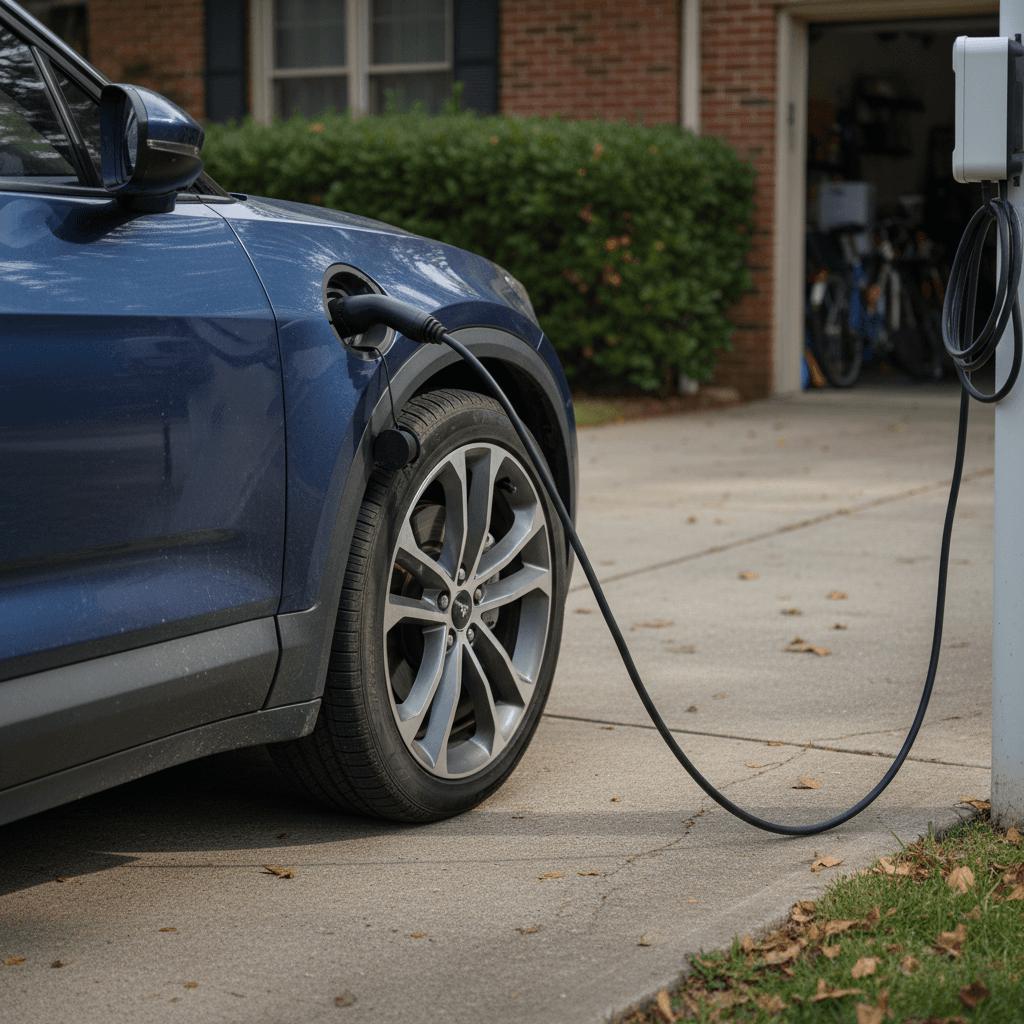
On the energy side, the Fisker Ocean behaves like a typical midsize EV SUV. Highway efficiency isn’t class‑leading, but you still enjoy a big gap vs. gas SUVs.
- A realistic real‑world efficiency band for many owners is around 2.4–3.0 miles per kWh depending on driving style, climate, and wheel/tire setup.
- At a U.S. average residential rate in the mid‑teens (cents per kWh), that works out to roughly 4–6 cents per mile for home charging.
- A comparable AWD gas SUV at current fuel prices often runs closer to 13–17 cents per mile in fuel alone.
Over 5 years and 60,000 miles, that fuel delta alone can put several thousand dollars back in your pocket versus a gas SUV. What complicates the Ocean picture isn’t what you pay the utility, it’s everything else wrapped around the vehicle.
Maintenance and repairs when the automaker is gone
One of the classic EV selling points is low routine maintenance. No oil changes, no spark plugs, no timing belts. Industry data shows EV maintenance costs can be 30% or more lower than similar gas vehicles over time. Still, the Ocean’s reality is more complicated because you can’t rely on a conventional dealer network.
Maintenance: where the Fisker Ocean saves, and where it doesn’t
Think in terms of “ordinary EV costs” plus an orphaned‑vehicle risk premium.
Costs similar to other EVs
- Tires: Heavy EV SUVs are hard on rubber; expect 30,000–40,000 miles from a set if you drive briskly.
- Brakes: Regenerative braking usually stretches pad life far beyond gas SUVs, unless software issues limit regen.
- Fluids: Occasional coolant and brake fluid service plus cabin air filters.
- Suspension & wear items: Bushings, shocks, and alignments over time, especially on rough roads.
Costs riskier than other EVs
- Software and electronics: Fisker’s own recalls and investigations highlighted glitches from door latches to brakes and drivability.
- Specialized parts: Body panels, control modules, and trim pieces may become scarcer and pricier without factory support.
- Diagnosis time: Independent shops will spend more billable hours learning a one‑off platform.
Build a repair reserve
Insurance costs and risk profile
Across the market, EVs tend to be slightly more expensive to insure than comparable gas vehicles because of higher vehicle values and specialized repair costs. For a mainstream EV SUV, that may mean a few hundred dollars more per year than a similar gas model.
A Fisker Ocean adds extra wrinkles for insurers:
- Uncertain access to OEM parts can lengthen repair times and increase total claim costs.
- If a repair requires proprietary software tools or parts that aren’t available, the car is more likely to be declared a total loss.
- Carriers may classify the Ocean as a higher‑risk, low‑data vehicle, which often translates into higher premiums or fewer insurers willing to quote.
Practically speaking, you should expect Ocean insurance to land at the upper end of the range for similar EV SUVs Depreciation is where Fisker Ocean long term ownership cost diverges most sharply from mainstream EVs. Even healthy EV brands can see 5‑year value losses of 50% or more, especially early‑generation models. An orphaned vehicle with multiple recalls and no clear factory support can fall faster. From a chemistry standpoint, the Ocean’s high‑voltage pack isn’t dramatically different from other modern EV batteries. Where it gets tricky is what happens if something goes wrong out of warranty in a world without a robust Fisker service network. The battery is both the car’s greatest asset and its biggest single potential expense. With most modern EVs, software is a selling point, over‑the‑air updates, new features, refinements. In the Ocean’s case, software has been one of the pain points, with reports of glitchy driver‑assist, braking feel, door latches, and more. Several NHTSA probes and recalls have already forced owners to seek updates and fixes. After Fisker’s collapse, a passionate owner community and third‑party organizations have stepped in with replacement apps and workaround solutions for remote access and feature control. That’s inspiring, but it also means: So is the Fisker Ocean a bargain or a money pit? Compared with mainstream EV SUVs like the Hyundai Ioniq 5, Kia EV6, Tesla Model Y, or Chevy Equinox EV, here’s the trade‑off: You can often buy a used Ocean thousands of dollars cheaper than a comparable mainstream EV SUV. That discount is your built‑in buffer against depreciation and higher risk. Here the Ocean behaves like any other EV SUV: low per‑mile fuel cost and fewer routine services than gas vehicles. Mainstream EVs come with functioning factory networks, parts pipelines, and software roadmaps. The Ocean does not, so you’re pricing in extra risk by default. Even if you find a good independent shop today, availability of control modules, body parts, and interior pieces 5–8 years out is a real question mark. Reselling or trading a used Ocean later may be harder than with other EV SUVs. You may have to accept a bottom‑of‑the‑market price or drive it until it’s no longer economical to fix. If you already have an Ocean, or you’re tempted by low used prices, there are practical ways to manage risk and keep long‑term ownership costs under control. Document the current condition: range, software version, any open recalls or issues. Get ahead on maintenance: baseline tire alignment, brake inspection, and basic service so you know where you stand. Shop insurance proactively each renewal to avoid surprise premium spikes. Set up a dedicated repair/contingency fund so one electronics failure doesn’t upend your finances. Keep all service records, if you ever sell, good documentation is your best defense against fire‑sale pricing. Start with your use case. If you need a bulletproof daily driver with minimal hassle, a more mainstream EV may be wiser. Insist on a thorough pre‑purchase inspection by an EV‑savvy technician focused on battery, high‑voltage systems, and software behavior. Get firm insurance quotes using the VIN before you sign anything. Make sure the discount vs. a similar EV SUV is meaningful, think five figures, not a few thousand dollars. Have an exit plan. If the market for Oceans dries up entirely, are you comfortable driving it to end of life? Ready to find your next EV? When you strip it down, Fisker Ocean long term ownership cost is a trade between low day‑to‑day running expenses and unusually high long‑term uncertainty. Electricity is cheap, routine maintenance is modest, and used prices are already heavily discounted. On the other hand, depreciation, software quirks, and the lack of a robust factory network mean you should only buy, or keep, an Ocean if you go in with clear eyes, a financial cushion, and realistic expectations. If you’re a budget‑conscious EV shopper who values predictability, you may be better served by a used EV SUV from a stable brand with strong parts and service support. If you’re a risk‑tolerant enthusiast attracted by the Ocean’s design and price, it can be a compelling “value play” as long as you treat it that way: price in a repair reserve, assume resale will be tough, and focus on getting as many enjoyable, low‑cost miles as you can from the years you have with it.Watch for limited coverage options
Depreciation and resale value
What’s already happened
What that means for you
Upside of buying late, not early
Battery health and replacement risk
Battery cost factors for Fisker Ocean owners
Normal degradation
Diagnosis and modules
Replacement economics
Make battery health your first filter
Software support, recalls and “hassle costs”
Value your own time
How a used Fisker Ocean compares to other EV SUVs
Ocean vs. mainstream EV SUVs: ownership trade‑offs
Total purchase cost
Energy and routine maintenance
Warranty and support
Long-term parts and repairability
Resale and exit options
Smart strategies if you own or are considering an Ocean
Ownership game plans: current vs. prospective Ocean owners
If you already own a Fisker Ocean
If you’re considering buying a used Ocean
How Recharged can help
FAQ: Fisker Ocean long-term ownership costs
Common questions about Fisker Ocean long-term costs
Is a Fisker Ocean worth owning long term?