If you’re searching for EV charging stations in Philadelphia, PA, you’re not alone. The city’s EV adoption is growing fast, but the charging network is still catching up and often feels patchy, especially if you park on the street. This guide walks through where chargers actually are, how fast they are, what they cost, and how to build a realistic charging routine in and around Philly.
Snapshot: Philly’s EV charging network in 2026
Why EV charging in Philadelphia feels different
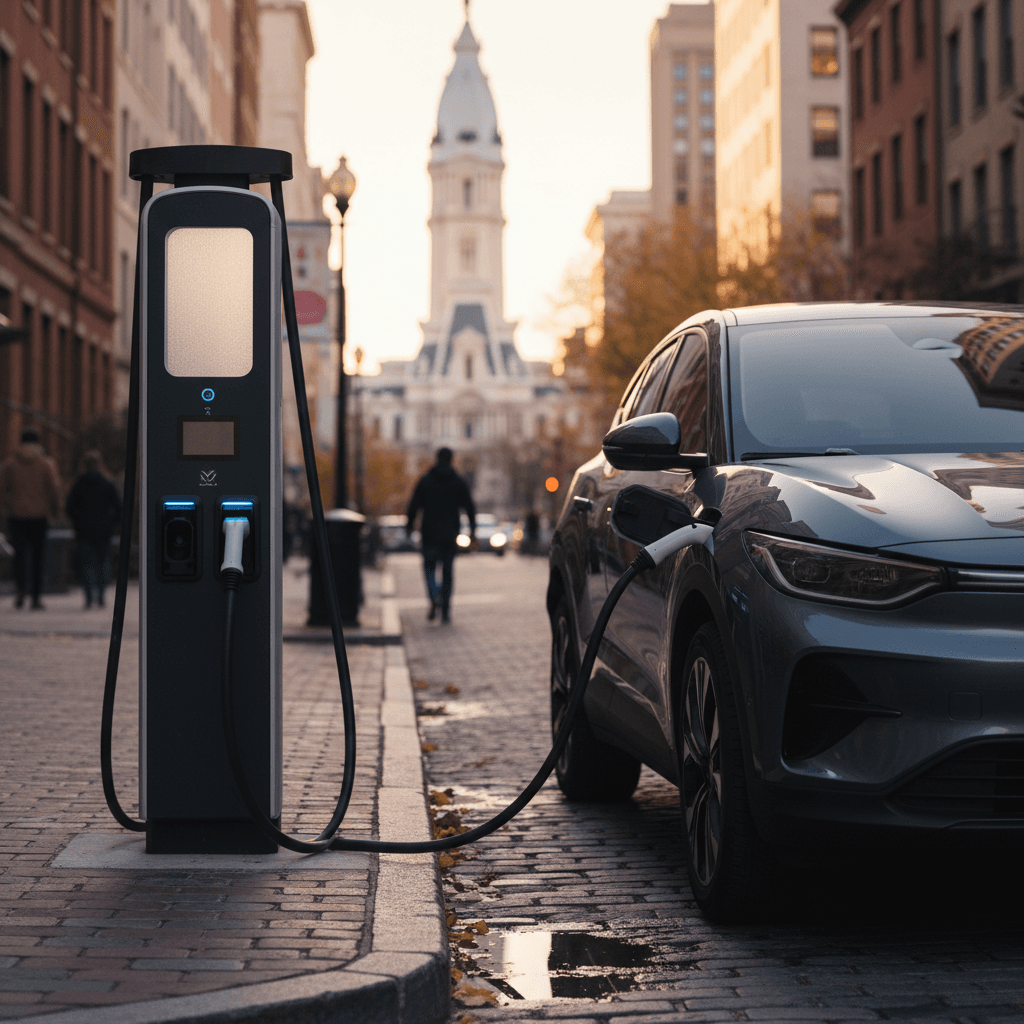
Philadelphia is a classic East Coast city: dense, rowhouse‑heavy, and dominated by street parking. That makes EV ownership feel very different here than in suburban parts of Pennsylvania where most homes have driveways and garages. Even as Pennsylvania climbs into the top 10 states for total public charging stations, many Philly residents still have to rely on shared public chargers, workplace plugs, or a lucky off‑street spot to keep their EVs topped up.
- Level 2 destination charging where you park for hours: garages, workplaces, universities, grocery stores, hospitals.
- DC fast charging when you need quick miles or are road‑tripping along I‑95, I‑76, or the Turnpike.
- Home or curbside charging if you have a driveway, a newer multifamily building, or live near a pilot curbside charger.
EV charging context: Pennsylvania and Philadelphia
How many EV charging stations Philadelphia has today
Public data and recent reporting suggest that the broader Philadelphia region now offers on the order of 450–480 public charging locations, up from roughly 140–180 in 2024. That growth has been driven by a combination of federal NEVI highway funds, state grants, utility programs, and private investment by retailers and parking operators.
- “Stations” vs. “ports”: One location might have 2–12 plugs. A shopping‑center fast‑charging hub could have 8+ DC fast ports, while a small lot might have just two Level 2s.
- City vs. metro: In‑city chargers are still clustered in Center City, University City, South Philly near big box retail, and a handful of municipal and hospital garages. Many stations counted in “Philadelphia” stats are technically just outside city limits, think King of Prussia, Cherry Hill, or the airport area.
- Growth is uneven: The network has expanded quickly along highways and in commercial corridors, but many residential neighborhoods still have little or no curbside charging.
Don’t assume coverage on every block
Types of EV charging stations in Philadelphia
Level 2: Everyday charging
Most of the EV charging stations in Philadelphia are Level 2 chargers using J1772 plugs (or Tesla wall connectors in private garages). They deliver roughly 6–11 kW, which usually adds 20–40 miles of range per hour depending on your car.
- Found at: workplaces, parking garages, universities, hotels, grocery stores, hospitals.
- Best for: topping up while you’re parked for a few hours or overnight.
- Typical session length: 2–8 hours.
DC fast charging: Road‑trip and rescue charging
DC fast chargers (often labelled DCFC or Level 3) are the highway pit‑stops of the EV world. In and around Philly, power levels commonly range from 50 kW older units up to 150–350 kW at newer hubs.
- Found at: highway interchanges, Wawas and Royal Farms, big box retail, travel plazas.
- Best for: adding 100+ miles in 20–40 minutes on trips, or when you’re low and short on time.
- Typical session length: 15–45 minutes.
Know your connector and max charge rate
Major EV charging networks in Philadelphia
Who actually runs the chargers you’ll use?
Most public stations fall under a few big brands plus local site hosts.
Tesla Supercharger & Destination
Tesla’s network is building out in the Philly region with both Superchargers (DC fast) and wall connectors (Level 2) at hotels and garages.
- Non‑Tesla access is expanding as more brands adopt NACS.
- Best for: Tesla owners today, and NACS‑equipped non‑Teslas at compatible sites.
Electrify America & EVgo
These are the major non‑Tesla DC fast networks around Philly, often anchored at shopping centers and highway exits.
- Power levels up to 150–350 kW.
- Apps show real‑time availability and pricing.
ChargePoint, Flo & others
Most of the city’s Level 2 chargers are on networks like ChargePoint or Flo but are actually owned by garages, employers, or universities.
- Pricing and access rules vary by site owner.
- Some are free for customers or employees.
On top of those national brands, you’ll increasingly see chargers labeled by utilities, parking operators, and retail chains. The software may still run on a major network, but on‑site signage might emphasize the property owner instead. When in doubt, open your preferred charging app and look for the familiar network logo before you plug in.
Best areas to find EV charging in and around Philadelphia
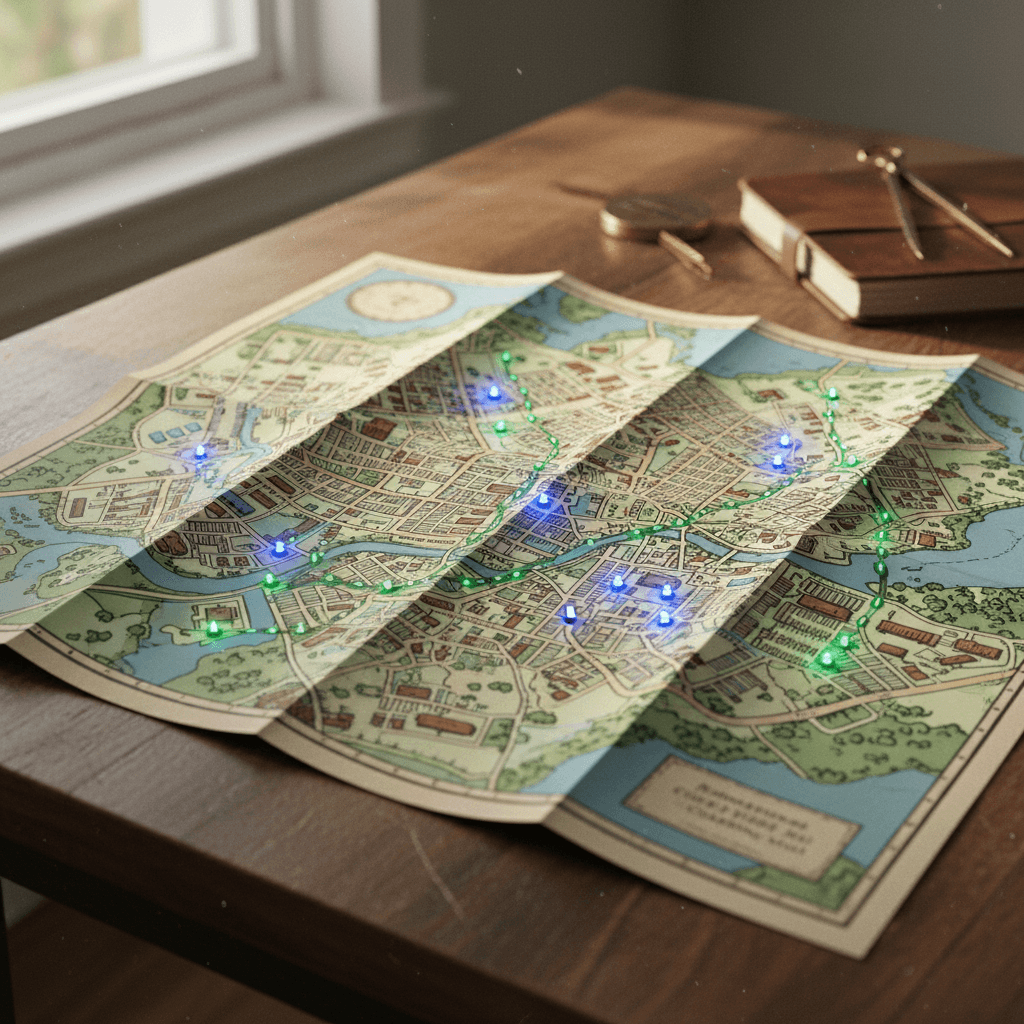
Common EV charging hotspots around Philadelphia
Use this as a starting point for planning your weekly charging routine.
| Area | What you’ll find | Charger type mix | Good for |
|---|---|---|---|
| Center City garages | Municipal and private garages, some hotels | Mostly Level 2, a few DC fast | Overnight parking, workday top‑ups |
| University City | Campus garages and lots, hospitals, labs | Heavy Level 2 | Staff and student charging while on campus |
| South Philly big‑box & stadium district | Retail centers, sports complex, I‑76/I‑95 access | Mix of Level 2 and DC fast | Errand‑day charging, pre‑trip top‑ups |
| Navy Yard & airport area | Corporate campuses, logistics hubs, hotels | Level 2 plus some DC fast | Commuters, fleet vehicles, airport parking |
| Suburban malls (e.g., King of Prussia) | Fast‑charging hubs at retail centers | Multiple DC fast networks plus Level 2 | Reliable fast charging with amenities while you wait |
| Turnpike & I‑95 service areas | Travel plazas and convenience stores | Primarily DC fast | Long‑distance trips in any direction |
Exact station counts change frequently, always confirm in an app before you drive out of your way.
If you can combine errands and charging, you win
How to find EV charging stations near you
Three reliable ways to find chargers
Use at least two sources so you’re not surprised by broken or blocked stations.
1. In‑car navigation
Most newer EVs (and many plug‑ins) integrate charging stations into their built‑in navigation.
- Filters by connector type your car can use.
- Often shows real‑time status for major networks.
- Can route you to arrive with a safe state of charge.
2. Public charging apps
Apps like PlugShare, ChargePoint, Electrify America, EVgo, Tesla, and others are indispensable in Philly.
- See recent check‑ins to know if a site is reliable.
- Filter for fast charging, free stations, or specific networks.
- Browse photos to understand parking layouts and access quirks.
3. Trip‑planning tools
For longer drives, tools like A Better Routeplanner (ABRP) or in‑car trip planners help you string together reliable fast chargers.
- Simulate winter and highway speeds.
- Avoid low‑power or out‑of‑service sites.
- Plan meal or restroom stops around charging time.
Quick checklist before you drive to a charger
Check recent user comments
Look for check‑ins from the last few days. If multiple drivers report broken connectors, blocked spots, or card reader issues, pick a different station.
Confirm power level and connector
Make sure the station actually offers DC fast if you need it, and that it has the right connector (CCS, NACS, or CHAdeMO) for your EV.
Verify access hours and fees
Some garage chargers shut off overnight or require paid parking even if the electricity is cheap. Read the details so you’re not surprised.
Have a backup option nearby
In dense cities, a charger can be blocked by parked cars or rideshare vehicles. Before you leave, identify a second‑choice station within a few miles.
Typical pricing and parking rules
Pricing for EV charging stations in Philadelphia, PA is all over the map because many Level 2 units are owned by private garages or employers. Still, some patterns have emerged:
- Level 2 in garages: Often billed per kWh, per hour, or baked into parking fees. Expect something like $0.20–$0.35/kWh in many locations, sometimes more in premium garages.
- Level 2 at workplaces or institutions: Frequently free or heavily discounted for employees or students, but limited to certain hours or permit holders.
- DC fast charging: Commonly billed per kWh, sometimes with a session fee or idle fee after a grace period. Effective prices can range from about $0.35–$0.55/kWh depending on network and time of day.
- Idle fees and time limits: High‑demand sites often charge extra if you stay plugged in after your session finishes, important in dense areas near Center City and the airport.
Watch for parking tickets and towing
Home and curbside charging options in Philadelphia
If you own a driveway, garage, or deeded off‑street spot in the city or suburbs, installing Level 2 home charging will transform your EV experience. A 240‑volt circuit and a 32–48 amp charger will usually refill a typical EV battery overnight, even after a long commute.
Apartments and condos: ask about “EV‑ready” plans
For the majority of Philadelphians who rely on street parking, the picture is more complicated. The city has experimented with limited curbside pilots and municipal fleet charging projects, and federal funds are earmarked for more public ports across the region over the next few years. But for now, most residents without off‑street parking will still depend on a combination of workplace charging and destination or fast charging at garages and retail centers.
When home charging makes sense
- You have reliable off‑street parking and control over electrical work.
- Your daily commute is under 60–80 miles round‑trip.
- You value waking up every day with a “full tank.”
In this scenario, public charging becomes mostly a backup for road trips or unusual weeks.
When you’ll rely on public charging
- You park on the street or share a lot without dedicated spaces.
- Your employer doesn’t yet offer charging.
- You live in a neighborhood with limited curbside infrastructure.
Here, it’s crucial to map out 2–3 reliable stations that fit your routine before you buy an EV.
Planning road trips from Philadelphia with public charging
From Philadelphia, you’re within a day’s drive of Boston, D.C., New York, Pittsburgh, the Jersey Shore, Baltimore, and much of New England. The good news is that the interstate corridors connecting those destinations are some of the best served by public fast charging in the country, thanks to federal NEVI funding, utility investments, and private networks.
Road‑trip planning steps for Philly EV drivers
Map your route around fast chargers, not just distance
Use your car’s planner or a tool like ABRP to place reliable fast‑charging stops every 80–150 miles depending on your EV’s range and weather.
Target higher‑power sites when possible
If your EV can make use of 150 kW+ chargers, prioritize those hubs, it can shave 10–20 minutes off each stop compared with older 50 kW units.
Arrive low, leave high, but not 100%
Fast chargers work fastest when your battery is between about 10% and 60–80%. Plan shorter, more frequent stops rather than one giant charge to 100%.
Avoid peak holiday travel when you can
On weekends and holidays, highway chargers near Philly can see queues. Leaving early in the morning or traveling off‑peak reduces wait times.
Think in “hours parked” instead of “full tanks”
Choosing a used EV that fits Philly’s charging reality
Because Recharged focuses on used EVs, we think a lot about how charging realities in cities like Philadelphia should shape your shopping list. The right car for someone with a driveway in the suburbs is not necessarily the right car for a street‑parking renter in South Philly.
Match your used EV to your charging situation
Ask these questions before you fall in love with a specific model.
If you’ll rely heavily on public charging
- Prioritize models that charge quickly on DC fast (strong charging curve, at least 100–150 kW peak where possible).
- Look for good efficiency (miles per kWh) so each session gets you farther.
- Make sure you have the right connector (CCS or NACS) for the networks you’ll use most.
If you’ll mostly charge at home or work
- Daily convenience matters more than ultimate DC speed, Level 2 performance and battery health are key.
- Even lower‑range EVs can work well if your commute is short and you can plug in nightly.
- Focus on models with stable long‑term battery behavior and good winter performance.
How Recharged can help Philadelphia shoppers
Ready to find your next EV?
Browse VehiclesEV charging stations in Philadelphia, PA: FAQ
Frequently asked questions about EV charging in Philadelphia
Key takeaways for Philadelphia EV drivers
- The number of EV charging stations in Philadelphia, PA has grown rapidly, but coverage is still clustered around highways, commercial hubs, and a few central neighborhoods.
- If you have a driveway or garage, installing Level 2 home charging turns public stations into a convenience, not a necessity.
- If you rely on street parking, your EV experience will depend on how well you can integrate workplace, garage, and retail charging into your weekly routine.
- For road trips, the I‑95, I‑76, and Turnpike corridors are now well served by multiple DC fast networks, plan around those hubs, not just your final destination.
- When shopping for a used EV, pay attention to connector type, fast‑charging speed, efficiency, and battery health, not just the headline EPA range figure.
- Recharged can help you choose a used EV whose charging behavior actually fits the way Philadelphia’s infrastructure looks on the ground today, and then deliver that car to your driveway or local pickup point.
Philadelphia’s charging network is in that awkward adolescent phase: big enough to make daily EV life possible for many drivers, but not yet dense enough that you can stop thinking about it. With realistic expectations, the right car, and a short list of reliable stations that fit your routine, an EV can still be a smart, lower‑maintenance, and lower‑fuel‑cost choice in and around the city. If you’re ready to explore used EVs that make sense for your block, and your budget, Recharged is built to help you every step of the way.