Driving an electric vehicle in Fayetteville, NC gets easier every year. New public EV charging stations are popping up across Cumberland County, utilities are adding options, and the I‑95 corridor through town is now well‑covered by fast‑charging networks. If you’re searching for EV charging stations in Fayetteville, NC, whether for a daily top‑up or a road‑trip stop, this guide walks you through what’s available and how to use it smartly.
Why Fayetteville matters for EV drivers
EV charging in Fayetteville, NC: what to expect
North Carolina & Fayetteville EV charging snapshot
Fayetteville doesn’t have the dense EV infrastructure of Charlotte or Raleigh yet, but it punches above its weight for a mid‑sized city on a major interstate. You’ll find a mix of Level 2 chargers around shopping areas, parks, and campuses, and DC fast chargers clustered near the I‑95 exits that serve through‑traffic. For most local drivers, a combination of home charging and occasional public top‑ups is more than enough.
Know your charger types before you plug in
Level 1 & Level 2 (AC charging)
- Level 1 (120V) – Standard household outlet, adds ~3–5 miles of range per hour. Works in a pinch but slow for full charges.
- Level 2 (240V) – Most public stations in Fayetteville and typical home wall units. Adds ~20–40 miles of range per hour depending on your car and the amperage.
- Best for: Overnight charging at home, workplace charging, and topping up while you shop, dine, or take classes.
DC fast charging (DCFC)
- 50–350 kW high‑power chargers along I‑95 and at select sites in the metro area.
- Can add 60–200+ miles of range in 20–40 minutes on many newer EVs.
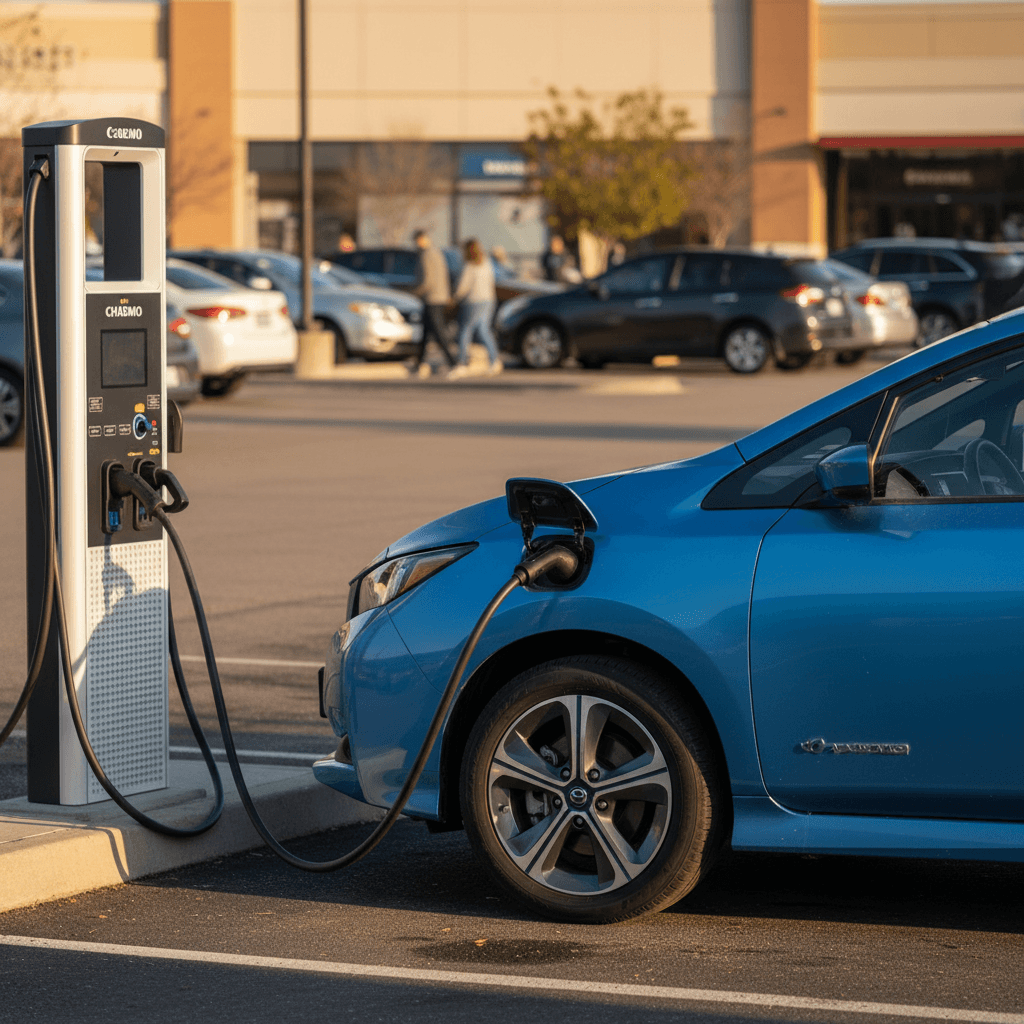
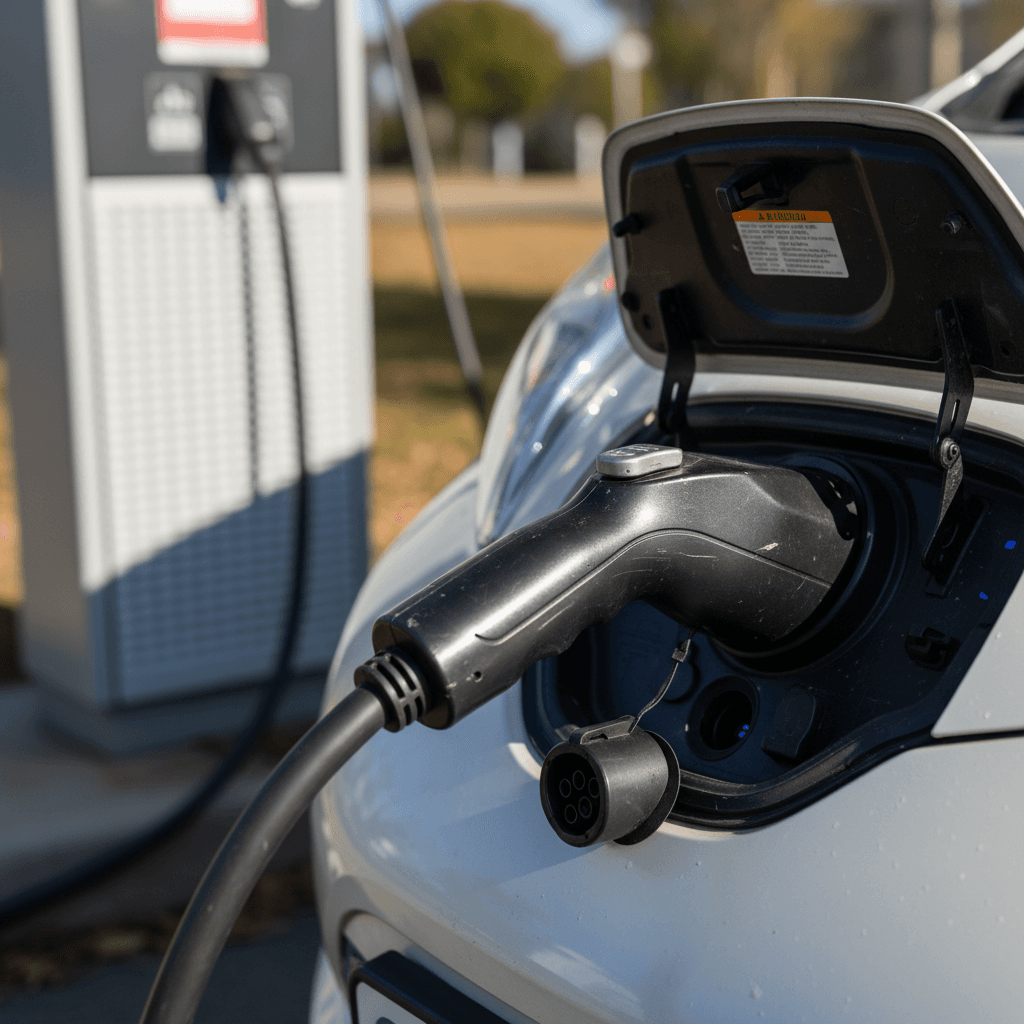
- Uses connectors like CCS, CHAdeMO (older Nissan LEAF), and increasingly NACS as more automakers adopt Tesla’s plug.
- Best for: Road trips, quick top‑ups when you’re low, or drivers without regular home charging.
Check your connector and charge rate
Public EV charging stations in Fayetteville and Cumberland County
The easiest way to see all EV charging stations in Fayetteville, NC is with apps like PlugShare, ChargePoint, or Google Maps. But it helps to understand the local pattern before you search, so you know where you’re likely to find a charger and what kind it will be.
Where you’re most likely to find public chargers
Typical charging hotspots around Fayetteville
Shopping & dining corridors
Look near Skibo Road, Cross Creek Mall, and major retail centers. Charging networks like ChargePoint often place Level 2 or DC fast chargers where you can easily shop or eat while you charge.
Parks & recreation
Fayetteville PWC maintains public Level 2 stations at Honeycutt Park, Lake Rim Park, Clark Park, and Marketfair Mall. These are great for topping up during sports, hikes, or family outings.
Colleges & campuses
Fayetteville Tech Community College (FTCC) is adding Level 2 EV chargers with federal grant funding, and other local campuses are slowly following suit. These are typically best for students and staff, but some are guest‑accessible.
Watch for access rules
Fast charging along I‑95 near Fayetteville
If you’re just passing through on I‑95, fast charging is what matters most. The corridor between Rocky Mount and Florence is now lined with DC fast chargers from networks like Electrify America, EVgo, and others. Around Fayetteville, most of these sites are clustered at highway exits with easy access to food, restrooms, and 24/7 services.
Typical fast‑charging options on and near I‑95 by Fayetteville
Exact sites change over time, but this table shows the types of locations and what to expect.
| Location type | Typical networks | Charge speeds | Best use case |
|---|---|---|---|
| Travel plazas & truck stops | Electrify America, EVgo, branded networks | 150–350 kW DCFC plus occasional Level 2 | Fastest stop on long road trips; in and out in 20–30 minutes. |
| Big‑box retail near exits | ChargePoint, EVgo, Tesla Supercharger (where non‑Tesla access exists) | 50–250 kW DCFC, Level 2 | Combine charging with grocery, shopping, or pharmacy runs. |
| Hotels near interchanges | ChargePoint, destination chargers | Level 2 (7–11 kW) | Overnight charging for travelers who can plug in while they sleep. |
Always confirm up‑to‑date station details in your preferred charging app before you drive.
Plan I‑95 stops before you leave
City, utility, and campus charging options
Beyond national networks, Fayetteville’s own institutions are quietly building useful charging options that can anchor your daily routine if you live, work, or study nearby.
Locally backed charging you should know about
City, utility, and campus chargers that serve Fayetteville drivers
City & county projects
Cumberland County installed an EV charger at the Department of Public Health using Volkswagen settlement funds, part of a broader clean‑transportation push. The City of Fayetteville is also investing in electric buses and depot charging for its FAST transit fleet, signaling a long‑term commitment to EV infrastructure.
Fayetteville PWC chargers
The local utility, Fayetteville PWC, operates multiple public Level 2 chargers across the city. These stations are accessible 24/7 and are easy to find in PlugShare or on PWC’s website. For residents, PWC also offers EV‑friendly time‑of‑use rates that reward overnight charging at home.
Community college & training sites
Fayetteville Technical Community College is adding Level 2 chargers funded by a 2024 federal grant. The project also supports training programs for EV maintenance and charger installation, which should improve long‑term reliability as more stations come online.
How much it costs to charge in Fayetteville
Pricing for EV charging stations in Fayetteville, NC varies by location and network, but there are predictable patterns. Understanding them helps you decide when it’s worth paying for fast charging and when home or workplace charging makes more sense.
Public Level 2 pricing
- Many municipal or utility‑backed Level 2 chargers in North Carolina still offer low per‑kWh rates or flat session fees. Some workplace and campus chargers are free for permitted users.
- Commercial networks (like ChargePoint) often bill by the kWh or by the hour. In much of NC, you’ll typically see the equivalent of roughly $1.00–$2.00 per hour of Level 2 use, though exact numbers vary.
- Level 2 remains the cheapest public option for routine top‑ups if you have the time to park.
DC fast‑charging pricing
- Fast‑charging networks on I‑95 usually bill by the kWh, with prices that often equate to more per mile than charging at home but still less than gasoline on a per‑mile basis for many EVs.
- Expect higher prices at peak travel times and slightly lower rates (or promotional discounts) late at night or mid‑week, depending on the network.
- Because DC fast charging is more expensive, reserve it for road trips or emergencies, and rely on home or workplace charging for everyday use when possible.
Home charging is still the value play
Best apps and maps for finding EV stations
Even though this guide focuses on Fayetteville, specific locations can change fast as new chargers open or old ones are upgraded. Reliable apps keep you up to date and help you avoid broken or blocked stations.
Apps Fayetteville EV drivers should install
Use more than one for redundancy
PlugShare
Crowd‑sourced map that shows nearly every public charger in Fayetteville and across the country. You’ll see check‑ins, photos, and notes about reliability, parking rules, and nearby amenities.
Network apps
Electrify America, EVgo, ChargePoint, Blink, and other networks all have their own apps. Install the ones that match the stations you use most so you can start and stop charging, monitor rates, and get session history.
Google Maps & in‑car nav
Google Maps, Apple Maps, and many EV infotainment systems now include real‑time charging information. Your car’s built‑in navigation may also precondition the battery on the way to a fast charger to improve speeds.
Always read recent check‑ins
Home charging, off‑peak rates, and daily driving
For most EV owners in Fayetteville, the real backbone of charging is still home. A simple Level 2 unit in your garage or driveway lets you wake up with a “full tank” most mornings, while public stations fill in the gaps or handle road‑trip duty.
Setting up smart home charging in Fayetteville
1. Confirm electrical capacity
Have a licensed electrician confirm your panel can safely support a 240V circuit for a Level 2 charger. Many garages already have capacity, but older homes may need upgrades.
2. Choose a Level 2 charger
Look for a 32–40 amp Level 2 unit with Wi‑Fi or app control so you can schedule overnight sessions and track energy use. Hard‑wired units are typically more weather‑resistant outdoors.
3. Enroll in time‑of‑use rates
Check Fayetteville PWC’s optional Whole‑Home or similar off‑peak rate plans. Shifting most charging to super off‑peak hours (often late at night) can cut your per‑kWh cost dramatically.
4. Set charge limits and schedules
In your charger app or your car’s settings, set a daily charge limit (for example 80%) and schedule charging to run during off‑peak hours so your battery and your electric bill both benefit.
5. Keep a backup plan
Know the nearest public Level 2 and DC fast chargers in case a storm, outage, or panel work interrupts home charging. Save them as favorites in your apps.
Safety first with DIY projects
Planning EV road trips from Fayetteville
Fayetteville’s spot on I‑95 makes it a solid launch point for trips north to the Mid‑Atlantic or south toward Savannah, Jacksonville, and Florida. With a little planning, an EV road trip can be as straightforward as a gas‑car journey, just with different pit stops.
Sample EV trip strategies from Fayetteville
Weekend beach or Wilmington run
Use home charging the night before so you start near 100%.
Rely mostly on Level 2 charging at your hotel or rental; many coastal properties now offer chargers.
If you need a quick boost, look for DC fast chargers along I‑95 or I‑40 on the way back.
Long I‑95 corridor trip (DC, Savannah, Florida)
Map primary and backup DC fast chargers every 80–120 miles using ABRP or PlugShare.
Favor larger travel plazas or multi‑stall sites in case a unit is offline.
Plan meals around charging stops instead of adding extra breaks just to charge.
Arrive at fast chargers with 10–40% battery when practical, charging is fastest in this range.
Military and commuter routes
If you commute to Fort Liberty or regional hospitals, combine workplace Level 2 charging with home overnight charging.
Keep an eye out for new chargers on base or in nearby retail centers as infrastructure expands.
For irregular duty hours, off‑peak home charging can help keep fuel costs predictable even on a shifting schedule.
Cold snaps & summer heat
Choosing the right used EV for Fayetteville driving
Where and how you charge in Fayetteville should influence the EV you choose, especially if you’re shopping the used market. Battery size, fast‑charging speed, and connector type can all determine how easy your life will be on I‑95 or running errands across town.
Match range to your real routes
- If most of your driving is commuting within Fayetteville plus occasional trips to Raleigh or the coast, an EV with 220–260 miles of rated range is usually more than enough.
- If you plan frequent long I‑95 runs, look at models that accept at least 100 kW on DC fast chargers so you’re not waiting longer than necessary at every stop.
- Apartment dwellers or on‑base residents without home charging should favor EVs with stronger fast‑charging performance and good efficiency so each DC session stretches farther.
Check battery health and charging capability
- On a used EV, verified battery health matters more than the original EPA range sticker. A healthy pack will deliver better daily range and hold DC fast speeds longer.
- Confirm which connector your car uses (CCS, CHAdeMO, or NACS) and whether adapters are included or easy to buy.
- Understand whether your trim supports faster DC charging (some base models charge slower than higher trims).
How Recharged can help
Ready to find your next EV?
Browse VehiclesFrequently asked questions about EV charging in Fayetteville, NC
EV charging in Fayetteville: quick answers
The EV landscape in Fayetteville, NC is changing fast, but the direction is clear: more chargers, more routes, and more everyday convenience. Whether you’re fueling a daily commute, planning a long I‑95 road trip, or shopping for your first used EV, understanding how local EV charging stations in Fayetteville, NC fit together will make ownership far easier. Use the right apps, lean on home charging when you can, and choose an EV whose range and charging speeds match the way you actually drive, and you’ll be well‑positioned for the next wave of infrastructure growth across the Sandhills and beyond.