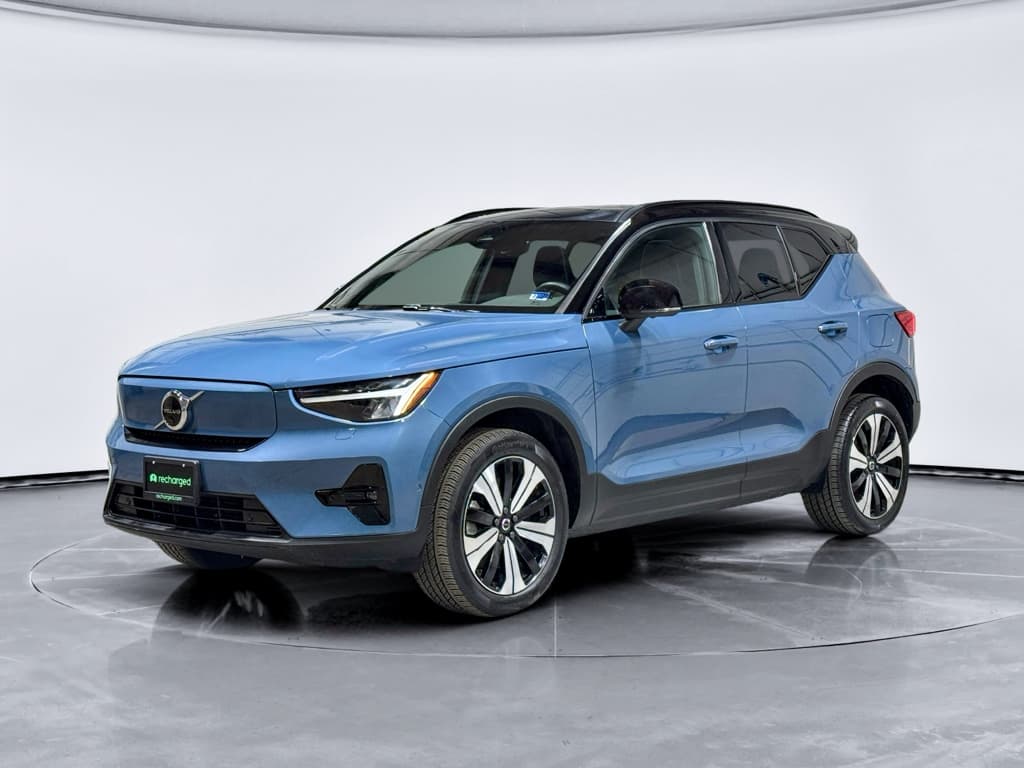
If you’re looking at a Volvo EX30, the first thing you should understand isn’t 0–60 or screen size, it’s the battery warranty. Your EX30’s high‑voltage pack is the most expensive component in the car, and knowing the exact Volvo EX30 battery warranty details is key to predicting long‑term costs, especially if you’re buying used.
Quick takeaway
Volvo EX30 battery warranty at a glance
Volvo EX30 battery & new‑car warranty snapshot
Volvo publishes battery warranty terms by market and model year, but for the EX30 in the U.S. the pattern follows Volvo’s broader BEV policy: an 8‑year / 100,000‑mile high‑voltage battery warranty layered on top of a 4‑year / 50,000‑mile New Vehicle Limited Warranty. In Canada and most global markets, the mileage cap for BEV batteries is 160,000 km rather than 100,000 miles.
Model‑year & market caveat
How long the Volvo EX30 battery warranty lasts
Typical Volvo EX30 warranty terms (North America)
How the EX30’s high‑voltage battery warranty stacks up against the rest of the car.
| Component | Time limit | Mileage / distance limit | Notes |
|---|---|---|---|
| New Vehicle Limited Warranty (whole car) | 4 years | 50,000 miles (80,000 km) | Covers most non‑wear components, including EV‑specific hardware except where separately listed |
| High‑voltage battery (BEV) – U.S. | 8 years | 100,000 miles | Covers defects and excessive capacity loss; details in battery warranty policy |
| High‑voltage battery (BEV) – Canada | 8 years | 160,000 km | Same basic structure as U.S., different distance cap |
| 12V & support batteries | 4 years | 50,000 miles (80,000 km) | Covered under New Vehicle Limited Warranty |
| Corrosion (perforation) | 12 years | Unlimited miles | Body rust‑through only, not battery case surface corrosion |
Always check your own vehicle’s warranty booklet to confirm exact terms.
Two clocks are always ticking on the EX30’s high‑voltage battery warranty: time and mileage. Once you hit 8 years from the in‑service date or cross the distance limit (100,000 miles in the U.S., 160,000 km in Canada), the high‑voltage battery warranty is done, regardless of how healthy the pack is at that moment.
How to find your in‑service date
What the EX30 high-voltage battery warranty actually covers
Volvo’s battery warranty is designed around two core risks: defects and abnormal degradation. In plain language, the EX30 battery warranty is meant to protect you if the pack fails prematurely or loses more usable energy than Volvo considers normal within the warranty period.
- Defects in materials or workmanship in the high‑voltage battery pack or its modules under normal use
- Battery management system (BMS)‑related issues that lead to improper operation or fault codes traced back to the pack or its integrated electronics
- Cooling or containment failures inside the pack that are traceable to a manufacturing defect rather than external damage
- Excessive capacity loss, usually defined via a state‑of‑health (SoH) threshold, measured and verified by Volvo within the warranty window
If a verified defect or excessive capacity loss is found, Volvo’s policy allows for repair, module replacement, or a complete pack replacement. In many cases Volvo will use a new or Volvo Genuine Refurbished battery pack, but either way the warranty requires that the replacement meet or exceed the capacity threshold that triggered the repair.
Refurbished packs still carry warranty
Battery degradation: how much loss is covered?
Every lithium‑ion EV battery degrades over time, and Volvo is explicit that normal gradual capacity loss is not a defect. Where things get interesting is the internal threshold Volvo uses to decide when degradation has become “too much” and triggers a battery repair or replacement under warranty.
Volvo publishes the exact capacity‑loss trigger in its internal battery warranty policy and dealer manuals rather than in big marketing headlines. For recent Volvo BEVs, that threshold has generally meant that if the high‑voltage battery’s usable capacity, measured with Volvo’s own diagnostics, falls below a set percentage of its original usable capacity within 8 years / 100,000 miles, Volvo will repair or replace the pack.
Don’t rely on the dash alone
1. You notice a big range drop
Maybe your EX30 that used to reliably show 275 miles at 100% is now closer to 220 on mild days, with the same driving pattern.
- You schedule a visit with a Volvo retailer
- Describe the range change and ask for a battery health check
2. Volvo verifies capacity with diagnostics
The retailer pulls detailed battery data with Volvo’s tools, measuring usable energy and state‑of‑health (SoH).
- If capacity is below Volvo’s internal threshold, a repair or replacement is authorized
- If it’s above the threshold, the pack is considered "within spec" even if you notice some loss
The practical implication: you should expect some range loss over 8 years that will not qualify for a warranty claim. The warranty exists to catch packs that are outliers, those that degrade far faster than Volvo considers normal, not every car that’s down, say, 15–20% at year eight.
What’s not covered by the EX30 battery warranty
The easiest way to get burned by a battery warranty is to misunderstand its exclusions. Volvo’s EX30 battery coverage follows the same general pattern as other OEMs: defects and abnormal degradation are covered; abuse, accidents, and environmental damage are not.
Common EX30 battery warranty exclusions
These are examples, your warranty booklet will have the definitive list.
Impact & crash damage
Damage from collisions, road debris, or bottoming out the pack on obstacles is typically excluded.
Insurance, not the battery warranty, usually covers this.
Extreme temperature abuse
Leaving the car fully charged and parked for long periods in extreme heat can accelerate degradation and may be deemed misuse.
Improper charging or equipment
Using non‑approved charging equipment that causes damage, or ignoring clear charging‑system warnings, can void coverage for a related failure.
Ignoring warning lights
Continuing to drive for long periods with battery‑system warnings lit, instead of seeking service, can give Volvo grounds to deny a related claim.
Flooding & water ingress
Submersion or deep‑water damage, such as flood events, is usually excluded and handled by insurance.
Unauthorized modifications
Unapproved software tunes, tampering with cooling systems, or opening the pack can void related coverage.
DIY on the high‑voltage pack is a hard no
New vs. used Volvo EX30 battery warranty
If you’re buying a new EX30, the story is straightforward: you get the full 8‑year / 100,000‑mile high‑voltage battery warranty from day one. When you’re shopping used, you’re stepping into the middle of that story, and that’s where most buyers get confused.
Buying a new EX30
- Full term from the in‑service date: 8 years / 100,000 miles on the battery
- 4 years / 50,000 miles bumper‑to‑bumper new‑car warranty
- Complimentary scheduled maintenance on BEVs for a limited term (model‑year dependent)
Buying a used EX30
- The battery warranty is transferable; you get whatever remains of the original 8‑year / 100,000‑mile term
- No "reset" at sale, the clock keeps running from the first in‑service date
- New‑car warranty may be partially or fully expired, depending on age and miles
Used‑car buying hack
At Recharged, every used Volvo EX30 we list comes with a Recharged Score Report that uses verified battery diagnostics, not guesses, to show remaining capacity and estimated health. That lets you line up the paper warranty coverage with the actual state of the pack before you commit.
Warranty vs. battery life: what to really expect
An 8‑year / 100,000‑mile warranty doesn’t mean the Volvo EX30’s pack turns into a pumpkin on day 2,922. It simply means Volvo is on the hook for defects and outlier degradation until that date, and you’re on the hook after.
- Most modern EV packs, including Volvo’s, are engineered to last well beyond the warranty period in normal use
- You should expect some gradual range loss, think in terms of a slow taper rather than a cliff
- How you charge, how hot or cold your climate is, and how often you fast‑charge all move the needle on long‑term health
- A pack that still has, say, 75–80% of its original usable capacity at 10–12 years old is entirely plausible with careful use
Why Volvo can offer 8‑year coverage
How to protect your Volvo EX30 battery and keep warranty intact
The EX30’s battery management system does a lot of work behind the scenes to protect the pack, but your habits still matter. The upside: the habits that keep the battery healthy are largely the same ones that help you avoid warranty gray areas.
Simple habits that support EX30 battery health
1. Avoid living at 100%
Use 100% charges for road trips, not everyday commuting. For daily use, a charge limit in the 70–90% band is usually kinder to the pack while still giving you ample range.
2. Don’t fear fast charging, but be strategic
DC fast charging won’t instantly kill the battery, but constant fast‑charging from low state‑of‑charge in extreme heat is harder on it. Mix in AC charging at home or work when you can.
3. Keep software up to date
Battery‑management and thermal‑control tweaks are often delivered via software updates. Let your EX30 install them, they can improve both protection and usable range.
4. Respect warning messages
If you see repeated battery‑system warnings, book service rather than ignoring them. Continuing to drive for months with warnings lit can undermine a future claim if something fails.
5. Be mindful of extreme heat
When possible, park in shade or indoors in very hot climates, especially after fast charging. High sustained pack temperatures accelerate chemical aging.
6. Document unusual behavior
If you notice a sudden, persistent range drop or strange charging behavior, jot down dates, mileage, and conditions. That record can help Volvo or a marketplace like Recharged interpret diagnostic data later.
Good habits pay off twice
Volvo EX30 battery warranty vs. rivals
On paper, the Volvo EX30’s high‑voltage battery warranty is solid but not groundbreaking. It broadly matches the mainstream EV industry’s center of gravity: 8 years / 100,000 miles in the U.S. for BEVs.
How the EX30’s battery warranty compares
Approximate U.S. high‑voltage battery warranty terms for key competitors.
| Model | Battery warranty (time) | Battery warranty (mileage) | Notes |
|---|---|---|---|
| Volvo EX30 | 8 years | 100,000 miles | Typical Volvo BEV policy; market‑specific km limits abroad |
| Hyundai Kona Electric | 10 years | 100,000 miles | Longer time limit, similar mileage cap |
| Kia Niro EV | 10 years | 100,000 miles | Industry‑leading time coverage |
| Tesla Model Y | 8 years | 120,000–150,000 miles (varies by battery) | Higher mileage cap on some trims |
| Chevrolet Equinox EV | 8 years | 100,000 miles | Matches GM’s standard BEV term |
| Ford Mustang Mach‑E | 8 years | 100,000 miles | Ford’s typical BEV battery coverage |
Always check the most recent warranty booklets; terms can change by model year.
So where does that leave the EX30? The warranty isn’t the longest in the segment, but it’s firmly competitive. Given Volvo’s conservative approach to safety and thermal management, an 8‑year term suggests a meaningful level of confidence in the chemistry and pack design rather than a race to the bottom on cost.
How Recharged evaluates Volvo EX30 battery health
A factory warranty tells you how long Volvo is obligated to help. It doesn’t tell you how healthy a specific used EX30’s pack is today. That’s the gap Recharged was built to close.
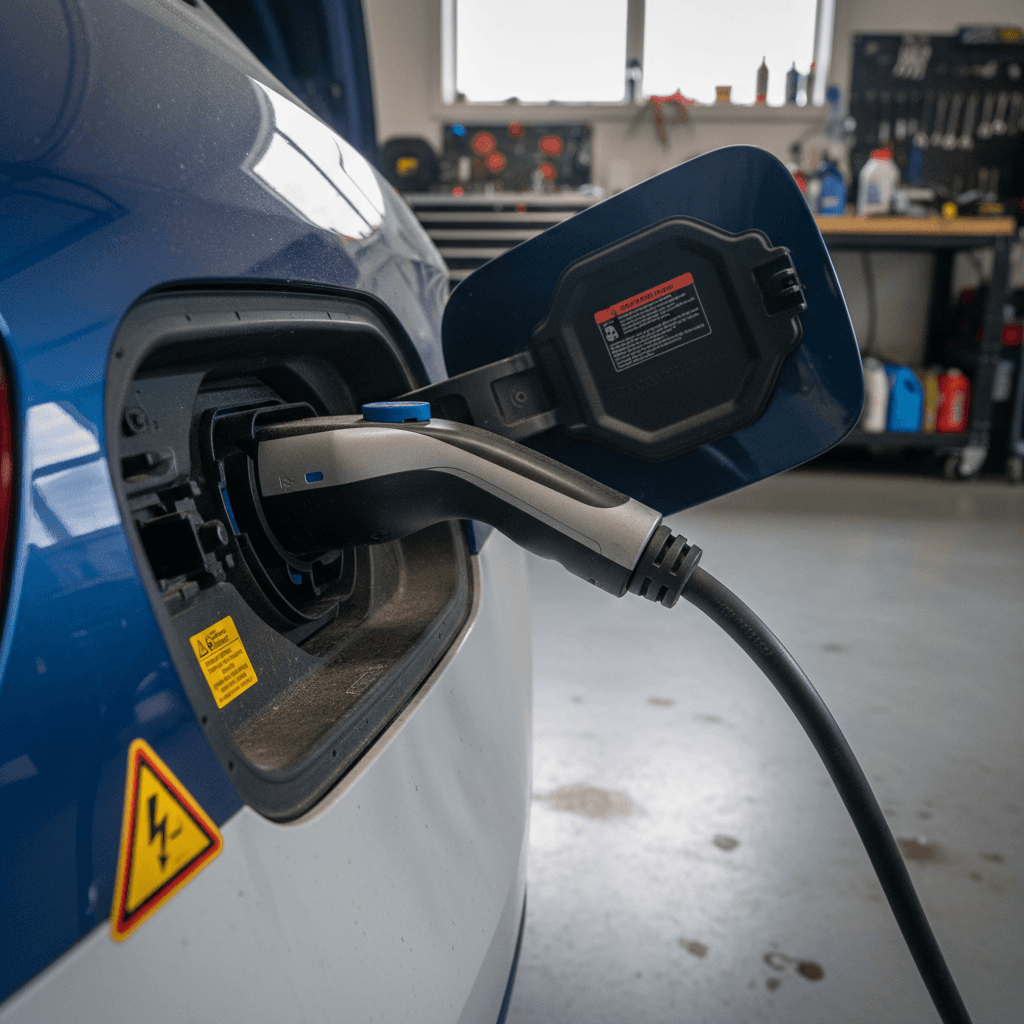
What you see in a Recharged Score Report for an EX30
Battery health made understandable, not mysterious.
Measured state‑of‑health
We translate raw battery diagnostics into a clear health score, so you can see how a given EX30 compares to typical cars of the same age and mileage.
Degradation vs. age & miles
We contextualize capacity loss against normal patterns, so you know whether a car looks like an outlier you should avoid.
Warranty & risk context
We highlight how much high‑voltage battery warranty remains, what a hypothetical out‑of‑warranty repair might cost, and how that should factor into price.
Ready to find your next EV?
Browse VehiclesBecause Recharged is both a marketplace and a data company, we’re not guessing from the dash gauge. We pull real diagnostic data, apply consistent methodology across brands, and then price vehicles accordingly, so you see the battery story and the fair‑market value story in one place.
FAQ: Volvo EX30 battery warranty details
Volvo EX30 battery warranty: common questions
Bottom line: is the Volvo EX30 battery warranty good enough?
Stepping back, the Volvo EX30 battery warranty details paint a picture that should be reassuring to most buyers. An 8‑year / 100,000‑mile high‑voltage battery warranty is competitive with the segment, Volvo’s track record on safety and thermal management is strong, and the exclusion list is about what you’d expect from a serious OEM, not a science experiment.
Where a lot of shoppers run aground is in the gray space between brochure speak and a specific used car sitting on a lot. That’s why, whether you’re buying new or used, you should pair factory coverage with real battery health data. On Recharged, every used EX30 listing includes a Recharged Score Report, expert EV‑specialist support, and transparent pricing grounded in that data, so you’re not just betting on the warranty, you’re buying with your eyes open.
If you’re considering a Volvo EX30, or cross‑shopping it against other compact EVs, getting clear on the battery warranty is step one. Step two is making sure the specific car you’re buying actually lives up to that promise. That’s exactly the gap Recharged exists to close.