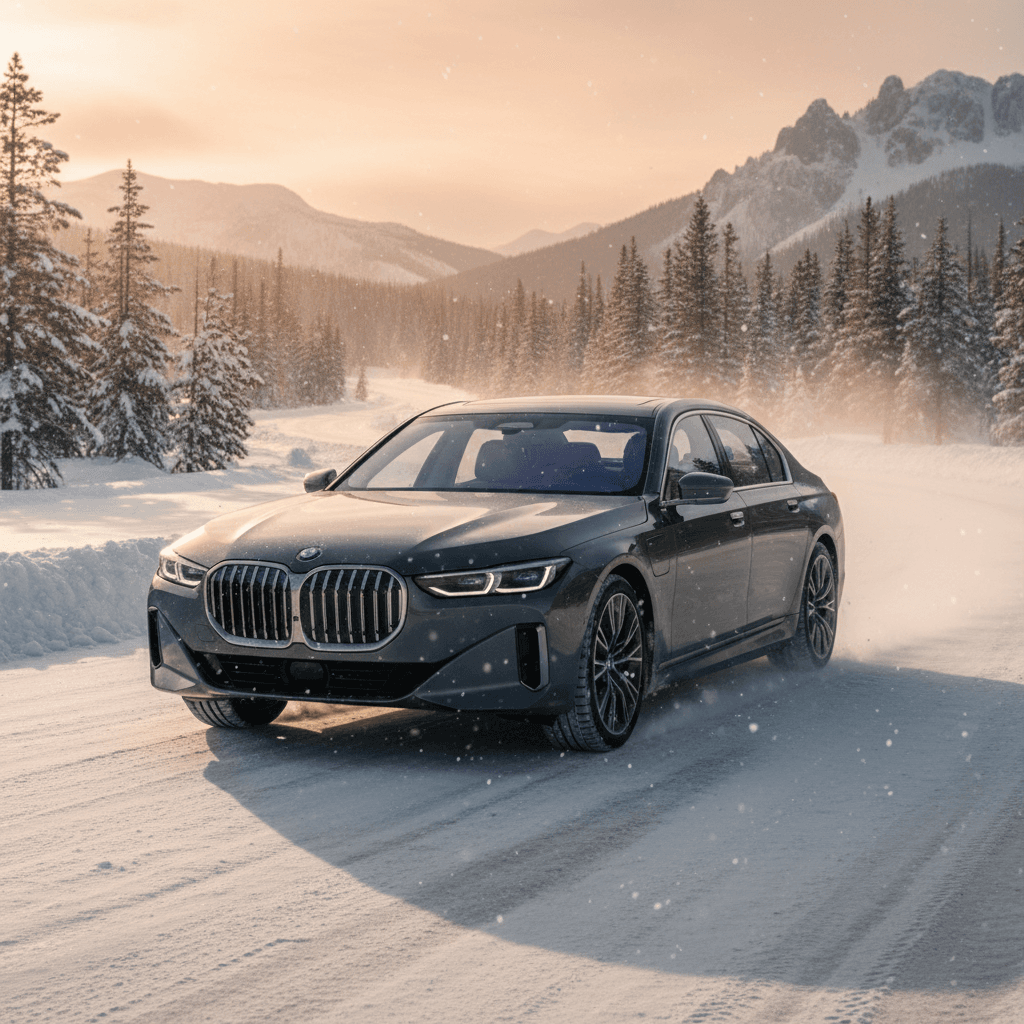
If you’re eyeing a BMW i7 and live where winters are serious, you’re probably wondering: is the BMW i7 best for snow and ice, or should you stick to an SUV? The answer is nuanced. The i7 can be an excellent winter car when it’s set up correctly, but it also has limits you need to understand before you bet your commute or ski trips on it.
Quick take
BMW i7 in snow and ice: what to expect
First, a quick refresher on what the i7 actually is. It’s a full-size luxury electric sedan, the EV twin of the 7 Series, with a huge battery (about 101.7 kWh usable) and, in most U.S. trims, dual-motor xDrive all-wheel drive. That combination gives you plenty of traction and smooth control, but it’s still a long, low sedan, not an X5 or X7.
- On plowed roads with packed snow and ice, an i7 on proper winter tires can feel extremely sure-footed.
- On slushy days with a few inches of accumulation, xDrive and stability control do a lot of the heavy lifting.
- In deep, unplowed snow, the i7’s low body and long overhangs become the limiting factor before traction does.
- In very cold weather, expect noticeable range loss, especially at highway speeds.
Sedan reality check
xDrive, weight and traction: the good news
Modern EVs often behave very well in winter because of how precisely they can meter torque. The BMW i7 is no exception. Dual electric motors on xDrive models continuously shift torque front to rear, and the stability systems are tuned to keep the car arrow-straight when the surface gets slippery.
Why the BMW i7 can be excellent in winter
Traction hardware is a real strength, if you support it with the right tires.
Heavy battery, planted feel
Dual-motor xDrive AWD
Fast-acting stability systems
AWD is not a tire substitute
Ground clearance and sedan limits in deep snow
Where the i7 loses ground to SUVs in winter is simple physics: ride height. Published specs put ground clearance in the neighborhood of about 5.4 inches for U.S. models, depending on market and suspension. That’s normal for a luxury sedan, but modest when you aim the nose at a plow berm or rutted driveway.
What that means in the real world
- You’ll cruise confidently on plowed highways and city streets.
- Four or five inches of fluffy snow is usually fine, but keep momentum gentle to avoid high-centering.
- Deeper, heavy snow can pack under the car, lifting weight off the tires and killing traction.
Watch these winter scenarios
- Piled snow at the end of your driveway after a plow passes by.
- Unplowed side streets or parking lots with hidden ruts.
- Approaching raised driveways or ramps where the front bumper can plow snow.
If you regularly drive in 6–10 inches of unplowed snow, an electric SUV like a BMW iX or a gas X5/X7 is a better tool for the job.
Best winter tires and wheel setups for the i7
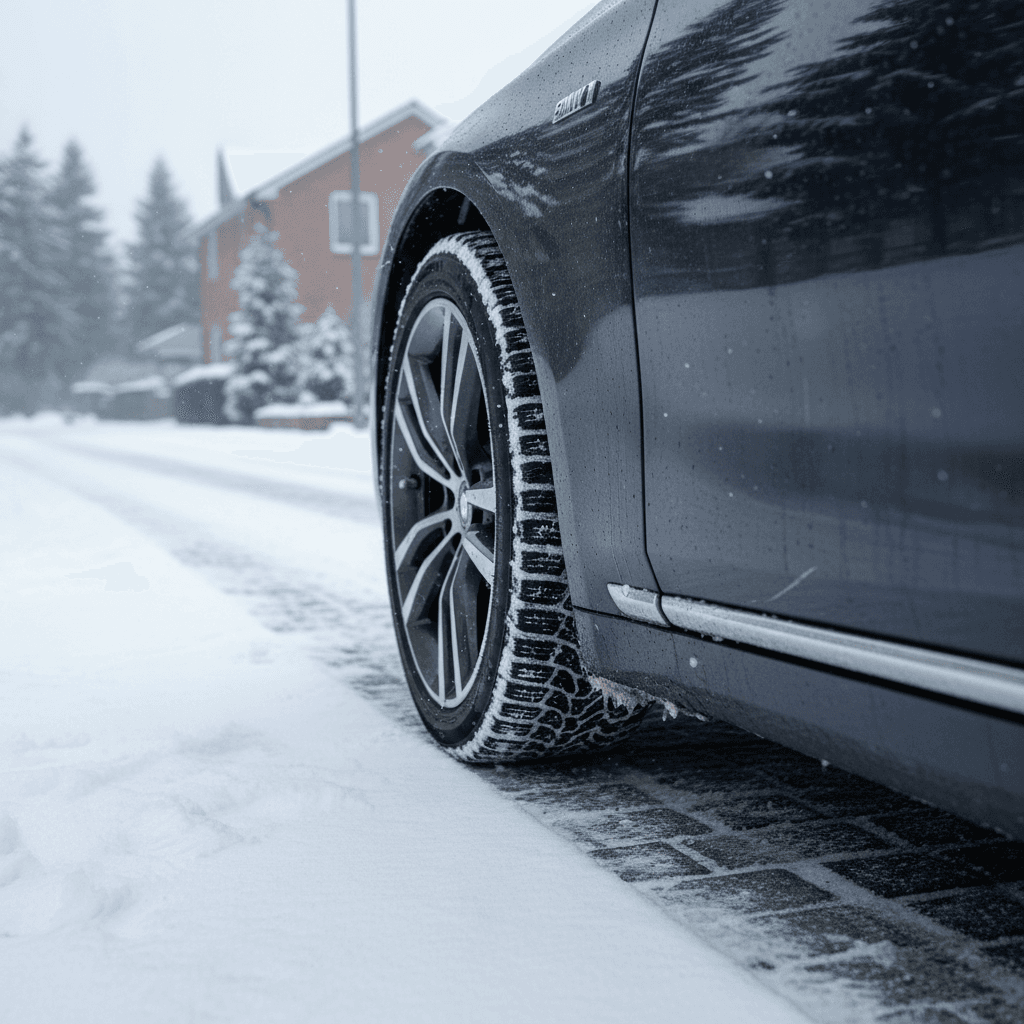
Ask any BMW owner who lives in a snow belt and you’ll hear the same thing: tires matter more than anything else. The i7’s factory-fit tires are often summer or performance-focused all-seasons. Those are great in warm, dry weather, and mediocre at best in snow and ice.
How to set up your BMW i7 for winter grip
1. Commit to a dedicated winter set
Even the best all-season tires don’t match a true snow-and-ice winter tire when temps drop below about 45°F. If you want the i7 to feel confident on icy mornings, invest in a second set of wheels with proper winter rubber.
2. Downsize wheel diameter where possible
If your i7 wears large 21" wheels, consider a winter package on <strong>smaller-diameter wheels with taller sidewalls</strong>. Narrower, taller tires cut through snow better, ride more comfortably over frozen ruts and are less vulnerable to pothole damage.
3. Look for snow-and-ice rated compounds
Top-tier winter options for large EVs include models like Michelin X-Ice Snow or Continental VikingContact (fitment depends on your wheel size and market). Prioritize tires rated for <strong>ice braking and slush evacuation</strong> over just high-speed performance.
4. Don’t mix tire types
Avoid running winter tires on one axle and summers or all-seasons on the other. That mismatch can create unpredictable handling in emergency maneuvers, especially on slick surfaces.
5. Store off-season wheels properly
If you’re tight on space, many BMW dealers and local tire shops offer <strong>wheel-and-tire storage programs</strong>. They’ll swap and store your sets each season, which is convenient with big, heavy EV wheels.
Winter tires transform the car
Cold-weather range: how much the i7 loses
Traction is only half the winter story with an EV. The other half is range. The i7 carries a big pack, but like every EV, it sees real range loss when temperatures drop.
BMW i7 winter range at a glance
Plan winter trips differently
- Use the BMW app or in-car scheduling to preheat the cabin and battery while plugged in before you leave. That preserves on-road range.
- Avoid repeatedly fast-charging from a very cold battery; let preconditioning do its job whenever possible.
- Expect higher consumption on short, stop‑and‑go winter errands, where cabin heating overhead is a bigger share of each trip.
- If you buy used, check for recent battery health data so you know how much range you’re working with in winter. A Recharged Score report, for example, quantifies real battery condition on used EVs.
Best BMW i7 drive modes and settings for snow
BMW doesn’t market a big, labeled “SNOW” button on the i7, but the drive modes, DSC and traction settings are tuned with low-traction conditions in mind. Knowing what each does, and what not to touch, goes a long way toward keeping the car predictable on slick roads.
i7 winter driving modes and when to use them
Exact labels can vary slightly by software version, but the principles stay the same.
| Setting | What it does | Winter use case | What to avoid |
|---|---|---|---|
| Normal/Comfort mode | Balanced throttle response, full DSC stability control active. | Best all-around choice for snow and ice. Predictable, smooth power delivery and maximum intervention when traction falls away. | None, this is your default winter setting. |
| Eco Pro | Softens throttle, optimizes climate and energy use. | Useful when you want to stretch range in cold, dry or lightly snowy conditions while keeping responses gentle. | If the road is very slick, focus more on good tires than squeezing every mile. |
| Sport | Sharper throttle and heavier steering, same basic traction safety net unless you change DSC. | Okay on cold, dry pavement, but easy to over-ask the rear tires on slick surfaces. | Not ideal for icy side streets or steep, slippery driveways. |
| DSC fully on | Full stability and traction control; cuts power quickly when wheels slip. | Default for snow and ice. Great for keeping the car straight during surprise slides or evasive maneuvers. | None, don’t disable this unless you’re very experienced. |
| Traction / DTC mode | Allows more wheel slip and relaxed stability to help in deep snow or when stuck. | A tool of last resort if you’re stuck in unplowed snow and need a bit more wheelspin to claw out. | Driving quickly with this mode on; sideways motion is less controlled. |
| DSC off | Minimal electronic intervention; you’re on your own. | Reserved for very specific situations (like rocking out of a snowbank) by experienced drivers. | General winter driving. For most people, this is an unnecessary risk. |
When in doubt, leave stability systems fully on and let the car manage wheel slip for you.
Don’t outsmart the electronics
Heated comfort and safety tech that help in winter
One area where the BMW i7 really shines in snow and ice is comfort and driver-assistance tech. Winter driving is stressful; a warm, quiet cabin and a set of extra digital eyes go a long way on dark, slushy nights.
Winter-friendly features you’ll appreciate in an i7
These don’t change physics, but they make cold-weather driving far less tiring.
Heated everything
Effective defrost and cameras
Advanced driver assistance
Preheat is your friend
Buying a used BMW i7 for winter driving
If you’re shopping the used market, a BMW i7 can make a fantastic four-season luxury EV, provided you verify a few winter-relevant details up front. Because it’s a premium, complex car, you want to know you’re not inheriting somebody else’s cold-weather headaches.
Used BMW i7 winter-readiness checklist
Confirm xDrive vs rear-drive
In the U.S., most i7s are dual-motor xDrive, but some markets also see single-motor rear-drive variants. For serious winter use, <strong>xDrive is strongly preferred</strong> for traction and resale appeal.
Inspect tire setup and tread depth
Ask what tires are currently mounted and how much tread remains. If it’s on worn summers or performance all-seasons, budget immediately for a set of winter or all-weather tires before next snow season.
Review battery health for winter margin
Battery capacity affects how much range buffer you have in cold weather. A third-party battery health report, like the <strong>Recharged Score</strong> that comes with every EV sold on Recharged, can show you how much real-world energy the pack can still hold.
Check charging history and fast-charging habits
Cars that lived their lives in very cold climates and were always fast-charged from frozen might show more degradation. That’s not a deal-breaker, but it affects winter range planning.
Verify software updates and climate features
Make sure the car has the latest software and that preconditioning, heated features and remote functions all work properly. These are the tools that keep the i7 livable in snow and ice.
Ask about any winter damage
Look for scraped underbody panels, cracked bumper covers or bent wheels from past winters. The i7’s long nose and low body can take a beating from hidden ice chunks and frozen ruts if the previous owner wasn’t careful.
Recharged’s marketplace focuses on used electric vehicles, including luxury EVs like the BMW i7. Every vehicle comes with a detailed Recharged Score battery health report, transparent pricing and EV‑specialist support, so you understand both winter range and long‑term ownership costs before you buy.
BMW i7 winter pros and cons at a glance
Is the BMW i7 a good winter car?
Here’s how it stacks up if snow and ice are a big part of your life.
Winter strengths
- Dual‑motor xDrive AWD with fast, smooth torque control.
- Heavy battery gives a planted, confident feel on packed snow and ice.
- Excellent heated comfort features reduce winter fatigue.
- Big battery provides solid range margins, even with a cold‑weather hit.
- High‑end driver assistance is helpful on long, dark winter commutes.
Winter limitations
- Low ground clearance limits performance in deep, unplowed snow.
- Large wheels and summer/performance tires are poorly suited to winter unless you swap setups.
- Cold weather reduces range and increases charging stops on long trips.
- Sedan packaging means less flexibility for ski gear versus a hatchback or SUV.
BMW i7 winter driving FAQ
Frequently asked questions about the BMW i7 in snow and ice
Bottom line: Is the BMW i7 best for snow and ice?
The BMW i7 isn’t a snow‑belt SUV, and it doesn’t pretend to be. But if your winters are mostly plowed highways, treated city streets and the occasional snowstorm, it can be an excellent year‑round luxury EV. With xDrive, high‑quality winter tires and smart use of its drive modes, the i7 feels planted, comfortable and predictable when the weather turns ugly.
If your daily winter driving involves deep, unplowed roads, steep rural driveways or frequent white‑out blizzards, an SUV with more clearance will still be the better choice. For everyone else, the i7 is a very capable winter partner when you respect its limitations, plan for some cold‑weather range loss and invest in the right tires.
Considering a BMW i7 or another used luxury EV as your next all‑weather car? Browsing through Recharged lets you compare real battery health, fair market pricing and winter‑relevant details across multiple models, so you can pick the EV that fits both your climate and your budget with confidence.