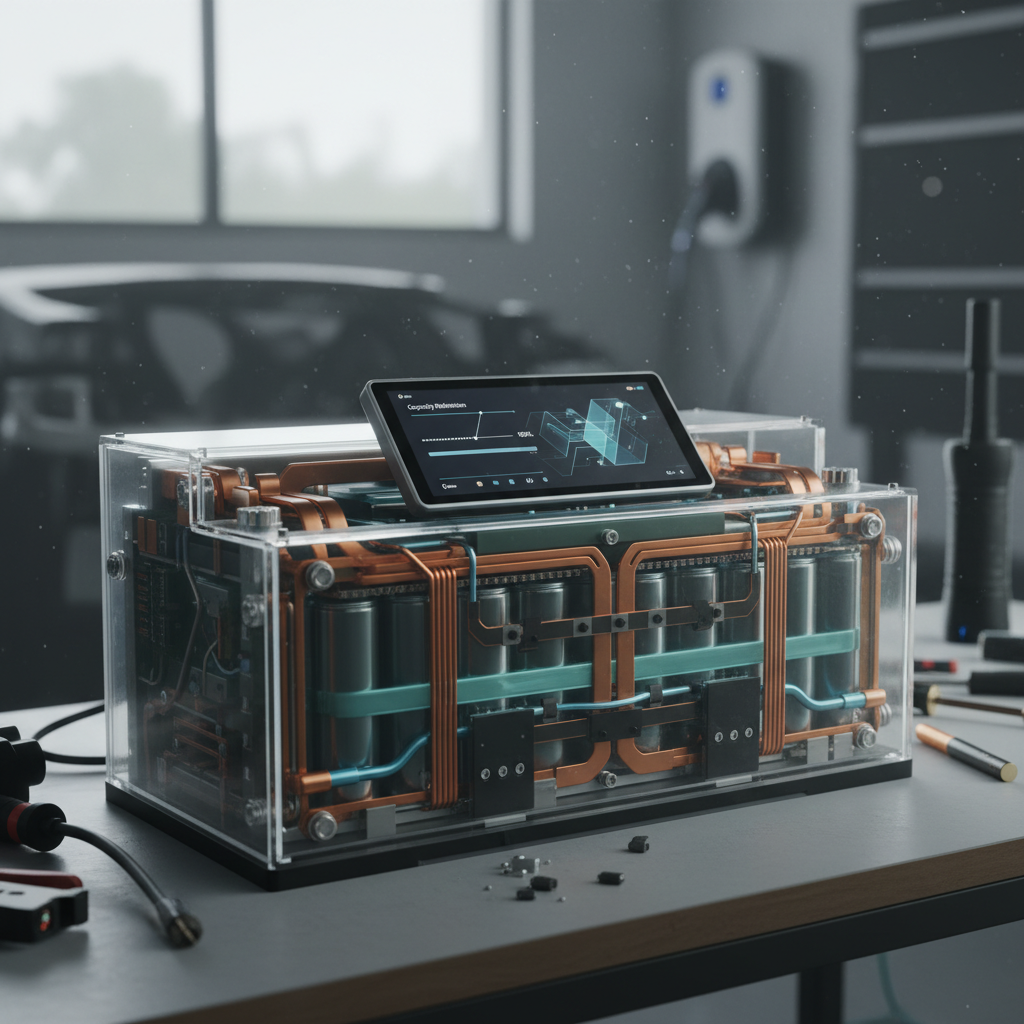
There isn’t one reliable price that represents every EV repair. Tires, suspension parts, cabin components, and collision damage resemble the expenses found on other vehicles, while the high-voltage battery, drive unit, onboard charger, and power electronics require EV-specific diagnosis. The important question isn’t simply whether an EV has fewer service items; it’s whether its condition, remaining coverage, and potential repair severity fit your budget.
Typical EV repair categories
Most electric vehicle repair costs fall into six practical categories, with the widest uncertainty concentrated in high-voltage and model-specific work. A warning light doesn’t identify the final bill because the cause could range from a small component or software issue to a damaged module. Get a written diagnosis before approving parts or treating a full battery replacement as inevitable.
Where EV repair costs come from
Use the likely cost exposure and first diagnostic step to decide how urgently a problem needs specialist attention.
| Repair category | Common examples | Cost exposure | First move |
|---|---|---|---|
| Tires and suspension | Tires, bearings, control arms | Low to variable | Inspect wear and alignment |
| Brakes and steering | Pads, rotors, steering parts | Low to variable | Check mechanical condition |
| Charging system | Port, onboard charger, wiring | Moderate to high | Test AC and fast charging |
| Climate and thermal | A/C, pumps, coolant valves | Moderate to high | Scan thermal-system faults |
| Drive electronics | Inverter, motor, control modules | High if uncovered | Use EV-qualified diagnostics |
| Battery or underbody | Modules, pack case, impact damage | Potentially very high | Inspect before disassembly |
Cost exposure is qualitative because parts pricing, labor, warranty coverage, and repairability vary by vehicle and failure.
Why some EV repairs get expensive
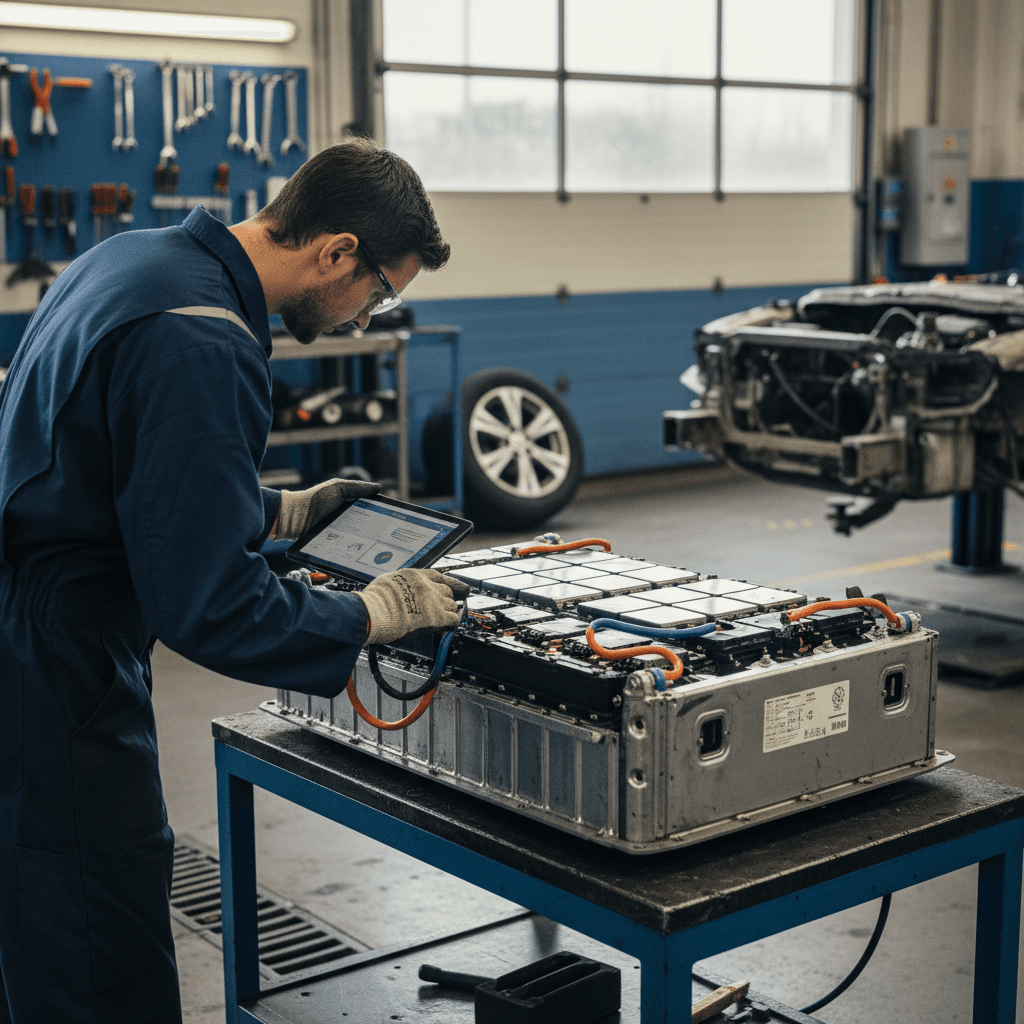
EV repair bills become expensive when diagnosis requires specialized equipment, the damaged component is part of a larger assembly, or only a limited repair network can perform the work. Packaging also matters: damage to wiring, cooling hardware, or the battery enclosure may require substantial labor even when the battery cells remain usable. Parts availability and whether the manufacturer permits module-level repair can change the recommended solution.
Improper transport can create unusually severe damage that normal driving never would. In a Recharged case, a BMW i3 that was supposed to travel on a flatbed was instead towed behind the transporter and arrived unable to drive. The quote to replace the two damaged modules was $13,500, illustrating why you should follow the manufacturer’s towing procedure and document a vehicle’s condition at pickup and delivery.
Our BMW i3 arrived unable to drive after it was improperly towed. Replacing the two damaged modules was quoted at $13,500, which is why the correct towing method matters as much as the repair destination.
Don’t improvise when towing an EV
What Recharged data says about repair exposure
Recharged battery diagnostics show that a costly battery failure shouldn’t be assumed simply because an EV is used. Across 2,242 Recharged Score inspections, tested remaining battery capacity averaged 93.9% of original capacity, with a 94.9% median. Those figures describe capacity at inspection, not future failure rates or the condition of every vehicle, so an individual diagnostic report still matters.
The size of a potential repair should also be considered against the vehicle’s market value. Over the trailing 12 months, buyers paid a median retail price of $27,297 across 1,796 EVs sold by Recharged, while the average retail price was $29,901. These are final buyer prices rather than repair estimates or seller payouts, but they show why a five-figure uncovered repair can materially affect the economics of a used EV.
The takeaway is to evaluate battery condition and repair exposure together rather than assuming every older EV needs a replacement pack. A vehicle with verified battery health, working charging systems, no unresolved warning lights, and appropriate coverage gives you a clearer ownership-cost picture. Recharged includes a Recharged Score Report with verified battery health so buyers can assess the most consequential component before purchase.
Recharged data
Used EV battery health
94%
avg remaining capacity
From Recharged battery inspections, not manufacturer estimates.
- Lowest
- 63%
- Median
- 95%
- Highest
- 100%
- Est. range
- 266 mi avg
- Cell balance pass
- 100%
- Quick charges
- 18 avg
- Slow charges
- 65 avg
Average cell imbalance: 7.3 mV
Based on vehicles Recharged tested
Recharged data
Recent EV sold prices
$27,297
median sold price
What buyers actually paid through Recharged, not list price.
- Lowest
- $500
- Average
- $29,901
- Highest
- $129,998
Monthly median sold price
Based on Recharged sales in the last 12 months
Every EV is battery-tested with a Recharged Score. Nationwide delivery.
How to reduce EV repair risk
You can reduce EV repair risk by verifying condition, coverage, charging behavior, and service support before you buy. A conventional road test is useful, but it won’t reveal every battery, thermal-management, or charging-system issue. Pair it with an EV-specific inspection and review the battery-health results in context.
Used-EV repair checklist
Verify battery health
Review tested remaining capacity and estimated range rather than relying only on the dashboard estimate.
Scan every control module
Ask for current, pending, and stored diagnostic codes, including codes cleared recently.
Test both charging methods
Confirm normal AC charging and, where practical, DC fast charging without repeated errors.
Inspect the battery enclosure
Look underneath for impact marks, deformation, corrosion, leaks, or signs of poor lifting.
Check thermal management
Run cabin heating and cooling, and investigate pump, valve, coolant, or temperature faults.
Confirm coverage by VIN
Verify warranty dates, mileage limits, exclusions, open recalls, and whether coverage transfers.
Review tire condition
Measure tread across each tire and check for uneven wear, sidewall damage, and mismatched replacements.
Locate qualified service
Identify a nearby facility that can diagnose the model before a breakdown forces the decision.
A pre-purchase report is most useful when it separates observed condition from prediction. Battery capacity testing can show what the pack delivers now, while diagnostic codes and an underbody inspection can identify issues needing immediate investigation. For a broader ownership review, compare these steps with ongoing EV maintenance costs and the full used-EV buying guide.
Repair and replacement aren’t always the same answer. On our Cybertruck, the service team repaired a tonneau-cover slat issue while separately replacing a recalled exterior component, so the underlying cause and coverage determined the remedy.
Who pays for an EV repair?
Who pays depends on what failed, why it failed, and which coverage remains active. A manufacturer warranty may cover a qualifying defect, a recall can provide a manufacturer-directed remedy, and auto insurance may apply to covered collision, road-hazard, vandalism, or transport damage. Normal wear, excluded damage, and out-of-warranty failures usually remain the owner’s responsibility.
- Check the vehicle identification number for open recalls and service campaigns.
- Read the battery and drive-system warranty instead of relying on a verbal summary.
- Ask whether the warranty transfers to a subsequent owner and which conditions can exclude coverage.
- Get a written diagnostic finding, parts list, labor estimate, and warranty decision before authorizing work.
- For insured damage, photograph the vehicle and preserve towing, transport, and service records.
Battery degradation and battery failure are different
Don’t assume that an extended service contract covers the high-voltage battery simply because it advertises EV coverage. Look for named components, exclusions, claim limits, diagnostic charges, labor rules, and requirements to use approved repair facilities. If battery replacement is your main concern, review how EV battery replacement decisions work before comparing plans.
Instant offer, trade-in, or consignment. Pickup available.
Electric vehicle repair cost FAQ
The bottom line
Electric vehicle repair costs are manageable when you separate routine wear from less frequent but potentially severe high-voltage or model-specific failures. Before buying, verify battery health, test charging, inspect the underbody, scan for faults, confirm warranty status, and locate qualified service. A documented inspection won’t eliminate every future bill, but it gives you a much better basis for choosing the right vehicle and ownership budget.