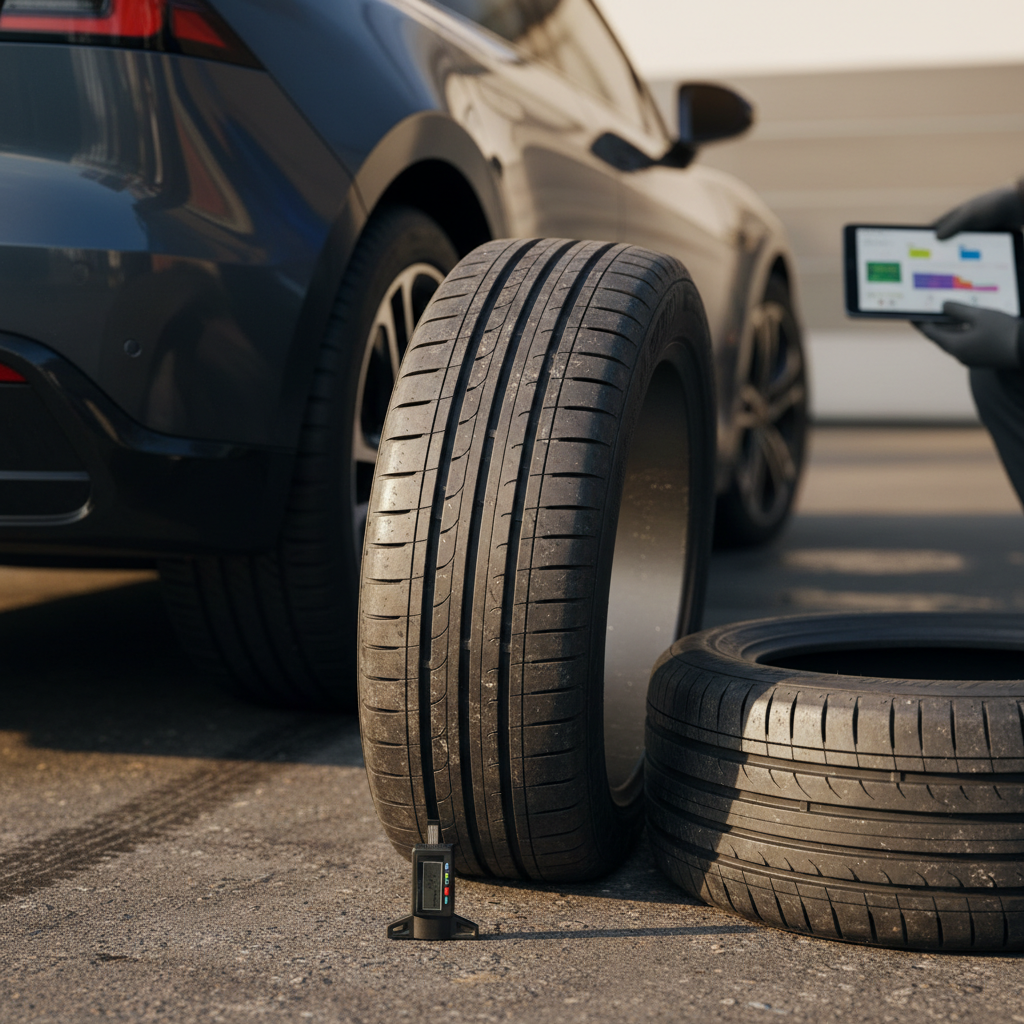
A used EV can look clean, drive well, and still leave its most important condition question unanswered: how much useful battery capacity remains? Before committing, ask for evidence tied to that specific vehicle and use it alongside a conventional inspection of the tires, suspension, body, glass, and interior. A broader used EV buying checklist can help you evaluate the rest of the car.
Start with a diagnostic battery report
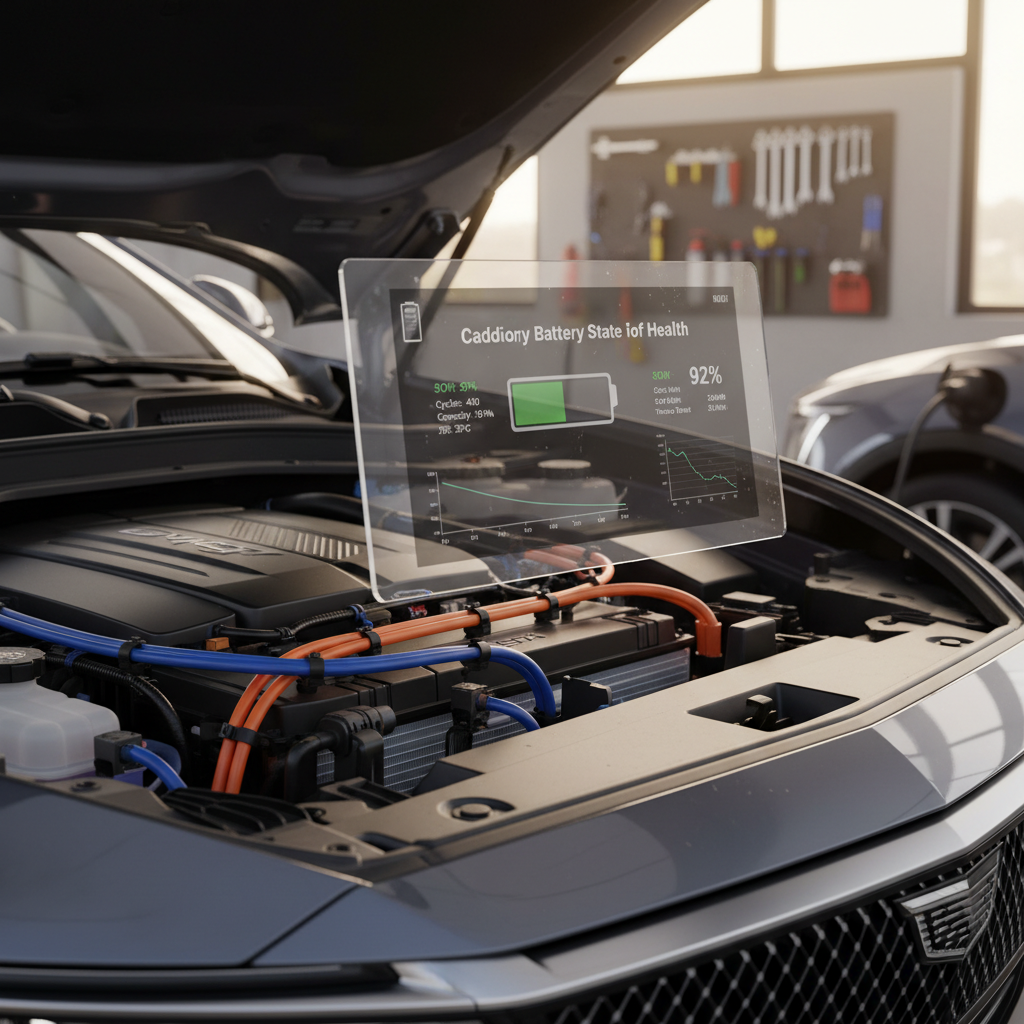
A vehicle-specific diagnostic report is the strongest starting point because it measures the battery rather than estimating condition from age or mileage. Look first for state of health, meaning tested remaining capacity as a percentage of the battery’s original capacity; this differs from state of charge, which only tells you how full the battery is now. A useful report should also include tested range, cell-voltage readings, and fast-versus-slow charging history. Learn more about EV battery state of health before comparing reports.
Recharged produces a Recharged Score Report by connecting a diagnostic tool to the vehicle and gathering battery data. On many EVs, that connection uses the onboard diagnostic connector, commonly called the OBD-II port; some vehicles require a model-specific connection procedure. The resulting data is more useful than a verbal assurance that the battery “seems fine.”
Use battery evidence in this order
Treat each source as one piece of the decision, with vehicle-specific diagnostics carrying the most weight.
| Evidence | What it shows | Role | Buyer action |
|---|---|---|---|
| Diagnostic battery report | Capacity, range, cell balance | Primary evidence | Require vehicle-specific results |
| Dashboard range estimate | Current displayed prediction | Supporting clue | Compare with tested range |
| Charging history | Fast versus slow mix | Useful context | Read with diagnostics |
| Service and warranty records | Repairs and coverage | Ownership context | Verify dates and terms |
Battery evidence to request when shopping for a used EV
What matters more, miles or battery health? For us, the answer is always battery health.
What Recharged battery data shows
Recharged battery diagnostics show that many inspected used EVs retain substantial capacity, but the variation makes an individual test essential. Across 2,242 Recharged Score inspections, tested remaining capacity averaged 93.9%, with a 94.9% median and results ranging from 63% to 100% of original capacity. Tested real-world range averaged 266 miles and had a 268-mile median, although the mixed fleet ranged from 16 to 492 miles.
Those fleet figures are context, not a universal pass mark. Range varies with the vehicle’s original battery size and design as well as its present condition, so you shouldn’t judge one model against the entire Recharged fleet average. The takeaway is simple: used-EV battery health has often held up well in Recharged inspections, but results vary enough that you still need the report for the exact vehicle you’re considering.
Recharged data
Used EV battery health
94%
avg remaining capacity
From Recharged battery inspections, not manufacturer estimates.
- Lowest
- 63%
- Median
- 95%
- Highest
- 100%
- Est. range
- 266 mi avg
- Cell balance pass
- 100%
- Quick charges
- 18 avg
- Slow charges
- 65 avg
Average cell imbalance: 7.3 mV
Based on vehicles Recharged tested
Recharged data
Used EV prices at Recharged
$30,997
median list price
Current list prices for matching inventory at Recharged.
- Lowest
- $12,996
- Average
- $34,803
- Highest
- $146,998
Average Recharged Score on these listings
4.8 / 5
Range
3.7 – 5.0
Based on available listings
Every EV is battery-tested with a Recharged Score. Nationwide delivery.
How to read an EV battery-health report
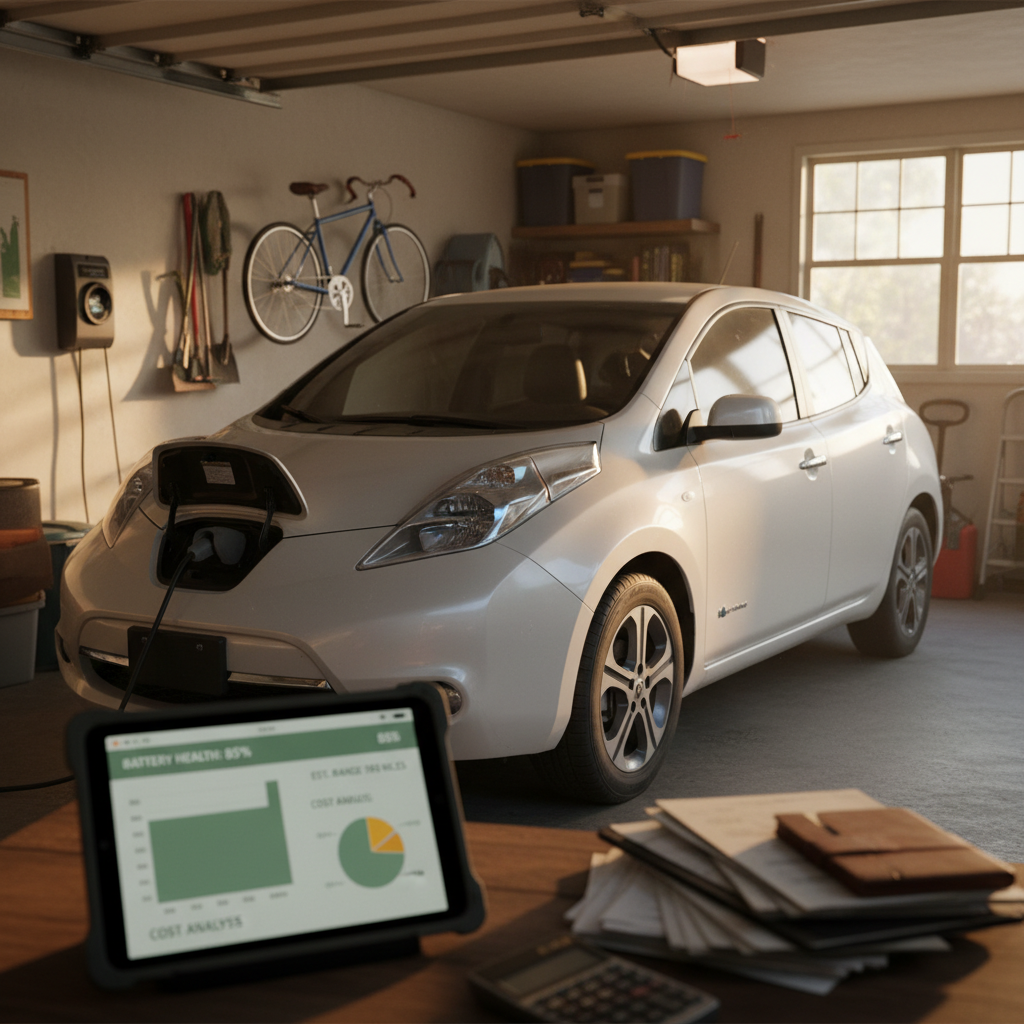
Read the report as a group of related measurements rather than treating one percentage as the whole answer. Remaining capacity indicates how much of the original battery capacity was measured, tested range translates the battery’s condition into driving usefulness, and cell-voltage readings help show whether the pack is balanced. Charging history adds context, but it shouldn’t replace direct measurements of capacity and cell condition.
Seven checks to complete
Confirm remaining capacity
Find the tested percentage of original capacity, not the current charge level.
Check tested range
Use the diagnostic range result rather than relying only on the dashboard display.
Review cell balance
Look for cell-voltage results and any flagged weak or underperforming part of the pack.
Read charging history
Review the recorded fast-versus-slow charging mix as supporting context.
Match the correct vehicle
Confirm that the report belongs to the exact used EV you’re evaluating.
Compare range with your needs
Leave enough practical range for commuting, errands, weather changes, and charging access.
Verify warranty coverage
Confirm the battery warranty’s remaining time, mileage limits, terms, and transferability.

Don’t use one universal pass-or-fail number
Battery health matters more than mileage alone
Mileage can’t tell you how much battery capacity remains or whether the cells are well balanced. In one Recharged test, a 2023 Kia EV6 with almost 9,000 miles showed 100% state of health and 274 miles of estimated range. A tested 2021 Tesla Model 3 showed 85% state of health and 268 miles of estimated range, demonstrating why the odometer alone can’t answer the battery question.
The Model 3’s report also showed that 41% of its charging had been fast charging, while its cell-voltage imbalance was only five millivolts and was assessed as very balanced. A millivolt is one-thousandth of a volt, and comparing cell voltages can help identify whether one part of the pack is underperforming. That combination of measurements provides more context than labeling a battery good or bad from charging history alone.
Battery-health red flags to investigate
The biggest red flag is a seller or retailer that can’t provide vehicle-specific battery evidence. A dashboard range number, current state of charge, or claim based on low mileage doesn’t establish remaining battery capacity. If the diagnostic report identifies a weak cell, unusually poor balance, or insufficient tested range, pause until you understand what the finding means for that vehicle.
- No diagnostic report for the specific vehicle
- State of charge presented as battery health
- Tested range that doesn’t meet your needs
- Flagged weak or underperforming battery cells
- Missing or unclear battery service records
- Battery warranty status that can’t be verified
- Pressure to rely on mileage alone
Not every incomplete record proves that the battery has a problem, but missing information shifts more risk to you. Ask whether the seller will permit a qualified diagnostic inspection before purchase and review the EV battery warranty terms. If the vehicle is outside warranty, clear diagnostic evidence becomes even more important.
Questions to ask before buying
Ask direct questions that require measurable answers, not general assurances. The seller should be able to explain when the battery was tested, what the remaining capacity and tested range were, and whether the report found any imbalance or underperforming cells. You should also understand what happens if a post-purchase inspection conflicts with the disclosed condition.
- Can I see the battery report for this exact vehicle?
- What tested remaining capacity does the report show?
- What tested real-world range was recorded?
- Were the cell-voltage readings balanced?
- What does the charging history show?
- Has the battery received repairs or replacements?
- What battery warranty coverage remains?
- Can I arrange an independent pre-purchase inspection?
Your final decision should connect the battery evidence to how you actually drive. A vehicle doesn’t need the fleet’s highest capacity figure to be useful, but its tested range should comfortably support your routine and charging options. For more ownership context, see how long EV batteries last and which factors deserve attention over time.
Instant offer, trade-in, or consignment. Pickup available.
Common battery-health questions
Buy the report, not the reassurance
The safest approach is to make measurable battery condition part of the purchase decision. Prioritize remaining capacity, tested range, cell balance, charging history, and warranty status, then decide whether the results fit your driving and the vehicle’s price. Recharged includes a Recharged Score Report with verified battery-health information so you can evaluate the battery before taking ownership.