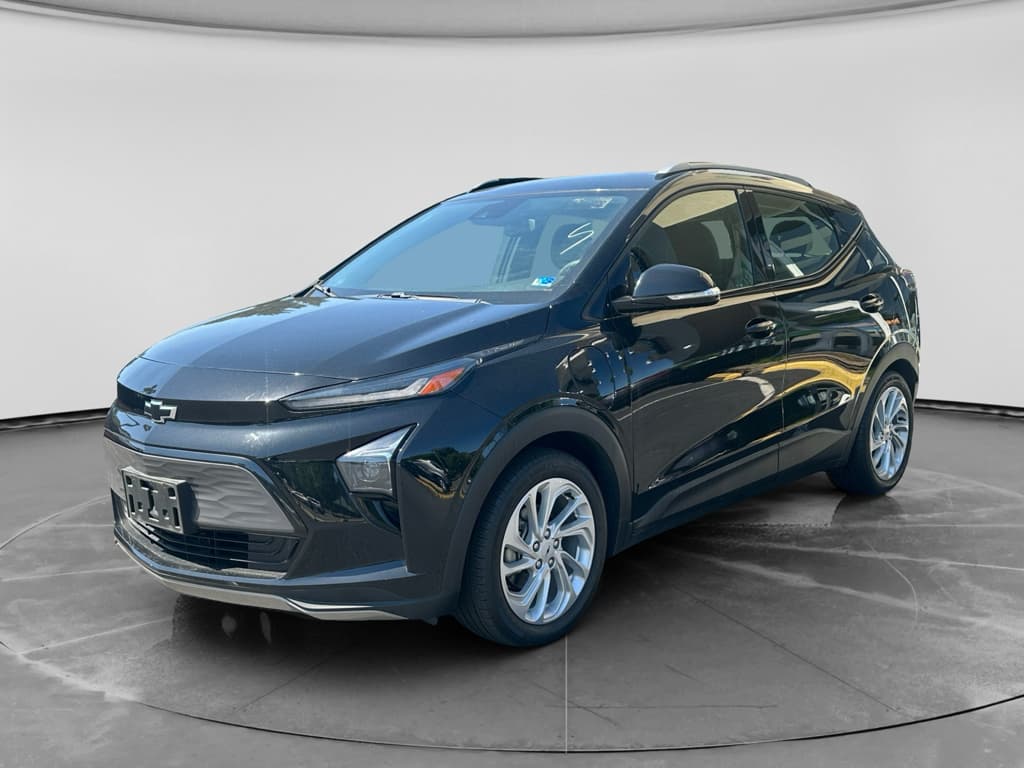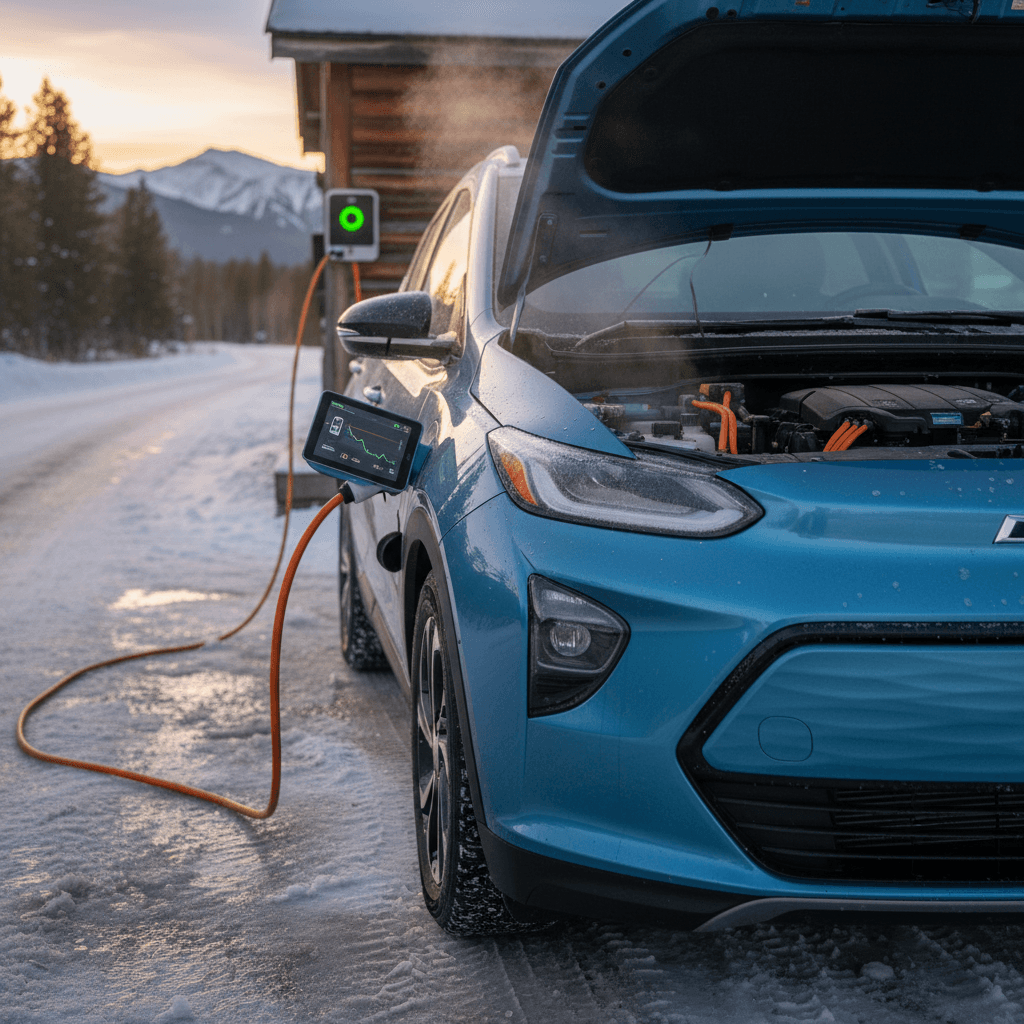
If you own or are shopping for a Chevy Bolt EUV, you’ve probably heard the horror stories: winter hits, and suddenly your dash shows far less range than the EPA’s 247 miles. Chevy Bolt EUV winter range loss is real, but it’s also predictable, manageable, and, for most drivers, not a dealbreaker.
Quick take
Chevy Bolt EUV winter range loss: what’s really going on
Every EV loses range in the cold. Batteries don’t like low temperatures, and neither do we, so we turn up the heat. The Bolt EUV combines a relatively efficient drivetrain with an older-school heating system that leans on a resistive cabin heater instead of a modern heat pump. That combination means it tends to sit on the higher end of winter range loss compared with newer EVs.
Industry-wide data from companies that track thousands of EVs shows that most models lose about 15–45% of their usable range in freezing weather, depending on design and whether they use a heat pump. The original Chevy Bolt is often quoted around 30–31% winter range loss at about 32°F, and real-world feedback from Bolt EUV owners lines up with that, especially in the northern U.S.
Cold starts hurt most
How much Chevy Bolt EUV winter range loss is normal?
Typical Chevy Bolt EUV winter range vs EPA rating
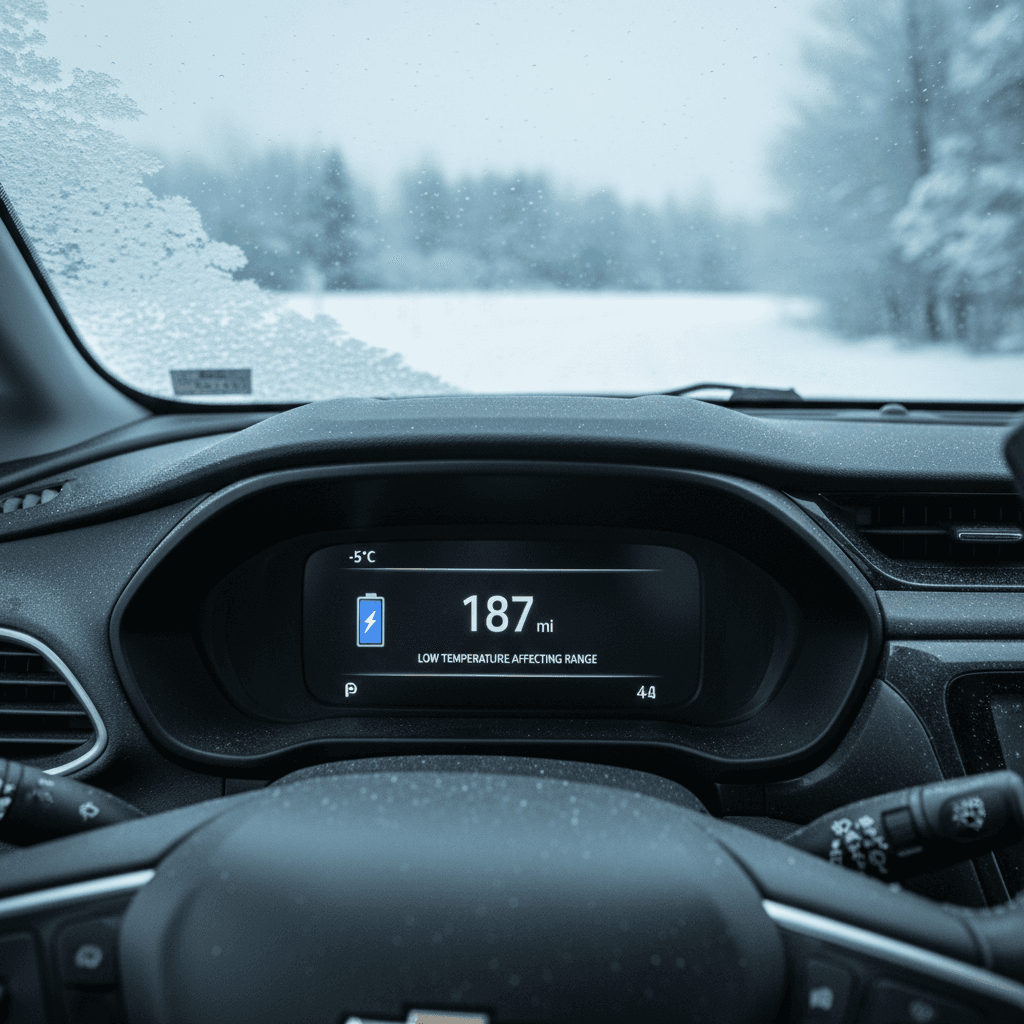
Let’s translate that into what you actually see on the dash. In data gathered from northern U.S. winters, a Chevy Bolt EUV with a 247‑mile EPA rating tends to show:
- Around 170–190 miles of estimated range on a full charge in typical winter temps (20–35°F) with normal cabin heat and mixed-speed driving.
- Around 150–170 miles at or below 10–15°F, especially with highway driving and a warm cabin.
- As low as 130–150 miles in brutal cold (near 0°F or below) with high speeds, headwinds, and a toasty cabin.
Owner reports from Minnesota, Michigan, New England and other cold regions regularly mention 30–40% winter range loss for the Bolt EV and Bolt EUV. A Minnesota driver, for example, reported about 240 miles in summer and 150 miles on sub‑zero winter days in a 2022 Bolt EUV, almost exactly a 35% drop.
Rule of thumb
Why the Chevy Bolt EUV loses so much range in winter
1. Battery chemistry and cold temps
Like every modern EV, the Bolt EUV uses a lithium‑ion battery. In cold temperatures, the chemical reactions inside the cells slow down:
- Higher internal resistance means the pack can’t deliver energy as efficiently.
- You see lower power and higher consumption, especially right after a cold start.
- The BMS (battery management system) protects the pack by limiting fast charging and sometimes power output until it warms up.
2. Cabin heating without a heat pump
The Bolt EUV does not use a heat pump. It relies mainly on a resistive heater, which works like a giant electric space heater:
- At 0–20°F, cabin heat can pull several kilowatts on its own.
- On short trips, heating energy can match or exceed what’s going to the wheels.
- Cars with heat pumps often lose closer to 15–20% of range in mild winter, while the Bolt family tends to be closer to the 30%+ range-loss group.
On top of chemistry and cabin heat, winter adds the usual suspects: snow tires with more rolling resistance, slushy roads, thicker gear oil until it warms up, and drivers wisely slowing down in bad conditions. All of that makes watt‑hours per mile climb.
Use seat and wheel heaters first
Real-world Chevy Bolt EUV winter range examples
Because so much depends on your climate and driving style, owner stories are often more helpful than lab numbers. Here’s a snapshot of what drivers report in real winter use:
Owner-reported Chevy Bolt / Bolt EUV winter range
These figures are typical reports from U.S. and Canadian owners; your results will vary with speed, terrain, and how warmly you like your cabin.
| Location & Model | Temperature & Conditions | Summer Range | Winter Range | Estimated Loss |
|---|---|---|---|---|
| Central Minnesota, 2022 Bolt EUV | Below 0°F, mix of highway and rural roads | ~240 mi | ~150 mi | +/‑ 37% |
| Northern U.S. mixed reports, Bolt EV/EUV | Around 32°F, city + suburban | ~230–250 mi | ~160–190 mi | 25–35% |
| NE Ohio, Bolt EUV | Teens–20s°F, preconditioned in garage | ~230–250 mi | ~180–200 mi | 20–30% |
| General U.S. data, Chevy Bolt (no heat pump) | Freezing temps, mixed driving | EPA 238–259 mi | ~68–70% of EPA | 30–32% |
All ranges are approximate full-charge equivalents and assume cabin heat is used.
EPA range vs. your dash
Driving and charging tips to reduce winter range loss
7 ways to stretch your Bolt EUV’s winter range
1. Precondition while plugged in
Use the myChevrolet app or the key fob to warm the cabin and battery <strong>before you unplug</strong>. That way, most of the energy for heating comes from the grid, not your battery.
2. Favor seat and wheel heaters
Set the cabin a bit cooler (low 60s) and let the <strong>seat and steering‑wheel heaters</strong> do the heavy lifting. They sip energy compared with cabin air heat.
3. Combine short trips
Several five‑mile errands from a cold start are brutal on winter range. Try to <strong>combine errands into one longer drive</strong> so the cabin and battery stay warm.
4. Slow down a little on the highway
Aerodynamic drag and rolling resistance rise in winter. Dropping from 75 to 65 mph can easily save <strong>10–15% energy</strong>, often the difference between a tense arrival and a relaxed one.
5. Check tire pressure often
Cold air drops tire pressure, which increases rolling resistance. Keep your Bolt EUV’s tires at the recommended PSI, especially if you run dedicated winter tires.
6. Use eco‑friendly climate settings
Try the Bolt’s <strong>Eco HVAC</strong> or lower fan speeds once the cabin is warm. Avoid constantly cranking the temperature up and down, which forces the heater to spike power usage.
7. Smart DC fast charging stops
In deep cold, DC fast charging slows down until the pack warms up. Plan for a <strong>slightly longer stop</strong>, and arrive with 10–20% state of charge so the battery is working and warming en route.
Don’t hammer it on a cold pack
Planning trips and daily commutes in winter
For most Bolt EUV owners in the U.S., winter range loss shows up not as breakdowns on the shoulder, but as annoying extra charging stops or tighter margins on familiar drives. A little planning goes a long way.
How to plan with Chevy Bolt EUV winter range loss in mind
Whether it’s a daily commute or a ski‑weekend drive, use these strategies to stay comfortable.
Short daily commute
If your round‑trip commute is under 60–70 miles, even a 40% winter range hit is a non‑issue. Plug in at home, precondition, and you’ll rarely think about it.
Consider a Level 2 home charger so you always start the day full and warm.
Long suburban or rural commute
For 80–130‑mile daily driving, assume winter range is about 160–180 miles and leave yourself a buffer. Top up during the day if you can, or charge to 100% on the coldest mornings.
Apps like PlugShare and A Better Routeplanner help you spot reliable public chargers along your route.
Weekend road trips
In deep winter, plan DC fast‑charge stops no more than 100–130 miles apart, especially at highway speeds. Expect slower charging and bring extra patience if temps are in the single digits.
Always have a backup station in mind in case your first choice is busy or offline.
Use winter mode in your planning apps
Buying a used Chevy Bolt EUV for winter driving
If you’re considering a used Bolt EUV and you live where snow sticks around for months, winter performance shouldn’t scare you off, but you do want to go in with clear expectations and a good sense of battery health.
Used Bolt EUV winter-buying checklist
1. Look beyond the EPA number
Don’t fixate on 247 miles. Ask yourself: <strong>Will ~150–180 miles of winter range cover my real life?</strong> Include detours, kids’ activities, and worst‑case cold snaps in your math.
2. Ask for verified battery health
Battery age and history matter for winter, because a weaker pack has less buffer. At Recharged, every used EV comes with a <strong>Recharged Score battery health report</strong> so you can see how the pack compares to similar cars.
3. Check winter driving history
A Bolt EUV that’s lived in a cold‑weather state may have more DC fast charging and heavy heater use. That’s not automatically bad, but it’s worth pairing with a <strong>third‑party battery health check</strong> or a report like the Recharged Score.
4. Inspect tires and wheels
Winter tires are fantastic for grip but can take a bite out of range. Make sure the car has <strong>appropriate tires</strong> for your climate and budget for a second wheel‑and‑tire set if you’ll be swapping seasonally.
5. Test‑drive on a cold day if you can
If the weather cooperates, take a <strong>longer test drive in genuine winter conditions</strong>. Watch the energy consumption screen and how the estimated range responds with heat on and off.
6. Plan your charging setup before you buy
The best winter upgrade is convenient charging. Think about whether you’ll install <a href="/articles/home-ev-charger-installation">home Level 2 charging</a> or rely on workplace and public options before you pick a car.
How Recharged can help
Ready to find your next EV?
Browse VehiclesBolt EUV vs other EVs in winter range loss
The Bolt EUV is hardly the villain of winter, but it’s also not the hero. When independent groups compare EVs in freezing temps, models with efficient heat pumps, like some Teslas, Hyundai Ioniq 5/Kona, Kia EV6, and newer GM models such as the Equinox EV, often keep 80–90% of their rated range around the freezing mark. The Chevy Bolt family usually lands closer to 70% of its EPA rating under the same conditions.
How the Chevy Bolt family stacks up in winter
Approximate average winter range retention at around 32°F based on public testing and aggregated owner data.
| Model | Heat Pump | Approx. Winter Range vs EPA | Notes |
|---|---|---|---|
| Chevy Bolt EV / EUV | No | ~68–70% | Efficient drivetrain, but resistive heater increases winter loss |
| Hyundai Ioniq 5 (AWD) | Yes | ~85–95% | Strong thermal management and standard battery warmer |
| Kia EV6 | Yes | ~80–90% | Better efficiency in cold, especially on highway |
| Tesla Model 3/Y (heat pump years) | Yes | ~80–90% | Advanced heat pump systems greatly reduce winter loss |
| VW ID.4 (early years) | No | ~60–70% | One of the bigger winter range losers in some studies |
Heat pumps generally help EVs hold more of their range in cold weather.
Choosing the right tool for your climate
FAQ: Chevy Bolt EUV winter range loss
Frequently asked questions about Bolt EUV winter range
Bottom line: can a Bolt EUV handle your winters?
The Chevy Bolt EUV does lose a meaningful chunk of range in winter, typically around 30–40% in real‑world cold climates. But that doesn’t make it a bad winter car. It just means you need to base your expectations on realistic winter range of roughly 150–190 miles, not the sunny‑day EPA number.
If that fits your daily life, the Bolt EUV remains one of the most efficient, value‑packed EVs on the used market. Pair it with smart winter habits, preconditioning, moderate speeds, good tires and a solid charging plan, and you’ve got a capable year‑round commuter that shrugs off snow and slush more gracefully than most gas cars you’ve owned.
And if you’re shopping used and want to be sure a particular car will meet your winter needs, buying through Recharged gives you a verified Recharged Score battery health report, transparent pricing, and EV‑specialist support from first click to delivery. That way, you know exactly how much range you’re really buying, on blue‑sky days and the coldest mornings alike.