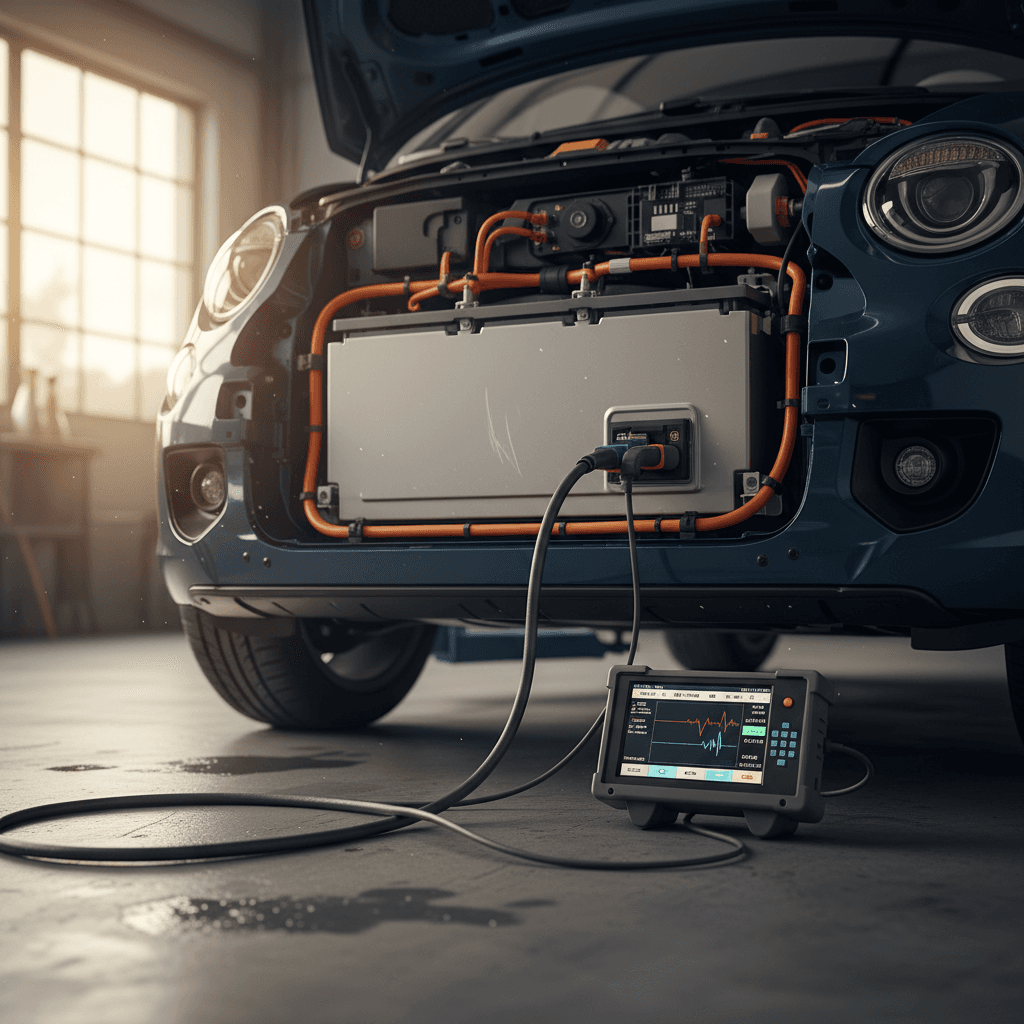
If you drive, or are thinking about buying, a Fiat 500e, understanding how to check its battery health is critical. This small city EV can be a bargain, but its value and day‑to‑day usability live or die with the condition of its high‑voltage pack. The good news: you can get a surprisingly clear picture of a 500e’s battery with a mix of on‑screen clues, simple test drives and, when needed, deeper diagnostics.
What this guide covers
Why Fiat 500e battery health matters, especially on a used car
Unlike an engine in a gas car, you can’t rebuild an EV battery cheaply. On a Fiat 500e, battery health drives three things: usable range, performance and resale value. A pack that’s lost 25–30% of its original capacity can turn a fun city runabout into a stressful daily driver, and a buyer who knows how to inspect battery health will discount a tired pack heavily, or walk away.
- Range: a healthy original‑generation 500e typically delivers roughly 70–80 miles of mixed real‑world range when new, depending on conditions.
- Performance: as state of charge drops or the pack overheats, the car can limit power to protect the battery.
- Value: the battery is the single most expensive component in the car; serious degradation can wipe out the “cheap used EV” math.
California compliance car history matters
Fiat 500e battery basics: size, chemistry and what “healthy” looks like
Key Fiat 500e battery specs at a glance
Knowing the starting point makes it easier to judge degradation later.
Pack size
Real‑world range
Thermal management
A “healthy” Fiat 500e battery isn’t about perfection; it’s about whether the remaining capacity and performance still fit your use case. Some loss, say 5–15% over the first several years, is normal. The real red flags are sudden drops in range, large differences between what the display promises and what you actually get, or trouble codes related to the high‑voltage system.
Think in usable range, not just percentages
Quick Fiat 500e battery health check from the driver’s seat
Before you break out tools or apps, you can learn a lot about Fiat 500e battery health just by paying attention during a short drive and charge cycle. This is your low‑friction, no‑equipment starting point, especially useful on a test drive of a used car.
5 quick checks you can do in minutes
1. Start with a full charge reading
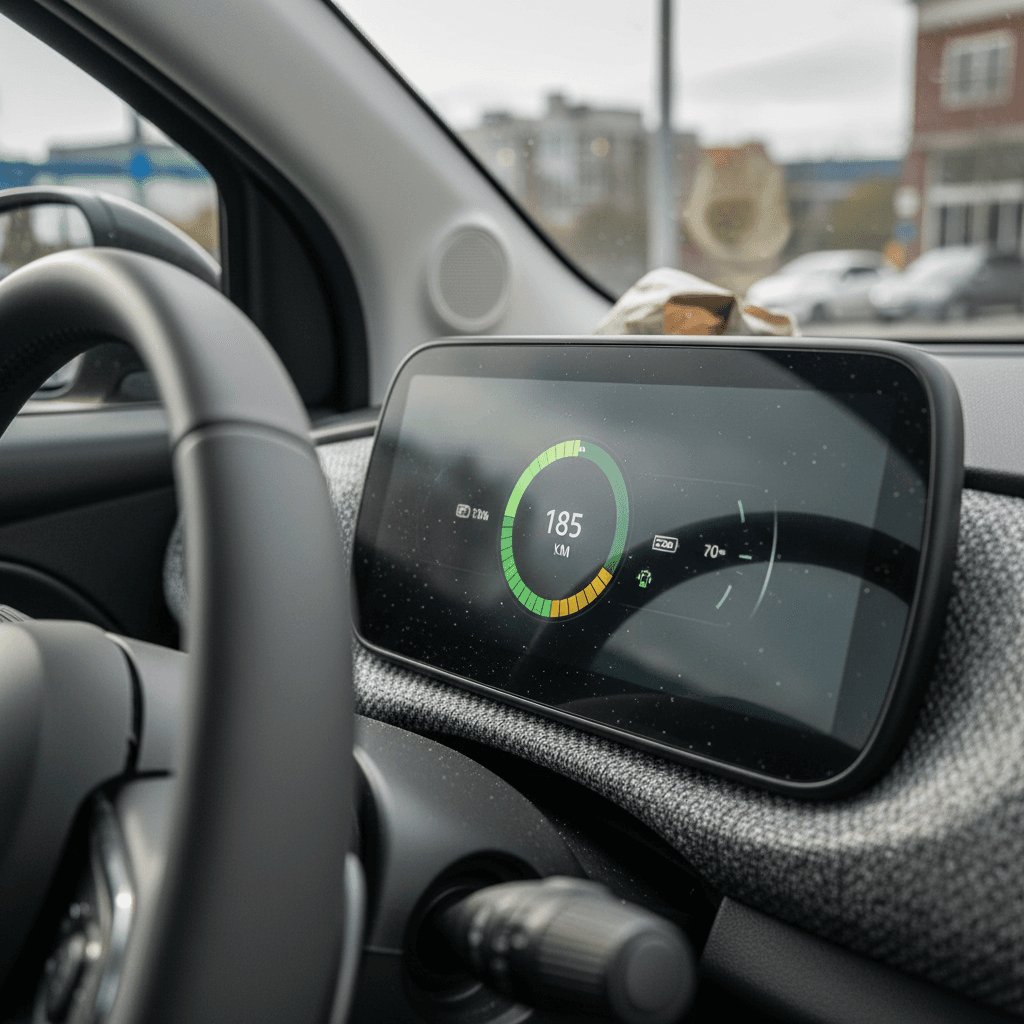
Ask the seller to charge the Fiat 500e to 100% before you arrive. Turn the car on and note the <strong>state of charge (SoC)</strong> and the estimated range on the dash. For a healthy pack in mild weather, a full charge should show an estimate in the ballpark of typical real‑world range for that model year (often 70+ miles for an early 500e).
2. Compare range estimate to SoC
If the car shows, for example, 90% SoC but only 40–45 miles of range in normal driving mode, that can hint either at heavy recent driving conditions (lots of high‑speed, cold weather, or hills) or underlying degradation. Make a note to cross‑check this with an actual drive (next step).
3. Take a mixed‑driving test loop
Drive at least 10–20 miles, mixing city speeds and some 45–60 mph stretches if possible. Watch how many miles of estimated range you lose versus miles actually driven. A very healthy pack will lose range roughly in line with distance traveled; big mismatches can indicate calibration issues or deeper degradation.
4. Watch for power limiting or warnings
During your drive, check for any <strong>warnings on the instrument cluster</strong>, especially related to the high‑voltage system, battery, or limited performance. Also notice whether the car feels unexpectedly sluggish at moderate SoC levels, this can be a sign the car is protecting a weak pack.
5. Listen and feel during charging
If you can plug the 500e into Level 2 AC charging, notice any unusual noises (beyond normal cooling fans) or warning messages as charging starts and progresses. Sudden stops in charging or errors on the charger or dash can point to pack or onboard charger issues.
If everything looks normal so far…
Using range to estimate Fiat 500e battery health
Because Fiat doesn’t show a direct “state of health” percentage on the dash, owners often use range‑based methods to estimate battery health. These aren’t precise, but they’re helpful, especially if you repeat them under similar conditions over time.
Very rough guide: indicated range vs likely battery health
Assumes original‑generation US Fiat 500e, mild weather, normal driving mode, full charge, mixed driving energy use. Treat these as directional, not exact.
| Indicated range at ~100% | Very rough health impression | What it might mean |
|---|---|---|
| 70+ miles | Healthy or lightly degraded | If conditions are mild, this suggests the battery is still close to original usable capacity. |
| 55–70 miles | Moderate degradation | Likely capacity loss but still practical if your daily driving is short and you have easy charging. |
| Under 55 miles | Significant degradation or harsh conditions | Could be a tired pack, very inefficient recent driving, cold temps, or a mix of all three. Requires deeper investigation. |
Use this table as a sanity check, not a laboratory measurement. Driving style, temperature and recent trips can swing range estimates significantly.
Don’t skip the context
Advanced battery health check with OBD and apps
If you want a more precise view of Fiat 500e battery health, especially as an owner monitoring degradation over years, it’s worth stepping up to OBD‑based diagnostics. These tools read battery data directly from the car’s control units through the OBD‑II port.
What you need for an OBD‑based battery check
Nothing exotic, just the right dongle, a compatible app, and a bit of patience.
1. A quality OBD‑II adapter
2. A compatible smartphone app
3. A simple test plan
Step‑by‑step: running an OBD battery health check
1. Connect the OBD adapter safely
Locate the 500e’s OBD‑II port (typically under the dash), plug in your adapter, and pair it with your phone following the adapter’s instructions. Make sure the car is in a safe, parked location.
2. Launch your EV diagnostic app
Open the chosen app, select the correct vehicle profile if needed, and confirm it can connect to the 500e without throwing errors. Give it a minute to read all ECU data.
3. Note pack voltage and SoC
Check the reported high‑voltage pack voltage and the state of charge. This helps you sanity‑check the app’s readings against what the dash shows.
4. Look at cell balance and temperatures
Healthy packs typically show relatively small differences between their highest and lowest cell group voltages, as well as reasonable cell temperatures across the pack. Large imbalances or very hot/cold cells can flag emerging issues.
5. Capture any state‑of‑health values
Some tools estimate state of health (SoH) as a percentage of original capacity. Treat these as <strong>directional, not gospel</strong>, but they can be very useful when tracked over time under similar conditions.
Owner‑level vs lab‑grade data
Professional diagnostics vs DIY checks
When DIY checks are enough
If you already own a Fiat 500e and you’re just trying to understand whether the battery is aging normally, the combination of on‑screen behavior, range tracking, and an occasional OBD scan is usually sufficient. You’re watching for big changes or obvious trouble signs, not obsessing over the last few percent of capacity.
- No warning lights or charging errors
- Range remains predictable and fits your daily use
- OBD data (if you use it) looks stable over multiple checks
When to get a professional battery report
If you’re about to buy a used Fiat 500e, or you suspect issues that DIY tools can’t explain, it’s worth stepping up to a professional evaluation. That might be a dealer‑level diagnostic session or a third‑party battery health service.
- Unexpected range loss over weeks, not just one trip
- Repeated charging faults or high‑voltage warnings
- Big price difference riding on battery condition in a sale
Where Recharged fits in
Ready to find your next EV?
Browse VehiclesChecking battery health when buying a used Fiat 500e
Shopping the used EV market is where battery health checks move from “nice to know” to “deal‑breaker.” A cheap Fiat 500e with a tired pack can turn into an expensive mistake, while a well‑cared‑for car with strong battery health can be a long‑lasting bargain. Here’s how to approach it like a pro.
Used Fiat 500e buyer’s battery checklist
1. Ask directly about range and charging habits
Start with the seller’s story. How far do they typically drive between charges? Do they usually charge to 80–90% or sit at 100%? Have they fast‑charged frequently? You’re looking for clues about long‑term battery stress.
2. Insist on a full‑charge reading
Ask for photos or a video of the car at 90–100% showing <strong>state of charge and estimated range</strong> in similar conditions to your likely use. This gives you a baseline before you even arrive.
3. Replicate your real commute
On the test drive, try to mimic your daily use: similar speeds, roads and climate if possible. Compare miles driven to miles of range lost on the display. If the car can’t comfortably handle your commute with a buffer during a test, it won’t magically improve later.
4. Check for warranty history or HV repairs
Ask for service records related to the high‑voltage battery or drive system. Past module replacements or BMS updates aren’t automatically bad, but you want to know the history and whether issues were fully resolved.
5. Consider a third‑party or Recharged battery report
If you’re buying privately, a professional battery inspection can be money well spent. If you’re shopping with <strong>Recharged</strong>, review the Recharged Score Report for objective battery data, not just “the seller says it’s fine.”
6. Price the car to the pack
Two similar‑looking Fiat 500e’s can deserve very different prices if one has a strong pack and the other is heavily degraded. Don’t be shy about walking away, or negotiating hard, if the battery health doesn’t match the asking price.
Don’t rely on odometer alone
How Recharged tests and rates battery health
At Recharged, we treat the battery pack as the core of a used EV’s value proposition. That’s why every vehicle we list, including models like the Fiat 500e, comes with a Recharged Score Report that goes well beyond a typical used‑car inspection.
What goes into a Recharged battery health evaluation
Because Recharged is both a marketplace and a retailer, we see battery health from both sides: buyers trying to minimize risk, and sellers trying to get fair value. The Recharged Score is designed to surface that information cleanly so you don’t have to reverse‑engineer battery condition from vague descriptions and optimistic range claims.
Protecting your Fiat 500e battery for the long term
Once you’ve confirmed that your Fiat 500e’s battery is in decent shape, the next step is keeping it that way. EV batteries respond best to moderation over time, avoid extremes of charge, temperature and neglect, and they tend to age gracefully.
Practical habits to extend your Fiat 500e’s battery life
None of these are complicated, but together they can make a real difference.
Stay in the middle
Avoid baking the pack
Use fast charging thoughtfully
Drive it regularly
Monitor for changes
Keep software and service current
Think about charging when you shop
Fiat 500e battery health FAQ
Frequently asked questions about Fiat 500e battery health
Battery health is where the abstract promise of “cheap used EV” meets reality, especially on compact city cars like the Fiat 500e. With a bit of structure, you can move beyond guesswork: start with simple range and dash‑display checks, layer in OBD‑based data if you’re inclined, and lean on professional diagnostics when real money is on the line. Whether you’re keeping your current 500e or evaluating your next one, treating the battery as the core asset, and demanding transparency around it, is the surest path to confident, low‑stress EV ownership.