If you’re watching the Chevrolet Bolt EV depreciation rate in 2026, you’re not alone. GM ended Bolt production in December 2023, and the used market is now flooded with off‑lease cars, post‑recall battery replacements, and buyers trying to decide whether to buy, keep, or sell. The result: some of the steepest price drops in the EV world, along with some of the best bargains for used‑EV shoppers.
Key takeaway on 2026 Bolt EV values
Why Chevy Bolt EV depreciation matters in 2026
The Bolt EV launched for the 2017 model year as one of the first truly affordable long‑range EVs. Fast‑forward to 2026, and used values are now shaped by three big forces: high early‑life depreciation across all EVs, GM’s decision to discontinue the original BEV2‑platform Bolt in 2023, and the promise of a next‑generation Ultium‑based Bolt coming around 2026–2027. That mix has made today’s Bolt EV both a depreciation cautionary tale and one of the best-value used EVs you can buy.
Chevy Bolt EV depreciation at a glance (2026 snapshot)
Depreciation is front‑loaded
Where Chevy Bolt EV prices sit in early 2026
To talk about the Chevrolet Bolt EV depreciation rate in 2026, you first need a feel for what these cars actually sell for today. Multiple market snapshots of 2022–2023 EVs show Bolt EV/EUV averages in roughly the $16,000–$17,000 range in February 2026, versus new MSRPs that were mostly in the mid‑$20Ks before incentives. That works out to a headline drop of around 40% from sticker on young, off‑lease cars.
Typical Chevy Bolt EV asking prices in early 2026
Illustrative retail price ranges you’re likely to see on dealer lots and online marketplaces in 2026. Actual numbers vary by region, trim, mileage, options, and battery history.
| Model year | Odometer range | Typical retail asking range (USD) | Rough depreciation vs. common MSRPs |
|---|---|---|---|
| 2023 Bolt EV | 20,000–35,000 mi | $15,000–$18,000 | ≈40–47% below ~$27K–$30K MSRPs |
| 2022 Bolt EV | 30,000–45,000 mi | $14,000–$17,000 | ≈45–55% below ~$31K MSRP (before 2022 price cuts) |
| 2020–2021 Bolt EV | 45,000–70,000 mi | $12,000–$16,000 | ≈55–65% below ~$37K–$39K MSRPs |
| 2017–2019 Bolt EV | 70,000–110,000+ mi | $8,000–$13,000 | ≈65–75% below original MSRPs around the high‑$30Ks |
These are ballpark retail ranges, not offers from Recharged or any specific seller.
How Recharged prices used Bolts
3‑year depreciation: What a 2023 Bolt EV looks like in 2026
For many shoppers and owners, the most useful reference point is a 3‑year window, exactly where the 2023 Bolt EV now sits in 2026. Pricing tools and depreciation analyses suggest current 2023 Bolt EV resale values around $14,000–$16,000 for typical mileage. When you compare that to common 2023 transaction prices in the high‑$20Ks (before incentives), you’re looking at roughly 40–50% value loss in three years.
- A well‑optioned 2023 Bolt EV that sold new around $29,000 may now list in the $15,000–$17,000 range in many markets.
- A more basic 2023 LT that transacted closer to $27,000 might be trading in the low‑ to mid‑$14,000s with average mileage.
- Lease residuals set back in 2023 often assumed stronger future values than the market actually delivered, leaving many lessees underwater on buyouts.
How incentives change the real depreciation
5‑ to 8‑year depreciation trends for older Bolt EVs
Depreciation looks different once a Bolt EV moves past the steep early drop and into its 5‑ to 8‑year life. Analyses of 2017–2020 Bolt EVs through 2025–2026 show a pattern common to many EVs: fast initial decline, then a slower glide‑path as the market finds a floor for a capable, long‑range hatchback with inexpensive running costs.
How older Bolt EVs typically age
Approximate retention based on historical MSRP and mid‑2025 to early‑2026 used‑market data.
Age 5 (e.g., 2020 Bolt EV in 2025)
Many 5‑year‑old Bolt EVs retain roughly 32–40% of their original MSRP, translating to values in the mid‑teens for cars that were high‑$30Ks when new.
Annual depreciation slows versus the early years but still outpaces many comparable gasoline compacts.
Age 8 (e.g., 2017 Bolt EV in 2025)
First‑generation 2017 Bolts often show retention around 25–35% of MSRP by years 8–9, commonly in the high‑single‑ to low‑teens thousands of dollars.
The spread is wide: clean, low‑mileage cars with fresh recall batteries can command noticeably more than high‑milers with sparse documentation.
Battery recall silver lining
How Chevy Bolt EV depreciation compares to other EVs
Context matters. EVs as a group have depreciated faster than many shoppers expected between 2022 and 2025. A combination of aggressive new‑EV discounting, rapid tech turnover, and changing incentives has pushed some models down 50% or more in just three years. Within that mix, the Bolt EV sits in the middle‑to‑lower end of the pack for value retention, worse than Tesla’s most in‑demand models, but often on par with or better than other non‑Tesla compacts.
Where Bolt EV holds up reasonably well
- Low running costs and solid real‑world efficiency help used buyers justify prices even as tech ages.
- Battery replacements on many early Bolts mean shoppers can find older cars with unusually fresh packs.
- Practical hatchback packaging makes the Bolt more usable than some style‑first small EVs.
Where Bolt EV lags on retention
- It lacks the brand pull and charging network halo that support Tesla values.
- Older models miss out on the latest driver‑assist and infotainment tech, which weigh heavily in EV shoppers’ decisions.
- GM’s decision to discontinue the BEV2 Bolt while hyping a future Ultium Bolt pressures values on the outgoing generation.
Illustrative 3‑year depreciation: Bolt EV vs. popular EVs
Representative early‑2026 snapshots comparing roughly 3‑year‑old EVs. Numbers are rounded and for educational context only.
| Model (approx. MY) | Original MSRP (typical) | Typical 3‑yr used value | Approx. depreciation |
|---|---|---|---|
| Chevy Bolt EV (2023) | $27,000–$30,000 | $14,000–$16,000 | ≈40–50% |
| Hyundai Ioniq 5 (2023) | $41,000–$57,000 | $19,000–$25,000 | ≈50–55% |
| Kia EV6 (2023) | $42,000–$56,000 | $18,000–$24,000 | ≈50–55% |
| Ford Mustang Mach‑E (2023) | $44,000–$56,000 | ≈$22,000 | ≈50% |
| Tesla Model 3 (2022) | ≈$47,000 | $20,000–$22,000 | ≈50–55% |
Actual values vary by trim, incentives, mileage, and local demand.
Used EVs are normalizing after the roller coaster
What’s driving Bolt EV depreciation in 2026
Several forces specific to the Bolt EV intersect with broader EV‑market trends to shape its depreciation profile in 2026. Understanding them will help you read price charts with more nuance, and avoid bad assumptions, whether you’re listing one for sale or clicking “buy now” on a used example.
Five big forces behind 2026 Bolt EV depreciation
Some you can control, some you can’t, but all help explain today’s prices.
1. Model discontinuation & future Ultium Bolt
GM ended production of the BEV2‑based Bolt EV in December 2023 and has publicly teased an Ultium‑based successor for the 2026–2027 timeframe. That tends to push used prices down on the outgoing generation as shoppers wait for the new tech.
2. Battery recall history
The pack recall temporarily scared buyers and dented values. In 2026, cars with documented full pack replacements often command a premium over non‑repaired or poorly documented examples.
3. Aggressive new‑EV discounting
Chevy slashed Bolt prices in 2022–2023 and many buyers stacked that with tax credits. When new EVs get cheaper quickly, used prices have to follow, even if the underlying product hasn’t changed.
4. Charging and tech expectations
Shoppers now expect faster DC charging, robust driver‑assist suites, and polished infotainment. The Bolt’s slower DC rates and older UI make it feel dated next to 2025–2026 rivals, which weighs on resale.
5. Sector‑wide EV softness
Industry data going into 2026 shows used EV prices drifting lower as more off‑lease inventory hits the market. Even solid cars like the Bolt can’t escape broader sentiment and supply‑demand shifts.
Watch for mispriced lease residuals
Owner strategies: How to minimize your Bolt EV depreciation hit
If you already own a Bolt EV, you can’t rewind the market. But you can manage what happens next, whether that means holding, trading, or selling. Your goal is to protect what value remains and maximize your outcome when you do exit the car.
Six smart moves for current Bolt EV owners
1. Know your realistic market value
Before you renew insurance, refinance, or decide on a lease buyout, pull multiple value estimates and compare them to live listings in your area. That will tell you if your depreciation is in line with the broader 2026 market.
2. Document recall and battery work
Keep records of all <strong>battery recall</strong> work and any high‑voltage repairs. Upload these when you list the car or share them with a dealer. A clean paper trail can separate your Bolt from a sea of similar listings.
3. Keep mileage and cosmetics in check
EV shoppers scrutinize range and appearance. Staying current on tires, brakes, and cosmetic touch‑ups, and avoiding excessive mileage, can keep you near the upper end of value bands for your model year.
4. Time your sale or trade thoughtfully
If you’re planning to switch into the next‑gen Ultium Bolt or another EV, watch how incentives move. A heavy new‑car incentive blitz can undercut your used value overnight, but it can also create chances to roll negative equity into a steeply discounted replacement.
5. Consider private‑party vs. instant offers
Private‑party listings often beat dealer trade‑ins on price, but they take time and effort. Platforms like Recharged can bridge the gap with <strong>instant offers, consignment, or trade‑in</strong> options backed by EV specialists.
6. Use data, not emotion
The Bolt EV has a loyal following, but markets are cold‑blooded. Base your decisions on actual offers, not what you “feel” the car should be worth, or what it cost you three years ago.
Where Recharged can help Bolt owners
Buyer strategies: How to shop a used Bolt EV in 2026
For buyers, the same depreciation that frustrates some owners is precisely what makes the Bolt EV compelling in 2026. You’re getting a practical, efficient EV with plenty of range for most commutes, at prices that often undercut hybrids and compact crossovers. The key is to buy the right Bolt at the right price.

Used Bolt EV buyer checklist for 2026
1. Start with battery health data
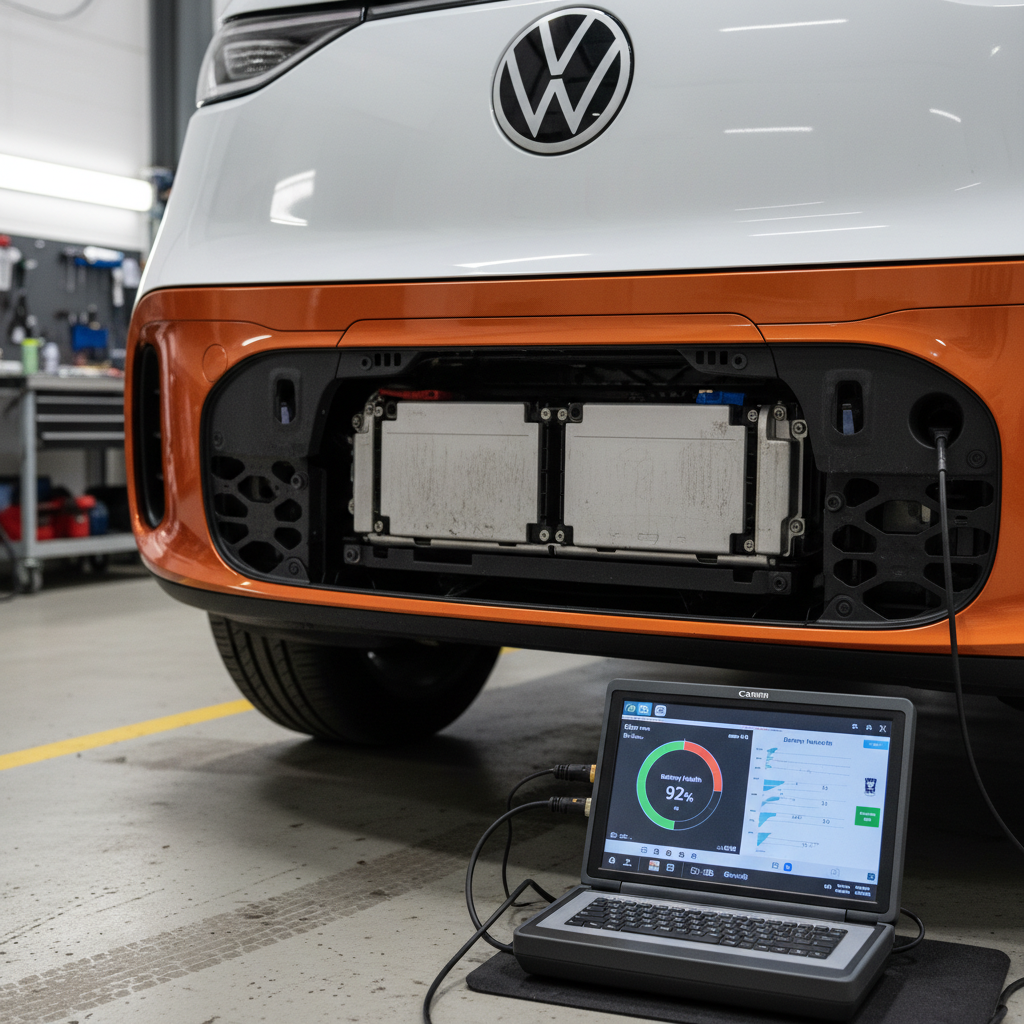
Battery condition is the single biggest factor in a used EV’s real‑world value. Look for listings that share <strong>diagnostic results</strong> or a third‑party battery report. Recharged listings include a Recharged Score so you can compare pack health at a glance.
2. Verify recall completion and pack replacement
Ask specifically whether the car received a <strong>full pack replacement</strong> under the recall or just software updates. A newer pack can justify paying a bit more for an older model year.
3. Compare asking price to true market bands
Don’t assume every Bolt under $20K is a deal. Compare mileage, trim, battery history, and options against current market bands for that model year. Walk away from cars that are priced like low‑mileage examples but show hard use.
4. Look beyond the headline depreciation percentage
Some of the scariest %‑off‑MSRP numbers belong to cars that were heavily discounted new. Focus on today’s <strong>cost per mile of useful life</strong>, not how badly the first owner got hit.
5. Inspect for EV‑specific wear
In addition to the usual used‑car checks, pay attention to charge‑port condition, onboard charger performance, and tire wear patterns. If you’re not comfortable judging these, consider an EV‑savvy pre‑purchase inspection.
6. Decide how important DC fast charging is to you
The Bolt EV’s DC fast‑charging speed is modest by 2026 standards. If you plan frequent road trips, factor that into your evaluation, or consider the EUV or another model entirely.
Where to find the best Bolt EV deals
- Off‑lease returns coming back to Chevy stores often have lower miles and good service records.
- Online EV marketplaces like Recharged specialize in used electric vehicles, pairing listings with verified battery health data.
- Private‑party listings can be cheaper but require more homework and negotiation.
Financing a depreciated EV
- Because depreciation is front‑loaded, financing a 3‑ to 5‑year‑old Bolt EV often means a better loan‑to‑value story than buying new.
- Consider getting pre‑qualified so you know your budget before you shop; Recharged can connect you with EV‑friendly lenders.
- Avoid stretching loan terms so long that you end up underwater again if values soften further.
Don’t ignore insurance and GAP history
Chevy Bolt EV depreciation rate 2026: FAQ
Frequently asked questions about Bolt EV depreciation in 2026
Bottom line: Is the Bolt EV’s 2026 depreciation an opportunity?
Put simply, the Chevrolet Bolt EV depreciation rate in 2026 is harsh if you bought new in the last few years, but it’s a gift if you’re shopping used. Three‑year‑old cars that cost close to $30,000 out the door are now trading in the mid‑teens. Five‑year‑old examples are even cheaper, with much of their lifetime value still ahead of them, especially when they’ve received fresh battery packs under the recall.
As with any used EV, the winners in this market will be the buyers and sellers who treat depreciation as a data problem, not a mystery. Lean on verified battery health, real‑world transaction data, and transparent condition reports to separate good deals from bad ones. If you’re ready to put numbers behind the narrative, Recharged can help you buy, sell, or trade a Bolt EV with the confidence that comes from a full Recharged Score report and EV‑specialist support from start to finish.