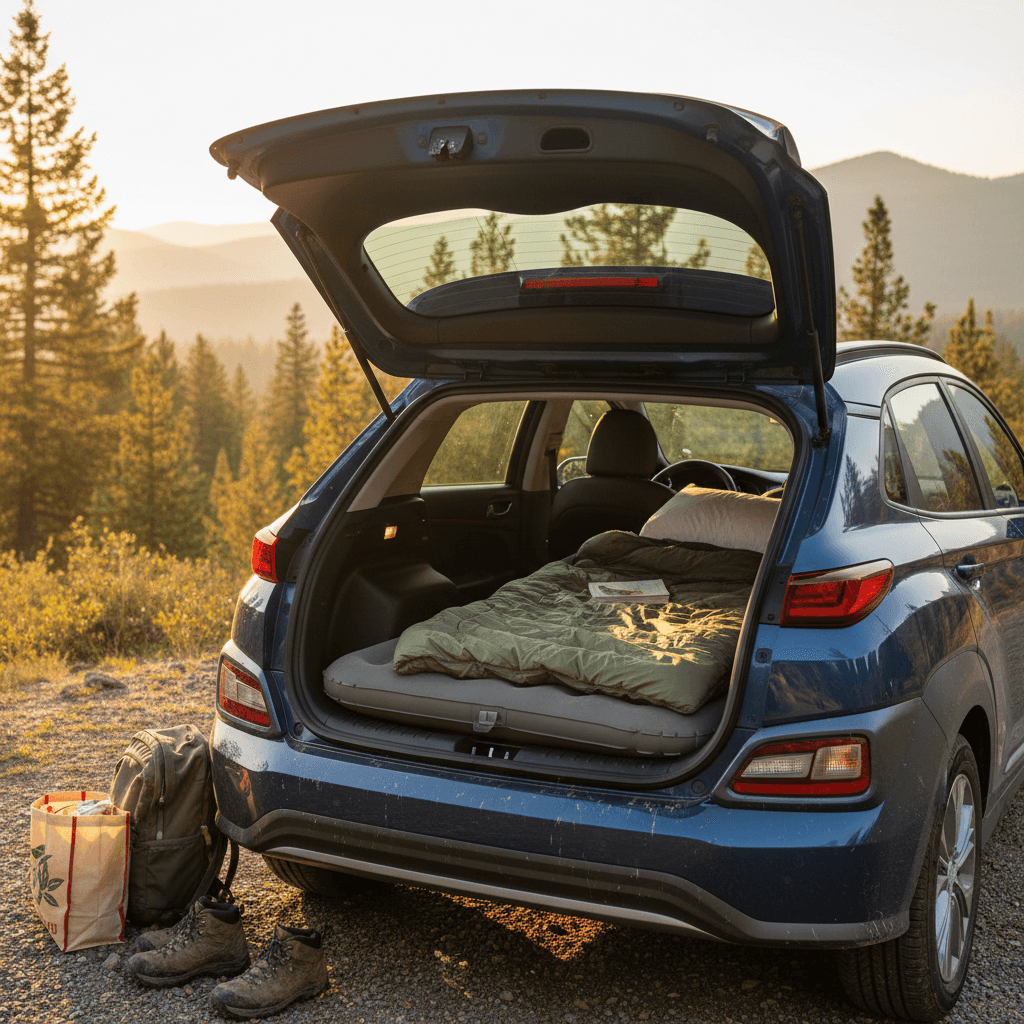
Yes, you can sleep in a Hyundai Kona Electric, people do it all the time, but it’s not a rolling studio apartment. The Kona EV is a subcompact crossover with just enough cargo length to turn into a serviceable tiny bedroom if you understand its dimensions, quirks, and how to work with (not against) its sloping rear seatbacks.
Short Answer
Space and Dimensions: How Much Room You Really Have
Hyundai Kona Electric Space at a Glance
Cargo specs give you the headline numbers. Earlier Kona Electrics (roughly 2019–2023 in the U.S.) offer about 19.2 cu ft of cargo space behind the rear seats and around 45.8 cu ft with them folded. The second‑generation Kona Electric (2024–2025) stretches that to roughly 25.5 cu ft seats‑up and about 63.7 cu ft seats‑down, thanks to a longer body and wheelbase.
In human terms, what matters is floor length and flatness. Owners who’ve actually measured it report about 56 inches of usable length from the back of a front seat (moved forward) to the hatch, and roughly 39–41 inches of width at the narrowest part of the opening. Diagonally, you can stretch closer to 6'4"–6'6" using the corner‑to‑corner distance, which is how taller folks make it work.
Think Diagonal, Not Straight
Generations: 2019–2023 vs. 2024–2025 Kona Electric
2019–2023 Kona Electric
- Shorter body and smaller cargo hold: ~45.8 cu ft with seats folded.
- Rear seatbacks form a gentle ramp rather than a perfect flat bed.
- Works best for solo sleepers or one adult plus a child.
- You’ll likely want a thicker mattress or platform to level the slope.
2024–2025 Kona Electric
- Lengthened wheelbase and body; cargo volume jumps to about 63.7 cu ft seats‑down.
- Available dual‑level cargo floor: raised setting gets you much closer to flat with seats folded.
- Improved rear legroom and slightly better headroom, handy when changing clothes inside.
- Still not a minivan, but much more forgiving for two‑person car camping.
Which Kona Electric Is Better for Sleeping?
Sleeping Layouts That Work in a Kona EV
- Solo sleeper, rear seats folded: The most common setup, both rear seats folded, passenger front seat pushed forward, sleep head‑to‑hatch or diagonally.
- Couple, minimalist: Both rear seats folded, two slimmer camping pads side by side; feet angle into the footwells behind the front seats.
- Front‑to‑rear stretch (taller solo campers): Passenger front seat fully reclined or slid forward, with bedding bridging from the front seatback to the folded rears.
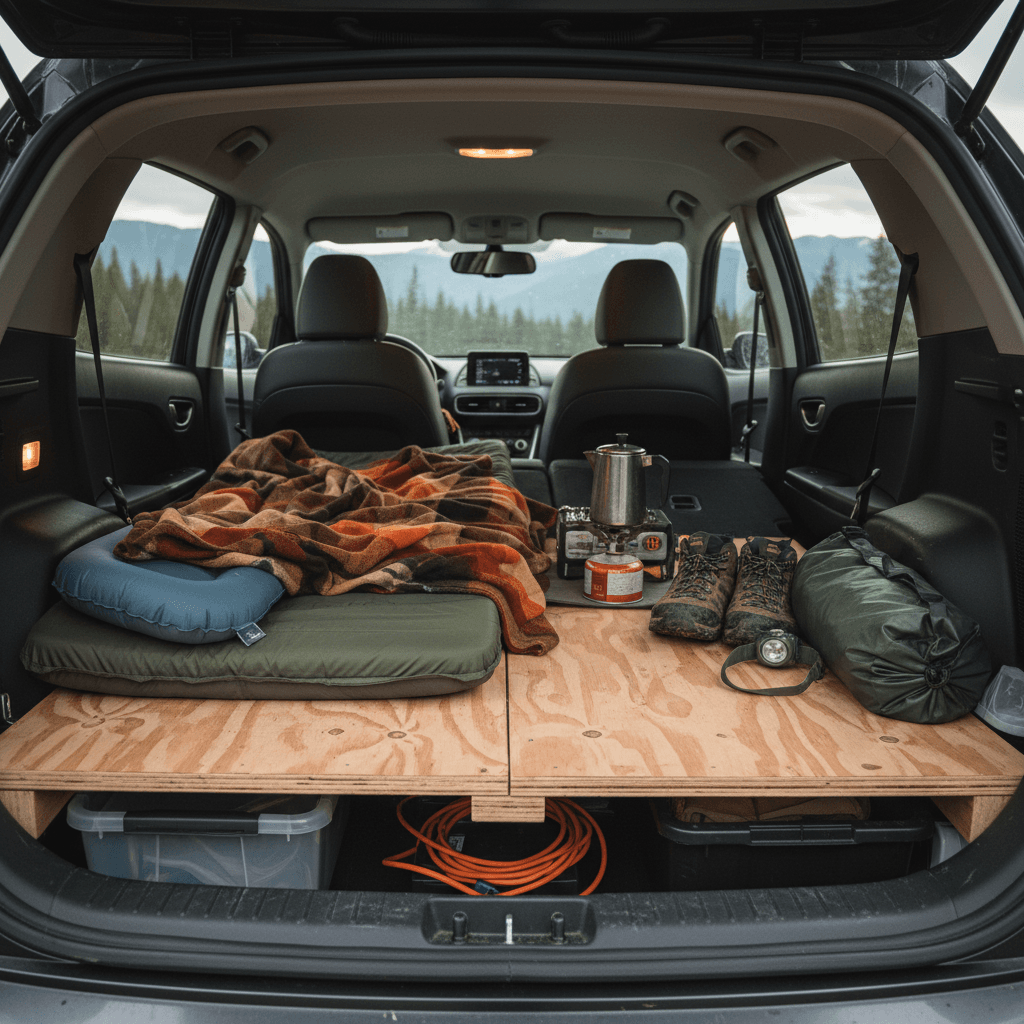
- Platform build: A low wooden or aluminum frame that spans from the hatch to the back of the front seats, leveling the slope and adding storage underneath.
The biggest ergonomic complaint about sleeping in a Kona Electric is that the rear seatbacks don’t fold perfectly flat. They create a mild incline up toward the front seats. Some owners simply live with it and use a thicker inflatable mattress to smooth out the dip. Others go further and remove the rear seat bottoms or build a compact platform that meets the level of the folded backs.
Check Before You Unbolt Anything
Mattresses, Platforms, and Gear That Fit
Common Bedding Solutions That Work in a Kona Electric
From ultra‑simple to mildly obsessive, here’s what people actually use.
1. Inflatable Car Mattress
Generic T‑shaped car mattresses from Amazon are popular because they’re cheap and flexible.
- Fit between the wheel wells and up to the hatch.
- Some designs extend into the rear footwells.
- Look for something around 70" x 40" or smaller.
2. Camping Pads & Foam
If you already own backpacking gear, this is the lowest‑effort route.
- Two 20"–25" wide pads fit side by side.
- Closed‑cell foam on the bottom, inflatable on top helps tame the seatback slope.
- Easier to roll up and stash during the day.
3. Low Sleeping Platform
For frequent trips, a simple plywood or aluminum platform can transform the space.
- Typically cut to about 40" wide and 55–60" long.
- Short legs or storage boxes support the front edge.
- Pairs nicely with a folding foam tri‑fold mattress.
Measure Twice, Buy Once
If you’re looking at universal platforms (the kind with adjustable rear legs), most are designed around small crossovers like the Kona, Ioniq 5, and similar. You’ll still want to verify your interior dimensions, but the Kona Electric’s roughly 40–41 inch cargo width makes it compatible with many of these modular systems.
Climate Control and Power While You Sleep
One underrated advantage of sleeping in an EV over an ICE car is quiet, efficient climate control. You can keep the Kona Electric in a ready or utility‑style mode and let the heat pump or A/C cycle gently through the night without an engine idling or fumes building up.
- In temperate weather, crack the windows slightly and skip climate control altogether.
- In colder temps, pre‑heat the cabin while plugged in, then run a low fan and moderate heat once you’re on battery.
- In hot, humid climates, A/C is almost non‑negotiable for comfort and safety, plan on a noticeable overnight energy draw.
How Much Battery Will Overnight Climate Control Use?
The Kona Electric also pairs well with small 12V accessories, USB fans, LED lights, or a laptop charger, without the usual worry about killing a starter battery. As long as the car is in the correct mode and you have enough main‑pack charge, the DC‑DC converter keeps the 12V system topped up.
Watch the Lights and Neighbors
Safety, Ventilation, and Battery Health Considerations
Pre‑Sleep Safety Checklist for Your Kona Electric
1. Choose a Safe, Legal Spot
Make sure overnight parking or camping is allowed, whether that’s a campground, a friend’s driveway, or a designated rest area. EVs are quiet, don’t abuse that stealth factor.
2. Level the Car
A slightly nose‑up or nose‑down car is annoying at 2 a.m. Use leveling blocks or simply reposition until your head isn’t downhill.
3. Ventilate Smartly
Crack opposite windows a half‑inch for cross‑breeze, or use vent shades and a small USB fan. You don’t have exhaust fumes to worry about, but stale air and condensation are still a thing.
4. Protect Privacy
Use reflective window covers or simple blackout curtains cut to size. They keep you cooler in summer, warmer in winter, and much less visible.
5. Mind Battery State of Charge
Set your own minimum SOC, many people choose 30–40%. If you wake up well under that, drive to a charger before coffee, not after.
6. Gear Management
Have a dedicated spot for keys, phone, and a light. The Kona’s door pockets and center console are surprisingly good at eating small objects when you’re half‑asleep.
Emergency Exit Matters
Real-World Kona Electric Camping Tips
Owner‑Style Tricks to Make the Kona Electric Livable Overnight
Collected from road‑trippers, weekend warriors, and people who really hate hotel fees.
Use the Front Seats as Part of the Bed
If you’re tall, push the front passenger seat forward and use a box or duffel to bridge the step between the folded rear seat and the seatback. Put your pillow there and stretch out diagonally.
Let Storage Do Double Duty
Shallow storage bins under your platform or mattress can support the front edge while holding clothes or cooking gear. They effectively “pay rent” for the floor space they’re stealing.
Tiny Fan, Big Upgrade
A palm‑sized USB fan clipped to a grab handle turns the Kona from stuffy capsule to habitable pod, especially with windows cracked and no full‑time A/C running.
Pack a Separate Sleep Kit
Keep your sleep clothes, toothbrush, headlamp, and earplugs in a single small bag that lives near the hatch. You don’t want to rummage through half the cargo hold in the dark every night.
Where the Kona Electric Shines
Is the Kona Electric Right for Your Road Trip?
If your idea of car camping is an occasional overnight on the way to somewhere else, the Hyundai Kona Electric is a quietly brilliant tool. It’s small enough to park anywhere, efficient enough that overnight climate control barely dents your range, and, especially in 2024–2025 form, roomy enough for a genuine, horizontal night’s sleep with a bit of planning.
If you want to live in a car for weeks at a time, you’ll bump into the Kona’s limitations fast: modest headroom for sitting up, the sloping rear seats, and limited storage once you allocate half the cabin to bedding. In that scenario, you might be happier in something boxier, like a used Ioniq 5 or a larger SUV‑style EV.
When you’re shopping used, pay attention to battery health and whether the car’s previous life involved lots of fast‑charging road trips. At Recharged, every used EV comes with a Recharged Score battery health report and fair‑market pricing, so you’re not guessing how your future camping partner will age. Our experts can also help you compare interior space across models if you’re torn between a Kona Electric and something larger.
So can you sleep in a Hyundai Kona Electric? Absolutely, within reason. Treat it like a compact, battery‑powered sleeper cabin: plan your layout, bring the right bedding, respect the limits of the space, and the Kona will reward you with quiet, climate‑controlled nights in places where hotel developers haven’t yet bothered to build. For many drivers, that’s more than enough adventure per cubic foot.