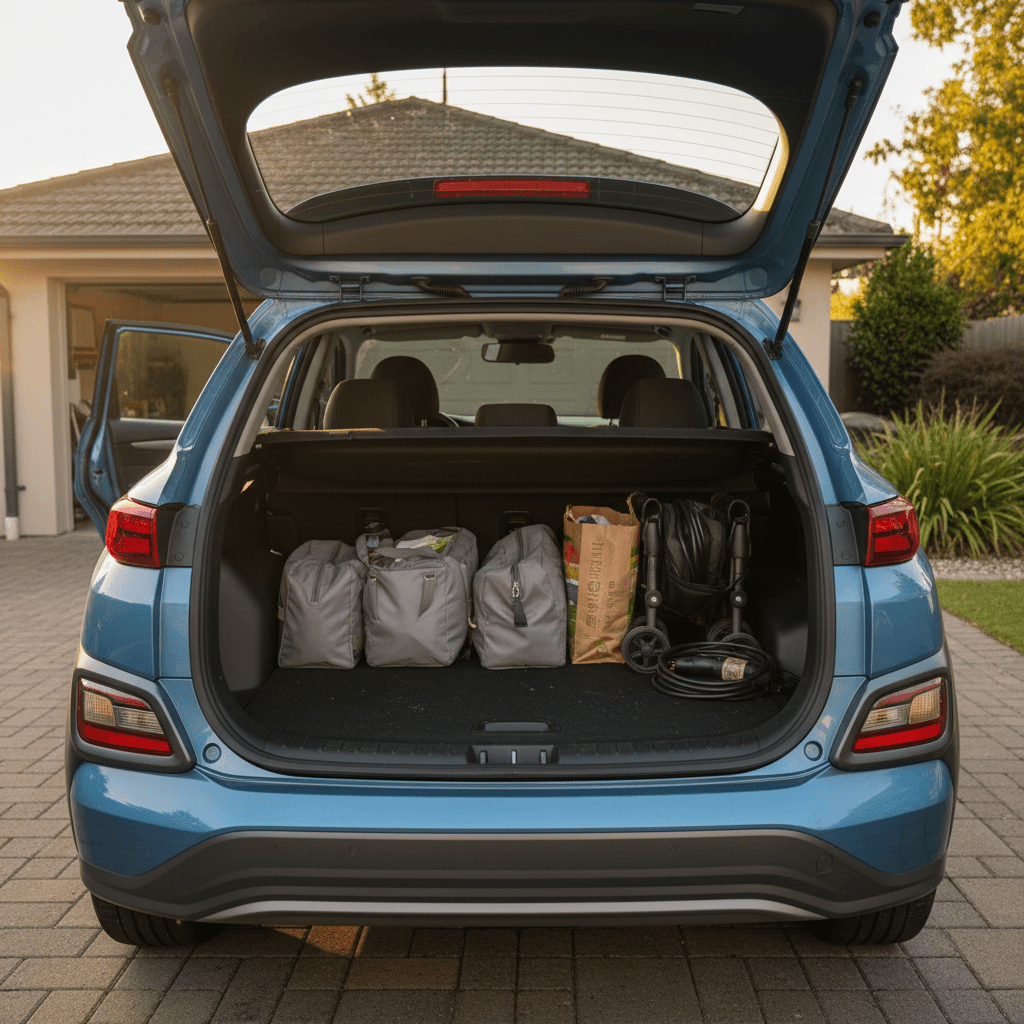
If you’re looking at a Hyundai Kona Electric, you’re probably wondering whether its compact footprint still gives you enough room for bikes, dogs, strollers, or road‑trip luggage. The good news is that the latest generation massively improves on the original, and once you understand the Kona Electric cargo space dimensions, it’s easier to know if it fits your lifestyle, or whether you should be shopping for something larger.
Two generations, two different cargo stories
Hyundai Kona Electric cargo space at a glance
Kona Electric cargo volume snapshot (U.S. models)
For the second‑generation 2024–2025 Hyundai Kona Electric sold in the U.S., Hyundai quotes 25.5 cubic feet of cargo space behind the rear seats and 63.7 cubic feet with the rear seats folded flat. That’s a substantial jump from the first‑generation Kona Electric, which offered around 19.2 cubic feet behind the seats and 45.8 cubic feet max. In practical terms, the newer Kona Electric behaves more like a “real” small SUV in the Costco‑and‑road‑trip sense, while the original was closer to a tall hatchback.
Cargo volume specs: first vs second generation Kona Electric
Hyundai Kona Electric cargo volume by generation (U.S. figures)
Key cargo volume specs that matter when you’re comparing model years or cross‑shopping other EVs.
| Generation / Model years | Cargo behind rear seats (cu ft) | Cargo with rear seats folded (cu ft) | Frunk (front trunk) volume |
|---|---|---|---|
| 1st gen Kona Electric (2019–2023 U.S.) | ≈19.2 | ≈45.8 | None |
| 2nd gen Kona Electric (2024–2025 U.S.) | 25.5 | 63.7 | 0.95 cu ft (≈27 L) |
Note: figures are Hyundai‑published measurements; real‑world usable space depends on how high you stack items and whether you remove the load floor.
The headline is simple: if cargo flexibility is a priority, the 2024–2025 Kona Electric is a big step up. A ~30% increase behind the rear seats and nearly 18 extra cubic feet with the seats folded makes the newer generation feel far less compromised as a one‑car household or small‑family vehicle.
Model‑year shopping tip
Detailed cargo space dimensions: length, width, and height
Cargo volume numbers are helpful, but they don’t tell you whether that snowboard or set of moving boxes will actually fit. Hyundai has published more granular dimensions for the newer global Kona Electric, and while numbers vary slightly by market measurement method, they give a solid picture of how usable the space is.
Key cargo dimensions in the second‑gen Kona Electric
Approximate figures based on Hyundai global measurements; think of these as real‑world guides, not millimeter‑perfect CAD data.
Cargo length
Approx. 867 mm (about 34.1 in) of cargo length behind the rear seats in the newer Kona Electric, according to Hyundai’s global engineering data. With seats folded, you gain considerably more usable floor length for longer items.
Cargo width
Hyundai quotes about 1,042 mm of width (roughly 41 in) in the rear cargo area for the all‑new Kona Electric, similar to many other small crossovers. Wheel‑arch intrusions are modest, so you can slide in wider suitcases or a folded stroller.
Cargo height
Vertical space is where the second‑gen car really improves: roughly 719 mm of cargo height (about 28.3 in) with the floor in the lower position. That extra height is a big part of why Hyundai can now quote over 63 cubic feet with the seats folded.
Raised vs. lowered cargo floor
Frunk storage and small-item space
Unlike the first‑generation Kona Electric, which devoted the entire front bay to power electronics, the newer Kona Electric adds a modest front trunk, or “frunk.” It’s not Rivian‑ or F‑150‑Lightning‑sized, but it’s genuinely useful.
- Frunk volume: about 0.95 cubic feet (≈27 liters) in 2024–2025 Kona Electric models, enough for a charging cable bag, a small backpack, or emergency supplies.
- Design: a lidded, under‑hood compartment, often with a net and light, designed for smaller, cleaner cargo rather than heavy tools or groceries.
- Best uses: EVSE (portable charger), adapters, work laptop in a soft case, or valuables you’d prefer not to leave visible in the main cabin.
Mind the heat and weather
Beyond the rear cargo area and frunk, the Kona Electric makes decent use of small‑item storage: side bins in the cargo area, under‑floor compartments (depending on trim), and plenty of cubbies upfront thanks to the shift‑by‑wire column shifter freeing up console space. That makes it easier to keep charging cables, cleaning supplies, and tire‑inflation kits organized and out of the way.
Real-world examples: what actually fits in a Kona Electric
Everyday errands
- Grocery runs: A 2024–2025 Kona Electric can comfortably swallow a family’s weekly grocery trip, think 6–8 reusable bags, behind the rear seats with room to spare.
- Home‑improvement store: Flat‑packed furniture boxes up to ~34 inches long fit with the seats up; longer boxes are easy with the 60/40 split folded.
- Pet transport: Most medium dog crates will fit sideways behind the seats in the newer generation; for larger crates, fold one side of the rear bench.
Road trips and hobbies
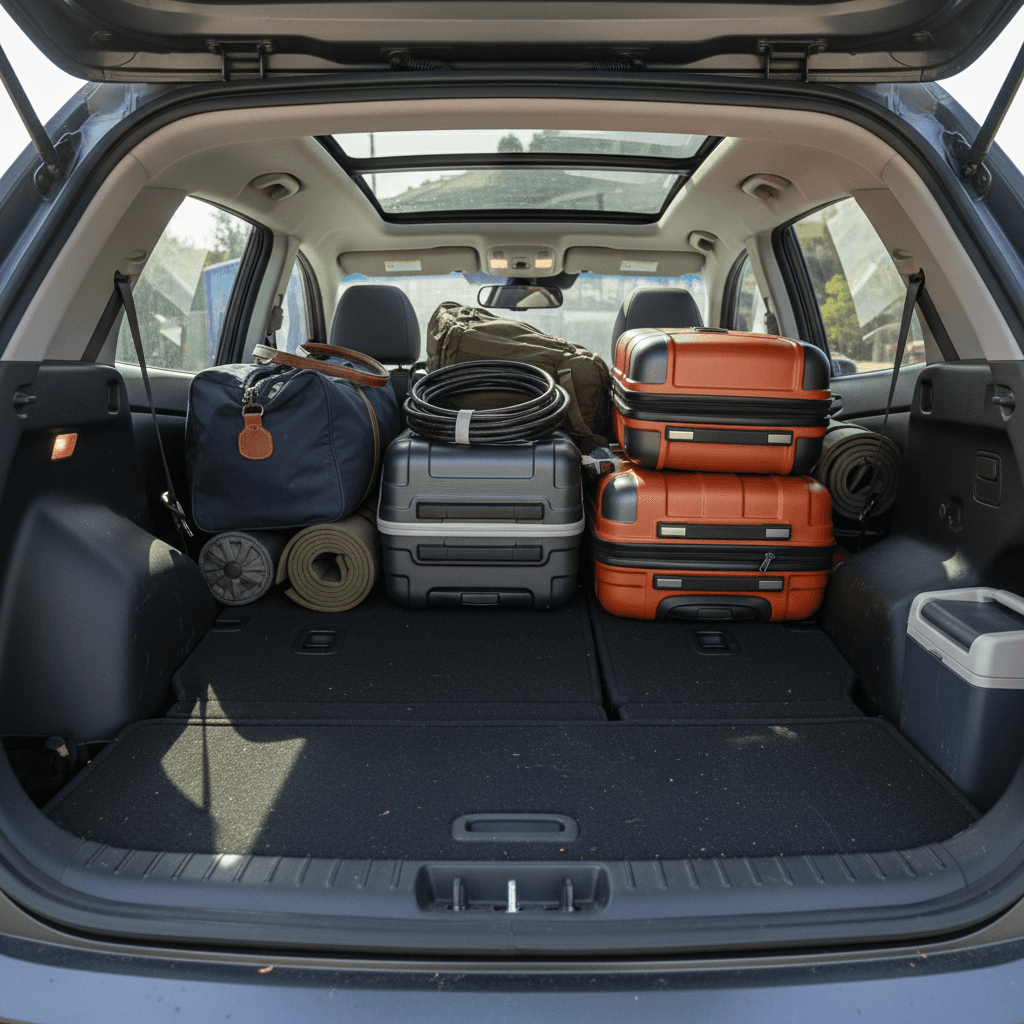
- Luggage: With the rear seats up, you’re realistically looking at 2 large checked‑size suitcases plus 2 carry‑ons. Fold the seats, and you can stack gear for a long weekend for four.
- Outdoor gear: Camping bins, tents, and soft duffels fit easily when you fold the rear seats. Two adults can sleep diagonally with an air mattress in the 2024–2025 car, though it’s tight.
- Sports equipment: Snowboards fit corner‑to‑corner with a rear seat folded; skis typically require folding the longer section of the 60/40 split or using roof racks.
Small EV, big‑enough cargo
How Kona Electric cargo space compares to other small EV SUVs
On paper, the latest Kona Electric’s 25.5/63.7‑cubic‑foot cargo numbers line up closely with mainstream small crossovers, electric or otherwise. It’s not the absolute champion in the class, but it’s right in the mix while staying shorter and easier to park than some rivals.
Kona Electric vs. other small EV crossovers (approximate cargo volumes)
A high‑level comparison to help you place the Kona Electric’s cargo space in context. Figures represent U.S.‑market specs where available.
| Model | Cargo behind rear seats (cu ft) | Max cargo with seats folded (cu ft) | Notable cargo traits |
|---|---|---|---|
| Hyundai Kona Electric (2024–2025) | 25.5 | 63.7 | Very competitive capacity for its footprint; includes small frunk. |
| Hyundai Kona Electric (2019–2023) | ≈19.2 | ≈45.8 | More like a tall hatchback; tight for big family road trips. |
| Kia Niro EV (current) | ≈22.8 | ≈63.7 | Similar max volume, slightly less space behind the seats than newer Kona. |
| Chevrolet Bolt EUV (discontinued) | ≈16.3 | ≈56.9 | Narrower, smaller rear cargo zone but good max with seats folded. |
| Volkswagen ID.4 | ≈30.3 | ≈64.2 | A size up in footprint and price; more space but bulkier in town. |
Always double‑check exact specs for the model year and trim you’re considering; automakers sometimes change how they measure cargo volume.
Think in use‑cases, not just cubes
Cargo tips for daily life and EV road trips
Make the most of Kona Electric cargo space
1. Use the 60/40 split creatively
You don’t have to drop the whole rear bench. Fold just the larger or smaller side to accommodate a long item, like skis or a bookcase box, while still keeping one rear seat usable for a passenger or child seat.
2. Adjust the load floor height
In second‑gen models with a two‑position floor, keep it high for an easy slide‑in load surface day‑to‑day. Drop it to the lower position when you need extra vertical space for coolers, pet crates, or potted plants.
3. Pack soft items on top
Because Kona Electric’s cargo height is modest, use soft bags, sleeping bags, and coats to fill the upper volume. Hard‑sided luggage goes on the floor; duffels and backpacks stack on top.
4. Reserve the frunk for EV essentials
Keep the portable EVSE, adapters, and maybe a compact roadside kit in the frunk. That frees the rear for day‑to‑day cargo while ensuring you always have your charging gear with you.
5. Watch rear visibility
It’s tempting to stack cargo to the roof, but that kills rearward visibility and can turn loose items into projectiles in a crash. If you must stack tall, consider a cargo net and rely on the Kona’s camera for reversing.
6. Consider a hitch rack or roof box
If you regularly haul bikes or bulky outdoor gear, a hitch‑mount bike rack or rooftop cargo box extends the Kona’s utility dramatically, especially for first‑gen cars with smaller interior volume.
Weight still matters, even in an EV
Buying a used Kona Electric: what to check in the cargo area
If you’re considering a used Hyundai Kona Electric, the cargo area can tell you a lot about how the vehicle was used, and how much life it still has in it as a hauler for your daily needs.
Cargo‑area inspection checklist for used Kona Electric shoppers
1. Inspect the load floor and trim
Lift the cargo floor if it’s removable and look for cracks, warping, water damage, or missing foam pieces. Heavy or careless loading often shows up as gouged plastic, torn carpeting, or broken tie‑down hooks.
2. Check seat‑fold mechanisms
Fold the rear seats up and down multiple times. They should latch cleanly, with no grinding noises or misalignment. Stuck or partially latching backrests can be expensive to sort out.
3. Verify cargo cover and accessories
Many Kona Electrics shipped with a retractable cargo cover or parcel shelf. Make sure it’s present, retracts correctly, and can be removed easily if you need to haul tall items.
4. Look for moisture or odor
Check under the load floor and in the spare‑tire well (if equipped) for dampness, rust, or mildew smell, signs of a leak or past flood damage. This is a red flag, especially for any used EV.
5. Confirm frunk condition (2nd gen)
Open the front trunk and make sure the liner, net and lid are intact. Damage here often indicates a previous front‑end impact or careless service work.
6. Ask for a battery health report
Cargo is only as useful as the range that gets you to your destination. At <strong>Recharged</strong>, every used Kona Electric comes with a <strong>Recharged Score Report</strong> that includes verified battery health and fair‑market pricing, so you know exactly what you’re getting.
Because the Kona Electric is a relatively compact EV, it slots into a sweet spot for many buyers: more practical than a hatchback, easier to park than a mid‑size SUV. If you’re shopping nationally, a digital retailer like Recharged can help you compare multiple used Kona Electrics, run the numbers on cargo vs. range vs. price, and arrange financing, trade‑in, and delivery without ever visiting a traditional dealership.
Hyundai Kona Electric cargo space FAQ
Frequently asked questions about Hyundai Kona Electric cargo dimensions
Put simply, the Hyundai Kona Electric punches above its weight in practicality, especially in its latest generation. The 2019–2023 car is a tidy, efficient hatch with enough room for urban life; the 2024–2025 redesign turns the Kona Electric into a genuinely useful small SUV with over 60 cubic feet of max cargo space and a handy frunk. If you’re cross‑shopping used EVs, pay close attention to which generation you’re looking at and how its cargo space dimensions match your real‑world needs. And if you want a clear picture of battery health, pricing, and day‑to‑day usability in one place, Recharged can help you compare Kona Electric listings and get your next EV delivered to your driveway.