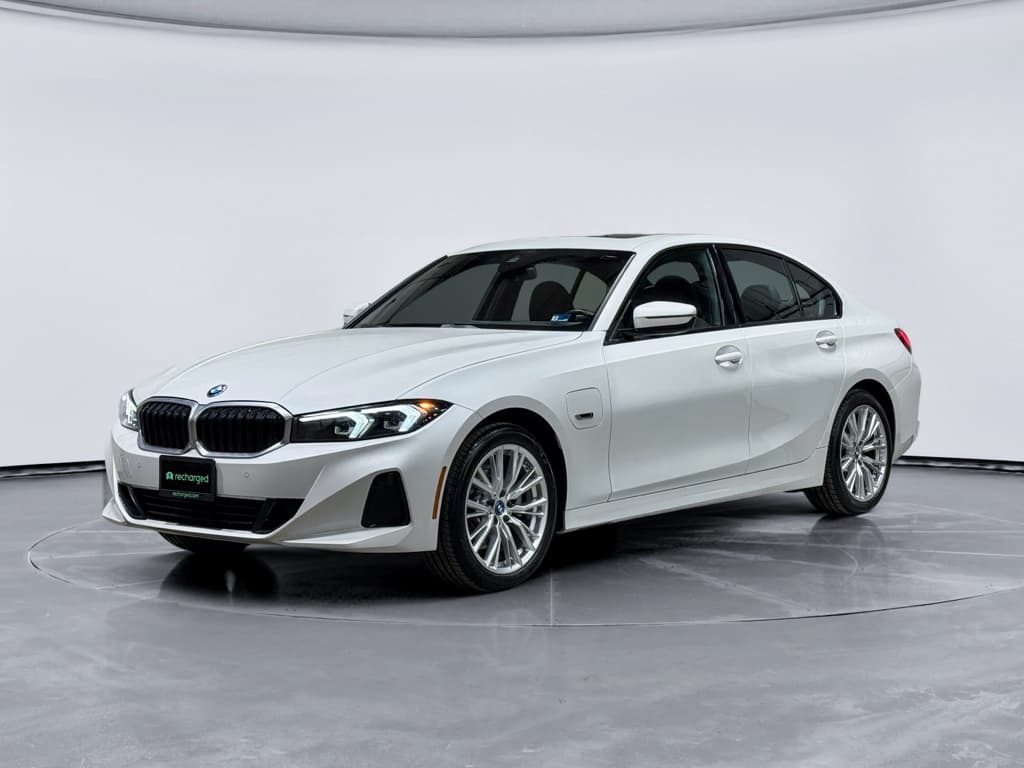
If you’re considering a BMW i4 road trip, you’re probably wondering about three things: real highway range, fast‑charging time, and comfort over several hours behind the wheel. On paper the i4 looks like a traditional BMW Gran Coupe that just happens to be electric, but how does it actually perform when you leave the city and start piling on miles?
BMW i4 trims covered
BMW i4 road trip at a glance
BMW i4 long‑distance snapshot
Bottom line for trip planning
Real-world highway range: what you can actually expect
On paper, the BMW i4 eDrive40 posts EPA ratings in the mid‑200s to low‑300s (depending on wheels and model year). That’s helpful for comparisons, but for road‑trip planning you care about real highway range at 70–75 mph, plus how weather, wheels, and driving style change the numbers.
eDrive40: the road‑trip sweet spot
- Usable battery: about 80 kWh.
- Typical 70–75 mph range: roughly 220–260 miles in mild temperatures.
- Best‑case (65 mph, gentle driving, 18" wheels): 270+ miles isn’t unusual.
- Worst‑case (75–80 mph, winter, headwinds): you may see 180–200 miles between 90% and 10%.
For most U.S. interstate travel, that translates to a comfortable 2.5–3.5 hours between charging stops if you don’t hyper‑mile.
M50: more power, slightly less range
- Same gross battery but more power and typically wider wheels/tires.
- Expect ~10–15% less highway range than an eDrive40 set up for efficiency.
- Think more like 200–230 miles per leg at 70–75 mph in fair weather.
If you like the M50’s acceleration but road‑trip often, choosing smaller wheels and eco‑oriented tires helps claw some of that range back.
Weather and elevation changes matter
On long trips, you’ll rarely use the full pack from 100% to near‑empty. The i4 is at its best if you fast charge in the 10–80% window. That means your practical leg length is really the distance you get between those percentages at your chosen cruising speed.
Rule‑of‑thumb road‑trip range for BMW i4
Approximate real‑world highway range for common scenarios in an eDrive40. Numbers assume 70–75 mph and some buffer at each end of the charge.
| Scenario | SOC window used | Estimated usable miles | Notes |
|---|---|---|---|
| Mild weather, 19" wheels, 70 mph | 90% → 10% | 240–260 mi | Typical best case on flat highway with light cargo. |
| Mild weather, 19" wheels, 75 mph | 90% → 10% | 220–240 mi | Faster speed adds aero drag, trimming range. |
| Cold, highway speeds, cabin heat on | 90% → 10% | 180–210 mi | Battery cold‑soaks overnight will hit efficiency hardest on first leg. |
| Heavy rain or strong headwinds | 90% → 10% | 170–200 mi | Aerodynamic penalty plus standing water can be significant. |
Use this as a planning baseline, then adjust for your own speed, weather and wheels.
DC fast charging on the road: how the i4 really behaves
Range only tells half the story in a BMW i4 road trip review. The other half is how quickly you can refill that battery. The good news: the i4’s DC fast‑charging performance is competitive with other luxury EVs on today’s 400‑volt architectures when conditions and chargers cooperate.
BMW i4 charging behavior in the real world
What to expect when you pull up to a 150–350 kW DC fast charger
Strong peak speeds
Recent data on the eDrive40 shows peaks around 200–205 kW when you arrive with a low state of charge (roughly 5–15%) and a properly warmed battery.
Healthy 10–80% average
Across that 10–80% window, you’re looking at an average of roughly 110–115 kW. In practice that’s often a ~30‑minute stop to add ~180 miles of true highway range.
Temperature‑sensitive
Owners consistently report that arriving with a cold or un‑preconditioned battery can cut peak power dramatically, sometimes to 70–90 kW, even if the charger is rated for 150–350 kW.
How to get the fastest possible charge
- On a good 150–350 kW charger, going from about 10% to 80% typically takes 25–35 minutes.
- You’ll see the highest kW numbers below ~40–50% SOC; power will gradually taper as you climb toward 80%.
- Charging from 80% to 100% on DC is much slower; it’s usually better to leave earlier and add an extra quick stop than to wait for those last few percent.
Don’t panic if you only see 60–80 kW
Navigation, planning & charging networks
The i4 is easier to road‑trip if you treat planning as part of the experience rather than something you do five minutes before leaving. BMW’s built‑in tools are decent, and third‑party apps fill in the gaps, especially for non‑BMW public fast‑charging networks.
Best tools for BMW i4 road‑trip planning
Mix BMW’s software with third‑party apps for the smoothest experience
BMW built‑in navigation
Use the i4’s native nav to route directly to a DC fast charger. The car will precondition the battery on the way, which is critical for fast charging performance.
Drawback: coverage and live status for some third‑party networks can be patchy, so cross‑check with other apps.
A Better Routeplanner (ABRP)
ABRP lets you choose your exact BMW i4 model, wheel size, and driving style, then simulates energy use and stop timing. It’s one of the best ways to sanity‑check how many stops you’ll need on a new route.
Network apps (EA, ChargePoint, etc.)
Download the apps for networks you’ll rely on, Electrify America, EVgo, ChargePoint and regional providers. They give you live stall status, pricing, and start/stop control, which BMW’s interface can’t always match.
In the U.S., many BMW i4 owners lean heavily on Electrify America for long‑haul trips, especially along interstate corridors. Depending on your model year and purchase program, you may have complimentary DC fast‑charging sessions included, which can meaningfully lower trip cost versus gas.
How Recharged can help you prep
Comfort, noise & storage on long drives
One of the i4’s biggest road‑trip strengths is that, underneath the EV hardware, it’s still fundamentally a BMW Gran Coupe. That brings familiar strengths, seating position, chassis tuning, interior quality, along with a few compromises from using a platform originally designed for gas models.
Seating & ride comfort
- Front seats are classic BMW: firm in a good way, with strong thigh support and effective adjustment for long stints.
- Rear seats are comfortable for two adults; the center position is best for shorter legs or kids on longer trips.
- Ride quality leans sportier than a Model 3 or an Ioniq 6, especially on big wheels. The eDrive40 on 18" or 19" wheels is the sweet spot for mixed comfort and handling.
- Cabin noise is well‑controlled at 70–75 mph, with more road roar from aggressive performance tires.
Cargo & practicality
- Hatchback trunk layout makes it easier to load luggage than a typical sedan; wide opening, decent vertical space.
- Two large suitcases plus soft bags fit easily; add a compact stroller or camping gear by folding part of the rear seat.
- No front trunk (frunk) due to the adapted platform; plan on packing everything in the rear and cabin storage.
- Plenty of small‑item storage in the doors and console, though not as cavernous as some dedicated skateboard‑platform EVs.
Comfort verdict
BMW i4 road trip vs Tesla Model 3 and other rivals
Every road‑trip review lives in context. The BMW i4 competes most directly with the Tesla Model 3, Polestar 2, Hyundai Ioniq 6 and similar compact premium EVs. Each has a distinct personality and long‑distance profile.
How the BMW i4 stacks up for long trips
Broad strokes, not a full head‑to‑head spec sheet
Versus Tesla Model 3
- Model 3 has a denser DC fast‑charge network thanks to Superchargers, though many non‑Teslas are gradually gaining access.
- Efficiency edge usually goes to Tesla, stretching range slightly at a given battery size.
- The i4 fights back with more traditional luxury cues, better sound insulation, and a driving feel many consider more premium.
Versus Polestar 2 & Ioniq 6
- Charging speeds are broadly comparable; in mixed owner reports, the i4’s curve is competitive, though not class‑leading.
- Ioniq 6 and some newer 800‑volt rivals can beat the i4 on pure DC speed, but the gap shrinks if the charger itself is the bottleneck.
- Interior feel is where preferences differ: BMW’s cockpit‑style layout versus Polestar’s and Hyundai’s more airy, minimalist designs.
The i4’s road‑trip identity
The BMW i4 is neither the most efficient nor the fastest‑charging EV on the market, but it’s well‑balanced: strong real‑world range, respectable DC performance, and a long‑distance driving experience that feels genuinely premium.
Road-tripping a used BMW i4: what to watch for
If you’re buying an i4 used, or taking a pre‑owned car you already own on its first real road trip, there are a few extra variables to think about. None are deal‑breakers, but they’re worth understanding before you set your route in stone.
Key checks before road‑tripping a used BMW i4
1. Battery health and past fast‑charging use
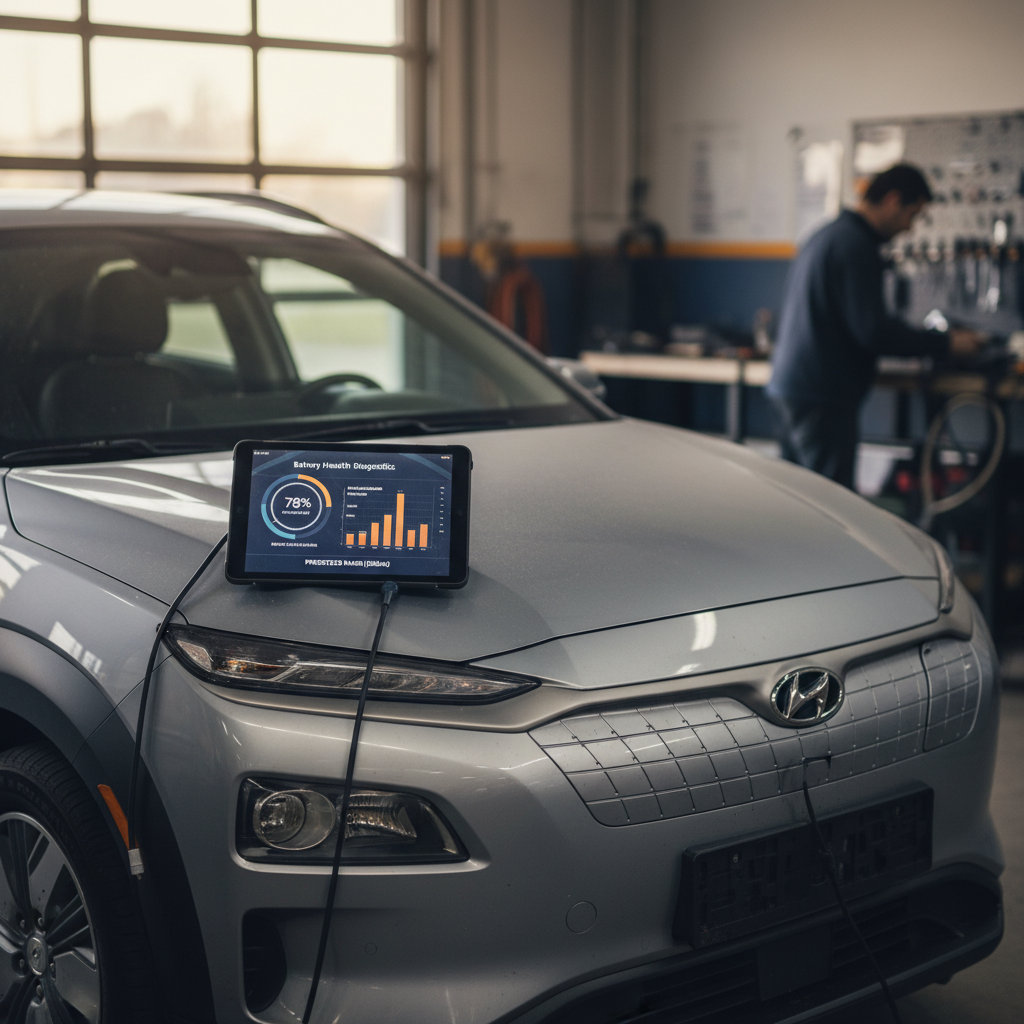
Battery degradation on modern BMW packs has generally been modest, but hard to eyeball from the dash alone. A <strong>Recharged Score Report</strong> gives you third‑party battery‑health diagnostics, so you know whether your usable range is still close to original specs.
2. DC fast‑charging behavior
On your first trip, schedule a test DC fast charge early in the day. If you never see more than 60–70 kW on a healthy 150+ kW charger (with preconditioning and low SOC), it’s worth asking a BMW service center to investigate.
3. Software updates and route‑planning features
BMW’s over‑the‑air updates can change how aggressively the car preconditions or how it estimates trip energy use. Make sure the car is on a recent software version before relying on built‑in planning for a multi‑day journey.
4. Tires, alignment, and range
Aggressive or worn tires, roof racks, and misalignment all eat into range. If you’ve just bought the car, it can be worth an alignment check and a tire pressure verification before your first 500‑mile weekend.
Why battery transparency matters for road trips
Pre-trip checklist for a smooth BMW i4 road trip
Treat this like your pre‑flight routine. Spend 15–20 minutes on these items a day or two before departure and your actual travel day will feel a lot less stressful.
BMW i4 road‑trip prep checklist
1. Map your fast‑charging anchors
Use ABRP or a similar planner to choose key DC fast‑charging stops about <strong>180–220 miles apart</strong> to start. Then cross‑check in network apps to confirm working stations and backup options.
2. Update apps and payment methods
Install or update Electrify America, ChargePoint, EVgo and any regional apps along your route. Add payment methods in advance so you’re not doing account setup in a hot parking lot.
3. Set up driver profiles and nav favorites
Save your home, hotel and frequent chargers as favorites in the i4’s navigation. Verify that <strong>“battery preconditioning for fast charging”</strong> is enabled in the charging settings.
4. Check tires, fluids and charging gear
Verify tire pressures (including the spare/repair kit), washer fluid, and wiper condition. Pack at least one <strong>Level 1 or Level 2 portable EVSE</strong> plus any adapters you might need for destination charging.
5. Plan SOC targets, not just stops
For each leg, note your <strong>departure and arrival SOC</strong> targets (for example, leave at 90%, arrive at 10–15%). This keeps you from over‑charging at early stops and wasting time in the slowest part of the charging curve.
BMW i4 road trip FAQ
Frequently asked questions about BMW i4 road trips
Final thoughts: is the BMW i4 a good road-trip EV?
Taken as a whole, the BMW i4 is an excellent road‑trip EV for drivers who value long‑distance comfort and a premium driving feel as much as charging stats. It won’t charge as brutally fast as the latest 800‑volt flagships, but with realistic 200‑plus‑mile legs and half‑hour DC stops, it fits neatly into how many people already travel by car.
Where the i4 really stands out is how little you have to change your habits if you’re coming from a BMW 3‑ or 4‑Series: the seating position, steering feel and overall touring character are familiar, just quieter and torquier. Get your planning tools in place, learn how to work with its charging curve, and the i4 will take you across states or across the country with far less drama than early‑EV horror stories might suggest.
And if you’re still shopping, a used BMW i4 with a verified Recharged Score Report can give you all of this capability at a lower price point, plus the confidence that its battery and pricing have already been scrutinized. For many buyers, that’s exactly the reassurance they need to make their first electric road trip feel like an upgrade, not an experiment.