Can an EV battery catch fire? Yes, lithium-ion batteries can and do sometimes burn. But when you look past viral videos and headlines, the data is clear: EVs are generally less likely to catch fire than gasoline cars, and modern battery packs are engineered with multiple layers of protection. The real question isn’t “can it happen?” but how likely is it, what causes it, and what you should look for if you own or are considering a used EV.
Key takeaway in one line
Do EV Batteries Really Catch Fire More Often?
If you follow the news, it can feel like every EV is a rolling fire hazard. In reality, EV fires are notable precisely because they’re uncommon and visually dramatic. Fire departments and safety agencies track vehicle fires across all powertrains, and when you normalize for the number of vehicles on the road, internal-combustion cars still account for the vast majority of fires in the real world.
EV Fire Risk in Context
Statistics aren’t the whole story
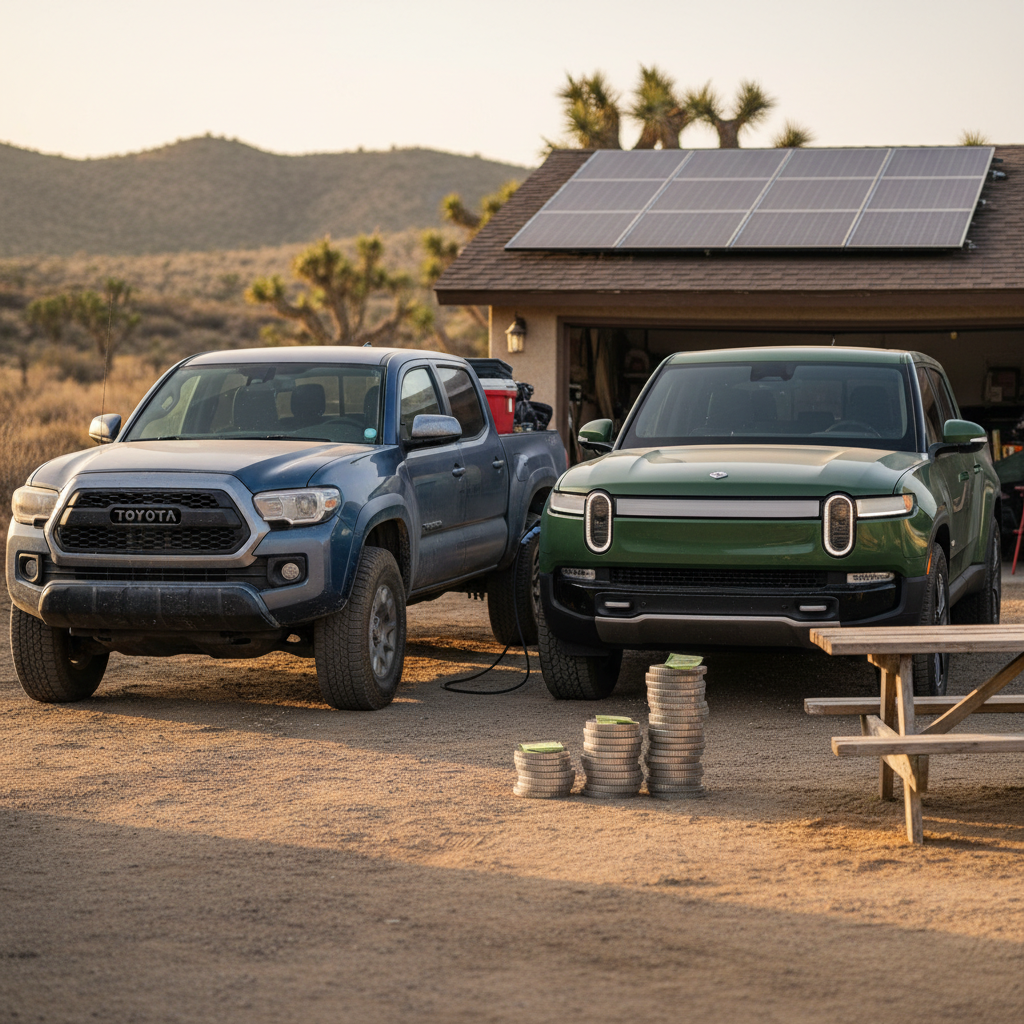
How Often Do EVs Catch Fire Compared with Gas Cars?
Different studies, countries, and datasets give slightly different numbers, but they all point in the same direction: EVs are not more fire‑prone than gasoline cars, and in many analyses they’re substantially safer.
Illustrative Vehicle Fire Rates by Powertrain
Rates vary by country and methodology, but these figures reflect the general trend regulators and researchers are seeing: EVs do not burn more often than gas vehicles and often burn less.
| Vehicle type | Approx. fires per 100,000 vehicles / year | Notes |
|---|---|---|
| Battery electric vehicle (EV) | ~4–25 | Most studies place EVs in the single or low double digits per 100k vehicles. |
| Plug‑in hybrid (PHEV) | ~4–30 | Adds both a battery and fuel system; risk profile sits between ICE and BEV in many datasets. |
| Gasoline / diesel (ICE) | ~70–1,500 | Conventional cars dominate real‑world vehicle fire statistics in every major market. |
Approximate fire rates per 100,000 vehicles by powertrain, based on aggregated international and U.S. data.
Exact numbers change as fleets grow and methodologies improve, but you don’t need to memorize the stats. The practical takeaway is this: an EV catching fire is a low‑probability event, and a gasoline car catching fire is meaningfully more common.
What Actually Burns in an EV Battery Fire?
When people say an “EV battery caught fire,” they’re usually talking about thermal runaway inside lithium‑ion cells. Each cell contains a flammable liquid electrolyte and other materials that can decompose exothermically (release heat) once temperatures get high enough or internal short circuits form.
- Elevated temperature or internal damage breaks down the separator between the positive and negative electrodes.
- This short circuit allows current to spike and heat to build up rapidly in the cell.
- The electrolyte and electrode materials decompose, releasing more heat and flammable gases.
- If heat and gases can’t be vented or managed, neighboring cells overheat and the process propagates through part of the pack.
From the outside, this can look like a sudden jet of flame, popping sounds, and thick smoke. It’s visually intense, but the underlying mechanism is well understood and heavily engineered against in modern packs.
Main Causes of EV Battery Fires
Four Main Pathways to an EV Battery Fire
Most EV fire investigations end up in one of these buckets.
1. Crash damage
2. Electrical faults
3. Manufacturing defects
4. Abuse, aging, or improper repair
Good news about “normal use”
Why EV Battery Fires Look Different, and Scarier
EV fires
- Intense but localized: Heat is concentrated around the pack, buried in the floor, so you may see jets of flame and heavy white or gray smoke.
- Can re‑ignite: Even after a fire is knocked down, residual heat deep in the pack can cause cells to reignite hours later.
- More water, different tactics: Fire crews often need more water and time to cool the pack, or they may let the pack burn in a controlled way while protecting surroundings.
Gas car fires
- More common but familiar: Typically start under the hood and spread quickly as fuel, oil, and plastics ignite.
- Shorter duration: Once the fuel supply is consumed or cut off, the fire tends to die down.
- Mature playbook: Fire services have nearly a century of experience dealing with gasoline and diesel fires.
For first responders, the challenge is different, not bigger
How Automakers Design EV Batteries to Avoid Fires
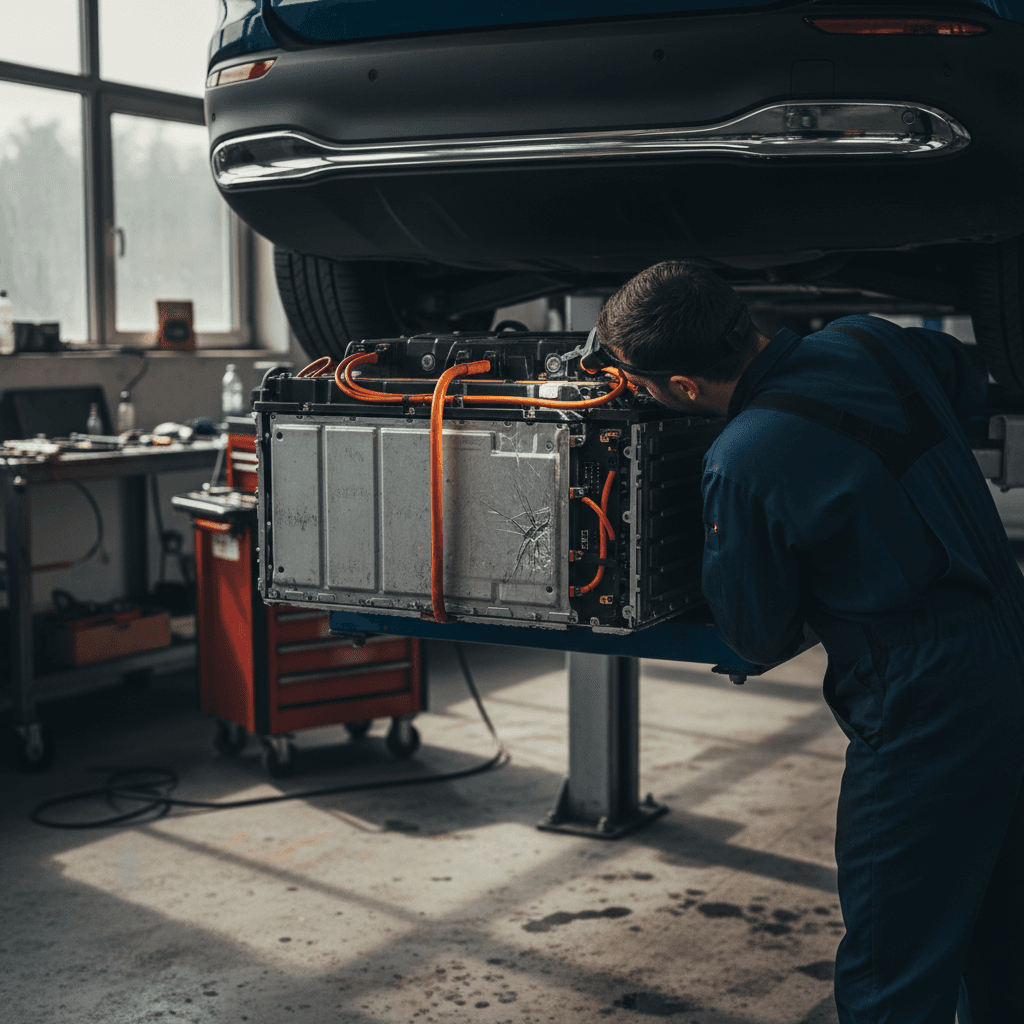
The industry knows that a single high‑profile battery fire can do years of reputational damage. That’s why serious automakers treat battery safety as a system‑level engineering problem, not just a chemistry problem.
Key Safety Layers in Modern EV Battery Packs
Robust pack enclosure
Battery packs are housed in rigid cases designed to withstand road debris and serious crashes. They’re mounted low in the chassis and protected by cross‑members and crush zones.
Advanced cooling systems
Liquid cooling channels or plates regulate cell temperature across the pack, preventing hotspots during fast charging or heavy loads that might otherwise accelerate degradation or failure.
Battery Management System (BMS)
The BMS constantly monitors voltage, temperature, and current at the cell or module level. It limits power, reduces charging rates, or shuts the system down entirely if readings move out of safe range.
Fuses, contactors, and isolation monitoring
High‑voltage circuits use pyrofuses, contactors, and isolation monitors to disconnect the battery quickly in a crash or fault, reducing energy available to feed a fire.
Cell and module fire barriers
Internal spacing, fire‑resistant foams, and shields are used to slow or stop thermal runaway from spreading from one module to the whole pack.
Abuse and certification testing
Packs and cells undergo nail‑penetration, crush, overcharge, short‑circuit, vibration, and thermal tests to meet standards before they ever reach a production vehicle.
An accident has to be very severe to compromise the battery pack in a way to rupture the cells and create an internal short which may lead to a fire.
Recent EV Battery Recalls: What They Tell Us
High‑profile EV battery recalls from brands like GM, Hyundai, Volkswagen, Mercedes‑Benz, and Volvo over the past few years can sound alarming. In reality, they illustrate that the safety net is working: when rare patterns of failures or elevated risk show up in the field, automakers and suppliers are expected to respond aggressively.
- Recalls are often triggered by manufacturing defects discovered after cells have seen real‑world use, things like electrode misalignment, contamination, or out‑of‑spec materials that can increase internal short‑circuit risk.
- Interim guidance (limit fast‑charging, cap state of charge, park outside) is meant to keep risk extremely low while parts and software fixes are rolled out.
- Packs or modules are usually replaced under warranty at no cost, and regulators keep pressure on automakers to notify owners and complete repairs.
How to think about recalls as a buyer
Fire Risk in Used EVs: What Shoppers Should Watch For
If you’re shopping used, your real leverage isn’t in eliminating risk entirely, that’s impossible with any car, but in avoiding the small subset of vehicles where risk is meaningfully higher. On the battery side, that usually means steering clear of cars with hidden damage, poor‑quality repairs, or unresolved recalls.
Higher‑Risk Used EV Scenarios
These are the situations where a closer look, or walking away, makes sense.
Unrepaired battery recalls
Prior crash or flood damage
Non‑OEM battery work
Where Recharged fits in
Practical Steps to Reduce EV Fire Risk
You don’t need to baby an EV to keep it safe. But just like with any complex machine, a few simple habits will keep both battery stress and fire risk extremely low.
Everyday Habits for EV Battery Safety
Follow the charging guidelines
Use approved chargers, avoid daisy‑chained extension cords or improvised wiring, and respect your vehicle’s recommended limits for DC fast charging frequency and state of charge.
Treat 240‑volt circuits like the serious hardware they are
If you’re installing a home Level 2 charger, have a licensed electrician do the work. Loose connections or undersized wiring can overheat and cause electrical fires, regardless of whether the vehicle is an EV.
Avoid parking damaged vehicles near structures
After a serious crash or deep water exposure, park the vehicle outside away from buildings until it’s been inspected or towed. This is standard guidance for any vehicle with potential fuel or electrical damage.
Keep software up to date
EVs frequently receive over‑the‑air updates that refine charging behavior, cooling strategies, and fault detection. Don’t ignore update prompts for months at a time.
Watch for warning lights and smells
If you see battery or powertrain warnings, smell strong chemical or burning odors, or notice unusual heat while charging, unplug, move to a safe spot, and contact roadside assistance or your dealer.
Check for open recalls periodically
Run your VIN through the manufacturer or government recall site once or twice a year. Fixing a recall is free and may directly reduce fire or reliability risk.
What to Do If an EV Battery Catches Fire
The odds that you’ll ever experience an EV fire are tiny, but preparedness is part of safety. The fundamental rules are similar to a gasoline car fire: get distance between people and the vehicle, and let professionals handle it.
- If you suspect a fire (smoke, popping sounds, visible flames), signal, pull over, and stop as soon as it’s safe.
- Shift into park, set the parking brake, and turn the vehicle off. If you’re charging, stop the charge if you can do so safely.
- Evacuate everyone, move at least 100 feet (or more if directed), and stay upwind of any smoke.
- Call 911 and clearly state that it is an electric vehicle so the dispatcher can inform the fire department.
- Do not attempt to reopen the hood or battery covers, spray water into high‑voltage components, or re‑approach the vehicle until firefighters say it’s safe.
Don’t play hero with a battery fire
FAQ: Common Questions About EV Battery Fires
Frequently Asked Questions About EV Battery Fires
Bottom Line: Should You Worry About EV Battery Fires?
Lithium‑ion batteries are powerful devices, and like gasoline, they store a lot of energy in a small space. That means the question “can an EV battery catch fire?” will always have the same honest answer: yes, it can, but it probably won’t. Statistically, EVs catch fire less often than gasoline vehicles, and automakers have spent decades building in structural, electrical, and software protections to keep already‑low risks even lower.
For you as a driver or used‑EV shopper, the most productive move isn’t to fear the technology, it’s to use information to your advantage. Follow basic charging and maintenance guidance, pay attention to recalls and warning lights, and be especially careful around vehicles with crash or flood history. If you’re buying used, lean on objective data like a Recharged Score battery health report so you’re not guessing about what’s happening inside the pack.
Do that, and you’ll be stacking the odds heavily in your favor, enjoying the everyday benefits of electric driving while keeping fire risk at a level that’s not just acceptable, but often lower than the gas car you’re replacing.