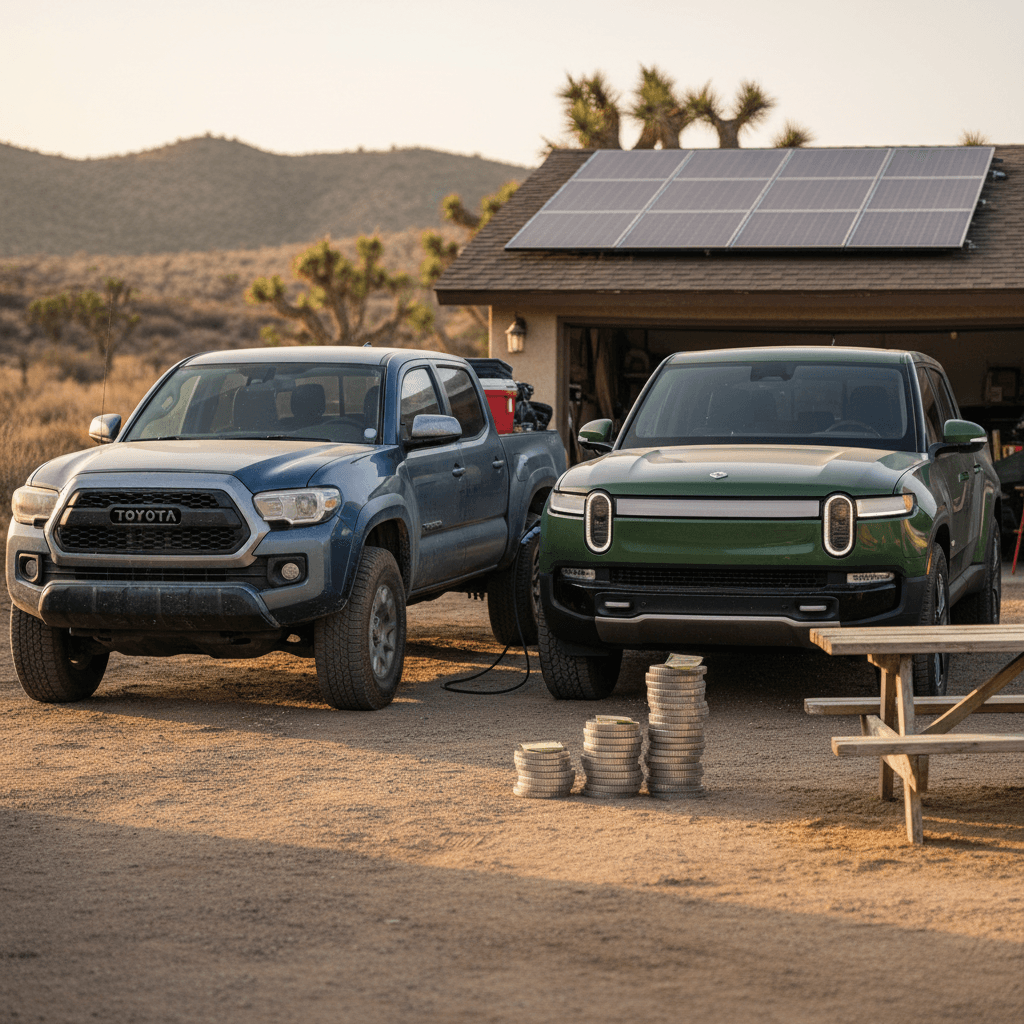
If you’ve spent years in a trusty Toyota Tacoma and you’re now looking at a Rivian R1T, you’re not alone. More truck owners are wondering if switching from a Tacoma to a Rivian R1T actually delivers real‑world cost savings, or if it’s just an expensive science experiment with a plug.
What this guide covers
Why Tacoma Owners Are Eyeing the Rivian R1T
The case for the Tacoma
- Reputation for bulletproof reliability.
- Strong resale value, especially in off‑road trims.
- Simple, familiar gas powertrain you can fuel anywhere.
The pull of the Rivian R1T
- Instant torque and sports‑car‑quick acceleration.
- Quiet, smooth daily driving with no tailpipe emissions.
- Adventure‑ready tech: adjustable air suspension, built‑in gear storage, powerful onboard outlets.
On paper, the R1T is the cooler truck. The big question is whether it’s also the smarter financial move.
Key Takeaways: Switching from Tacoma to R1T
Tacoma vs. Rivian R1T: Snapshot for a Typical Driver
Who benefits most
Upfront Cost: Tacoma vs. Rivian R1T
The Rivian R1T is a premium electric truck. A Tacoma is a mainstream midsize pickup. Comparing new‑for‑new, the R1T will almost always cost more upfront, but the picture changes once you factor in incentives and the used market.
Approximate Purchase Prices (U.S., early 2026)
Representative price ranges for popular Tacoma and R1T configurations. Actual pricing varies by trim, options, mileage, and market conditions.
| Vehicle | Typical New Price Range | Typical Late‑Model Used Price Range | Notes |
|---|---|---|---|
| Toyota Tacoma (gas, 4x4, mid‑trim) | $38,000–$48,000 | $30,000–$42,000 | Recent‑generation trucks with reasonable mileage. |
| Rivian R1T (dual‑motor, Large pack) | $75,000–$90,000+ | $55,000–$75,000 | Early trucks and mid‑spec trims increasingly available used. |
| Rivian R1T (used, through EV‑focused retailer) | N/A | Often mid‑$50Ks–$60Ks | Battery health and pricing transparency become crucial here. |
Using the used market can dramatically close the gap between a Tacoma and an R1T.
Sticker shock is real
Fuel vs. Electricity: Where Big Savings Show Up
Fuel is where the Rivian R1T quietly claws back a lot of that upfront cost, especially if you’re used to feeding a V6 or V8 Tacoma with today’s gas prices.
Typical Yearly Energy Costs: Tacoma vs. Rivian R1T
Assuming 15,000 miles/year and average U.S. fuel and electricity prices.
Gas in a Tacoma
If your Tacoma averages around 21 mpg combined and gas is about $3.75/gallon, you’ll burn roughly 714 gallons a year.
Annual fuel cost: about $2,675.
Electricity in an R1T
An R1T typically uses around 0.45–0.55 kWh/mile in mixed driving. At 15,000 miles, that’s roughly 7,000–8,000 kWh/year.
Charging mostly at home at $0.15–$0.17/kWh puts you near $1,050–$1,250/year.
Realistic blended cost
If you mix home charging with some pricier DC fast charging on trips, a realistic average works out to around $700–$1,300/year, still well under typical Tacoma fuel spend.
Fuel savings in plain English
Maintenance and Repairs: Gas Truck vs. EV Truck
Tacomas have a well‑earned reputation for going forever, but they still have every moving part of a traditional gas powertrain: engine, transmission, exhaust, fuel system, and all the fluids that go with them. The Rivian R1T deletes most of that complexity.
- No oil changes, spark plugs, timing belts, or transmission service on the R1T.
- Brake wear is usually lower on EVs thanks to strong regenerative braking.
- Coolant and gear‑oil services exist but are infrequent compared with ICE service intervals.
- Tacoma owners often pay for routine services every 5,000–10,000 miles; much of that disappears with the R1T.
Typical Annual Maintenance Spend
Don’t ignore big‑ticket EV repairs
Insurance, Tires, and Other Running Costs
Here’s where the story tilts back in the Tacoma’s favor. The Rivian R1T is a heavier, more expensive truck packed with technology, and insurance and tires will generally reflect that.
Insurance
- In many markets, R1T insurance is higher than for a Tacoma because of its price, repair complexity, and specialty parts.
- Depending on your driving record and location, expect the R1T’s premium to be modestly to significantly higher than a comparable Tacoma.
- Shopping quotes before you switch is essential; sometimes bundling and telematics programs narrow the gap.
Tires, brakes, and wear
- The R1T’s weight and instant torque mean more expensive tires, especially if you opt for all‑terrain rubber.
- Brakes tend to last a long time thanks to regen, which partially offsets tire costs.
- Tacomas also go through tires, particularly if lifted or off‑roaded, but they have cheaper wheel/tire packages on average.
Big picture on running costs
Tax Credits, Incentives, and HOV Perks
Unlike a Tacoma, a Rivian R1T may qualify for federal or state EV incentives, especially if you’re buying used or leasing. The rules change frequently, but there are three common buckets to pay attention to.
- Federal clean vehicle credits: Depending on how the R1T is configured and your income, a new or qualifying used R1T may be eligible for a tax credit, point‑of‑sale rebate, or lease incentive.
- State and local rebates: Many states, utilities, and cities offer EV purchase rebates, discounted registration, or home charging incentives you’ll never see with a gas Tacoma.
- HOV lane and parking perks: In some regions, EVs get carpool lane access, reduced tolls, or preferred parking, valuable if your commute is traffic‑heavy.
Do this before you shop
5‑Year Total Cost of Ownership Scenarios
Let’s put all of this into a simplified five‑year picture. These are not precise quotes; they’re ballpark scenarios to help you see how the costs stack up if you drive 15,000 miles a year and finance your truck.
Illustrative 5‑Year Cost Comparison
Very rough, example‑only 5‑year cost comparison for a well‑equipped Tacoma vs. a used Rivian R1T purchased from an EV‑focused retailer. Assumes similar down payments and loan terms.
| Category | Tacoma (gas) | Rivian R1T (used EV) | What to note |
|---|---|---|---|
| Purchase & financing | Lower monthly payment | Higher monthly payment | Used R1T typically still costs more than a similar‑year Tacoma. |
| Fuel / electricity (5 yrs) | Higher (gas) | Much lower (electricity) | R1T can save many thousands in energy over five years. |
| Maintenance & repairs | Moderate | Lower (day‑to‑day) | EVs usually need fewer routine services; battery health is key. |
| Insurance | Lower | Higher | R1T is more expensive to insure, but shop quotes. |
| Tires & wear items | Moderate | Moderate–higher | Heavier truck and performance tires cost more. |
| Incentives | None | Possible | Tax credits or rebates can further reduce effective R1T cost. |
| Resale value | Historically strong | Evolving, generally strong for sought‑after trims | Market for used EV trucks is maturing. Battery reports help resale. |
Your actual costs will depend on your deal, financing, incentives, driving style, and local energy prices.
When the R1T comes out ahead
Charging and Road-Trip Reality Check
Cost is only half the story. If you rely on your Tacoma for long highway runs or towing, you need to be honest about how an R1T fits your life day to day.
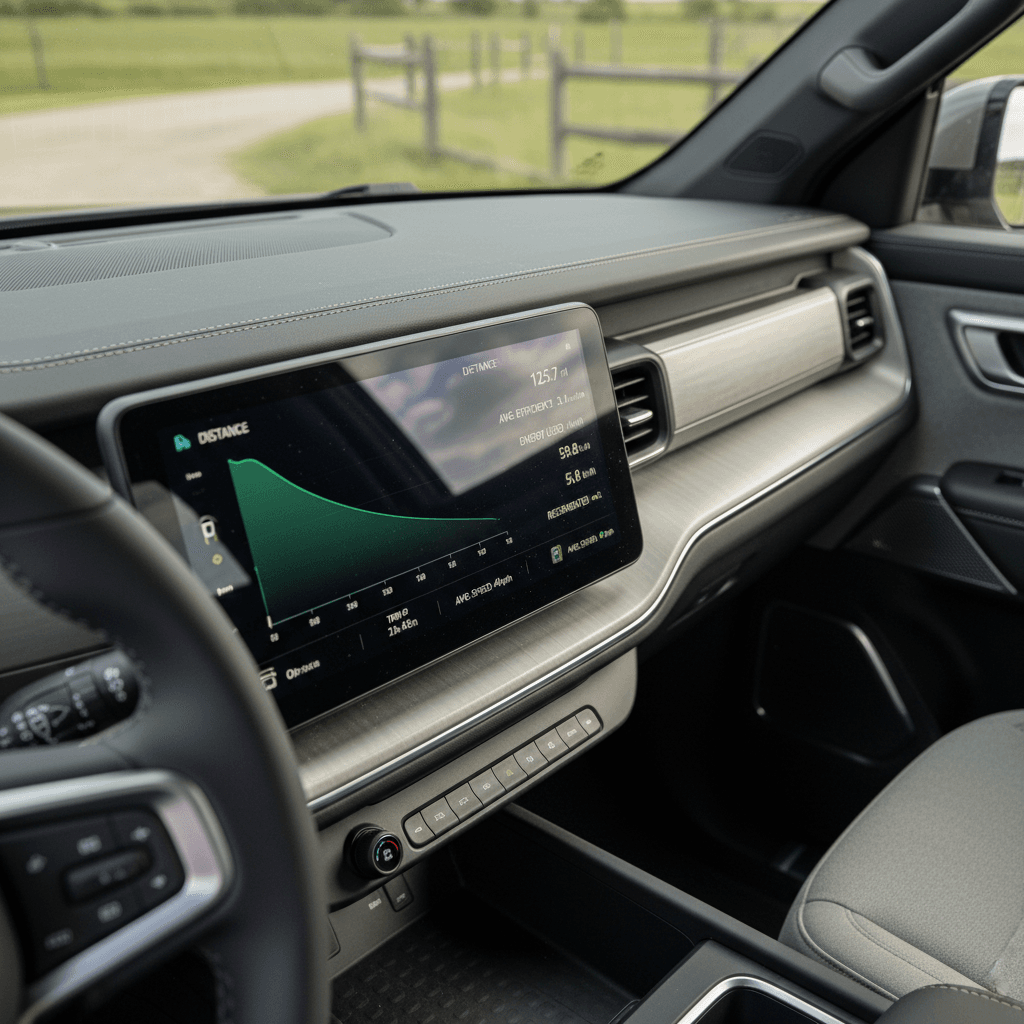
Living With an R1T Instead of a Tacoma
Where it’s easier, and where you’ll need to plan ahead.
Daily commuting
With a home Level 2 charger, you’ll “refuel” while you sleep. No more gas‑station detours, and your energy costs are predictable.
Weekend trips
Rivian’s trip planner and third‑party networks make regional trips fairly straightforward. You’ll spend more time thinking about charging stops than you do now, but it quickly becomes routine.
Towing and heavy loads
Towing and high speeds will cut range in any EV truck. If you currently tow long distances with your Tacoma, map out charging locations along your usual routes before you commit to an R1T.
Charging can add cost too
How Buying Used R1T Through Recharged Can Shift the Math
If you’re trading out of a Tacoma into a used Rivian R1T, the details of the truck you choose, and how you buy it, matter more than any single line item in a spreadsheet.
What Changes When You Shop a Used R1T with Recharged
Verified battery health with a Recharged Score
Every R1T on Recharged includes a <strong>Recharged Score Report</strong> that shows verified battery health and real‑world range. That clarity helps you avoid surprises and understand how long the truck can serve you, and what it might be worth later.
Fair market pricing, not guesswork
Recharged benchmarks each EV against the market so you can see whether a Rivian is appropriately priced relative to its mileage, options, and battery condition, the same way savvy Tacoma shoppers compare trims and packages.
Trade‑in and instant offers for your Tacoma
You can get an instant offer or explore consignment options for your Tacoma, simplifying the move into an R1T instead of juggling private‑party listings on your own.
Financing built for EVs
Recharged offers financing tailored to EV buyers, so you can see how different down payments and loan terms shift your monthly cost and total interest paid on a Rivian compared with keeping your gas truck.
Nationwide delivery and Richmond, VA Experience Center
Shop fully online, or visit the Recharged Experience Center in Richmond, VA, to get hands‑on with EVs and talk through your Tacoma‑to‑R1T questions with an electric‑only team.
Use your fuel savings as a budget tool
Checklist: Are You Ready to Make the Switch?
Tacoma → Rivian R1T Readiness Checklist
1. Know your annual mileage
If you’re under about 10,000 miles a year, the R1T’s fuel savings build slowly. Over 15,000–20,000 miles, the savings story gets much stronger.
2. Confirm home charging options
Do you have a driveway or garage where you can install Level 2 charging? If not, are there reliable public chargers near home or work?
3. Get real insurance quotes
Don’t guess. Pull VIN‑specific insurance quotes for representative R1Ts and compare them to your current Tacoma policy.
4. Think about your towing and road‑trip habits
If you tow long distances or regularly cross remote areas, map out charging corridors to make sure an R1T fits your lifestyle.
5. Compare total monthly out‑of‑pocket
Add your Tacoma payment (if any), fuel, and routine maintenance. Then compare that to an R1T payment, electricity, and expected maintenance. Focus on what actually leaves your bank account each month.
6. Decide how long you’ll keep the truck
The longer you plan to keep the R1T, the more its lower running costs can outweigh a higher purchase price.
FAQ: Switching from Tacoma to Rivian R1T
Frequently Asked Questions
Bottom Line: When the R1T Makes Financial Sense
Switching from a Toyota Tacoma to a Rivian R1T isn’t just a lifestyle choice; it’s a complete reshuffle of where your money goes. You’ll likely spend more upfront and on insurance, but you stand to save significantly on fuel and routine maintenance, especially if you drive a lot and can charge at home.
If your Tacoma is barely driven and paid off, an R1T may be more want than need. But if you’re logging serious miles, frustrated by fuel bills, and ready for a quieter, quicker truck that still loves a trailhead, the Rivian starts to make financial sense, particularly as a well‑priced used truck with a clean battery‑health report.
When you’re ready to see how the numbers pencil out in your situation, explore used Rivian R1T listings on Recharged, check the Recharged Score reports, and compare your current Tacoma costs to a specific truck’s projected energy and maintenance spend. That’s how you turn an electric‑truck daydream into a confident, dollars‑and‑cents decision.