In California, the HOV lane is the closest thing we have to a time machine. For electric drivers, California EV HOV lane rules can turn a 70‑minute commute into 40, if you understand the fine print on Clean Air Vehicle decals, income limits, and how these rules apply to used EVs.
First, a quick reality check
Overview: How EV HOV lane rules work in California
California uses HOV (carpool) lanes to reduce traffic and emissions. Traditionally, you needed 2+ or 3+ people in the car, depending on the corridor. To push drivers toward cleaner vehicles, the state created the Clean Air Vehicle decal program, which allows qualifying EV and plug‑in hybrid owners to drive solo in HOV lanes on most state highways.
- HOV lanes are marked with a diamond symbol and signs showing occupancy requirements (2+ or 3+).
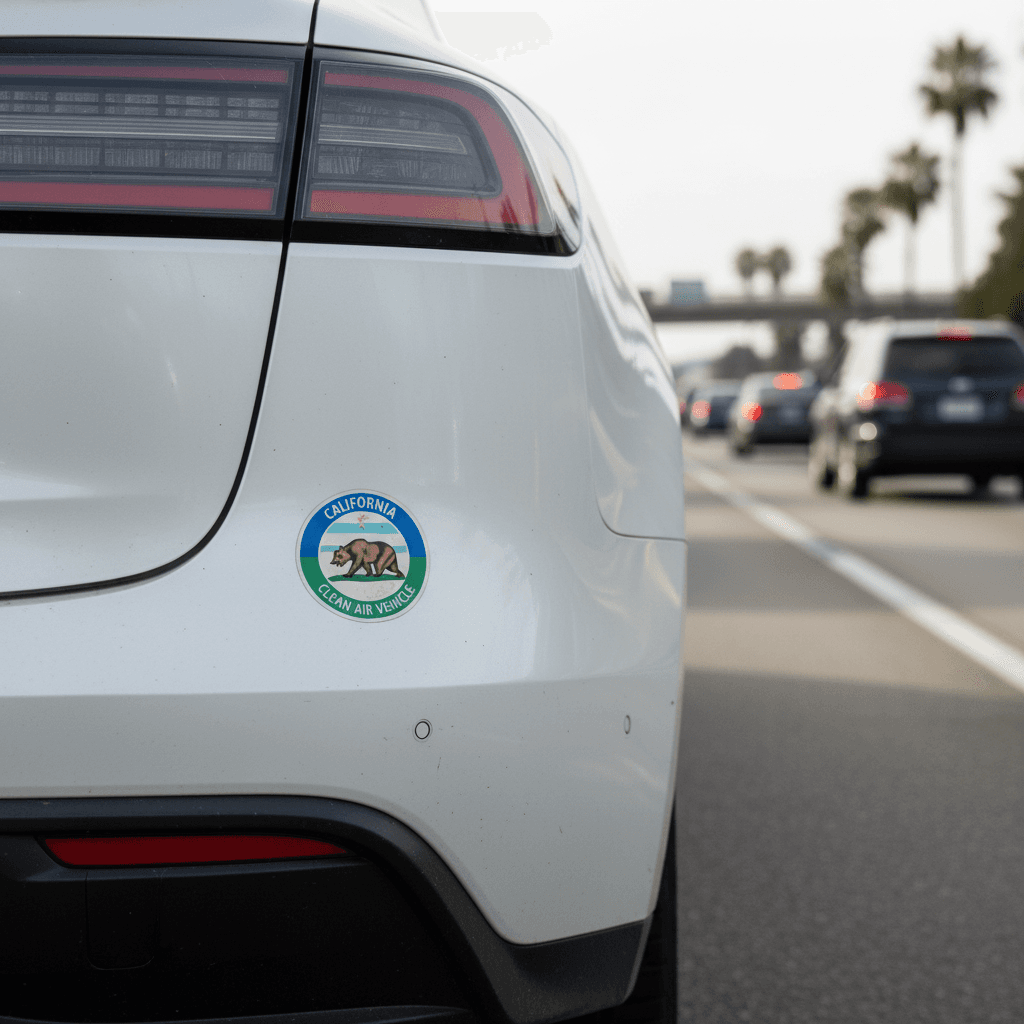
- Clean Air Vehicle decals allow qualifying EVs and plug‑in hybrids to use HOV lanes with a single occupant, during posted hours.
- The program has evolved over time, older colors have expired, newer ones are income‑based, and not every plug‑in qualifies.
- Local express lanes (toll lanes) may have separate rules and pricing, even if they honor CAV decals.
Signs beat stickers
Who can use HOV lanes in California, and when
Standard HOV access
- 2+ or 3+ people in the vehicle (check local signs).
- Motorcycles are almost always allowed, even with one rider.
- Buses and some vanpools qualify by design.
EV & plug‑in hybrid access
- A qualifying Clean Air Vehicle decal properly affixed to the car.
- Valid registration and current plates that match the decal record.
- Income eligibility met for newer decal issuances.
Think of the HOV lane as a velvet rope. Occupancy gets you past the rope for free. A CAV decal acts like a special pass that lets a qualifying EV or plug‑in hybrid under the rope even with a single occupant, at least on eligible segments of freeway and many express lanes.
Clean Air Vehicle decals explained
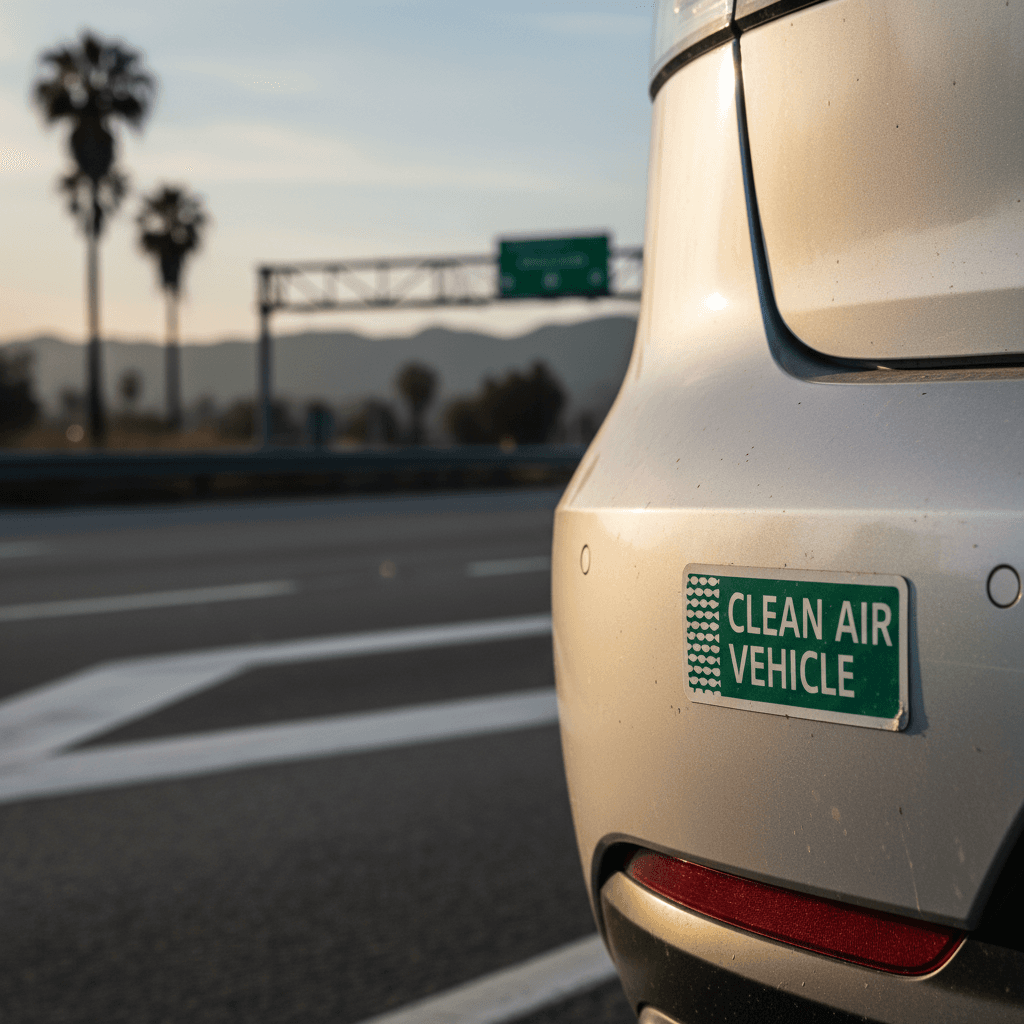
Over the years, California has gone through a rainbow of stickers: white, green, red, purple, and now orange and blue. Older colors have expired; you’ll still see them on bumpers, but they no longer grant HOV access. What matters today is the current CAV decal series and its expiration date.
Recent California CAV decal colors and status
Use this as a quick gut check when you’re looking at a used EV listing or walking a dealer lot.
| Decal color | Approximate issue years | HOV status | Key notes |
|---|---|---|---|
| White / Green | Pre‑2019 | Expired | No longer valid for solo HOV use. |
| Red | 2018–2019 | Expired | Superseded by later series. |
| Purple | 2019–2022 | Mostly expired | Check DMV; most are no longer valid for HOV. |
| Orange | Recent series | Active (subject to income rules) | Current standard for many qualifying EVs. |
| Blue | Recent, limited programs | Active (special cases) | Used in some income‑qualified and pilot programs. |
Always verify the current official status with the California DMV, as rules can change.
Your VIN matters more than the color
Income limits and eligibility for new decals
California quietly shifted the CAV program from a universal perk to a more income‑targeted benefit. New Clean Air Vehicle decals are now generally reserved for drivers under certain income thresholds, with higher‑earning households pushed toward carpools and transit instead of solo HOV access.
How income affects California HOV access for EVs
The exact dollar amounts change over time, but the structure looks like this.
Low‑ to moderate‑income
If your household income falls below state thresholds, you’re usually eligible for a new CAV decal when you buy or lease a qualifying EV.
Middle‑income households
You may still qualify, but the rules get more nuanced. Some plug‑in hybrids may not qualify; pure EVs generally have better odds.
Higher‑income households
In many cases you won’t be granted a new carpool sticker, even with a brand‑new EV. You’ll still save on fuel, but you won’t skip traffic.
Verify before you buy
Used EVs and carpool stickers: what buyers must know
This is where a lot of California shoppers get burned. You spot a used EV with a shiny decal, the salesperson says, “Oh yeah, HOV legal,” and six weeks later CHP is inviting you to contribute to the state’s general fund.
Used EV HOV checklist
1. Ignore the physical sticker
Treat every decal you see on a used EV as pure decoration until proven otherwise. Colors age, rules change, and a previous owner may have left an expired sticker on the bumper.
2. Ask for CAV paperwork
Request the original CAV approval letter or registration documents showing the decal number tied to the VIN. If the seller can’t produce them, assume you’ll be applying from scratch, if you’re eligible at all.
3. Confirm decal transfer rules
Historically, California allowed decals to stay with the vehicle when sold, but the eligibility period and expiration didn’t reset. That means a used EV might carry a decal that’s <strong>already past its HOV expiration</strong>.
4. Check current expiration dates
Look up the latest CAV program bulletin to see which decal series are currently valid. A valid‑looking sticker from 2019 may be worthless in 2025.
5. Don’t overpay for a promise
If a seller wants extra money for “HOV privileges,” insist on documentation that proves the decal is currently valid and that your income status won’t disqualify you from continuing to use it.
6. Use third‑party experts
If you’re buying a used EV online, work with platforms that provide transparent histories and expert guidance. Recharged, for example, pairs every used EV with a <strong>Recharged Score Report</strong> so you can focus on battery health and pricing while you verify incentives like HOV access separately.
Red flag: “HOV‑ready, just needs stickers”
How to apply for a California Clean Air Vehicle decal
If you and your vehicle are eligible, the application process is straightforward but bureaucratic. Build in some lead time before you plan your commute around that carpool lane.
- Confirm that your EV or plug‑in hybrid is on California’s current list of eligible Clean Air Vehicles.
- Check that your income falls within the latest limits for the CAV program.
- Register the car in California if it isn’t already; the vehicle needs valid CA plates and registration.
- Download the latest CAV decal application form from the California DMV website.
- Fill out the form carefully, including VIN, license plate, your contact information, and any income‑related declarations.
- Pay the required application fee and mail the packet to the DMV at the address listed on the form.
- Wait for approval and for your decal set to arrive by mail, then affix them exactly where the instructions specify.
Once you’re approved
Timeline, expiration, and transfer rules
Why the calendar matters more than the color
Think of a CAV decal like a limited‑time backstage pass. Once that era of the program ends, the pass is done, even if the car is immaculate and the sticker still looks brand new. When you shop for a used EV, you’re not just asking, “Does it have a sticker?” You’re asking, “Is this sticker still in its lifetime window?”
Expect future tightening, not loosening
Common mistakes that get EV drivers ticketed
Top HOV mistakes California EV drivers make
Most of them are easy, and expensive, to avoid.
Driving solo with no decal
Owning an EV alone is not a golden ticket. If you don’t meet occupancy requirements and you don’t have a valid CAV decal, CHP treats you like any other solo driver in the HOV lane.
Expired or wrong‑series decal
That purple or red sticker might have been gold a few years ago. Today it can be a false sense of security that ends with a citation and a hit to your insurance.
Assuming express lanes are identical
Some toll lanes honor CAV decals with discounts or free access; others don’t. Always read the roadside signs and, for app‑managed corridors, check how your plate is classified.
Peeling and re‑sticking decals
Decals are meant to be permanent and matched to one car. Peeling, moving, or trying to swap them between vehicles can get you into fraud territory, not just a simple traffic ticket.
CHP has seen every trick
How HOV access fits with other California EV incentives
The carpool lane is just one tile in California’s EV mosaic. You also have state rebates, local utility discounts, federal tax credits, and used‑EV‑specific programs stacked in various ways. HOV access might be the perk you feel every single day, but it shouldn’t be the only reason you choose an EV.
Stackable value
- Federal tax credits can lower the purchase price of qualifying new EVs.
- State and local rebates help with both new and used models, depending on your income.
- HOV access saves time and, indirectly, money on commuting stress.
Do the full math
- Estimate your fuel and maintenance savings versus a comparable gas car.
- Factor in potential charging costs at home and in public.
- Treat HOV access as the cherry on top, not the sundae.
At Recharged, we see HOV access as a nice‑to‑have, not a must‑have. The Recharged Score Report focuses on battery health, pricing fairness, and vehicle condition, because those are the things that matter for the life of the car. If your commute happens to line up with a live CAV decal, that’s just a very pleasant bonus.
FAQ: California EV HOV lane rules
Frequently asked questions about California EV HOV lane rules
Bottom line for California EV shoppers
California’s EV HOV lane rules are no longer the wild, anything‑goes days of early hybrids. Today, solo carpool access is a means‑tested privilege layered on top of a specific vehicle, a specific decal series, and a specific calendar window.
If you’re shopping for an EV, especially a used one, treat HOV access like a bonus, not the foundation of the deal. Verify your eligibility, confirm the car’s decal status, and make sure the fundamentals hold up: healthy battery, transparent history, and fair pricing. That’s where a marketplace like Recharged earns its keep, with battery‑health diagnostics, clear Recharged Score Reports, and expert guidance so your next EV feels like a smart purchase even when the HOV lane is closed.