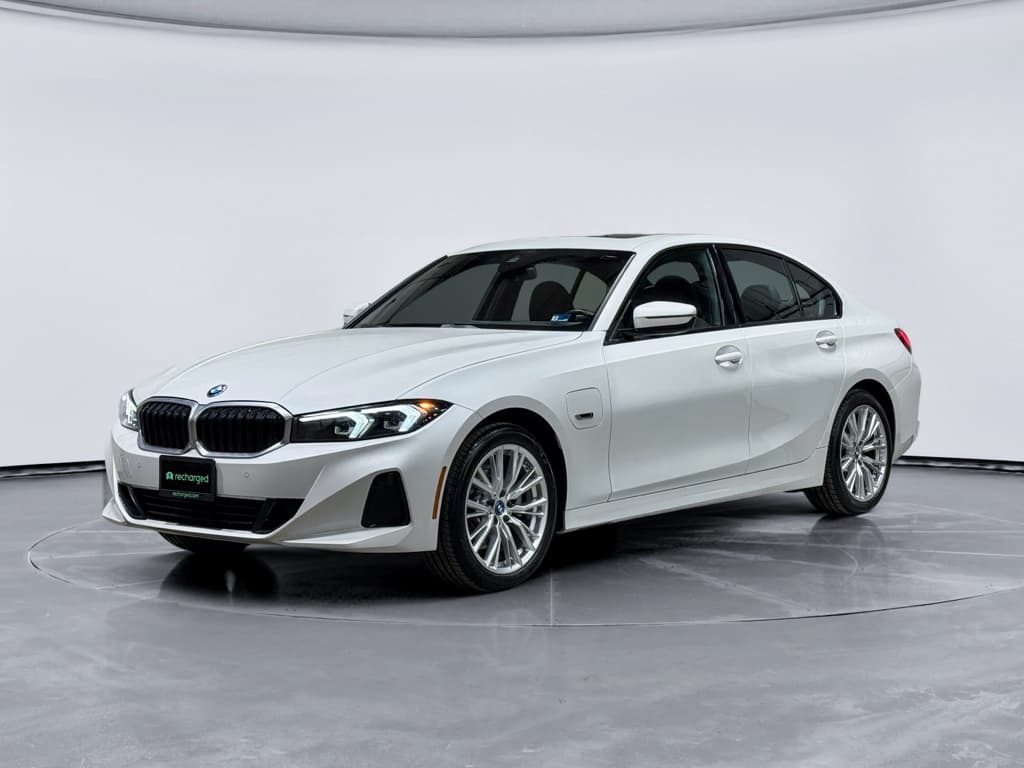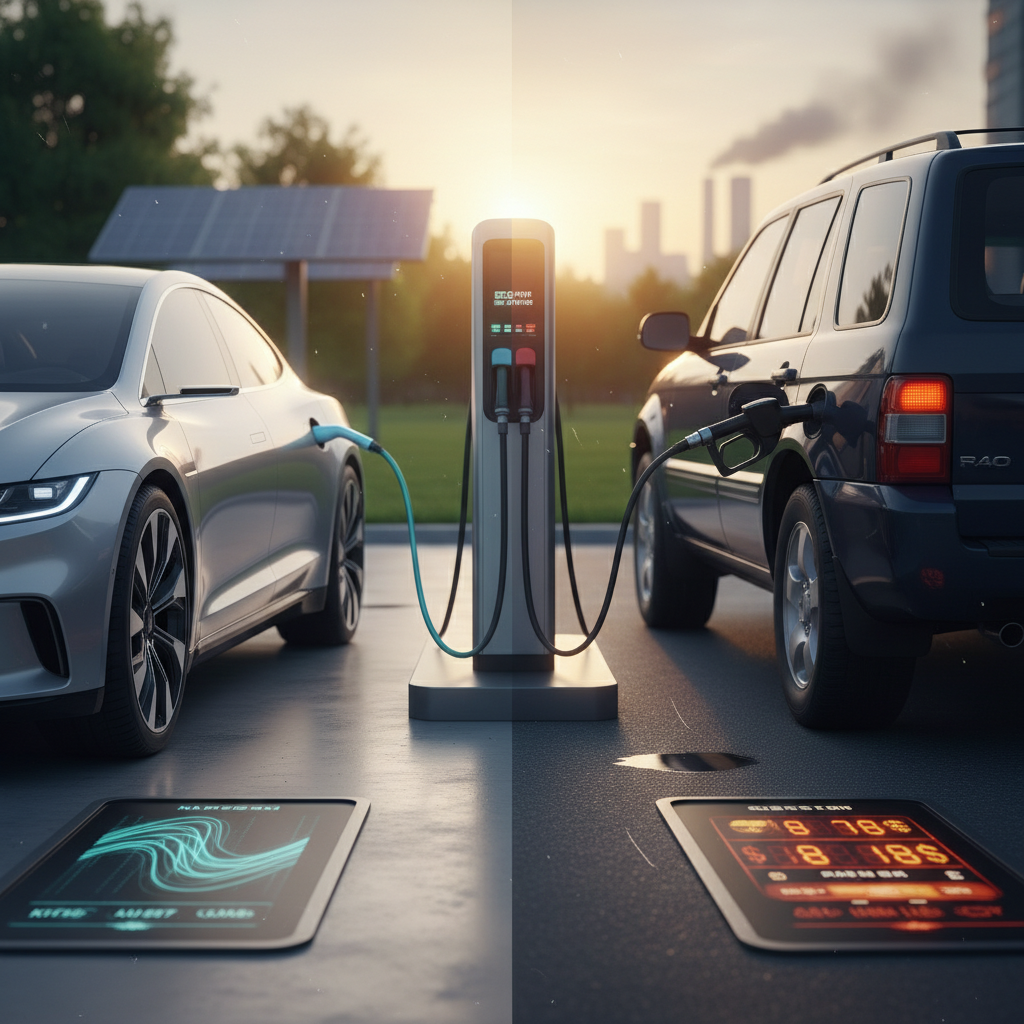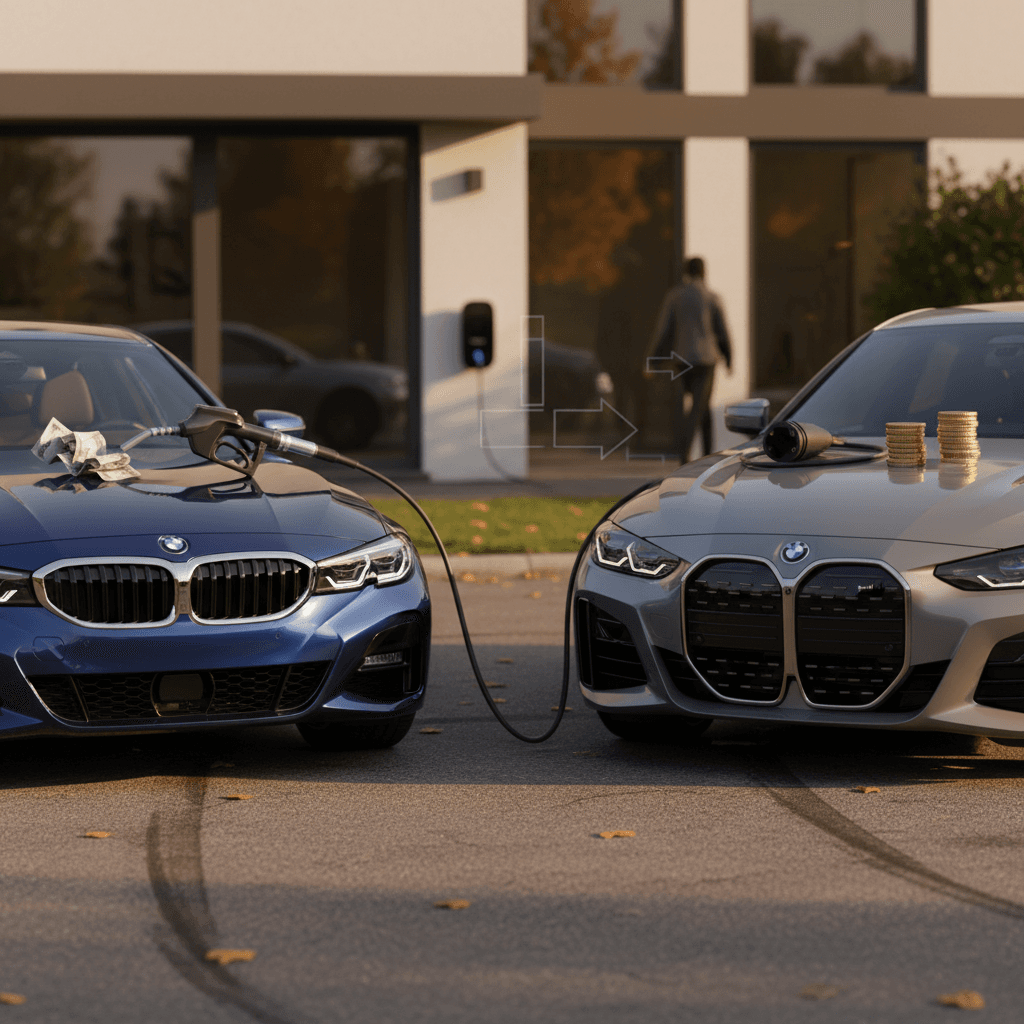
If you love the way a BMW 3 Series drives but you’re tired of gas prices and maintenance, switching to a BMW i4 is one of the most natural moves you can make. The big question is simple: what are the real cost savings when you go from a gasoline 3 Series to an all‑electric i4?
Who this guide is for
Why drivers are switching from BMW 3 Series to BMW i4
BMW 3 Series vs BMW i4: Same soul, different cost structure
You keep the BMW feel while changing how you pay to drive
Familiar BMW dynamics
The i4 shares its platform DNA with the 3/4 Series. Steering feel, driving position, and interior quality all feel like a modern BMW sedan, not a science project.
Instant EV performance
Even the entry i4 eDrive35/eDrive40 delivers strong torque and smooth acceleration, comparable to or better than a 330i in everyday driving.
Shift from gas to electrons
Instead of paying for premium gasoline and frequent services, most of your running costs consolidate into electricity and tires with far fewer moving parts to maintain.
Quick answer: How much can you save?
Headline 5‑year cost differences (typical U.S. driver)
Use these as directional numbers
Assumptions for our BMW 3 Series vs i4 cost math
To keep things concrete, we’ll compare a typical recent‑generation BMW 330i with a rear‑drive BMW i4 eDrive40. These are both popular configurations and sit near the heart of their respective lineups.
- Annual mileage: 12,000 miles (U.S. average daily driving of ~33 miles, plus trips).
- Gas BMW: Recent‑gen 330i averaging ~30 mpg combined in the real world on premium fuel.
- BMW i4: Real‑world consumption around 30 kWh per 100 miles (0.30 kWh/mile is conservative for mixed driving).
- Gas price: We’ll use $3.10–$3.50 per gallon as a realistic range for recent U.S. averages, with $3.30 as a mid‑point.
- Electricity price: We’ll use $0.17 per kWh as a typical U.S. residential rate; some states are closer to $0.13, others over $0.25.
- Time horizon: 5 years of ownership, starting from today.
Your local prices matter
Fuel vs electricity: BMW 330i vs BMW i4
Step 1: Cost per mile in a 330i
Using our assumptions:
- Fuel economy: 30 mpg combined (real‑world target for a 330i on the highway/city mix).
- Gas price: $3.30 per gallon.
Cost per mile = Gas price ÷ mpg = $3.30 ÷ 30 ≈ $0.11 per mile.
At 12,000 miles per year, that’s about $1,320 per year in fuel just to keep your 3 Series moving.
Step 2: Cost per mile in a BMW i4
For the i4 eDrive40:
- Energy use: ~30 kWh per 100 miles (0.30 kWh/mile) is a conservative mixed‑use figure.
- Electricity price: $0.17 per kWh (typical residential average).
Cost per mile = kWh per mile × price per kWh = 0.30 × $0.17 ≈ $0.051 per mile.
At 12,000 miles per year, that’s about $612 per year in electricity if you charge mostly at home.
Annual energy cost: BMW 330i vs BMW i4 (typical U.S. prices)
Illustrative comparison at 12,000 miles per year. Use it as a template for your own numbers.
| Vehicle | Energy use assumption | Unit price (mid‑point) | Cost per mile | Annual cost (12,000 miles) |
|---|---|---|---|---|
| BMW 330i (gas) | 30 mpg | $3.30/gal | $0.11/mi | $1,320 |
| BMW i4 (home charging) | 30 kWh/100 mi | $0.17/kWh | $0.051/mi | $612 |
| BMW i4 (50% home, 50% DC fast) | Same as above, but 50% charging at ~$0.40/kWh | Blended ~$0.28/kWh | ≈$0.084/mi | ≈$1,008 |
Electricity is roughly half the per‑mile cost of gasoline in this scenario.
Maximize savings by leaning on home charging
Maintenance and repairs: where the i4 really pulls ahead
Even if your local gas and power prices are neck‑and‑neck, the maintenance picture is where switching from a BMW 3 Series to a BMW i4 usually produces meaningful savings.
Key maintenance differences: BMW 3 Series vs BMW i4
Same brand, very different service schedule
No engine, no oil changes
Your 3 Series needs regular oil changes, spark plugs, belts, and more. The i4 has none of that. Most routine visits focus on inspections, brake fluid, and cabin filters.
Brakes last longer
Strong regenerative braking in the i4 means far less pad and rotor wear, especially if you drive mostly in urban and suburban traffic.
Fewer moving parts
No multi‑gear automatic transmission, no exhaust system, no turbo plumbing. Fewer complex mechanical systems usually translate into fewer surprise repair bills over time.
Illustrative 5‑year maintenance/repair spend
Actual numbers vary by mileage, driving style, and warranty coverage. Think of this as directionally realistic for 12,000 miles/year and out‑of‑warranty service.
| Item | BMW 330i (5‑yr est.) | BMW i4 (5‑yr est.) | Comments |
|---|---|---|---|
| Oil & engine services | $1,200–$1,600 | $0 | Multiple full‑synthetic oil changes, plugs, filters, etc. |
| Other scheduled maintenance | $1,000–$1,400 | $800–$1,000 | Brake fluid, cabin filters, inspections, coolant service timing differs |
| Wear items (brakes, exhaust, misc.) | $800–$1,500 | $400–$900 | Regenerative braking stretches pad/rotor life; no exhaust on i4 |
| Total 5‑year maintenance & minor repairs | ≈$3,000–$4,500 | ≈$1,200–$2,000 | Range reflects variability in shop rates and parts pricing |
The BMW i4 typically trims several hundred dollars a year off maintenance vs a comparable 3 Series.
Don’t ignore tires on the i4
Insurance, depreciation, and resale value
Insurance and depreciation are more nuanced. In some markets, insuring a BMW i4 can cost a bit more than insuring a 330i because of higher parts and repair costs. On the other hand, EVs can qualify for specific discounts and may hold value differently depending on how the used‑EV market evolves in your area.
- Insurance: Many owners report their i4 premium is similar to or somewhat higher than a comparable 3 Series. Shopping around and taking advantage of telematics/EV discounts can offset this.
- Depreciation: Early i4s have seen fairly typical luxury‑EV depreciation: a steep drop from new, then a plateau. That can be a negative for first owners but a huge opportunity on the used market.
- Battery perception: The long‑term value of a used i4 depends heavily on battery health and range performance. Buying a car with a verified battery‑health report (like the Recharged Score) can protect you against hidden degradation.
Depreciation favors the second owner
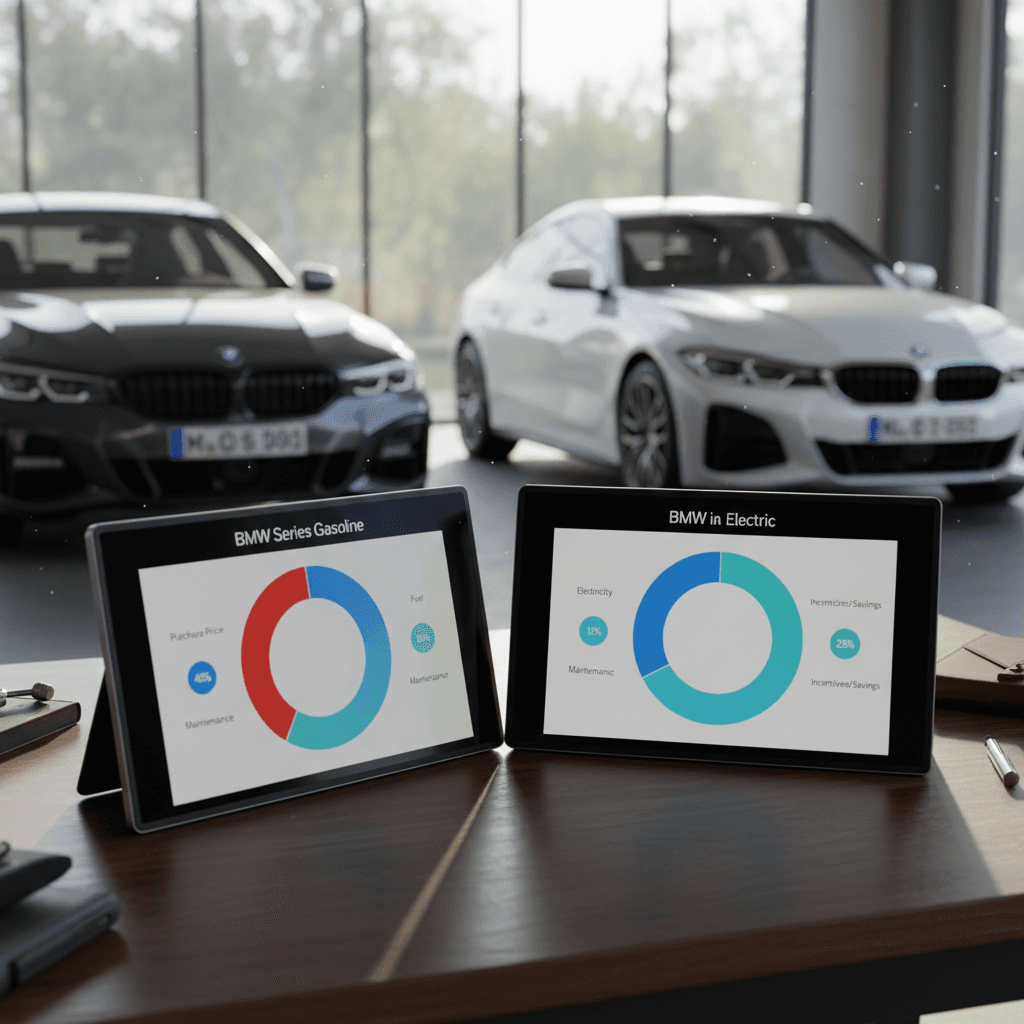
5‑year total cost of ownership comparison
Let’s pull everything together into a simplified 5‑year total cost picture for a typical buyer moving from a 3 Series to an i4. We’ll assume you’re cross‑shopping similarly equipped, lightly used cars to avoid the huge MSRP gap between new models.
Illustrative 5‑year cost comparison: used BMW 330i vs used BMW i4
Assumes 12,000 miles/year, mostly home charging for the i4, and similar purchase prices on the used market.
| Category (5 years) | Used BMW 330i | Used BMW i4 | Notes |
|---|---|---|---|
| Purchase price (used) | $28,000 | $33,000 | Example: 3‑year‑old 330i vs 3‑year‑old i4 at current used prices. |
| Financing interest | $3,000 | $3,500 | Similar APR/term; higher principal on the i4. |
| Fuel / electricity | ≈$6,600 | ≈$3,060 | From earlier: $1,320/yr vs $612/yr for mostly home charging. |
| Maintenance & minor repairs | ≈$3,500 | ≈$1,800 | Mid‑range of our earlier maintenance estimates. |
| Tires | ≈$2,000 | ≈$2,400 | Assuming the i4 goes through slightly more expensive or more frequent sets. |
| Net incentives | $0 | $0 to –$4,000 | Zero for both used in some cases; used EV credit may reduce i4 cost. |
| Estimated resale after 5 yrs | –$12,000 | –$14,000 | Illustrative residuals; luxury models vary widely. |
| Approximate 5‑yr net out‑of‑pocket | ≈$31,100 | ≈$29,860 (no credit) | If you qualify for a used‑EV credit, the i4 number can drop further. |
The exact numbers will vary, but the structure of the savings is consistent.
Even with a higher purchase price, the i4 can come out ahead
How long until the BMW i4 pays for itself?
Think of the price difference between your 3 Series and the i4 as an upfront investment that your lower fuel and maintenance costs have to earn back. The payback period is how long it takes those annual savings to equal that price gap.
3‑step payback calculator for your situation
1. Estimate your price gap
Subtract what your current 3 Series is worth (trade‑in or sale) from the price of the i4 you’re considering. Example: i4 costs $35,000, your 330i will fetch $22,000 → <strong>$13,000 gap</strong>.
2. Estimate your annual savings
Add your expected fuel and maintenance savings. Using our example numbers: ~$700/year in energy savings plus ~$400/year in maintenance savings → <strong>$1,100 per year</strong>.
3. Divide gap by savings
$13,000 ÷ $1,100 ≈ <strong>11.8 years</strong>. If your miles and gas prices are higher (or you get tax credits on top), your annual savings grow and the payback gets shorter.
A more practical way to think about it
Extra savings: home charging, commuter patterns, and tax credits
Three big levers that can tilt the math hard toward the i4
Fuel and maintenance are just the starting point
Home charging & off‑peak rates
If you can install a Level 2 charger and use off‑peak or EV‑specific rates, your cost per kWh can drop substantially. That pushes electric cost per mile down and accelerates your savings.
High‑mileage commuters
The more you drive, the more chances your i4 has to out‑save a 3 Series. A 20,000‑mile‑per‑year commuter can easily double the fuel‑savings figures in this guide.
Tax credits & incentives
Depending on your income, vehicle age, and whether you buy new or used, you may qualify for federal and state EV incentives that effectively cut thousands off the i4’s price.
Run the numbers on charging installation
Buying a used BMW i4: how to protect your savings
Because depreciation does the most work in the first few years, the used market is where switching from a 3 Series to an i4 can become especially compelling. But with an EV, you need to be more deliberate about battery health and charging history than you might have been with past gas cars.
Key checks before you buy a used BMW i4
Verify battery health, not just range estimate
Ask for an independent battery‑health report rather than relying solely on the in‑car guess‑o‑meter. A platform like Recharged bundles a <strong>Recharged Score Report</strong> that includes verified battery diagnostics, so you know how much usable capacity is left.
Review charging history and usage patterns
Frequent DC fast‑charging and sustained high‑temperature operation can accelerate degradation. Look for cars that were mostly home‑ or workplace‑charged and have service records from reputable BMW or EV‑savvy shops.
Check software level and recall history
BMW updates can improve charging behavior, efficiency, and driver‑assistance systems. Make sure the i4 is up‑to‑date and that any relevant recalls or service campaigns have been completed.
Inspect tires and suspension carefully
The i4’s weight and performance can be hard on tires, bushings, and alignment if the car’s been driven aggressively. Uneven wear can signal you’ll need a set of tires and possibly a suspension refresh sooner than you’d like.
Why a verified used EV matters more than ever
How Recharged helps you switch from 3 Series to i4
If you’re ready to move on from your BMW 3 Series, Recharged is built around exactly this kind of transition: going from a familiar premium gasoline sedan to a used electric vehicle with clear, data‑backed ownership costs.
What Recharged brings to your BMW 3 Series → BMW i4 journey
From valuation to battery diagnostics to delivery
Fair pricing & trade‑in options
Get an instant offer or consignment option for your 3 Series, and browse used BMW i4 inventory with fair‑market pricing backed by real transaction data.
Recharged Score battery report
Every EV on Recharged comes with a Recharged Score Report that includes verified battery health, so you understand how much capacity and range you’re actually buying.
EV‑specialist support & delivery
From financing and paperwork to nationwide delivery and an EV‑savvy support team (plus an Experience Center in Richmond, VA), Recharged is designed to make the jump from gas to electric as low‑stress as possible.
Ready to find your next EV?
Browse VehiclesTalk through your specific numbers
FAQ: switching from BMW 3 Series to BMW i4
Frequently asked questions about BMW 3 Series → BMW i4 cost savings
Bottom line: Is switching from 3 Series to i4 worth it?
If you enjoy the refinement and dynamics of a BMW 3 Series but you’re ready to stop budgeting for premium gas and frequent services, the BMW i4 is one of the smoothest transitions you can make. For many U.S. drivers who can charge at home, the i4 cuts energy costs roughly in half, trims maintenance substantially, and, when bought used at the right price, can deliver a lower 5‑year total cost of ownership than sticking with a comparable 3 Series.
The key is to run your own numbers: miles, local fuel and power prices, likely incentives, and the specific cars you’re comparing. If you want help doing that with real inventory and verified battery data, Recharged was built to make that decision clearer and the actual switch from 3 Series to i4 as simple and transparent as possible.