If you’re asking yourself, “What’s the best place to sell a used car in California?”, you’re really asking two questions: where will I get the most money, and where will the process be the least painful, especially with California’s smog rules and paperwork. This guide walks you through each option, how they really work in California, and how to pick the right path for your situation, including if you’re selling an electric car.
California makes selling a bit different
How to choose the best place to sell in California
Start with your priorities: money, speed, or simplicity?
Every selling option in California is a trade-off between price, time, and hassle.
Maximize sale price
Best fit: Private-party sale or a strong online marketplace.
- You’re willing to handle photos, listings, and test drives.
- You don’t need the money this week.
- Your car is clean, well-maintained, and likely to appeal to shoppers.
Sell fast, with less effort
Best fit: Online instant-offer buyers and dealers that buy cars outright.
- You want the car gone within a few days.
- You’re okay taking slightly less than top dollar.
- You want help with DMV paperwork.
Special case: Electric vehicles
Best fit: EV-focused platforms like Recharged for used EVs.
- Battery health and range matter more than leather seats.
- You want buyers who actually understand EV value.
- You prefer a digital process with EV specialists.
Why Californians increasingly sell cars online
Main places to sell a used car in California
Online instant-offer buyers
Online buyers that operate in California, instant-offer sites that give you a price in minutes, have become one of the best places to sell a used car in California if you want speed and consistency. You enter your VIN and basic details, upload a few photos, and get a firm offer that’s good for a set period. Many send a mobile inspector, then arrange pickup and payoff if you have a loan.
- Pros: Very fast (often 1–3 days), minimal haggling, pickup available in many areas, they handle most paperwork.
- Cons: Offers can be a few hundred to a couple thousand below what you might achieve with an excellent private-party sale, especially for rare or enthusiast models.
- Best for: Newer mainstream vehicles, cars in good condition, and sellers who value time and predictability over squeezing the last dollar.
Compare at least two instant offers
Dealership trade-ins and direct purchase
Traditional California dealers still buy a lot of used cars, either as a trade-in when you purchase another vehicle or as an outright purchase (they cut you a check even if you’re not buying from them). For convenience, this is often the easiest way to sell a car you’ve driven for years.
Pros of selling to a dealer
- One-stop transaction: Trade-in value can be applied directly to your next car, lowering your sales-taxable amount in many cases.
- Paperwork handled: Dealers process title transfer and DMV documents daily.
- Good for problem cars: Some dealers will still buy higher‑mileage or rough-condition vehicles you’d struggle to sell privately.
Cons of selling to a dealer
- Lower price: Wholesale offers are usually less than private-party value, dealers need margin for reconditioning, profit, and risk.
- Pressure: You’re on their turf; negotiations can feel one-sided if you don’t have competing quotes.
- Limited appetite for EVs: Many general dealers still undervalue electric vehicles and hybrids compared with EV-focused buyers.
Watch how the deal is structured
Private-party sale on marketplaces
If your top priority is maximum sale price, selling privately, on platforms like Craigslist, Facebook Marketplace, or enthusiast forums, is often still the best place to sell a used car in California. Buyers will pay closer to retail if the car presents well and you’re patient.
Private-party sale in California: what to expect
How private sales compare to other options for a typical, well‑maintained used vehicle.
| Factor | Private-party sale | Dealer / instant-offer |
|---|---|---|
| Typical price | Highest (close to retail) | Lower (wholesale to mid-range) |
| Time to sell | Days to weeks | Same day to a few days |
| Your effort | High (photos, listings, calls, test drives) | Low (single visit or appointment) |
| Paperwork | You handle bill of sale, title transfer, smog | They handle most documents |
| Safety & fraud risk | You meet strangers, handle payment | Business setting, wired funds or check |
Private-party is usually the highest price, but also the most work, especially in a state with strict smog rules.
Safety first on private sales
EV specialist marketplaces like Recharged
If you’re selling a used electric vehicle in California, a generalized car buyer isn’t always the best place to sell. EV shoppers care deeply about battery health, real‑world range, and charging history, factors traditional buyers and dealers often undervalue. That’s where an EV‑focused marketplace like Recharged can be a better solution.
Why an EV specialist can beat generic buyers
California is ahead on EV adoption; specialist platforms are ahead on EV valuation.
Battery health is priced in
Right buyers, statewide
Low-friction selling options
How California smog rules affect where you sell
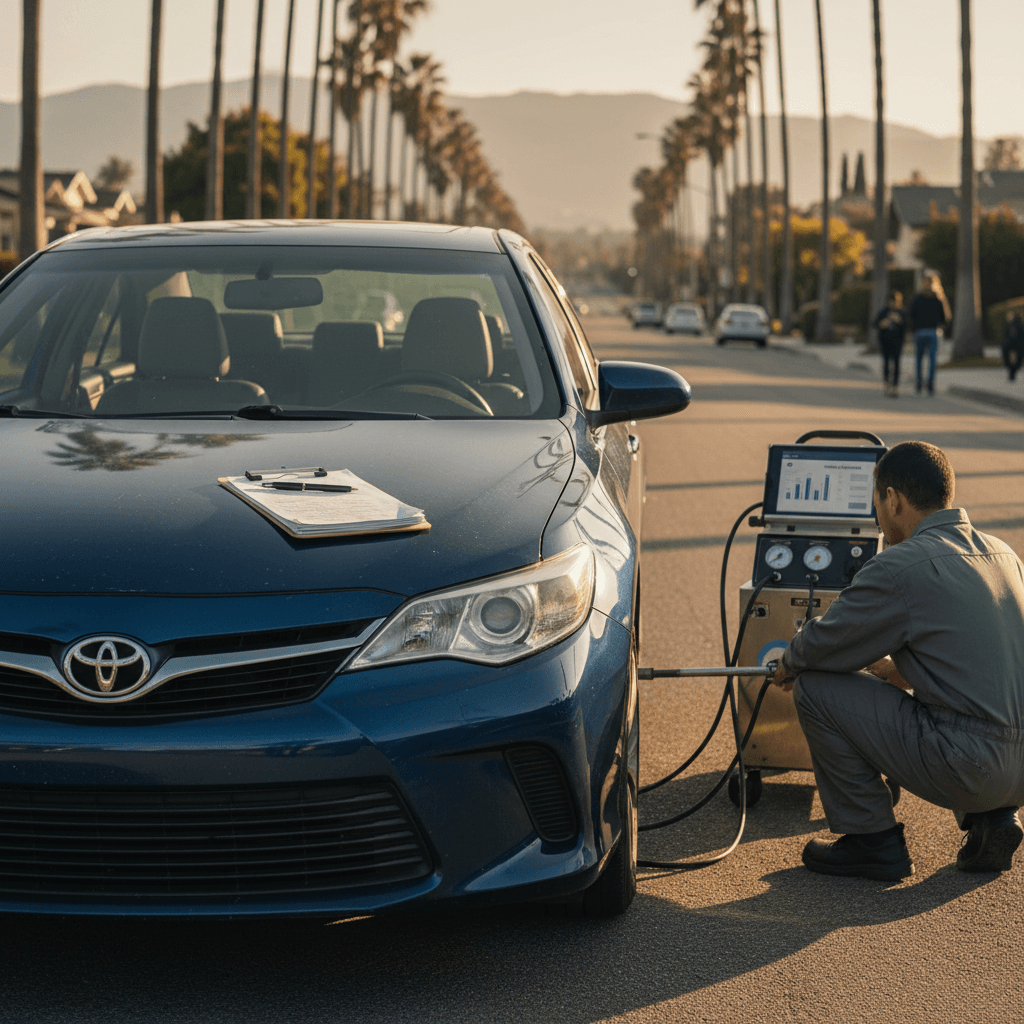
Smog requirements are a uniquely Californian wrinkle that can quietly determine the best place to sell your used car. In most private-party transactions, the seller must provide a passing smog certificate that’s recent, typically within about 90 days of the sale, for gasoline vehicles that are more than four model years old. If you skip this step, the buyer may struggle to register the car and could come back to you.
- Most private sales: Seller provides a fresh, passing smog certificate at or before the time of sale, unless the car is less than four model years old or otherwise exempt (such as some older classics and EVs).
- Dealers: Licensed dealers must ensure vehicles they sell comply with smog rules before offering them for sale, and they risk administrative penalties if they don’t.
- Electric vehicles: Battery‑electric vehicles are typically smog‑exempt, which is one reason EV sales and purchases are simpler on the emissions front.
Don’t try to “agree” your way around smog
Where you get the most money vs the most convenience
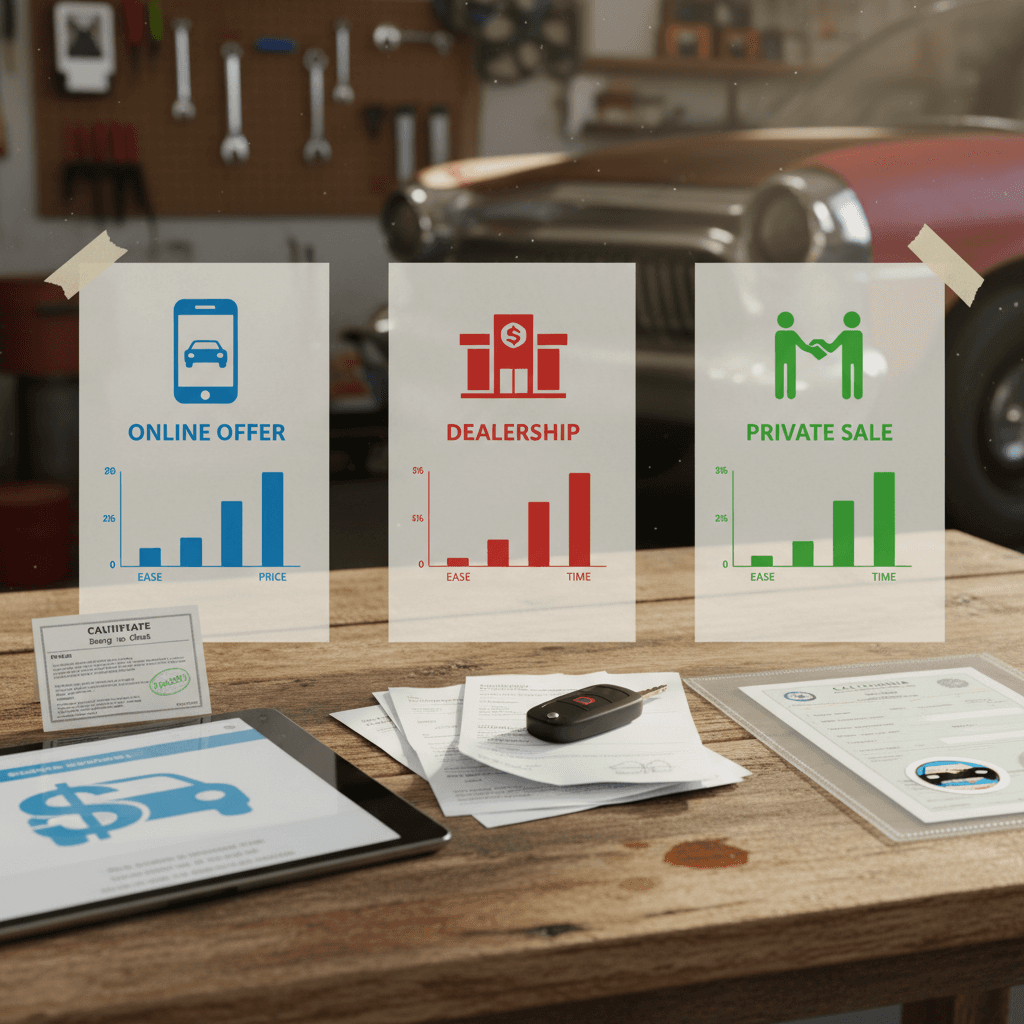
No single channel is always the best place to sell a used car in California. It depends on your priorities, the type of vehicle, and how much effort you’re willing to invest. Here’s a quick ranking, assuming an average, clean, non‑exotic car.
Money vs convenience: which place to sell fits you?
Generalized comparison; individual results will vary based on your car’s age, condition, mileage, and whether it’s an EV.
| Selling channel | Typical price vs best-case | Time & effort | Best for |
|---|---|---|---|
| Private-party sale | Highest | High effort, can take weeks | Price‑maximizers comfortable with selling tasks |
| EV specialist (Recharged for EVs) | High on EVs, especially with strong battery health | Moderate effort, largely digital | Used EVs, plug‑in hybrids, tech‑savvy sellers |
| Online instant‑offer buyer | Mid‑range, usually above dealer wholesale | Low effort, 1–3 days | Busy owners, mainstream vehicles |
| Dealer trade‑in or direct purchase | Lowest but rolled into new‑car deal | Very low effort, same‑day possible | Buying another car, simplifying everything at once |
For most sellers, the sweet spot is using online offers for a baseline, then deciding between a quick sale or a higher‑effort private listing.
A simple strategy that works for most Californians
Ready to find your next EV?
Browse VehiclesStep-by-step checklist before you list or get an offer
California seller checklist: prep before you pick a selling place
1. Gather your paperwork
Locate your title (or lender information if you still have a loan), registration, service records, and any recall documentation. Having everything organized makes dealers, online buyers, and private shoppers more comfortable, and speeds up closing.
2. Check smog and emissions status
If your car isn’t EV or exempt, review when it last passed smog. If you’re close to selling and the certificate is aging out, plan to get a fresh test so you’re compliant for a California private sale.
3. Get a realistic value range
Use online pricing guides and instant-offer tools to understand trade‑in, private-party, and EV‑specific values. Don’t just look at asking prices, focus on what comparable cars actually sell for.
4. Fix inexpensive issues
Consider taking care of low-cost repairs (burned‑out bulbs, minor detailing, small dings) that can have an outsized impact on perceived value. For EVs, ensure you have both keys, the charging cable, and adapter if included from new.
5. Decide your non‑negotiables
Set your minimum acceptable price, your ideal timeline, and how far you’re willing to travel. This clarity will guide whether a dealer, instant-offer site, EV specialist, or private sale is realistically your best place to sell.
6. Plan how you’ll get paid
Before you list or accept offers, decide which payment methods you’ll accept, typically cashier’s check verified at a bank, in‑branch wire, or funds handled by a reputable platform. Avoid taking on unnecessary risk just to squeeze out a few extra dollars.
Tips to avoid common California selling pitfalls
Four mistakes that cost California sellers time and money
Most are easy to avoid if you know to look for them.
Ignoring smog until the last minute
Not checking payoff or title status
Under‑selling valuable options
Overlooking safety and fraud protections
When it’s better to sell an EV to a specialist
California has the country’s most mature EV market. That means there are more EV buyers, but also more confusion about battery health, charging standards, and depreciation. In that environment, a generalist buyer or dealer may undervalue your car simply because they’re conservative about EV risk.
- Your EV has strong range left: If your real‑world range is still close to the factory figure, an EV specialist can showcase that with diagnostics instead of guessing from age and mileage alone.
- You have a desirable trim or battery pack: Long‑range versions, dual‑motor variants, and models with fast‑charging capability often attract savvy buyers willing to pay more, if they understand what they’re seeing.
- You want a streamlined, EV‑aware process: Platforms like Recharged build the whole experience around electric vehicles, from charging‑related questions to battery reports, trade‑in, financing, and even consignment.
How Recharged can help if you’re selling an EV
FAQs: Best place to sell a used car in California
Frequently asked questions about selling a car in California
Bottom line: best place to sell your car in California
There isn’t a single best place to sell a used car in California for everyone. If you want maximum dollars and you’re willing to work for them, a carefully managed private-party listing is hard to beat. If you want a fast, predictable sale, online instant-offer buyers and dealer purchases are the logical choices. And if you’re selling an electric vehicle, an EV‑focused marketplace like Recharged can often combine strong pricing with expert guidance and a streamlined, digital experience.
Whichever path you choose, start with good information: understand your smog obligations, know your payoff, document your car honestly, and collect multiple offers. With those pieces in place, you can confidently pick the California selling channel that fits your priorities, and walk away from the deal feeling that you got both a fair price and a fair process.