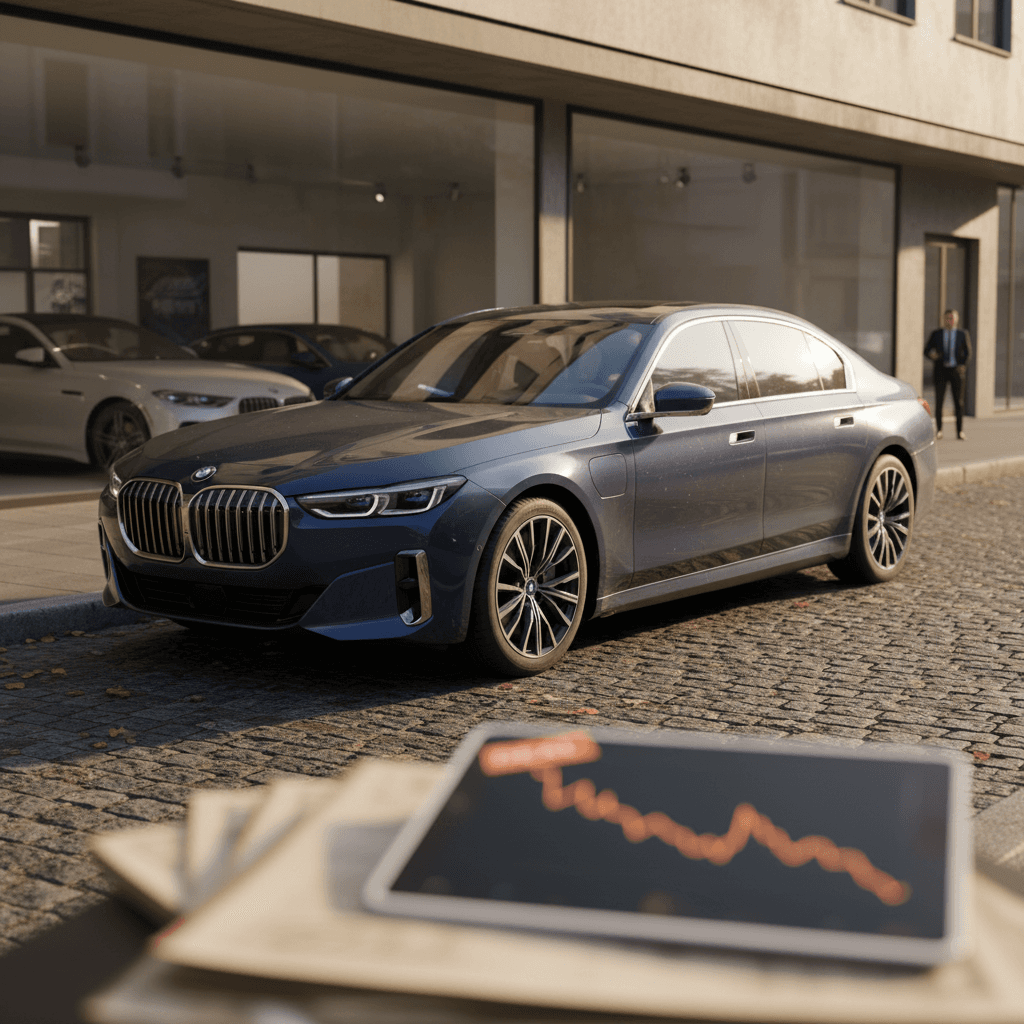
If you’re eyeing a flagship electric sedan but don’t love the six‑figure window sticker, a used BMW i7 starts to look very tempting. The big question is simple: what is a BMW i7 worth after 5 years, and is it a smart buy or a money pit?
Quick take
BMW i7 value after 5 years: what to expect
The BMW i7 only launched for the 2023 model year, so we don’t have real 5‑year‑old cars yet. But we do have three useful data points: how quickly luxury EVs depreciate in general, what the i7 has done in its first couple of years, and how BMW 7 Series sedans have historically behaved in the used market. Put together, they paint a pretty clear picture of where i7 values are heading by years four and five.
BMW i7 5‑year value in context (US estimates)
Remember: these are estimates
How much does a BMW i7 depreciate in 5 years?
Let’s start with what we do know. Third‑party depreciation models and early transaction data already show the BMW i7 dropping hard in its first few years, just like most full‑size luxury sedans and most luxury EVs.
- Some valuation tools project an i7 will lose about 55% of its value after 5 years, leaving around 45% of MSRP as resale value.
- Separate EV‑depreciation studies show luxury electric models often lose 60% or more over five years, especially if new tech makes them look dated.
- BMW’s own 7 Series gas sedans have historically been among the fastest‑depreciating luxury cars, and the i7 rides the same curve with an extra EV twist.
So if your i7 had an original MSRP of about $125,000, a typical 5‑year outcome might look like this:
Example: 5‑year depreciation on a $125,000 BMW i7
Illustrative numbers using common depreciation curves for luxury EV sedans. Real‑world values will vary by trim, options, condition, and mileage.
| Year | Approx. Value | % of Original Price | Notes |
|---|---|---|---|
| New | $125,000 | 100% | Typical well‑optioned i7 xDrive60 or M70 |
| Year 1 | $90,000–$95,000 | ~72–76% | Immediate luxury and EV‑tech hit |
| Year 3 | $55,000–$60,000 | ~44–48% | Where many luxury EVs land after 3 years |
| Year 5 | $50,000–$65,000 | ~35–52% | Broad range; strong cars with lower miles cluster near the top |
This example isn’t a quote, it’s a realistic ballpark for planning and comparison.
How to use these numbers
Why luxury EVs like the i7 lose value so fast
It’s tempting to blame everything on “EVs depreciate fast,” but the i7 is fighting on several fronts at once: it’s a full‑size luxury sedan, it’s loaded with expensive tech, and it belongs to a segment that’s generally out of favor with used‑car buyers who prefer SUVs.
Main forces pushing BMW i7 values down
Great news if you’re buying used, not as great if you bought new.
Luxury sedan math
Historically, BMW 5 and 7 Series sedans lose close to 60% of their value in 5 years. The used market just doesn’t prize big sedans the way it does SUVs.
Fast‑moving tech
Every model year brings longer range, quicker charging, and nicer screens. That makes an early i7 feel old faster than an equivalent gas 7 Series would.
EV market volatility
Price cuts from new EVs, shifting tax credits, and changing interest rates can all push used EV prices up or down quickly, especially in the luxury tier.
Out‑of‑warranty fear
Five years in, many buyers worry about complex electronics and repair costs, even though the high‑voltage warranty usually runs 8 years or more.
Limited buyer pool
The set of people shopping for a used, six‑figure electric limo is small. Any time buyers are scarce, prices soften.
Competition from rivals
Rivals like the Mercedes‑Benz EQS or Porsche Taycan, plus top‑spec Tesla Model S, give shoppers a lot of choices in the same price band.
Real‑world 5‑year value examples for the BMW i7
Because the earliest US‑market i7s are only 2–3 years old as of 2026, we have to lean on a mix of current used listings and projection tools to imagine year five. Here’s how the story usually goes.
Scenario 1: High‑spec launch i7 xDrive60
Original MSRP: ~$140,000 with options
Usage: 15,000 miles/year, garaged, dealer‑serviced
At 3 years: Likely trading in the $70k–$80k range
At 5 years: Realistic resale around $60k–$70k if clean and well‑documented.
For a used buyer, that’s less than half of the original sticker for essentially the same opulence and performance.
Scenario 2: Lower‑miles corporate or executive car
Original MSRP: ~$120,000
Usage: 8,000–10,000 miles/year, meticulous maintenance
At 3 years: Could fetch mid‑$70k
At 5 years: Still realistically $65k–$75k thanks to low miles and strong records.
These are the gems you’re hunting for, especially when you can document battery health instead of guessing.
BMW i7 vs other luxury EVs on 5‑year value
When you’re cross‑shopping used luxury EVs, it helps to know whether the BMW i7 is uniquely bad, surprisingly good, or right in the pack on depreciation. From what we’ve seen so far, it’s mostly in the pack, better than the worst offenders, not as strong as the very best.
How the BMW i7 broadly compares to key rival luxury EVs on 5‑year value
Approximate 5‑year depreciation expectations based on early resale data and segment trends. Actual results will vary by trim, mileage, options, and region.
| Model | Segment | Typical New MSRP | Est. 5‑Year Value | Est. 5‑Year Depreciation |
|---|---|---|---|---|
| BMW i7 | Full‑size luxury EV sedan | $120k–$140k | $55k–$70k | ~55–60% |
| Mercedes‑Benz EQS | Full‑size luxury EV sedan | $110k–$135k | $50k–$65k | ~55–65% |
| Porsche Taycan (sedan) | Performance luxury EV | $100k–$140k | $60k–$80k | ~40–50% |
| Tesla Model S | Luxury performance EV | $75k–$100k | $40k–$60k | ~40–50% |
| BMW 740i (gas) | Full‑size luxury gas sedan | $100k–$120k | $40k–$55k | ~55–65% |
Use this table as a directional guide when you’re choosing between used luxury EV sedans.
The sweet spot
5‑year cost of ownership: more than just depreciation
Depreciation is the big swing in any luxury car’s budget, but it’s not the whole picture. Over five years, the i7 claws back some ground with low fuel costs and fewer routine service visits compared with a gas 7 Series, while still asking for premium‑car insurance and pricey tires.
Where the i7 saves you money
- Electricity vs gas: Even on average US residential rates, powering an i7 is usually far cheaper per mile than feeding a twin‑turbo V8.
- No oil changes: EVs skip many of the fluid changes and tune‑ups that come with a gas 7 Series.
- Regenerative braking: Brake pads often last longer when you drive smoothly, especially in city use.
Where the i7 still feels like a 7 Series
- Insurance: Replacement cost and repair complexity keep premiums on the high side.
- Tires and wheels: Big wheels, performance tires, and potholes are the same expensive combo they’ve always been.
- Out‑of‑warranty repairs: If you’re not covered, little things can have big‑car price tags.
Don’t skip the fine print
What a 5‑year‑old BMW i7 is really like to own
On the road, a well‑kept 5‑year‑old i7 should still feel every inch a flagship: silent, absurdly quick, and lined with leather and ambient lighting. The experience is closer to business‑class air travel than to an everyday commuter car. But living with an aging flagship EV also has quirks you should go in expecting.
Life with a 5‑year‑old i7: highs and lows
Why it can feel like a steal, and where it can still sting.
Lounge‑like comfort
Rear‑seat space, seat comfort, and cabin quiet are hard to match at any price. Even at 5 years old, the i7 feels special every time you climb in.
Plenty of performance
Instant torque doesn’t age. Unless you’re chasing the latest Nürburgring times, the i7 will still feel shockingly quick in daily driving.
Software & tech aging
Infotainment, driver‑assist tech, and app integration age faster than leather and aluminum. Expect a car that feels a model cycle behind the newest EVs.
Battery & range reality
Some degradation is normal. The key question isn’t “Has it lost range?” but “How much, and is that acceptable for my driving?”
Dealer vs independent service
More independent EV‑savvy shops are popping up, but you may still find yourself tied to a BMW dealer for certain repairs.
Charging habits matter
How the first owner charged, home AC vs constant DC fast charging, shows up years later in battery health and real‑world range.
How to shop smart for a 5‑year‑old BMW i7
The difference between a great used i7 and a nightmare isn’t subtle, it’s all in the history and the battery. Mileage alone won’t tell you the story. You want documentation, diagnostics, and someone in your corner who understands EVs.
Lean on EV‑specific diagnostics
- Shop cars with complete service records and documented recall work.
- Prioritize examples with more home charging than DC fast charging, when that info is available.
- Compare cars using battery‑health data, not just dashboard range estimates on a warm day.
- Factor in warranty coverage for the high‑voltage battery and major electronics, especially as you cross the 5‑year mark.
Checklist: buying a used BMW i7 after 5 years
Essential checks before you sign for a 5‑year‑old i7
1. Verify build, options, and original MSRP
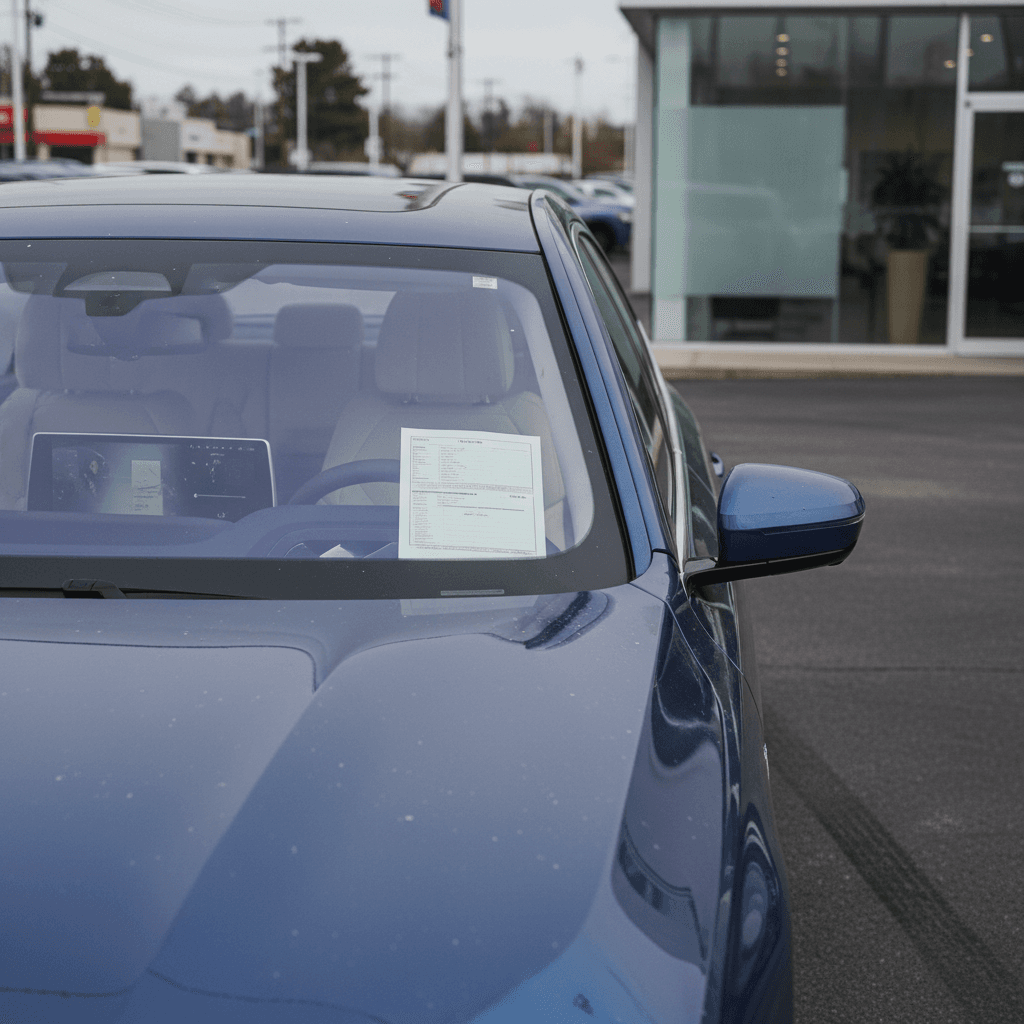
Pull the original window sticker or build sheet. A heavily optioned i7 that started life as a $140k flagship might be a better deal at $65k than a lightly optioned one at $58k.
2. Get real battery‑health data
Ask for a professional battery diagnostic or a Recharged Score Report. You’re looking for <strong>state‑of‑health</strong> numbers that show how much usable capacity remains versus new.
3. Study the charging history
Favor cars that mostly lived on <strong>Level 2 home charging</strong> and only used DC fast chargers for trips. Frequent fast‑charging can accelerate battery wear over time.
4. Inspect for luxury‑car wear items
Check soft‑close doors, massage seats, air suspension, power sunshades, and every screen and switch. On a car that started over $100k, any of these can be an expensive fix.
5. Confirm remaining warranties
Know the exact in‑service date and warranty terms for the high‑voltage battery, drive units, and major electronics. A few months of coverage left can be worth real money.
6. Compare total cost, not just price
Look at insurance quotes, local electricity rates, tire costs, and potential repair exposure. A cheap purchase price doesn’t help if you’re blindsided by a four‑figure repair.
7. Consider financing and trade‑in options
If you’re moving out of a gas luxury sedan or SUV, get an <strong>instant offer or trade‑in quote</strong>. At Recharged, you can roll your trade and i7 purchase into one EV‑focused financing plan.
FAQ: BMW i7 depreciation and used‑car questions
Frequently asked questions about BMW i7 value after 5 years
Bottom line: is a 5‑year‑old BMW i7 a good value?
If you buy a new BMW i7 and keep it 5 years, you’re almost certainly signing up for some serious depreciation, that’s the luxury‑sedan way, and the EV badge doesn’t change it. But if you step in as the second owner, that same five‑year horizon can look like one of the best deals in the electric‑car world: a flagship BMW with whisper‑quiet speed and a lounge‑like cabin, priced like a mid‑trim crossover.
The smart move is to treat value as more than just the asking price. Look at battery health, charging history, warranty coverage, and total running costs. And if you’d rather not decode all that alone, let an EV‑focused marketplace help. On Recharged, every i7 listing comes with a Recharged Score Report, transparent pricing, and specialist guidance so you can enjoy all the best parts of a big‑ticket BMW, without paying big‑ticket new‑car money.