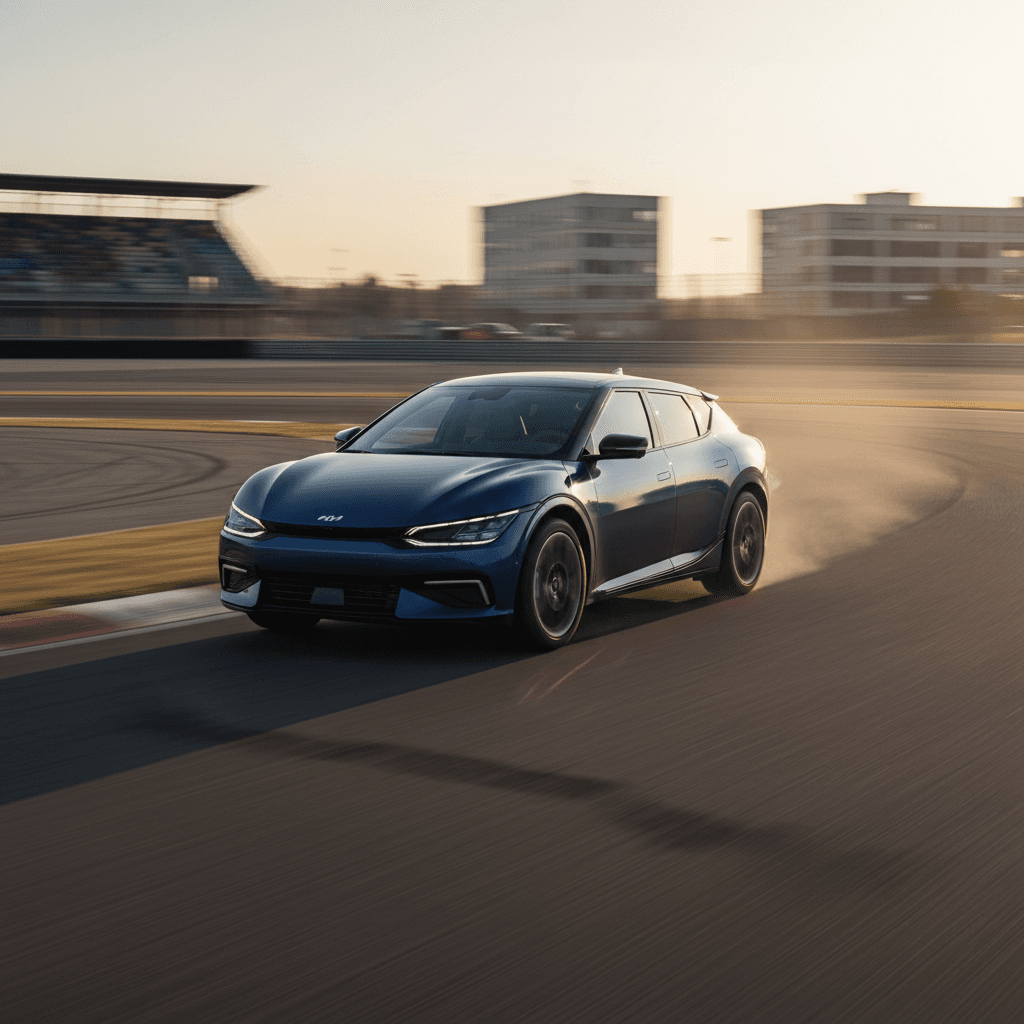
If you want supercar acceleration wrapped in a practical electric crossover, the Kia EV6 GT sits squarely in your crosshairs. This Kia EV6 GT performance review breaks down how it actually drives, 0–60 mph times, handling, braking, range, and charging, so you can decide whether this high-voltage halo car fits your real life, not just your YouTube queue.
Key Takeaway
Overview: Why the EV6 GT Matters
The EV6 GT is Kia’s performance flagship, its quickest production model to date. Built on the E-GMP platform, it takes the already-quick dual‑motor EV6 and cranks everything up: more power, bigger brakes, revised suspension, and performance software that lets you unlock drift and launch modes. For 2025, Kia has sharpened the package with a slightly larger 84 kWh battery, more power (up to about 641 hp in many markets), and minor chassis and tech tweaks that make it a better high-speed cruiser without losing its wild side.
Kia EV6 GT Headline Performance Numbers (U.S.-Oriented)
Powertrain and Acceleration: Supercar Numbers, SUV Practicality
Under the skin, the Kia EV6 GT uses a dual‑motor all‑wheel‑drive setup with an energy‑dense ~84 kWh battery. Earlier GTs made 576 hp and 545 lb‑ft of torque; the latest updates push output to roughly 641 hp, putting it in the same league as Kia’s cousin, the Hyundai Ioniq 5 N. That’s an extraordinary amount of shove in what is still a family‑friendly crossover.
- Front motor: ~160 kW driving the front axle for extra traction under hard launches and in poor weather.
- Rear motor: Up to ~270+ kW, doing the heavy lifting for acceleration and drift-oriented modes.
- Combined output: 576–641 hp and around 545–570 lb‑ft of torque depending on model year and market.
- Single‑speed reduction gear: Instant, seamless thrust with no gear changes to interrupt acceleration.
Put your foot down in GT mode and the EV6 GT simply erupts. Independent instrumented tests have recorded 0–60 mph times in the low 3‑second range, with Kia officially quoting around 3.4 seconds. That’s not just “fast for an EV”; it’s on par with high‑dollar performance crossovers and some traditional supercars.
Launch Control Done Right
Handling, Braking, and Ride: Track Toy or Daily Driver?
Power only tells half the story. The EV6 GT backs it up with serious chassis hardware: electronically controlled suspension, stiffer bushings and anti‑roll bars, a quicker steering ratio, and a standard electronic limited‑slip differential (e‑LSD) at the rear. All of this is tuned to make a tall, 5‑door crossover behave surprisingly like a low, wide hot hatch when you lean on it.
How the EV6 GT Drives When You Push It
Aggressive hardware, with a few everyday compromises
Cornering Grip
The wide stance, performance tires, and e‑LSD let the EV6 GT put its power down early out of corners. Body roll is well controlled, and the car feels far more agile than its curb weight suggests.
Braking Power
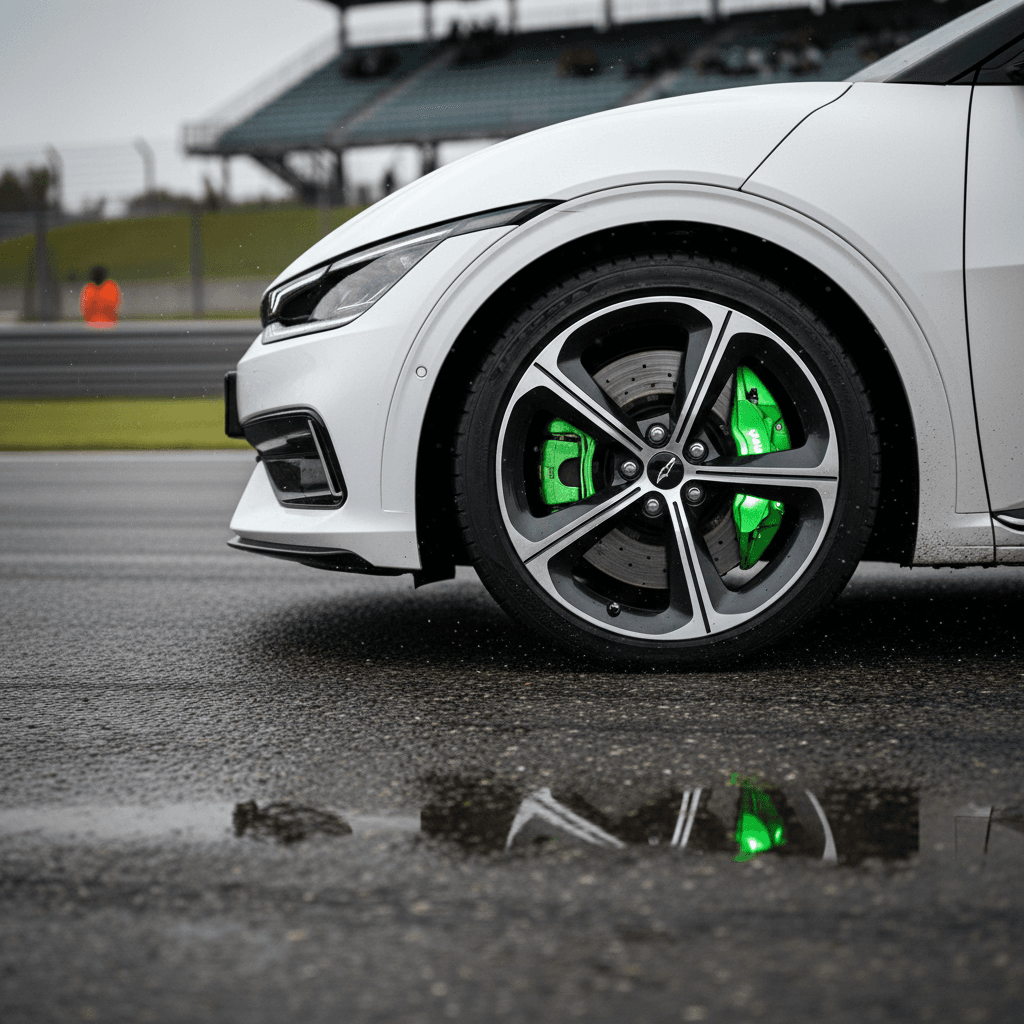
Upgraded 15-inch front and 14.2-inch rear discs with multi‑piston calipers give the GT the stopping power you’d expect of a 600‑hp EV. Repeated hard stops on track can still tax the system, but for spirited street use it’s overbuilt in a good way.
Ride & Noise
Revised damper tuning and extra sound deadening on newer models make the EV6 GT quieter and more composed at highway speeds, but the ride is still firm. Broken pavement and expansion joints are where you’re reminded this is a performance model.
Mind the Weight
Range, Efficiency, and Real-World Usage
Here’s the trade‑off: the Kia EV6 GT’s performance tune, sticky tires, and aggressive aero all cost you range. In U.S. EPA testing, earlier GTs were rated around 206 miles; updated models hover in the low‑200‑mile range, often quoted around 218–231 miles depending on wheels and conditions. That’s a sizeable gap versus a long‑range RWD EV6, which can approach or exceed 300 miles.
Approximate EPA Range vs Other EV6 Trims (U.S.)
How much range you give up for GT performance
| Model | Drivetrain | Battery | Approx. EPA Range |
|---|---|---|---|
| EV6 Light Long Range | RWD | Long-range pack | ≈310–319 miles |
| EV6 GT-Line AWD | Dual-motor AWD | Long-range pack | ≈270–295 miles |
| EV6 GT Performance AWD | Dual-motor AWD | Long-range / GT tune | ≈218–231 miles |
Numbers vary by model year and wheel size but this gives the right ballpark.
Driven calmly in mixed conditions, many owners report real‑world ranges that roughly match the EPA figure. Push the car in GT or Drift mode, or run extended high‑speed highway stretches, and it’s easy to dip below 200 miles on a charge. Cold weather and track use will shrink that even further.
Performance + Winter = Short Leash
Charging Performance and Road-Trip Viability
What the EV6 GT gives up in range, it claws back in charging speed. On an 800‑volt DC fast charger, the GT can accept over 230 kW and, in ideal conditions, go from 10–80% in roughly 18–20 minutes. That’s competitive with other performance EVs and helps make road‑tripping realistic if you’re willing to plan your stops.
Kia EV6 GT Charging Snapshot
Charging Strategy for EV6 GT Owners
Performance Features, Modes, and Driving Tech
Beyond raw power, the EV6 GT’s character is defined by its software. Drive modes significantly reshape throttle response, steering weight, suspension stiffness, and stability‑control intervention. Newer models add a virtual gear‑shift system and synthetic performance sounds to make the experience feel more engaging, especially for drivers coming from ICE performance cars.
Key Performance Features That Change How the EV6 GT Feels
1. GT Mode Button
A bright green GT button on the steering wheel calls up the sharpest throttle map, firmest suspension, and loosest stability control. It turns the EV6 from quick crossover to serious back‑road weapon.
2. Drift Mode
By carefully tuning the torque split and traction control, Drift Mode lets the EV6 GT rotate and hold controlled oversteer on track. It’s not for the street, but it shows how far Kia pushed this platform.
3. Electronic Limited-Slip Differential (e‑LSD)
The e‑LSD can send more torque to the outer rear wheel during cornering, effectively tightening your line and improving exit traction, especially on corner exit with high power demand.
4. Adaptive Suspension
Electronically controlled dampers soften for commuting and firm up in sportier modes, though even the softest setting is stiffer than regular EV6 trims. For many drivers, it’s a fair trade for sharper turn‑in.
5. Virtual Gear Shift & Sound
Later EV6 GTs add a virtual multi‑gear sensation and synthetic engine notes. You can dial these in or out depending on whether you want a pure EV feel or a more traditional performance‑car vibe.
How the Kia EV6 GT Compares to Rival Performance EVs
The EV6 GT doesn’t exist in a vacuum. Shoppers cross‑shopping performance EVs tend to look at it alongside cars like the Ford Mustang Mach‑E GT, Tesla Model Y Performance, Chevrolet Blazer EV SS, and Hyundai Ioniq 5 N. Where the Kia shines is in its blend of outrageous acceleration, fast charging, and relatively attainable pricing compared with the most exotic options.
Kia EV6 GT vs Key Performance EV Rivals (Approximate)
High‑level comparison of performance‑oriented electric crossovers and SUVs.
| Model | Power | 0–60 mph | Approx. Range | Character Snapshot |
|---|---|---|---|---|
| Kia EV6 GT | Up to ≈641 hp | ≈3.3–3.5 s | ≈218–231 mi | Brutally quick, ultra‑fast charging, firm but livable ride. |
| Hyundai Ioniq 5 N | ≈641 hp | ≈3.3 s | ≈221 mi | More track‑obsessed, louder, even more hardcore tuning. |
| Ford Mustang Mach‑E GT | Up to 480 hp | ≈3.7 s (Perf. Pack) | ≈260–280 mi | Strong straight‑line speed, softer charging curve. |
| Chevy Blazer EV SS | ≈615 hp | ≈3.4 s | ≈300+ mi (est.) | Newer entry with big power and competitive range. |
| Tesla Model Y Performance | ≈450+ hp | ≈3.5 s | ≈279–303 mi | Less extreme dynamics, excellent Supercharger access and efficiency. |
Specifications vary by model year and options; always confirm exact figures for the specific car you’re considering.
Where the EV6 GT Stands Out
Daily Livability: Cabin, Comfort, and Practicality
Performance EV or not, the EV6 GT still has to haul people and stuff. Inside, it largely mirrors higher‑trim EV6 models, with dual 12.3‑inch displays, a clean dashboard layout, and generous passenger space. The bucket‑style front seats in the GT add more lateral support and neon‑accent details, but they’re still comfortable for long drives if you fit them well.
Space & Utility
- Plenty of legroom in both rows; rear passengers in particular benefit from the flat floor and long wheelbase.
- Cargo space is decent but not class‑leading, squeezed slightly by styling and battery packaging.
- A small front trunk (frunk) adds bonus storage for charging cables or emergency gear.
Comfort & Noise
- Newer EV6 GTs get better damper tuning and more sound insulation, making them quieter at highway speeds.
- The 21‑inch wheels and low‑profile tires do transmit sharp impacts, urban potholes are the enemy.
- Adaptive driver‑assist systems (like Highway Driving Assist and smart cruise control) help the car settle into an effortless long‑distance rhythm, as long as you plan your charging stops.
Seats: Try Before You Buy
Buying a Used Kia EV6 GT: What to Watch For
Early EV6 GTs are already hitting the used market, and more will follow as 2025 facelifted models arrive. That makes the GT a tempting way to get supercar‑level EV performance for the price of a new mainstream crossover, if you shop carefully.
Used Kia EV6 GT Performance & Battery Checklist
1. Battery Health and Fast-Charging History
Aggressive DC fast‑charging and frequent track use can add wear. Use a <strong>third‑party battery health report</strong>, like the Recharged Score that comes with every EV on Recharged, to confirm usable capacity and look for abnormal degradation patterns.
2. Tires, Brakes, and Alignment
A 600‑hp EV on 21‑inch performance tires can shred rubber and stress suspension parts. Inspect for uneven tire wear, brake rotor lip or discoloration, and any pulling or vibration at highway speeds that might suggest alignment or suspension issues.
3. Software and Drive Modes
Verify that performance modes (GT, Drift, launch‑style functions) engage as expected, and that there are no warning lights related to the e‑LSD, adaptive suspension, or traction systems. A test drive on both smooth and rough pavement is essential.
4. Charging Hardware and Cables
Confirm that the CCS fast‑charging port, charge door, and included Level 1/Level 2 cables all operate normally. On a test drive, stopping at a public DC fast charger, even briefly, is a smart move to confirm there are no handshake or speed‑limiting issues.
5. Cosmetic and Track Wear
Check for curb rash on the big 21‑inch wheels, melted tire rubber behind the wheel wells, or heat‑stressed brake calipers, clues that a prior owner may have tracked the car hard. Some track use isn’t necessarily bad, but it’s valuable context when negotiating price.
How Recharged Can Help
FAQ: Kia EV6 GT Performance and Ownership
Frequently Asked Questions About the Kia EV6 GT
Bottom Line: Is the Kia EV6 GT Worth It?
Viewed purely through a performance lens, the Kia EV6 GT is a knockout. It accelerates like an exotic, charges like a modern EV should, and offers handling that belies its crossover shape. The trade‑offs are clear: a firmer ride, noticeably shorter range than other EV6 trims, and higher tire and brake costs if you drive it hard.
If you want an electric family hauler that just happens to be brutally fast, the standard dual‑motor EV6 GT‑Line is probably enough. But if you’re the kind of driver who actually uses a GT button, seeks out empty on‑ramps, and might sign up for the occasional track day, the EV6 GT feels like one of the most entertaining ways to spend performance‑EV money right now, especially on the used market.
When you’re ready to explore used Kia EV6 GT listings, Recharged can help you compare real‑world battery health, charging performance, and pricing across multiple cars, so you get the thrills you’re paying for, without hidden surprises.