The Audi e-tron GT is one of those cars that can make you fall in love on a test drive and then, in some unlucky cases, test that love with a dead 12V battery or a Christmas tree of warning lights. If you’re trying to understand Audi e-tron GT common problems and fixes, or you’re shopping used and don’t want to inherit someone else’s science experiment, this guide will walk you through the issues that matter and what you can realistically do about them.
What this guide covers
Audi e-tron GT reliability in the real world
What owners actually report
From flawless to frustrating, your experience may vary
When it’s good
Plenty of owners report no major issues over tens of thousands of miles, just routine service and the occasional recall visit. The car’s performance and cabin quality get rave reviews.
When it’s not
At the other end, some cars spend months in the shop chasing electrical gremlins: bricked 12V systems, warning messages, suspension noises, and sensor faults.
Reality check
The e-tron GT is a complex, low-volume performance EV riding on Porsche Taycan hardware. When it behaves, it’s superb. When something goes sideways, repairs can be slow and expensive outside warranty.
So is the e-tron GT a disaster? No. But it’s also not a Toyota Camry with a battery pack. Think of it more like a German sports sedan that happens to be electric: spectacular to drive, demanding to own if you’re unlucky or inattentive on maintenance and software updates.
Audi e-tron GT problem patterns
High-voltage battery vs 12V: what actually goes wrong
The first thing to understand: there are two batteries in your Audi e-tron GT. The big high-voltage pack under the floor moves the car. The small 12V battery, just like in a gas car, wakes the whole system up, runs locks, modules, and contactors. When people say their e-tron GT is “bricked,” it’s usually the 12V side, not catastrophic HV battery failure.
- Car won’t unlock or power up after sitting for 1–3 weeks
- Seemingly random “__ system malfunction” warnings across multiple subsystems
- Charging won’t start, or the charge light flashes yellow then red
- After a recall or software update, the car refuses to wake properly until repaired
Why 12V issues feel so scary
High-voltage battery issues
- Less common than 12V problems.
- Often software-related (battery management system faults or recalls).
- Typically covered under an 8-year / 100,000-mile battery warranty.
- Symptoms: reduced performance, persistent HV error messages, repeated DC charging faults.
12V battery & power management issues
- More common complaint on early cars and some post-update vehicles.
- Symptoms: no start, dead locks, dash stays black, or cascades of warning messages.
- Can recur if underlying power-management or software bug isn’t fixed.
- 12V replacement itself isn’t exotic, but GT access and coding are not a DIY job for most owners.
Quick triage: is it 12V or high-voltage?
1. Check for any life at all
If the car won’t unlock, the interior is dark, and the app shows it offline, suspect the 12V battery. A truly failed HV pack usually still allows some basic functions or warning messages.
2. Look at error patterns
Multiple “system malfunction” warnings appearing at once often trace back to a weak 12V battery or bad ground. HV issues tend to trigger more specific driveline or battery warnings.
3. Note how long it sat
If the car bricked after sitting 2–3 weeks, it may be a power-management bug that failed to keep the 12V topped up from the main pack, something Audi has addressed with software updates on affected VINs.
4. Try a safe 12V jump (with guidance)
On some EVs, a safe 12V jump or charger can wake the car enough to move it, but you should always follow Audi’s procedure. If you’re buying used, ask the seller for service records showing 12V replacement and power-management software updates.
How Recharged helps on used cars
Common e-tron GT charging problems and fixes
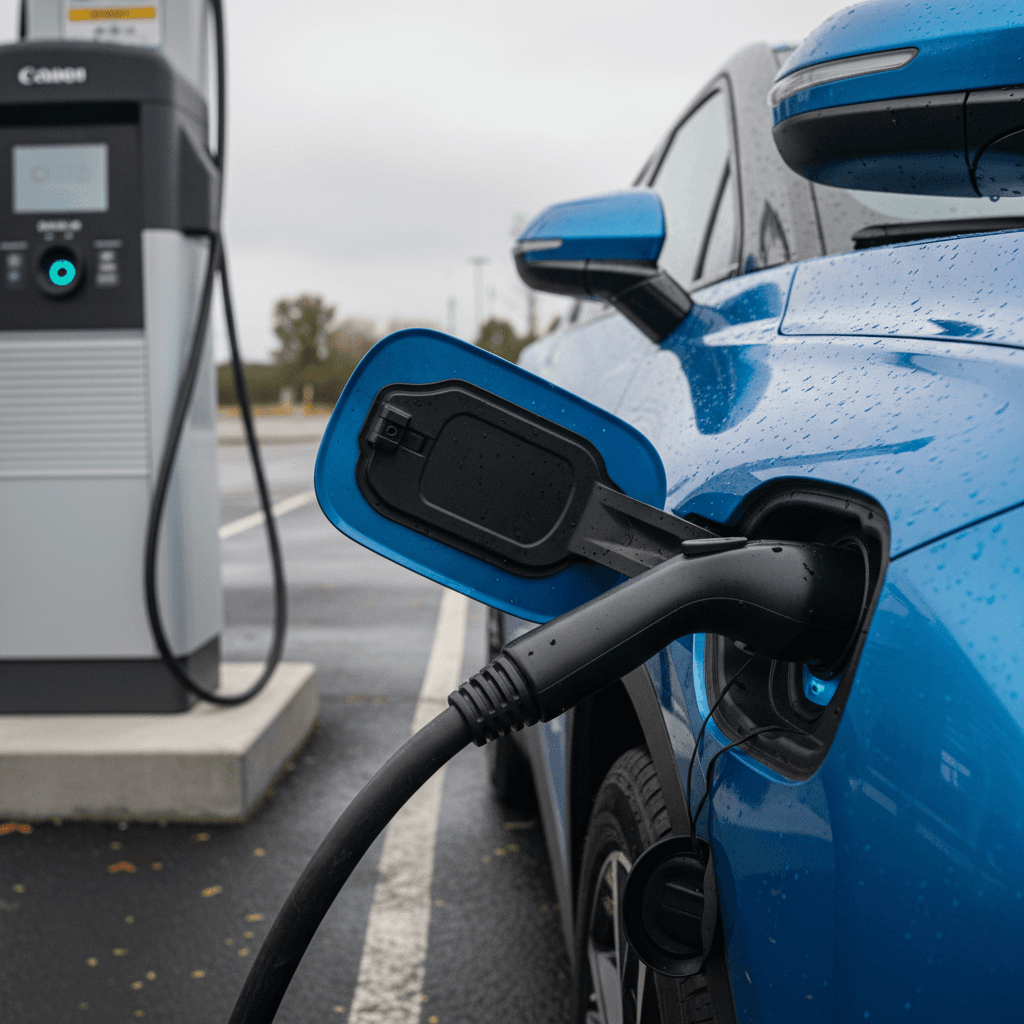
Charging complaints on the e-tron GT usually fall into one of two camps: AC charging issues (home and Level 2 public stations) and app/network weirdness that looks like a car problem but isn’t.
Typical e-tron GT charging problems and practical fixes
Focus on Level 2 AC issues, where most owners report trouble.
| Symptom | Likely cause | Owner-level checks | When to call Audi |
|---|---|---|---|
| DC fast charging works, Level 2 doesn’t | Onboard AC charger fault or software bug | Test another Level 2 station; power cycle car, check for software update records | If problem repeats across stations, dealer diagnosis of onboard charger/HV system |
| Charge light flashes yellow then red | 12V battery weak, charge-port lock issue, or communication error | Inspect connector for moisture/debris, check different cable/EVSE, avoid extension cords | If multiple EVSEs fail, have 12V battery and charge-port lock tested |
| Charging stops after a few minutes on Level 2 | Thermal management or onboard charger glitch | Try in cooler conditions, ensure ventilation around charger, reset session | Persistent behavior warrants dealer software update and charger diagnostics |
| Car ignores scheduled charging or app commands | myAudi / network glitch more than hardware | Try manual plug-and-charge, log out/in of app, disable schedule temporarily | If behavior persists even without schedules, ask dealer to check telematics & software |
| Home charger works with other EVs, not the GT | Charger firmware or handshake compatibility | Update home EVSE firmware, test public Level 2 station for comparison | If only your GT fails at multiple AC stations, suspect onboard charger or software |
Always default to Audi’s official procedures and recall guidance for your specific VIN.
Safety first with DIY charging fixes
Infotainment, cameras, and electronics glitches
The e-tron GT shares a lot of digital DNA with other modern Audis and Porsches, which means you get a gorgeous interface, and the occasional software tantrum. Common complaints include frozen or blank digital instrument clusters, glitchy navigation, and in some model years, rearview camera images failing to appear when you shift into reverse.
Typical electronic and camera hiccups
Annoying more than catastrophic, but still worth fixing
Frozen instrument cluster
Cluster or MMI screen goes blank or locks up. Often clears with a vehicle restart or soft reset of the infotainment system. If it’s recurring, dealer should check for software updates and TSBs.
Rear camera intermittently black
Several Audi and Porsche models, including the e-tron GT, have had rearview camera compliance recalls tied to software or infotainment hardware. The fix is a software flash or module replacement done free under recall.
Workshop mode & app weirdness
After service, techs sometimes forget to exit workshop or transport mode, leading to odd state-of-charge readouts or missing battery info in the app. A simple dealer reset usually cures it.
The e-tron GT’s software isn’t catastrophically worse than other German luxury cars, it’s just that when your speedometer is a screen, a freeze feels existential.
Suspension, tires, and ride-related complaints
Underneath the sleek bodywork, the e-tron GT is a heavy, low sports sedan riding on an adaptive air suspension and big, sticky tires. That’s a fantastic recipe for handling and a predictable recipe for wear.
- Accelerated tire wear, especially rear tires on RS or aggressively driven cars
- Creaks, clunks, or squeaks from the steering shaft, sway bar links, or upper control arms
- Suspension noises over low-speed bumps or while turning into driveways
- Occasional complaints of warped-like brake feel caused by pad deposits rather than true rotor warping
Performance costs performance money
How to keep tires and suspension out of trouble
Get alignments checked annually
Even a minor curb kiss can put a performance alignment out of spec. Uneven wear on the inside shoulders is your early warning.
Rotate religiously
Follow rotation intervals; with this much torque, skipping rotations is a reliable way to buy four tires sooner than you’d like.
Listen at parking-lot speeds
Creaks and clunks show up most clearly during slow maneuvers and while going over speed bumps. Have them checked before they take out more expensive components.
Avoid cheap tire downgrades
Switching to bargain tires might save you short term but can seriously affect wet grip and braking on a two-and-a-half‑ton EV. Stick with reputable brands in the correct spec.
Software updates, recalls, and why they matter
With the e-tron GT, software is as important as hardware. Audi has issued recalls and campaigns over rear camera behavior, battery management, charging port behavior, and other electronic functions. Many cars on the used market have had these items quietly handled; some have not.
Key recall themes affecting e-tron GT owners
Exact campaigns vary by model year and VIN, always run your own check.
| Area | What can go wrong | Typical fix | Owner takeaway |
|---|---|---|---|
| Rearview camera / infotainment | Blank or black screen instead of camera view in reverse; non-compliance with rear visibility rules | Software update and, in some early cases, infotainment unit replacement at the dealer | Get this done: it’s a safety and legal requirement, and it’s free under recall. |
| Battery management system (BMS) | Erroneous battery-control behavior, warning messages, or reduced performance on affected cars | Dealer software flash of BMS and related modules | Always ask for a printout of completed software actions when buying used. |
| Charging hardware or port issues | Intermittent AC charging failures or warning lights | Inspection and potential replacement of charge-port components or modules | If your GT struggles to charge where other EVs have no issue, don’t just live with it. |
Use Audi’s VIN lookup or NHTSA’s recall tool to see open campaigns on your car.
Good news: much of this is fixable for free
Preventive maintenance tips for smoother ownership
EVs don’t need oil changes, but the e-tron GT is not a no-maintenance appliance. A bit of proactive care goes a long way toward keeping it thrilling rather than terrifying.
Five habits that reduce e-tron GT drama
None of them kill the fun; all of them save money
Treat the pack kindly
For daily driving, aim to keep charge between 20–80% and avoid leaving the car at 100% or near 0% for long periods. This helps long‑term battery health.
Exercise the 12V gently
If you travel or store the car, don’t leave it untouched for a month. Either have someone move it periodically or talk to your service advisor about safe storage practices and software level.
Stay current on software
Make sure all campaigns and TSBs are up to date at each service visit. Tell the advisor about any weird behaviors, no matter how minor, they’re clues.
Watch your tires
Check pressures monthly, get alignments checked yearly, and don’t ignore shimmy or noise. On a heavy EV, small issues snowball fast.
Budget realistically
Expect higher costs for tires, brakes, and suspension work than a mainstream EV. Extended protection may be worth pricing out before factory warranty expires.
Choose the right use case
If your life is all short hops and long idle weeks, an e-tron GT may be less happy than in the hands of a daily driver who plugs in regularly and keeps it moving.
Buying a used Audi e-tron GT: inspection checklist
If you’re shopping used, you’re in the sweet spot: the e-tron GT has already taken its steepest depreciation hit, but you can still find cars under factory warranty. The key is sorting the gems from the garage-queen horror stories.
Used e-tron GT pre-purchase checklist
1. Pull full service & recall history
Ask for dealer printouts showing all completed recalls and software updates, especially anything related to BMS, charging, and cameras. Walk away from cars with murky histories.
2. Ask directly about 12V and bricking
Has the car ever been towed dead? How often does it sit? Repeated bricking episodes without a clear fix are a red flag unless there’s strong documentation that the underlying software bug has been resolved.
3. Test charging in the real world
If possible, plug the car into a Level 2 charger (home or public) and confirm it starts and sustains a session. Note any warning lights, beeps, or aborted charges.
4. Inspect tires, suspension, and brakes
Uneven tire wear, steering squeaks, or suspension clunks suggest deeper issues. Budget for a full set of performance tires if they’re near the wear bars, that’s normal life on these cars.
5. Scan for electronic weirdness
During a test drive, work every screen, drive selector, camera, and parking sensor. A frozen cluster or missing camera feed might just need a software update, but confirm it’s not a recurring ghost.
6. Get an EV-focused inspection
Traditional pre-purchase inspections can miss EV‑specific issues. A platform-aware inspection, or a Recharged Score Report on vehicles listed with Recharged, will look at battery health, charging behavior, and thermal management, not just tires and brakes.
Why consider a marketplace built for EVs
FAQ: Audi e-tron GT common problems
Frequently asked questions about e-tron GT problems
Bottom line: who the e-tron GT suits best
The Audi e-tron GT is not trying to be a sensible appliance. It’s a four-door electric grand tourer that happens to commute like a luxury sedan and annihilate on-ramps like a supercar. That combination comes with complex systems and a narrower margin for neglect than, say, a mass‑market crossover EV.
If you’re the kind of driver who stays on top of software updates, keeps a close eye on tires and suspension, and doesn’t mind the occasional dealer visit, the e-tron GT can be a spectacular daily companion. If you want something you can ignore for months at a time without consequence, it may not be your car.
For used shoppers, the key is selectivity. Look for documented software and recall history, clear answers about any past bricking or charging drama, and evidence the car has been driven and serviced, not just detailed. A marketplace like Recharged, with battery health diagnostics, transparent history, and EV‑specialist guidance, tilts the odds heavily in your favor. That way, you get the best version of the e-tron GT story: the one where all the drama comes from the way it drives, not the way it charges.