If you’re wondering “are electric cars really worth it?” in 2025, you’re not alone. EV prices, incentives, charging networks and used-car values have all shifted in the last couple of years, and the answer now depends heavily on how you drive, where you live, and whether you buy new or used.
Quick answer
Are electric cars worth it in 2025?
EV vs gas: key 2025 numbers at a glance
Those numbers hint at the tradeoffs: EVs typically cost more to buy but less to run. They shine if you keep them long enough and drive enough miles. They make less sense if you swap cars every few years, can’t charge at home, or pay a steep premium for the latest model just as incentives wind down.
How EV costs compare to gas cars
Let’s start with the piece most shoppers care about: total cost of ownership, what you pay all-in over several years. That includes purchase price, financing, fuel or charging, maintenance, insurance and resale value.
Illustrative 5-year cost: mainstream gas vs electric car
A simplified example for a typical compact SUV or sedan driven 12,000 miles per year. Actual numbers vary by model, state, electricity and gas prices.
| Cost factor (5 years) | Gas car | Electric car |
|---|---|---|
| Purchase price (after any incentives) | $27,000 | $31,000 |
| Fuel / charging | $7,000 | $4,000 |
| Maintenance & repairs | $4,000 | $2,400 |
| Insurance | $7,000 | $8,200 |
| Estimated resale value | -$10,000 | -$11,000 |
| Estimated net 5-year cost | $35,000 | $34,600 |
These are directional figures to show why an EV can be cheaper to own even if it costs more upfront.
How to use this math
Sticker price, incentives and financing
New EVs still tend to carry a higher sticker price than comparable gas models. Industry surveys in 2025 put the average new EV around the mid‑$50,000s, versus high‑$40,000s for new gas cars. That gap narrows, and sometimes disappears, once incentives and dealer discounts are factored in, but two big changes matter right now:
- Federal new and used EV tax credits are scheduled to end for vehicles acquired after September 30, 2025, which removes up to $7,500 (new) or $4,000 (used) of help for qualifying buyers.
- Some automakers are cutting EV prices and offering aggressive financing to keep demand moving as incentives fade.
- Used EV prices have come down sharply from their 2022 peaks, creating real bargains for second owners.
Watch the incentive timing
New EV buyers
- Pros: Latest tech, full warranty, best range and charging speeds.
- Cons: Highest depreciation risk, higher insurance, incentives phasing out.
- Best for: High‑mileage drivers or business owners who can capitalize on incentives before they expire and keep the car 7–10+ years.
Used EV buyers
- Pros: Lower upfront price, early‑years depreciation already paid by someone else.
- Cons: Need to verify battery health and warranty coverage.
- Best for: Value‑focused shoppers who want EV running costs without new‑car pricing. This is exactly the niche where Recharged focuses with verified battery diagnostics and fair‑market pricing.
Charging costs and day-to-day convenience
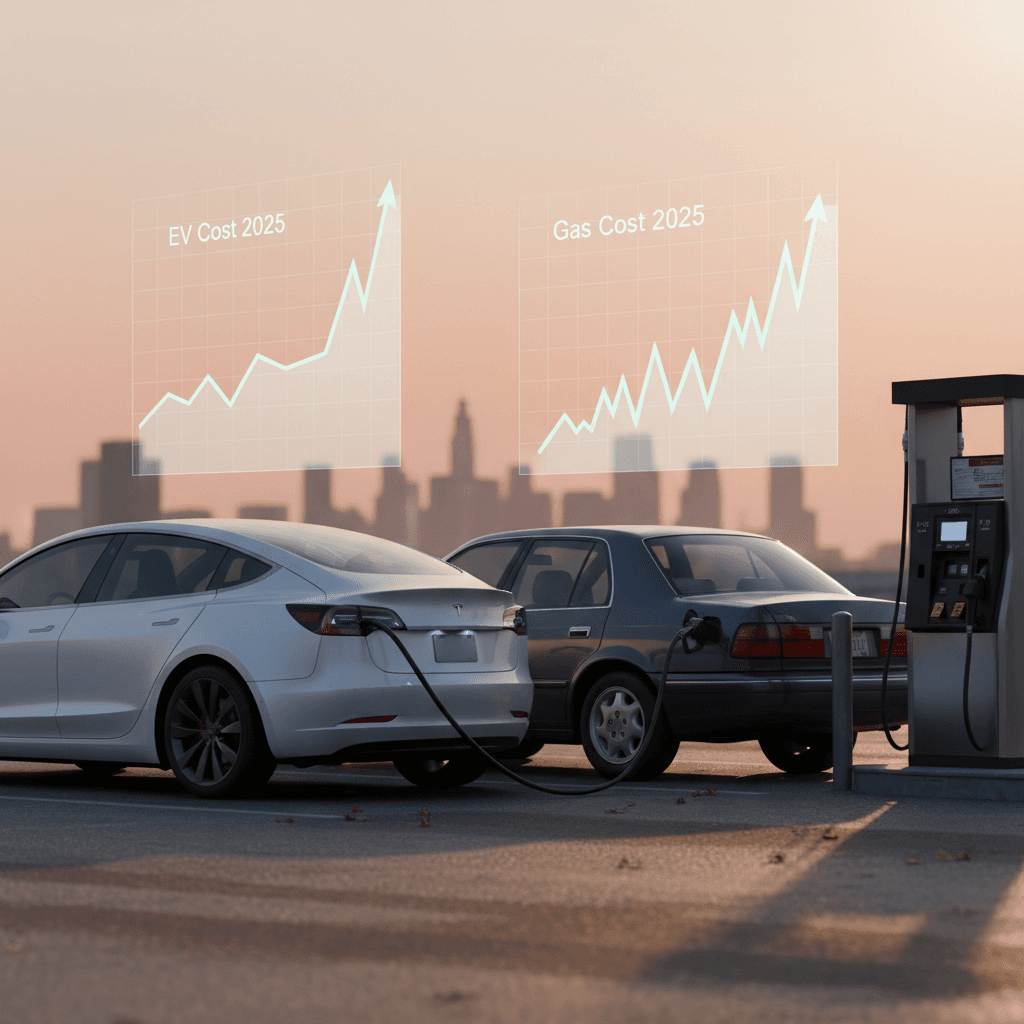
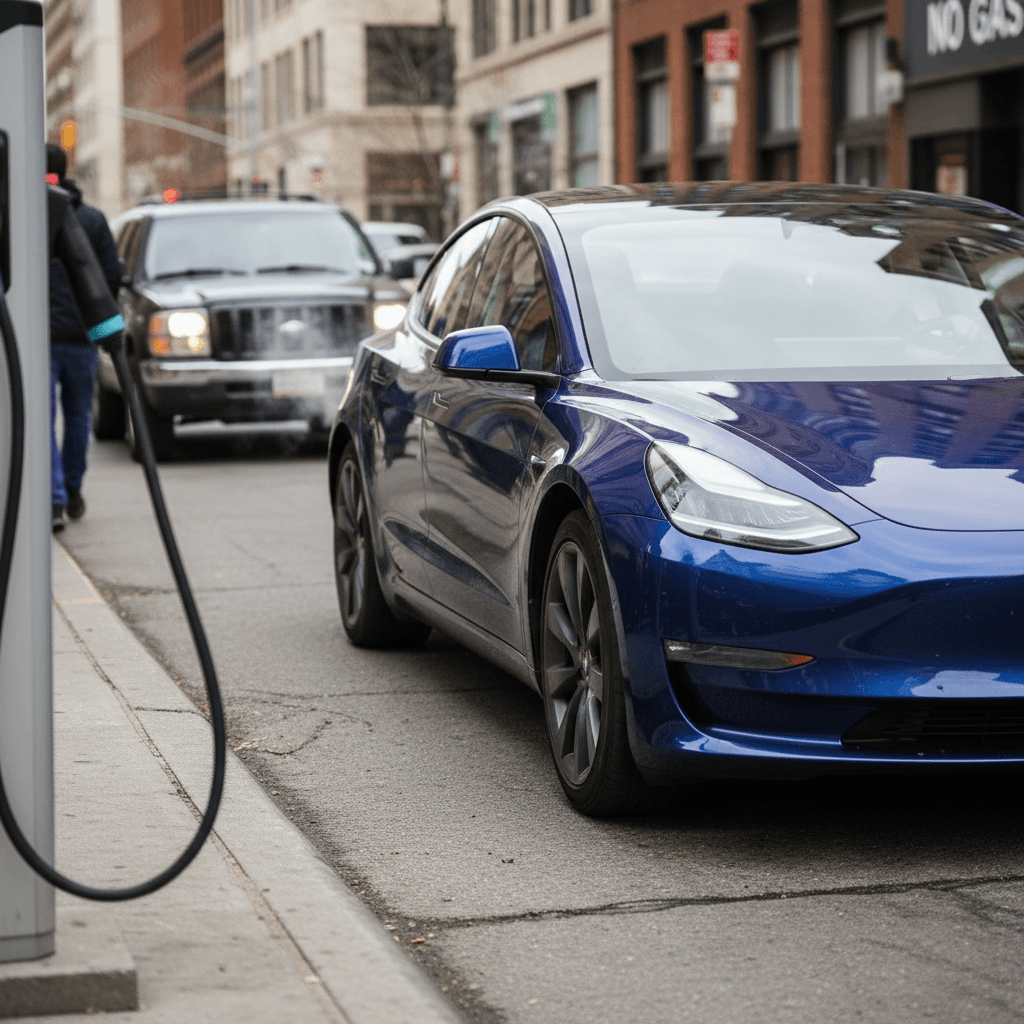
Fuel is where EVs quietly win. At U.S. average electricity prices, many EVs cost roughly one‑third to one‑half as much per mile to “fuel” as comparable gas cars. Think of spending $35–$60 a month on home charging instead of $150–$250 at the pump if you drive around 12,000 miles a year.
How and where you charge shapes the value
Home charging is the single biggest factor in whether an EV feels convenient and cost‑effective.
Home charging
If you have a garage or driveway, installing a Level 2 (240V) charger lets you wake up to a “full tank” most mornings.
- Lowest per‑mile energy cost.
- Most convenient: plug in, walk away.
- Upfront install cost ($500–$1,500 in many markets).
Public DC fast charging
Great for road trips and apartment dwellers, but typically more expensive.
- Per‑kWh prices can rival or exceed gas on a per‑mile basis.
- Plan around charger availability and occasional waits.
- Still improving rapidly along major highways.
Workplace & community charging
More employers, apartments and cities are adding chargers.
- Sometimes free or subsidized.
- Can offset lack of home charging.
- Reliability and access vary widely by location.
Rule of thumb
Maintenance, repairs and battery life
From a mechanical standpoint, EVs are simpler: no oil changes, no exhaust system, fewer moving parts. Real‑world data shows maintenance and routine repairs running roughly 30–40% lower than for comparable gas cars over the first few years. You still have wear‑and‑tear items, tires, cabin filters, coolant, brakes, but there’s far less routine engine work.
- Regenerative braking means brake pads often last significantly longer than on gas cars.
- There’s no engine oil, spark plugs, or traditional transmission to service.
- Software updates can fix or improve some issues over the air, especially on newer EVs.
What about the battery?
“In our long‑term tests, real‑world driving and charging patterns tend to be kinder to EV batteries than older lab assumptions suggested, meaning many packs will remain usable well past 200,000 miles.”
The big‑ticket risk
Depreciation and resale value
Here’s where the EV story gets more complicated. Several recent studies show EVs depreciating faster than gas cars over the first five years, with average value loss approaching 60% compared to the mid‑40% range for internal‑combustion models. Rapid tech improvements, heavier reliance on incentives and shifting demand patterns all play a role.
Why many new EVs lose value faster
None of these are dealbreakers, but they matter if you swap cars often.
Rapid tech cycles
Range, charging speed and driver‑assist tech are improving quickly. A 2025 model can feel dated by 2028 if it has shorter range or slower charging than newer rivals, which pushes resale prices down.
Incentive shock
When a new EV comes with thousands in rebates, used shoppers expect discounts too. As federal credits wind down, the market will need time to reset, which can create volatility.
Lease & fleet returns
High lease penetration and fleet adoption mean large waves of off‑lease EVs hit the used market at once, putting pressure on values in certain segments.
Brand and warranty strength
EVs from brands with strong dealer networks and long battery warranties tend to hold value better, another reason to pay attention to warranty terms when you buy.
Where depreciation works in your favor
Ready to find your next EV?
Browse VehiclesEnvironmental impact: is an EV really cleaner?
Even as federal incentives shift, one thing hasn’t changed: over their full life cycle, EVs produce far fewer emissions than comparable gas cars in most of the U.S., even where the grid still leans on fossil fuels. While it takes more energy (and emissions) to build an EV, largely because of the battery, most analyses find that EVs “break even” within the first 1–2 years of driving and finish their life cycle with roughly half the total emissions.
- In regions with cleaner grids, the emissions advantage shows up even faster.
- As more renewables come online, existing EVs automatically get cleaner to operate without you changing anything.
- Local air quality improves when more driving is electric, especially in dense urban areas and near highways.
Practical takeaway
When an EV is worth it (and when it isn’t)
Scenarios where an EV is usually worth it
- You can charge at home in a garage or driveway and mostly avoid public charging.
- You drive 10,000–15,000+ miles per year, so fuel savings really add up.
- You plan to own the car 7–10 years or longer, spreading the higher upfront cost over many low‑cost miles.
- You’re open to a used EV, letting someone else take the steepest depreciation hit.
- Your local electricity rates are reasonable compared to gas prices.
Scenarios where an EV may not be worth it yet
- No reliable home or workplace charging, so you’d rely on public fast chargers most of the time.
- You drive very few miles (say, under 6,000 a year), so fuel savings stay small.
- You replace cars every 2–3 years, exposing yourself to the steepest depreciation window.
- Your area has sparse charging infrastructure and long‑distance trips are frequent and time‑sensitive.
- Insurance quotes for EVs in your ZIP are drastically higher than for similar gas models.
Are used electric cars worth it?
For a growing number of shoppers, the answer is yes, used EVs are where the math really starts to click. Prices have cooled from the pandemic surge, early depreciation is already baked in, and battery data is finally robust enough that you can judge a specific car’s health instead of guessing.
Checklist: when a used EV is a smart buy
Battery health is independently verified
Request a <strong>quantitative battery health report</strong>, not just a verbal “it seems fine.” Recharged vehicles come with a Recharged Score and detailed diagnostics so you can see remaining capacity and any warning signs.
Remaining warranty coverage fits your plans
Confirm how much of the <strong>battery and powertrain warranty</strong> remains in years and miles, and whether it’s transferable. That safety net significantly reduces financial risk.
Price reflects depreciation and incentives
Compare the asking price to new‑car MSRP minus any incentives that were available when new. A used EV should be meaningfully cheaper than a similarly equipped new one.
Charging fits your lifestyle
Make sure the range and charging speed match your real‑world driving. A 220‑mile EV can be perfect for commuting and local errands but might be stressful for frequent 400‑mile road trips.
Support and service are accessible
Check that you have nearby shops or dealers equipped to service your chosen EV. Recharged’s EV‑specialist support can also help you understand ownership requirements and service options.
Where Recharged fits in
How to decide if an EV makes sense for you
5 steps to deciding if an EV is worth it for you
1. Map your real driving patterns
Look at a typical week: commute distance, errands, school runs, weekend trips. Note how often you drive more than 150–200 miles in a day.
2. Audit your charging options
Can you install a Level 2 charger at home? Does your workplace offer charging? Are there reliable public chargers along routes you use often?
3. Run a simple cost comparison
Compare a specific EV and gas model: purchase price, expected fuel or charging costs, insurance quotes and estimated resale after 5 years. Focus on total monthly cost, not just the payment.
4. Decide new vs used
If you value the latest tech and plan to keep the car for a long time, new can work. If you prioritize value and lower risk, a <strong>used EV with a strong battery report</strong> often delivers the best bang for your buck.
5. Get expert help
Talk to EV‑savvy advisors, not just general salespeople. Recharged’s specialists can walk you through battery reports, charging plans and total cost of ownership to make sure the numbers and lifestyle fit.
FAQ: Are electric cars worth it?
Frequently asked questions about whether EVs are worth it
Bottom line: are electric cars worth it today?
There’s no one‑size‑fits‑all answer, but the pattern is clear. Electric cars are usually worth it for drivers who can charge at home, drive a moderate to high annual mileage, and plan to keep the car for several years. The math gets even better when you buy used and let someone else absorb the steepest depreciation.
On the other hand, if you drive very little, swap vehicles every couple of years, or have no reliable place to charge, a gas or hybrid model may still be the more practical choice, for now.
If you’re leaning toward an EV but aren’t sure where to start, exploring Recharged’s inventory of used electric vehicles is a low‑pressure way to see real pricing, battery health reports and total‑cost‑of‑ownership details side by side. With transparent diagnostics, EV‑specialist support and nationwide delivery, you can figure out whether an electric car is worth it for your situation, before you ever set foot in a showroom.