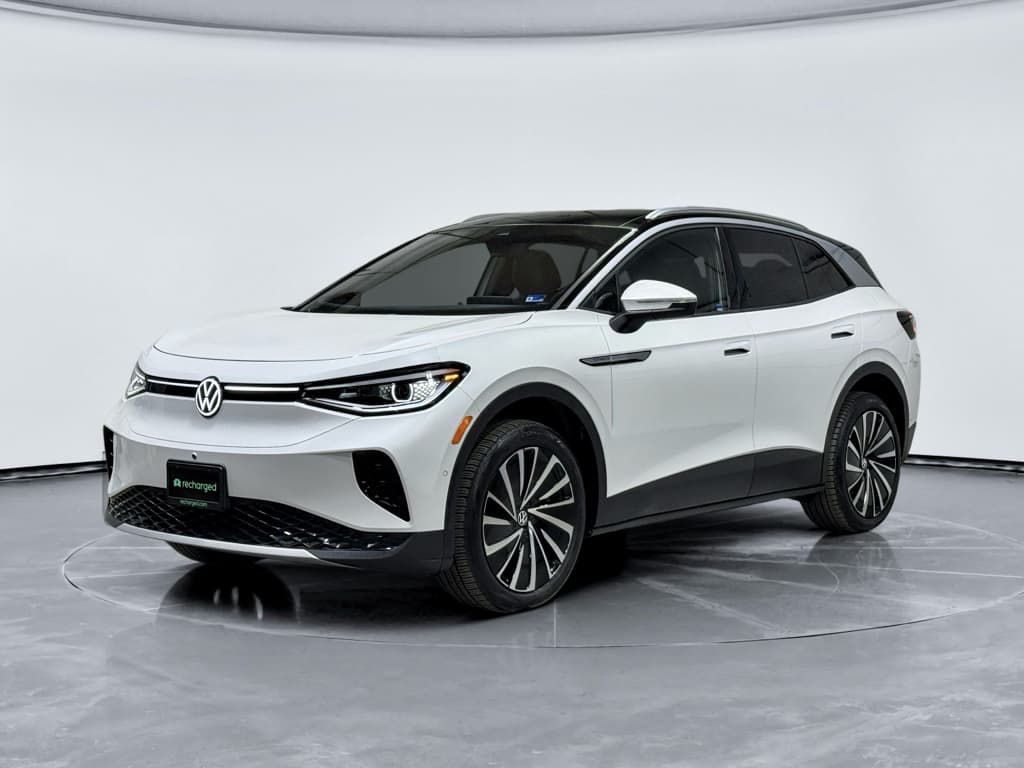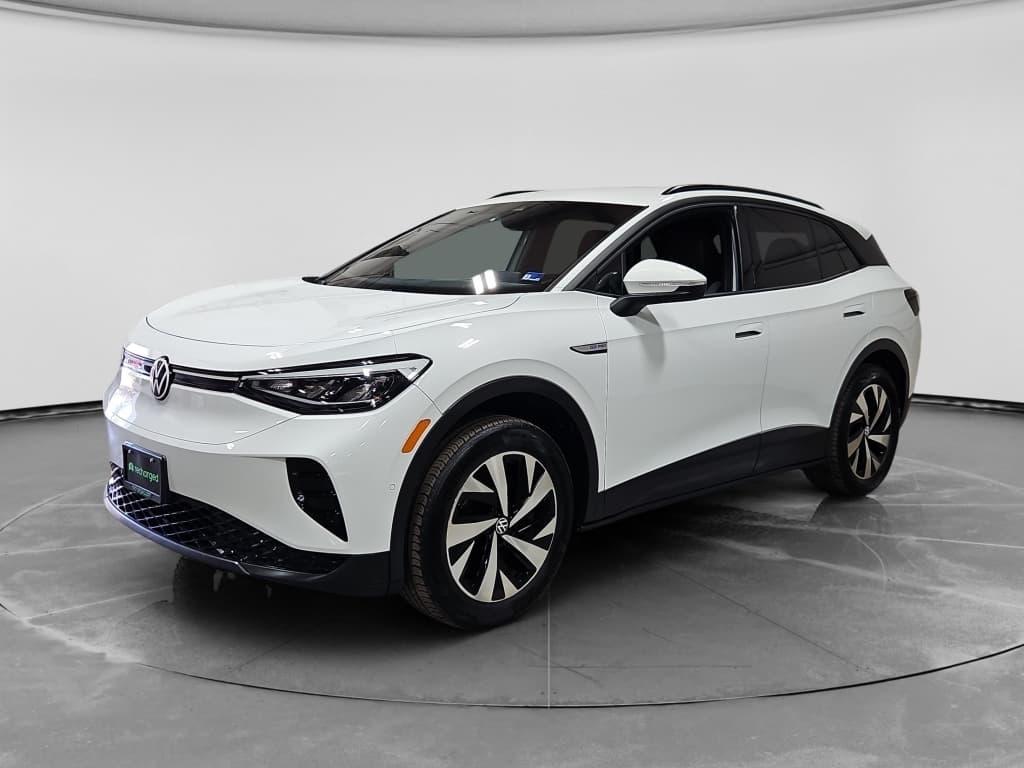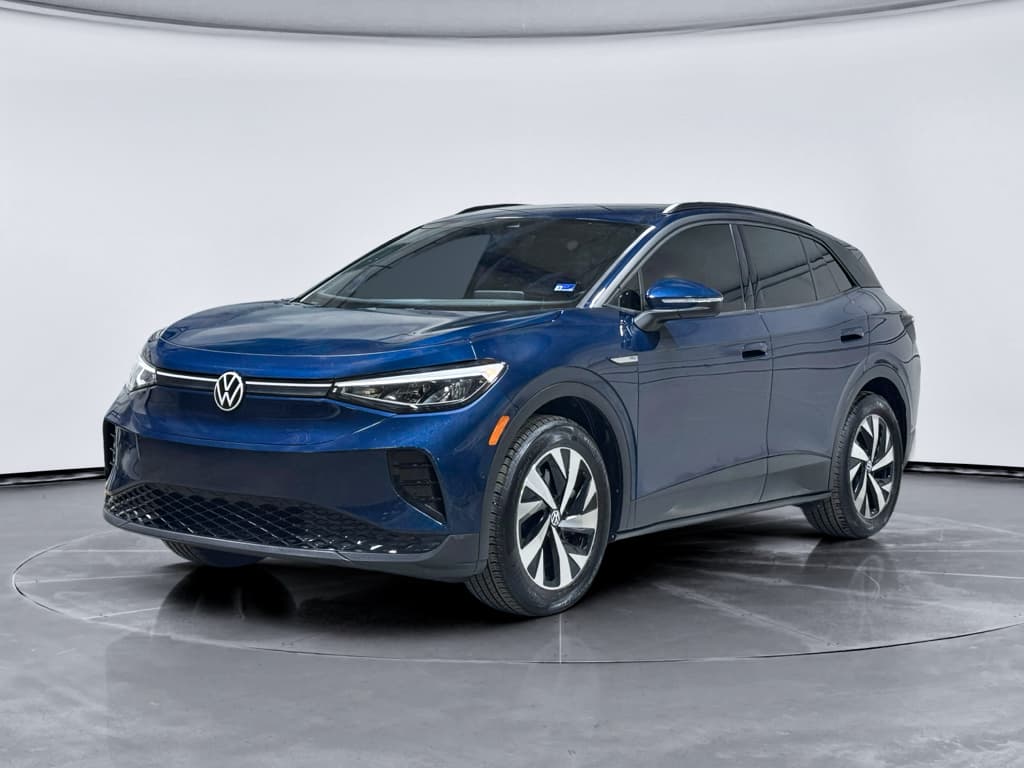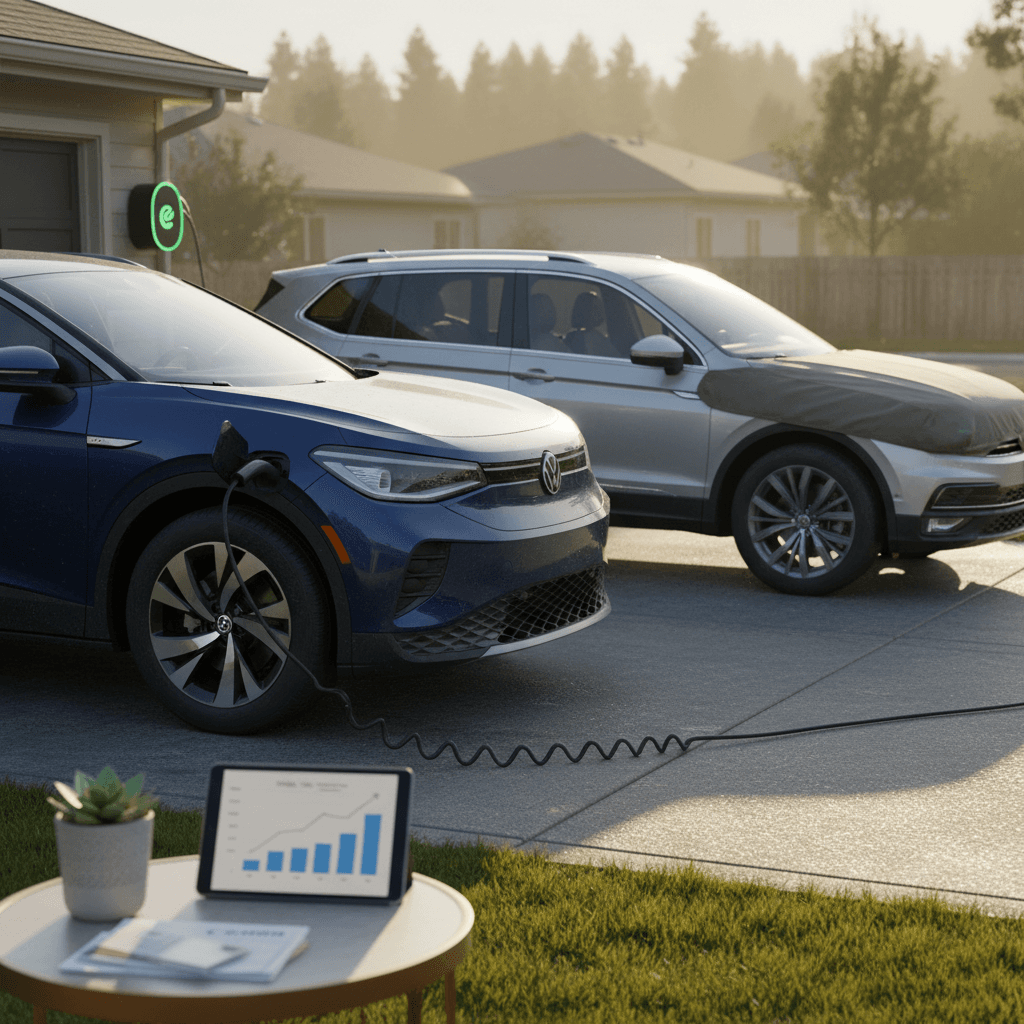
If you’re driving a gasoline Volkswagen Tiguan and eyeing the all‑electric Volkswagen ID.4, the big question is simple: will switching actually save you money? Between today’s $4‑a‑gallon gas and rising electricity rates, the answer isn’t as obvious as it used to be. Let’s walk through the real‑world numbers so you can see the potential cost savings of switching from a Tiguan to a Volkswagen ID.4 for your own commute and lifestyle.
Assumptions we’ll use
Why switch from a Tiguan to an ID.4?
The Tiguan and ID.4 live in the same neighborhood: both are compact family SUVs from Volkswagen with similar interior space and a familiar feel from behind the wheel. The key difference is under the skin. The Tiguan burns gasoline; the ID.4 runs purely on electricity from a battery. That shift changes how you fuel, how often you service the car, and what it costs you to own it over 5–10 years.
- You’re tired of unpredictable gas prices and want more stable fuel costs.
- You drive a lot of city miles where EV efficiency shines.
- You can charge at home or at work, at least a few nights a week.
- You want smoother, quieter driving and instant EV torque without losing SUV practicality.
- You’re thinking about long‑term total cost of ownership, not just monthly payment.
Think in years, not months
Key specs: Volkswagen Tiguan vs. Volkswagen ID.4
Before we get into dollars, put both vehicles on the same page. Exact numbers vary by model year and trim, but these are representative of recent U.S. models.
Volkswagen Tiguan vs. Volkswagen ID.4: key numbers
Roughly comparable trims for recent model years in the U.S. (gasoline Tiguan vs. all‑electric ID.4).
| VW Tiguan (gas) | VW ID.4 (electric) | |
|---|---|---|
| Powertrain | Turbo 4‑cyl gas, automatic | All‑electric motor, single‑speed |
| Drivetrain | FWD or AWD | RWD or AWD |
| Typical combined efficiency | ≈24 mpg (gas) | ≈33 kWh/100 miles |
| Fuel/energy source | Regular gasoline | Grid electricity (home & public charging) |
| Usable battery or fuel tank | 14–15 gal tank | 62–82 kWh battery (trim‑dependent) |
| Real‑world range | ≈350–400 mi per tank | ≈230–290 mi per full charge |
| Routine maintenance | Oil, filters, spark plugs, belts, exhaust, transmission service | Tires, cabin filter, brake fluid; far fewer wear items |
These are typical figures meant for cost comparisons, not exact specs for every trim.
Fuel vs. electricity: where most ID.4 savings come from
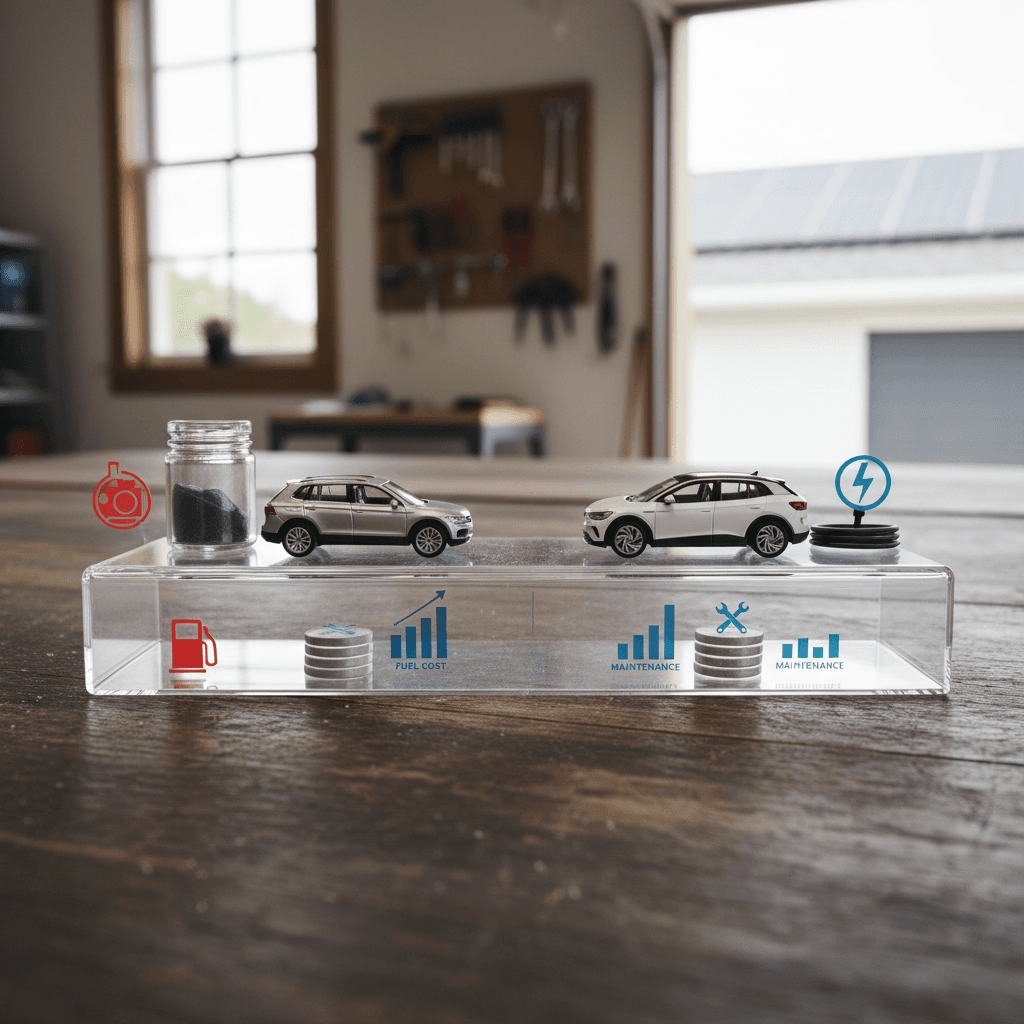
For a lot of drivers, fuel vs. electricity is the single biggest budget change when switching from a Tiguan to an ID.4. Let’s do some simple, transparent math using current U.S. averages.
Tiguan gas vs. ID.4 electricity – typical U.S. costs
Step 1: Cost per 100 miles
- Gas price (national average): about $4.00 per gallon.
- Fuel economy: about 24 mpg combined.
- Gallons per 100 miles: 100 ÷ 24 ≈ 4.2 gallons.
- Fuel cost per 100 miles ≈ 4.2 × $4.00 = $16.80.
- Efficiency: about 33 kWh/100 miles for many RWD trims.
- Home electricity: assume $0.16 per kWh (close to recent residential averages).
- Electricity cost per 100 miles ≈ 33 × $0.16 = $5.28.
Your local rates matter
Step 2: Annual fuel/energy cost at 12,000 miles
- 12,000 miles ÷ 100 = 120 units of 100 miles.
- 120 × $16.80 ≈ $2,016 per year in gasoline.
- 120 × $5.28 ≈ $634 per year in electricity.
Public fast charging can change the math
Maintenance and repairs: fewer moving parts, fewer surprises
Gas SUVs like the Tiguan are familiar, and they also have a long list of parts that need service: oil changes, spark plugs, timing belts or chains, exhaust systems, transmission fluid, and so on. The ID.4 ditches most of that. You still have tires, brakes, and cabin filters, but far fewer wear items that can leak, clog, or fail.
Where the ID.4 saves you on maintenance
Same brand, different guts: gas vs. electric upkeep
Tiguan: traditional maintenance
- Oil and filter every 5,000–10,000 miles.
- Spark plugs, ignition components, belts.
- Transmission service and potential long‑term repairs.
- Exhaust system, emissions equipment, engine cooling system.
ID.4: simplified service
- No engine oil, spark plugs, or timing belt.
- Single‑speed gearbox with fewer service needs.
- Brake wear reduced by regenerative braking.
- Software updates can fix issues without parts.
Exactly how much you save depends on which Tiguan you’re replacing, how you’ve maintained it, and how long you keep cars. But over a 5‑year span, it’s reasonable to expect the ID.4 to save several hundred to a few thousand dollars on maintenance and typical repairs compared with a gasoline Tiguan, especially as mileages climb.
Look at your real service records
Insurance, depreciation, and incentives
Fuel and maintenance are big, but they’re not the whole story. Switching from a Tiguan to an ID.4 also affects insurance, depreciation, and any incentives you might qualify for.
- Insurance: EVs can be a bit more or less expensive to insure than a comparable gas SUV depending on your ZIP code, repair network, and trim. Get quotes for both specific VINs; don’t guess.
- Depreciation: Early ID.4s have already taken their biggest hit, which is good news if you’re buying used. Late‑model Tiguans also drop quickly in the first 3–4 years. Your best bet is usually a 2–4‑year‑old vehicle, gas or electric.
- Incentives and credits: New ID.4s may qualify for federal or state incentives depending on where they’re built and your tax situation. Used EVs can also qualify for a federal used EV tax credit in some cases. Gas Tiguans generally don’t have equivalent long‑term incentives.
- Parking and perks: Some regions offer discounted tolls, HOV lane access, or cheaper city parking for EVs, which can subtly tilt the cost equation toward an ID.4.
Used ID.4s often hit the sweet spot
5‑year cost comparison: Tiguan vs. ID.4 (example)
Let’s pull all of this into one simple, example‑driven comparison. These aren’t hard quotes, think of them as a way to understand the shape of the costs when switching from a Volkswagen Tiguan to a Volkswagen ID.4.
Illustrative 5‑year cost of ownership – Tiguan vs. ID.4
Example assumes 12,000 miles/year, mostly home charging for the ID.4, and national average prices. Your actual numbers will vary by state, trim, and how you drive.
| Cost category (5 years) | VW Tiguan (gas) | VW ID.4 (electric) | What this means |
|---|---|---|---|
| Fuel / electricity | ≈$10,000 | ≈$3,200–$3,800 | ID.4 can save around $6,000+ in energy over 5 years if you mostly charge at home. |
| Routine maintenance | ≈$3,000–$4,000 | ≈$1,500–$2,500 | ID.4 avoids many engine‑related services, though tires and brakes still matter. |
| Repairs out of warranty | Highly variable; engines & transmissions can be costly | Fewer moving parts, but battery and electronics repairs are specialized | Modern EVs are still new to many shops; quality of repair network matters. |
| Insurance | Baseline | Similar to ±10% depending on your area | Sometimes slightly higher for EVs; shop quotes for both VINs. |
| Depreciation (used purchase) | Moderate; gas SUVs are familiar used buys | Moderate; first owners already took the big hit | Buying either vehicle 2–4 years old can soften depreciation for you. |
Illustrative comparison only; always run personalized numbers before making a decision.
Rough 5‑year energy savings
How to maximize your savings when you switch
Six ways to improve Tiguan → ID.4 cost savings
1. Charge at home whenever possible
Home charging is almost always cheaper than public fast charging. Install or use an existing 240V outlet (where safe and permitted) for Level 2 charging to get the most savings and convenience out of your ID.4.
2. Hunt for a fairly priced used ID.4
Let someone else pay the steepest part of depreciation. A well‑priced 2–3‑year‑old ID.4 with a healthy battery can undercut the total 5‑year cost of keeping your current Tiguan, especially if you’re about to face big maintenance items.
3. Compare insurance quotes before you commit
Call or go online with your insurer and get real quotes for both VINs: your Tiguan and a specific ID.4 you’re considering. Even a small monthly difference adds up over 5 years.
4. Use your actual driving data
If your car or phone tracks trip history, look at your real annual mileage and typical trip length. City‑heavy and stop‑and‑go use favors the ID.4; very low annual mileage can make the fuel savings smaller than you expect.
5. Consider workplace or free charging
If you have access to low‑cost or complimentary charging at work, apartments, or public programs, your effective cost per mile in the ID.4 can drop dramatically compared with a Tiguan on $4 gas.
6. Plan the timing of your switch
If your Tiguan is approaching expensive maintenance (timing components, transmission service, brakes, tires), folding that future cost into the switch to an ID.4 can make the financial case stronger right now.
How Recharged can help you switch from Tiguan to ID.4
Numbers are great, but you still have to find the right car, understand its battery health, and figure out what to do with your Tiguan. That’s where Recharged comes in. Recharged is built specifically around used EVs like the ID.4, with tools and services designed to make the switch from a gas SUV straightforward instead of stressful.
Turning your Tiguan into an ID.4, the easy way
Recharged focuses on used EVs, battery health, and transparent pricing.
Find a vetted used ID.4
Trade in or sell your Tiguan
Financing & delivery, done online
Battery health, decoded for you
Ready to find your next EV?
Browse VehiclesFrequently asked questions about Tiguan to ID.4 cost savings
Your questions, answered
Bottom line: When does an ID.4 make financial sense?
When you strip away the hype and the anxiety, the math is pretty straightforward. If you drive a typical amount each year, can charge at home, and pick up a well‑priced new or used ID.4, switching from a Volkswagen Tiguan to a Volkswagen ID.4 can shave thousands of dollars off your 5‑year running costs. Fuel savings do most of the heavy lifting, with maintenance quietly adding more to your side of the ledger.
If you’re curious about your own numbers, start with two things: your real annual mileage and your actual gas and electricity prices. From there, you can plug in a specific ID.4’s details, compare offers, and decide whether now is the right moment to retire your Tiguan from daily‑driver duty. And if you want expert help reading battery reports, weighing deals, or turning your Tiguan into your down payment, Recharged is built to make that switch simple, transparent, and on your terms.