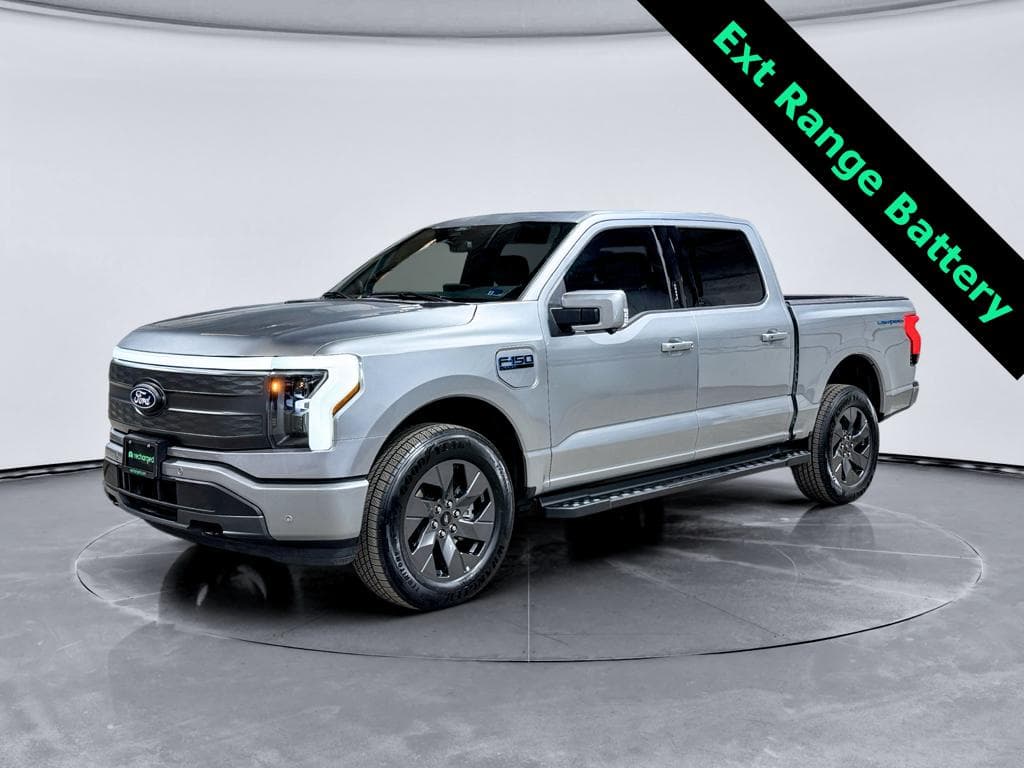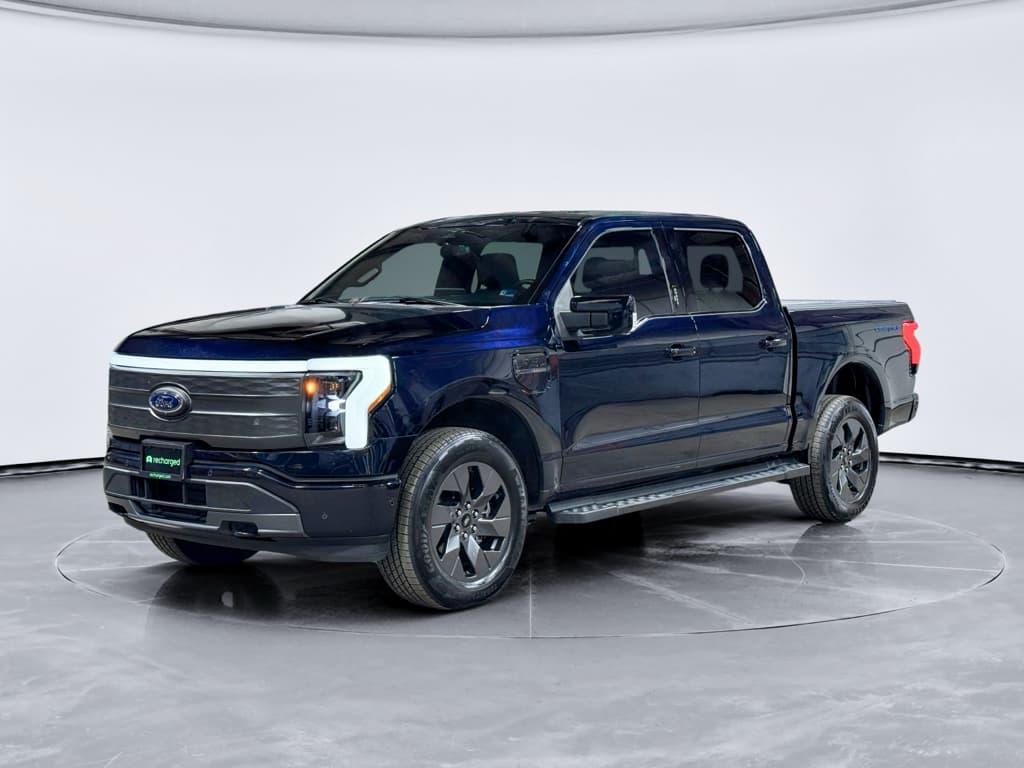
If you Google 2024 Ford F-150 Lightning reliability rating, you’ll find two very different stories. On paper, this electric pickup is a marvel: fast, quiet, hugely capable, and able to power your house in a blackout. In the reliability data, though, the Lightning shows up near the bottom of the class, with scores in the high‑30s out of 100 and a growing list of recalls tied to batteries, suspension, and electronic gremlins.
Quick take
2024 F-150 Lightning reliability rating at a glance
2024 F-150 Lightning reliability snapshot
Major consumer-survey organizations currently rate the 2024 Ford F-150 Lightning’s reliability as below average. It has even landed on lists of the least reliable new vehicles, largely because of issues with the high‑voltage battery system, charging behavior, electronic modules, and suspension components rather than the basic truck structure. At the same time, many owners report thousands of trouble‑free miles. That split personality is exactly what you’d expect from an early‑generation EV pickup with complex software and brand‑new hardware.
Don’t confuse crash safety with reliability
How reliability ratings for the 2024 Lightning are calculated
When you see a line like “the 2024 F-150 Lightning scored around 38 out of 100 for reliability,” that number isn’t pulled from thin air. It usually comes from owner survey data compiled by publications such as Consumer Reports along with defect and recall statistics from government databases.
- Owners report problems across dozens of systems: battery and charging, electrical accessories, body hardware, in‑car electronics, suspension, climate control and more.
- Each report is weighted by severity, repair cost, and whether the vehicle was undriveable.
- Those data points are combined into a predicted reliability score for that model year and compared against the average new vehicle.
- Early‑production electric trucks, including the Lightning, tend to score poorly because they concentrate a lot of new technology into one vehicle.
In the Lightning’s case, survey data shows above‑average complaint rates in EV‑specific categories, battery pack, charging behavior, and software, as well as some traditional truck issues like suspension components and cameras. That’s why a truck that feels rock‑solid on a test drive can still earn a low reliability rating on paper.
How to read a 38/100 score
Common 2024 F-150 Lightning problem areas
By 2024, Ford had already worked through some of the ugliest early‑production bugs from the 2022 trucks, especially around catastrophic battery failures. But owners and recall data still point to several problem clusters you should know about if reliability is high on your shopping list.
Where the 2024 Lightning tends to misbehave
Most trouble isn’t with the frame or body, it’s the electronics and EV hardware layered on top.
High‑voltage battery & charging
Early Lightnings saw a small but serious wave of battery module failures and even a few pack‑related fires, prompting a recall and software limits on state of charge while Ford replaced defective modules in 2022–2023 trucks. For 2024 builds, the defect rate appears lower, but:
- Some owners still report charging faults and slow DC fast‑charge speeds.
- There are ongoing software updates aimed at improving thermal management and charge curves.
- Trucks built during recall windows may have had battery work done, worth verifying in the service history.
Software & electronic modules
The Lightning is effectively a rolling data center. That’s great when over‑the‑air updates add features; less great when a glitch bricks your infotainment or throws drivetrain warning lights.
- Owners report intermittent touchscreen, camera, and driver‑assist faults that resolve with software updates or module resets.
- A large 2021–2024 Ford truck recall addressed rear‑camera failures due to software bugs affecting visibility when reversing.
- Some drivers complain of "phantom" warnings that require dealer diagnosis.
Suspension & steering components
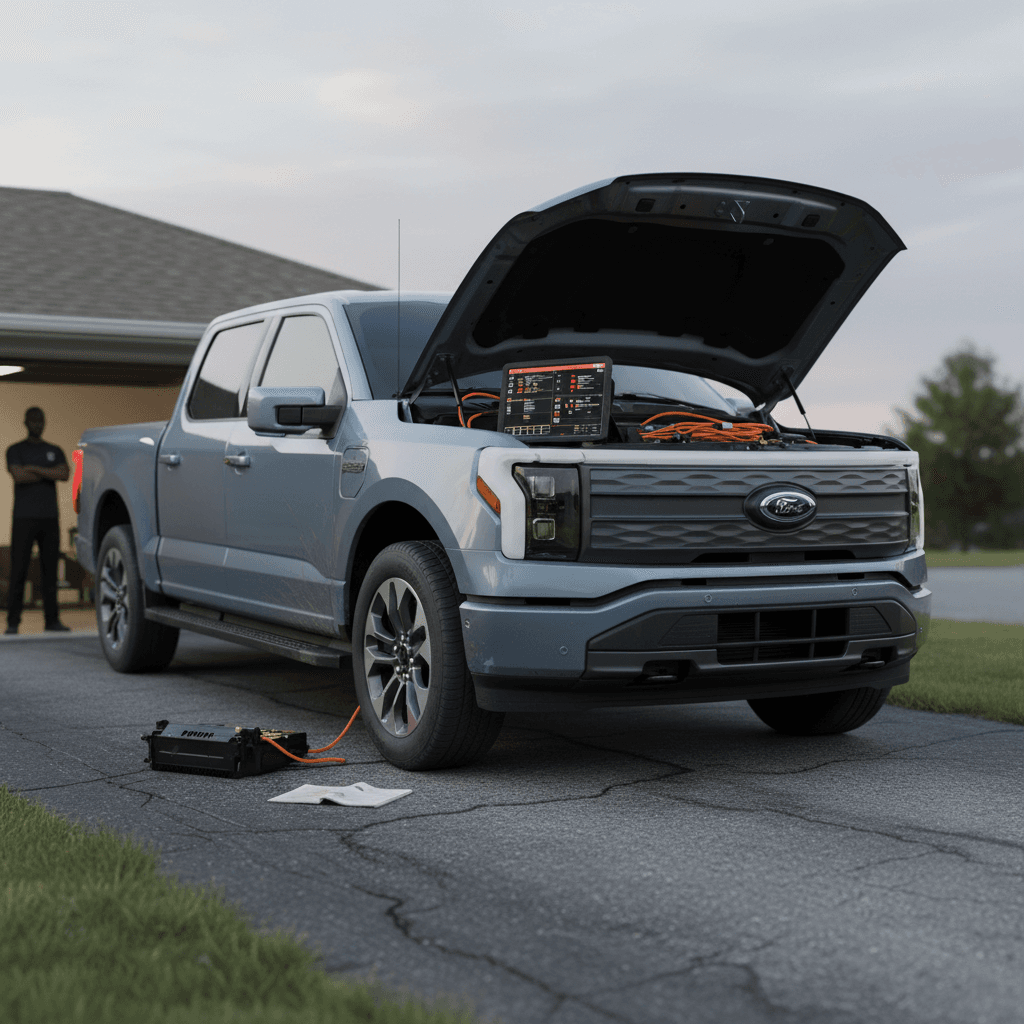
In 2024, Ford recalled tens of thousands of 2024–2025 F-150 Lightnings for loose front upper control‑arm ball‑joint nuts that could eventually affect steering control. It’s a classic truck‑hardware issue made urgent by the Lightning’s weight.
- Uncorrected trucks could develop clunks, wandering steering, or accelerated tire wear.
- A simple visual inspection plus recall verification will tell you if the fix has been performed.
The rare but serious failures
Recalls affecting the 2024 Ford F-150 Lightning
As of early 2026, the F-150 Lightning family has accumulated a non‑trivial stack of recalls. Not every 2024 truck is affected by all of them, but any serious shopping effort should start with a recall search by VIN.
Major recalls that can touch 2024 F-150 Lightnings
Always check a specific truck’s VIN on NHTSA’s site or with a Ford dealer, recalls apply to certain build dates and trims, not every vehicle.
| Issue | Model years involved | What can happen | Typical fix |
|---|---|---|---|
| High‑voltage battery module defect / fires | 2022–2024 | Internal battery defect can cause pack failure and, in rare cases, thermal events. Some owners were told to limit charge to 80% until repaired. | Battery module inspection and replacement; software updates to manage SOC and pack behavior. |
| Front upper control‑arm ball‑joint nut may loosen | 2024–2025 | Loose joint can affect steering feel and, if ignored, lead to loss of control. | Inspect and torque or replace affected components; alignment check. |
| Integrated park module roll‑away risk | 2022–2026 (Lightning among several Ford EVs) | Park pawl may not fully engage; vehicle could roll after being shifted into Park on a slope. | Park‑module software update and, in some cases, hardware replacement. |
| Rear camera image loss | 2021–2024 Ford trucks including some F‑150/Lightning | Rearview camera can intermittently fail, reducing visibility when reversing. | Software update or camera module replacement. |
Summary only; individual vehicles may be unaffected or already repaired.
How Recharged handles recall risk
Owner experience: what 2024 Lightning drivers say
Numbers tell one story; owners tell another. Read through forums and owner‑review sites and you’ll see a pattern: polarized experiences. Some 2024 Lightning drivers are 5,000–15,000 miles into ownership with essentially no problems and glowing reviews of comfort and power. Others have spent too much time at the dealer chasing software bugs or recall work.
What happy owners highlight
- Effortless torque: Even in heavy trims, the Lightning is startlingly quick and smooth.
- Everyday refinement: Quiet cabin, upscale ride, and intuitive one‑pedal driving in traffic.
- Home‑backup capability: With the right hardware, it can power a house during an outage, something owners in storm‑prone regions rave about.
- Low routine maintenance: No oil changes and fewer moving parts than an ICE F‑150.
What frustrated owners complain about
- Real‑world range: Long highway commutes, cold weather, or towing can slash the usable range well below the window‑sticker number.
- Dealer learning curve: Some dealers are still figuring out EV diagnostics, which can stretch repair timelines.
- Downtime for recalls: Battery or module work can sideline a truck for weeks if parts are back‑ordered.
- Random electronic quirks: Occasional ghost warnings, camera glitches, or driver‑assist hiccups that require software updates.
The Lightning can be the best truck you’ve ever driven, and the most time you’ve ever spent getting software updates at a dealership. Whether that tradeoff makes sense depends entirely on your tolerance for first‑generation tech.
How the 2024 Lightning compares to other trucks and EVs
Within the EV universe, the F-150 Lightning is not alone in its reliability struggles. Consumer‑survey data shows that electric trucks as a category, Rivian R1T, GMC Hummer EV, the first wave of Silverado and Sierra EVs, tend to land near the bottom of the reliability charts. They’re big, complex, and built in comparatively small numbers. That’s a recipe for bugs.
Where the Lightning stands in context
Think of it less as the problem child and more as the class representative for early EV pickups.
Versus gas F‑150
The gas F‑150 has decades of iteration behind it and currently scores much higher for reliability. Most of its issues are known and relatively cheap to fix. The Lightning, by contrast, carries more software complexity and expensive EV hardware, so when something does go wrong, it can get complicated fast.
Versus other EV pickups
Compared with rivals like the Rivian R1T, the Lightning is often described as the "safer" choice from a big legacy brand, with better dealer coverage and parts availability. But in survey data, its reliability isn’t dramatically better; these first‑wave trucks all wrestle with similar electronic and driveline teething issues.
Versus mainstream EVs
Compact and midsize EVs, think Tesla Model 3/Y, Hyundai Ioniq 5, Kia EV6, tend to score higher for reliability than EV pickups. They’re lighter, built in higher volumes, and in some cases several generations into their hardware. If you don’t absolutely need a pickup bed, you can buy a more reliable EV for less money.
How to weigh reliability against capability
What this reliability picture means if you’re buying used
Here’s the paradox: the same factors that hurt the 2024 F-150 Lightning’s reliability rating also depress its resale prices. For a patient, informed buyer, that can be a rare opportunity. Ford cut new‑truck prices in 2023–2024, dealers piled on incentives, and then the broader EV market cooled. Used Lightnings now trade for far less than their original MSRP, especially the big‑battery Lariat and Platinum trucks.
- You’re taking on more reliability risk than with a gas F‑150 or a mainstream EV sedan/SUV.
- But you’re also not paying anywhere near the $80,000–$90,000 these trucks could sticker for new.
- The 8‑year/100,000‑mile EV component warranty cushions you against the scariest failures, especially battery and motor replacements.
- If recalls have been performed and the truck’s software is current, many owners report stable, drama‑free daily use.
Where Recharged fits in
Ready to find your next EV?
Browse VehiclesPre‑purchase checklist for a used 2024 F-150 Lightning
Smart buyer checklist: 2024 F-150 Lightning
1. Run the VIN for recalls and campaigns
Verify that all safety recalls, battery modules, suspension, park‑module, rear camera, have been completed. Ask for service invoices showing what was done and when, not just a verbal “it’s taken care of.”
2. Confirm battery health, not just range estimate
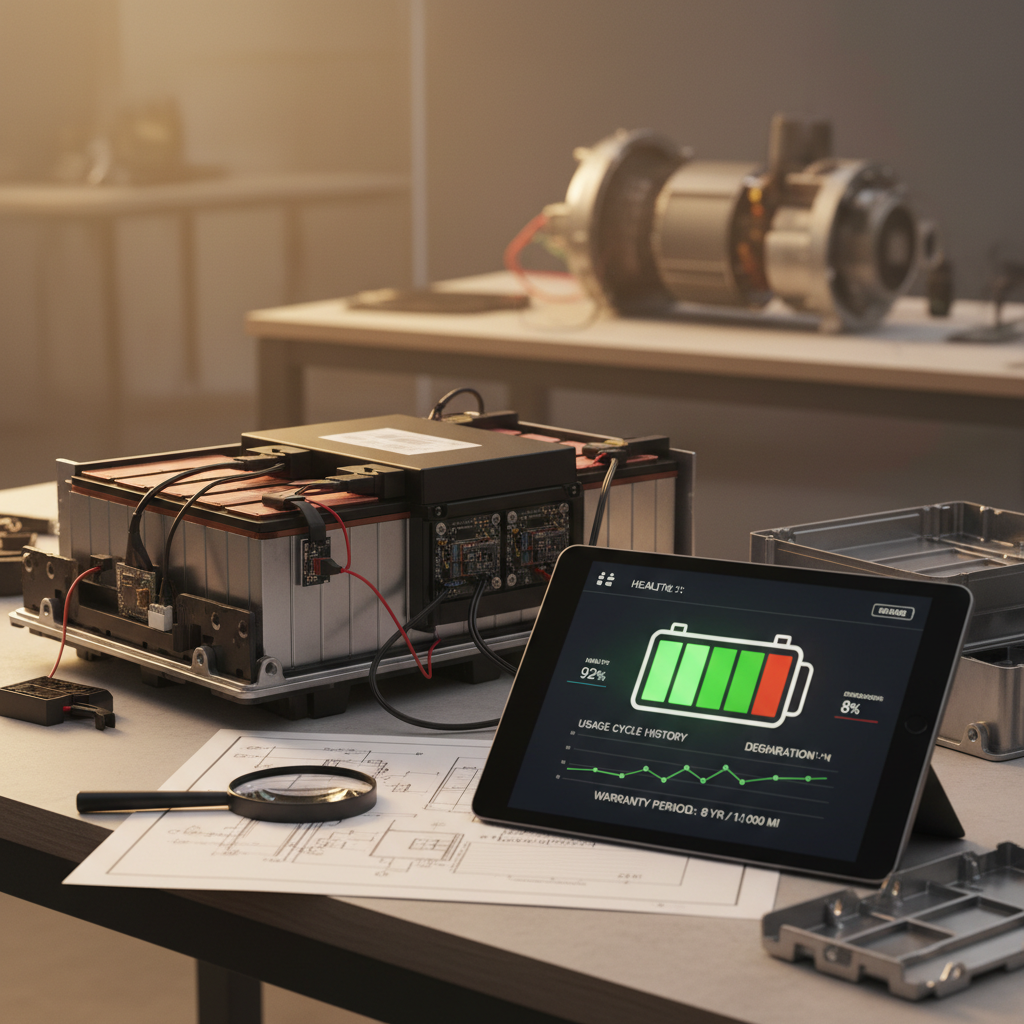
Use a <strong>battery health report</strong> rather than relying on the dashboard guess‑o‑meter. At Recharged, we load‑test and analyze pack performance to spot outliers that might still be under warranty but not aging gracefully.
3. Inspect suspension and tire wear
Have a shop check front control‑arm hardware, alignment, and tire wear patterns. Excessive inner or outer wear can hint at unresolved suspension issues or curb strikes that pre‑date recall work.
4. Test all cameras and driver‑assist features
In a single drive, cycle the 360° camera views, reverse multiple times, and try BlueCruise or lane‑keeping (if equipped). Watch for glitchy displays, warning lights, or features that randomly disable.
5. Do a cold‑start and fast‑charge test
If possible, see how the truck behaves after sitting overnight and then during a DC fast‑charge session. You’re looking for stable charge rates, no overheating or error messages, and consistent range estimates.
6. Match range to your real use case
Build a simple spreadsheet of your commute, towing, and climate. If you routinely need 200 highway miles in winter with a trailer, be brutally honest: even a healthy Lightning may not be the right tool.
7. Review software and OTA update history
Ask the seller or dealer for documentation showing that major software campaigns and over‑the‑air updates have been applied. An un‑updated Lightning is statistically more likely to exhibit the glitches that hurt its reliability rating.
FAQ: 2024 Ford F-150 Lightning reliability rating
Frequently asked questions about 2024 F-150 Lightning reliability
Bottom line: is the 2024 F-150 Lightning too risky?
The 2024 Ford F-150 Lightning reliability rating is, frankly, not flattering. On the charts, it’s a below‑average performer with more recalls and more electronic gremlins than you’d hope for in a truck that started life with an $80,000 price tag. But reliability ratings describe populations, not destinies. Plenty of individual Lightnings are racking up miles quietly, especially later‑build 2024 trucks with their recall work completed and software up to date.
If you need an EV truck’s unique mix of towing, work‑site utility, and home‑backup capability, and if you’re willing to live with the occasional software update or dealer visit, the Lightning can still be a genuinely brilliant tool. Your job as a shopper is to separate the solid trucks from the problem children: verify recalls, demand battery‑health data, insist on full records, and be realistic about range. That’s exactly the gap Recharged was built to fill, pairing used F-150 Lightnings with transparent diagnostics and expert guidance so you can enjoy the future‑truck experience without sleep‑losing surprises.