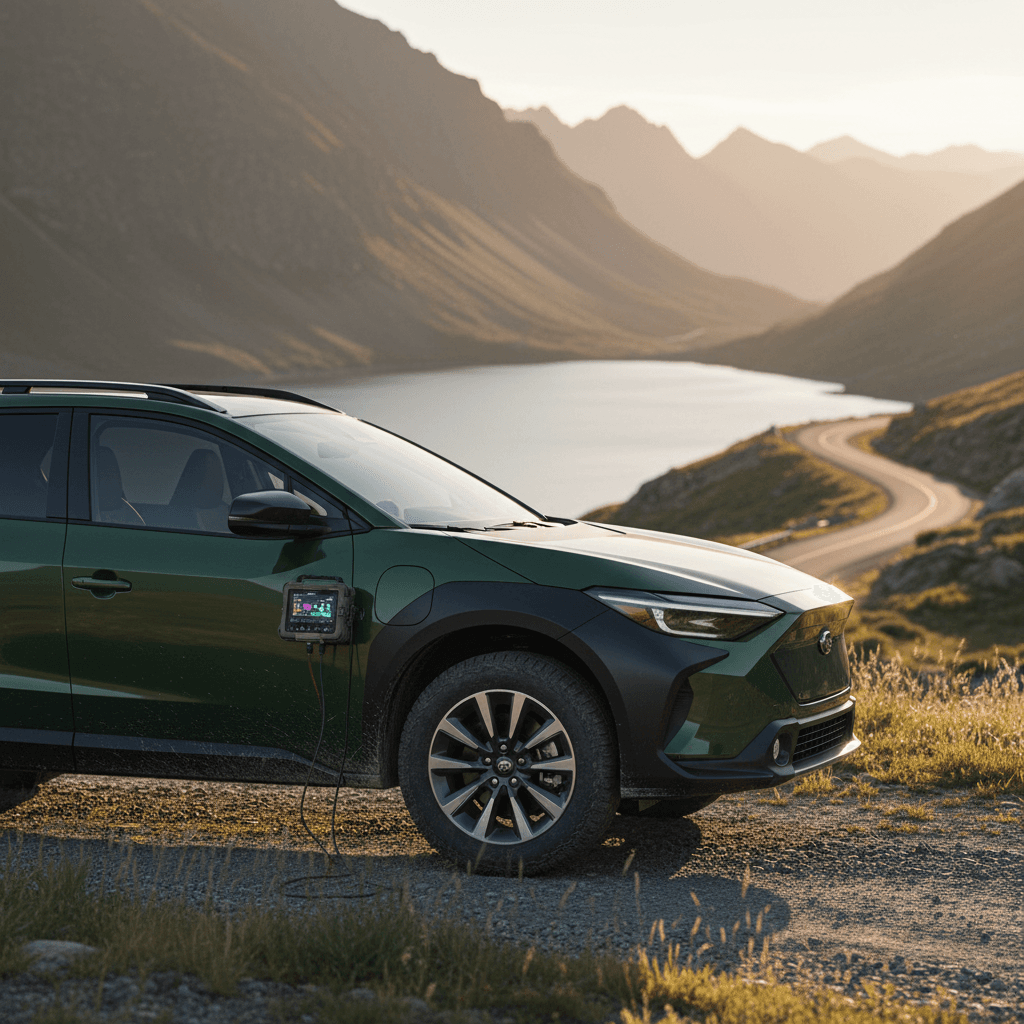
If you’re eyeing a Subaru Solterra for its all-weather confidence, you’re probably asking one big question: how far will the 2025 Subaru Solterra really go on a charge? On paper, the answer is up to 227 miles, but as any EV owner learns quickly, what’s printed on the window sticker and what you see on a cold, fast highway run can be two very different stories. This 2025 Subaru Solterra range test breaks down the numbers, the compromises, and what living with this EV SUV actually feels like day to day.
Quick Range Snapshot
Overview: Why the 2025 Solterra’s Range Matters
The Solterra sits in one of the hottest EV segments: compact electric SUVs with all-wheel drive. Think Hyundai Ioniq 5, Kia EV6, Tesla Model Y, and Nissan Ariya. Most of those crossovers comfortably clear 250 miles of EPA range, and many push past 275. The 2025 Solterra, with a max EPA estimate of about 227 miles, walks into that crowd already at a disadvantage on paper.
But if you live somewhere with real winter, or you spend weekends on muddy trailheads and snowy passes, the Solterra’s priorities make sense: grip, stability, and confidence first, long‑range bragging rights second. Subaru’s cold‑weather‑optimized battery management (improved for 2024 and carried into 2025) and standard dual‑motor AWD give it a very different personality from the sleek, range-maximizing crossovers it competes against.
Key 2025 Subaru Solterra Range & Battery Numbers
EPA Range vs. Real-World Results
Let’s start with the official story. For 2025, the Subaru Solterra uses the same 72.8‑kWh pack as earlier years and keeps the same EPA labels:
- Premium AWD: up to 227 miles EPA-estimated range
- Limited & Touring AWD: roughly 222 miles EPA-estimated range (larger wheels/tires shave off a few miles)
- Combined efficiency around 104 MPGe, or roughly 32 kWh/100 miles in mixed driving
Those are respectable numbers on paper, especially when you remember that every Solterra sold in the U.S. is dual‑motor AWD. But range labels are generated using a standardized test cycle that doesn’t look much like real life in, say, upstate New York in February.
What independent tests actually see
Third‑party testing has been consistent: the Solterra tends to fall a bit short of its EPA label at sustained highway speeds, and land surprisingly close in mixed driving. In 70–75 mph testing, multiple outlets have reported around 200 miles on a full charge, right in line with what we’d expect from a ~64‑kWh usable pack pushing a tall, boxy SUV through the air.
Highway Hit to Expect
Our 2025 Subaru Solterra Range Test Method
Every driver’s route is different, but you can still build a consistent playbook for evaluating an EV’s range. For a 2025 Subaru Solterra range test, we recommend a method like this, exactly the sort of testing you’ll see behind the numbers from major outlets:
How to Recreate a Fair Solterra Range Test
1. Start with a full, preconditioned battery
Charge to 100% on Level 2 at home or work. If it’s cold, precondition the cabin and battery while still plugged in so you’re not burning energy just to warm up the pack once you start driving.
2. Set a realistic cruising speed
Pick a target, 70 or 75 mph is a good highway benchmark, and lock it in with cruise control. Avoid big speed swings; they’ll make your data noisy.
3. Drive a loop, not a one-way route
A highway loop that starts and ends at the same place helps cancel out elevation changes and headwinds. Aim for at least 60–80 miles of continuous driving.
4. Track energy use and distance
Watch the Solterra’s trip computer for kWh/100 miles (or mi/kWh) and note the mileage at 75%, 50%, and 25% remaining. That tells you how linear, or not, the consumption is.
5. Stop with a buffer
Don’t run the pack to 0%. Stopping around 5–10% state of charge still gives a clear picture of total usable range once you extrapolate.
6. Repeat in different conditions
If you really want to understand your Solterra, do one test in mild weather (60–75°F) and another in winter. You’ll likely see a 15–30% gap.
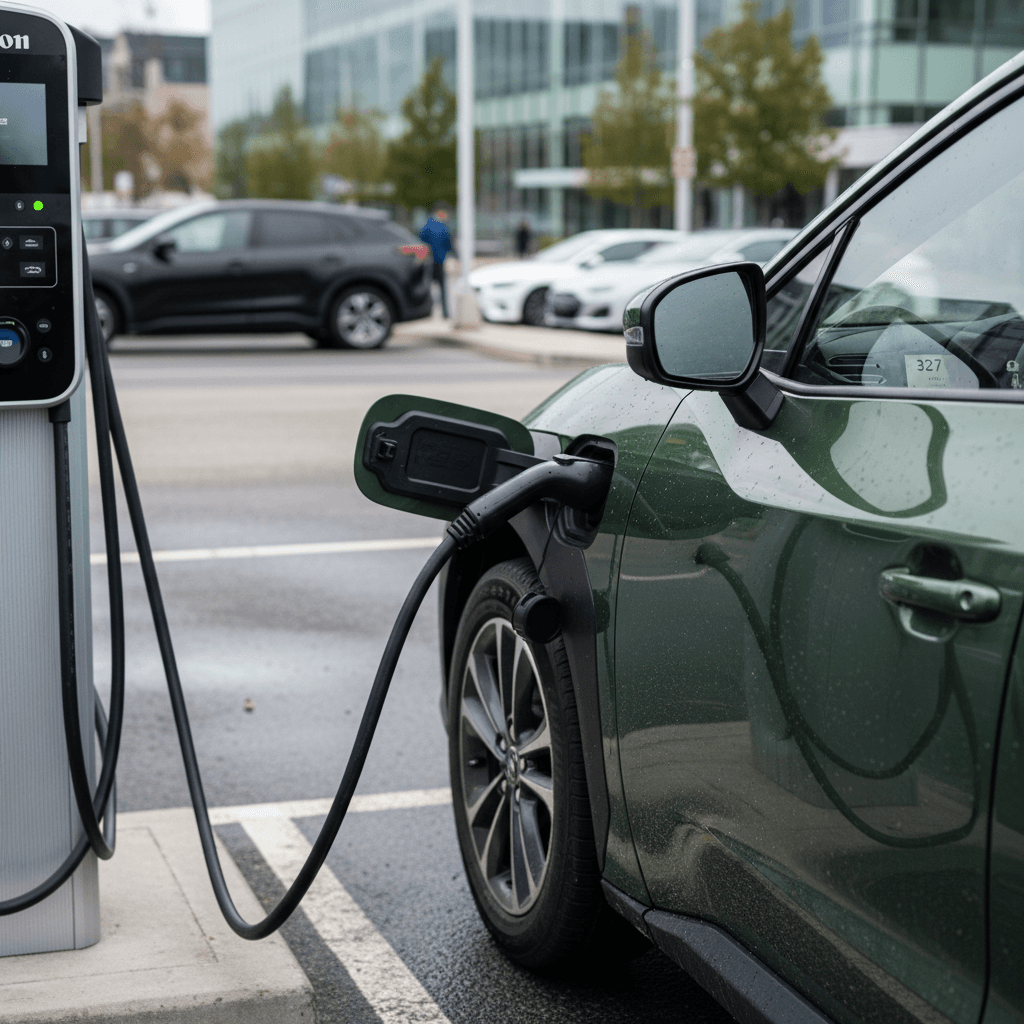
City vs. Highway: How Driving Style Changes Range
The Solterra’s drivetrain is tuned more like a traditional Subaru than a hyper‑efficient Tesla. It’s happiest at reasonable speeds, with lots of opportunities to harvest energy back through regenerative braking.
City & Suburban Driving
In gentle around‑town use, the Solterra’s efficiency can surprise you. Stop‑and‑go driving gives the regen system plenty of work to do, and speeds stay low enough that the SUV’s boxy shape doesn’t hurt as much.
- Expect efficiency around 3.5–4.0 mi/kWh in mild weather.
- That works out to roughly 220–240 miles on a full charge if you’re patient.
- Use the steering‑wheel paddles to adjust regen for traffic; high regen in the city can add noticeable range.
Highway & Long-Distance Driving
At 70–75 mph, aero drag and the Solterra’s modest 64‑kWh usable battery start to show. All‑wheel drive also means you’re always spinning two motors.
- Expect closer to 3.0–3.3 mi/kWh at typical American freeway speeds.
- That yields about 190–210 miles of realistic highway range in good weather.
- Running 80 mph, strong headwinds, or heavy cargo can knock that into the 160s.
Easy Range Win
Weather and Terrain: What Hurts Solterra Range Most
The 2025 Solterra was designed with places like Vermont and Colorado in mind. That’s great for traction, but snow, cold, and big elevation swings are the sworn enemies of battery range. Here’s how those factors show up on the dash.
Biggest Range Killers in the 2025 Solterra
Know what to watch for before the low‑battery chime
Sub‑freezing temps
Cold makes the battery less willing to give up energy and forces the pack and cabin to use more power just to warm up.
Expect: 15–30% range loss on truly cold days; short trips are hit hardest.
Steep climbs
Climbing long grades at highway speed is a double‑whammy: aero drag plus gravity.
Expect: A big hit on the uphill leg, partially offset by regen on the way back down.
Headwinds & storms
A stout headwind can eat as much energy as adding 5–10 mph to your speed.
Expect: Another 5–15% range loss in gusty, stormy weather.
Cold-Weather Reality Check
Charging Speeds and Road-Trip Viability
With range, the conversation can’t stop at how far you go on a full battery. It has to include how quickly you can add miles back. Here the 2025 Solterra is a step behind class leaders but still manageable if you plan ahead.
2025 Subaru Solterra Charging Snapshot
How long it takes to add usable miles in common scenarios
| Charging Type | Power | Typical Scenario | Approx. Time | Miles Added |
|---|---|---|---|---|
| Level 1 (120V) | 1.4 kW | Standard household outlet at home | 24 hours+ | ~40–50 miles |
| Level 2 (240V) | 6.6 kW onboard | Home or workplace wallbox | 9–11 hours (0–100%) | ~200+ miles overnight |
| DC Fast (public) | Up to 100 kW | Highway fast charger | ~35 minutes (10–80%) | ~140–160 miles in a good session |
Times assume a healthy battery and ideal conditions. Real-world results vary by charger quality, temperature, and starting state of charge.
The Solterra’s 6.6‑kW onboard AC charger is slower than the 7.7–11 kW units common in 2025, so home charging sessions are longer. On DC fast chargers, peak power around 100 kW also trails rivals that now accept 170–250 kW, but because the Solterra’s battery is modest in size, you still get a usable chunk of range in under an hour.
Road Trip Rule of Thumb
How the Solterra Compares to Rival EV SUVs
No range test is complete without context. The Solterra isn’t the only all‑wheel‑drive EV SUV vying for your driveway, and it’s not the star pupil when it comes to outright distance on a charge.
2025 EV SUV Range & Charging Comparison (AWD Models)
Approximate EPA range and peak DC fast‑charging speeds for popular AWD rivals.
| Model (AWD) | EPA Range | Usable Battery (approx.) | Peak DC Fast Charge | Highway Reality |
|---|---|---|---|---|
| Subaru Solterra | 222–227 mi | ~64 kWh | ~100 kW | ~190–210 mi at 70–75 mph |
| Hyundai Ioniq 5 | ~260–270 mi | ~77 kWh | ~235 kW | ~230–250 mi at 70–75 mph |
| Kia EV6 | ~252–270 mi | ~77 kWh | ~235 kW | ~220–250 mi at 70–75 mph |
| Tesla Model Y Long Range | ~310 mi | ~75 kWh | ~250 kW (Supercharger) | ~270–290 mi at 70–75 mph |
| Nissan Ariya e-4ORCE | ~260 mi | ~87 kWh | ~130 kW | ~230–250 mi at 70–75 mph |
Numbers are rounded, based on commonly available 2024–2025 specs for comparable dual‑motor trims.
You can see the pattern: the 2025 Solterra trades range and charging speed for a smaller battery and Subaru‑style AWD confidence. If you need 250+ highway miles between stops, there are better tools for that job. If you’re more interested in year‑round traction and moderate daily mileage, the Solterra makes its case in other ways, ride comfort, safety scores, and sure‑footed manners when the weather turns ugly.
Safety & Range Trade-Off
Tips to Maximize Range in Your Solterra
You can’t change physics, or Subaru’s battery size, but you can absolutely change how far your Solterra goes on each kilowatt‑hour. These habits make a visible difference on the range meter.
Practical Ways to Stretch Your 2025 Solterra’s Range
Use Eco mode on the highway
Eco mode softens throttle response and can tamp down on unnecessary bursts of acceleration that drain the pack faster than you realize.
Plan routes that avoid big speed swings
Frequent jumps between 55 and 80 mph chew up range. A steady 68–72 mph cruise will beat herky‑jerky speed changes every time.
Precondition while plugged in
On cold or hot days, use the climate‑control preconditioning while you’re still on shore power. That way the battery doesn’t have to pay the comfort bill later.
Lean on regen in traffic
Use the paddles to dial in more aggressive regenerative braking around town. Let the motors harvest energy instead of relying heavily on the friction brakes.
Watch your tires
All‑terrain tires, under‑inflation, or winter rubber can knock range down. Keep tires properly inflated and know you’ll pay a mileage tax for knobbier rubber.
Travel lighter when you can
Roof boxes, bike racks, and a cargo area packed to the ceiling all add drag and weight. If you don’t need it on this trip, pull it off the car.
Buying a Used Solterra: What Range‑Focused Shoppers Should Watch
Because the 2023–2025 Subaru Solterra models share core hardware, a used Solterra can be a smart way to get into an AWD EV, if you know what range to expect and how to verify battery health. Early-production concerns around charging have largely been addressed via software updates, but you still want data, not promises, when you’re shopping secondhand.
Range Questions to Ask When Shopping Used
Especially important for 2023–2025 Solterra models
1. What’s the current battery health?
Ask for a recent battery health report or diagnostic. A good marketplace will provide an independent report that shows pack capacity and charging behavior, not just an odometer reading.
2. How was the car driven?
A Solterra that lived on gentle suburban commutes may show better effective range than one that spent life at 80 mph between cities.
3. Are software updates current?
Later software revisions improved charging consistency and winter behavior. Confirm that recall campaigns and updates have been applied.
4. Does it match your daily needs?
Look honestly at your longest regular days. If you rarely exceed 120–150 miles, even a slightly degraded pack will be plenty.
How Recharged Helps
Ready to find your next EV?
Browse VehiclesOn top of that, Recharged’s EV specialists can help you sanity‑check whether a Solterra’s real‑world range fits your routine, or if a different used EV SUV might give you a little more breathing room for the same budget.
2025 Subaru Solterra Range FAQ
Frequently Asked Questions About 2025 Solterra Range
Final Thoughts: Is the 2025 Solterra’s Range Enough?
If you judge the 2025 Subaru Solterra purely by miles per charge, it’s a mid‑pack performer in a class crowded with long‑legged EV SUVs. Most rivals will go farther and charge faster. But that’s only half the story. The Solterra doubles down on Subaru’s familiar strengths, symmetrical AWD, confidence on lousy roads, and a calm, secure driving feel, while delivering enough real‑world range (roughly 180–220 miles for most drivers) to cover a huge chunk of American commutes and weekend excursions.
If your life regularly demands 250+ highway miles between plugs, you’ll be happier in something with a bigger battery. If your days look more like 60‑mile commutes, ski weekends, and muddy trailheads, the Solterra’s range, when you understand its limits, is entirely workable. And if you’re shopping the used market, pairing a Solterra with a Recharged Score Report, expert EV guidance, and nationwide delivery can turn those abstract range numbers into a clear, confident decision about the right electric SUV for the way you actually live.