You’re eyeing a used Ford Mustang Mach-E, but every listing seems to tout a different year, trim, battery, and tech package. If you’re wondering which Ford Mustang Mach-E year is best to buy used, you’re not alone, and the answer depends on how you drive, how long you’ll keep it, and how much range you really need.
At-a-glance takeaway
Why model year matters for a used Mustang Mach-E
Unlike a gas Mustang, a used Mach-E lives or dies on battery health, software, and charging hardware. Ford has been refining the Mach-E almost every model year since its 2021 debut, tweaking range, trims, heat pumps, and even the front trunk (frunk) layout. That means a 2021 and a 2024 Mach-E can feel like cousins, not twins, even if they share a nameplate.
- Battery and thermal updates that affect range and DC fast charging repeatability
- Software updates that change driving feel, charging curves, and driver-assistance tech
- Trim and equipment changes (dropped California Route 1, added Rally and special editions)
- Recalls and TSBs that especially affect early-build 2021–2022 models
- Depreciation patterns that make some years a screaming deal and others just okay
Used EV rule of thumb
Quick answer: the best used Mustang Mach-E years
Best used Mustang Mach-E years by shopper type
Match the model year to how you actually drive
Best all-around value: 2022
Why 2022? It’s the sweet spot between early-production 2021s and higher-priced 2023–2024s.
- Many early quirks and recalls addressed
- Good selection of Select and Premium trims on the used market
- Plenty of factory warranty left on most examples
Best mix of range & performance: 2023
Ideal if you want longer commutes or road trips without range anxiety.
- Improved range and performance across trims
- Better depreciation curve than buying new
- More modern feel than 2021–2022 in software and tuning
Best budget buy: 2021
First-year Mach-E models are now the price leaders.
- Highest depreciation from new, so lower entry prices
- Be sure recall work (especially high-voltage battery junction box) is completed
- A great value with a clean Recharged Score battery report
Best for keeping 8–10+ years: 2024
Pay more up front, but you’re starting newer.
- Later hardware and feature updates baked in
- Maximum remaining warranty coverage
- Good choice if you want to "buy once, keep forever"
A note on 2025–2026 models
Model-year breakdown: 2021–2025 Mustang Mach-E
Let’s walk year by year so you can see how the Mustang Mach-E has evolved and where the sweet spots really are.
Mustang Mach-E model year snapshot (U.S. market)
How 2021–2025 models stack up for a used buyer
| Model year | Why consider it used? | Why be cautious? |
|---|---|---|
| 2021 | Lowest prices, broad availability, classic early trims (Select, Premium, California Route 1, GT). | First model year, more recalls/TSBs; ensure battery and junction-box recall work is complete. |
| 2022 | Refined version of 2021 with many early issues ironed out; strong value vs. new. | Still early generation hardware; some recalls still apply; supply can be tighter than 2021 in certain regions. |
| 2023 | Improved performance and range, strong tech updates; feels more "mature" as a product. | Pricing still relatively high; some trims retain value extremely well, so discounts vary. |
| 2024 | Newer hardware and trims, Rally model added; best if you plan long ownership. | Small used-car discount vs. new; you’re paying for recency more than value. |
| 2025 | Incremental hardware changes, including reshaped frunk to fit a heat pump; mostly new-car territory today. | Very few on the used market and pricing usually near-new; frunk space reduced vs. earlier years. |
Exact trims and specs vary by configuration; always verify details on an individual VIN.
2021 Mustang Mach-E: the value play, with homework
The 2021 Mustang Mach-E was Ford’s first model year for this electric SUV, and those early builds are now the cheapest way into a Mach-E. You’ll see plenty of Select and Premium trims, a handful of long-range California Route 1 cars, and the punchy GT.
- Pros: lowest prices, wide availability, classic early trims like California Route 1 that later disappeared.
- Cons: higher chance of early-build issues, more recalls, and hardware that’s been updated in later years.
- Key homework: confirm that the high-voltage battery junction box recall and related software updates have been completed, and review a detailed battery health report.
2022 Mustang Mach-E: the used sweet spot for most shoppers
By 2022, Ford had a full year of customer data under its belt, and the Mach-E benefitted from incremental improvements and more stable production. For many used buyers, 2022 hits the best balance of price, features, and peace of mind.
- Refined copies of the 2021 formula with fewer first-year wrinkles.
- Strong selection of Select and Premium trims, plus performance-oriented GT models.
- Enough time on the road to have a clear reliability picture, but new enough for substantial warranty coverage.
2023 Mustang Mach-E: better range and performance, still depreciating
Many 2023 Mach-E models get improved performance and range, and some trims show notably strong resale value compared with other EVs. For example, independent estimates suggest a 2023 Select trim loses a relatively modest amount of value over five years compared with its original MSRP, signaling healthy long-term demand.
If you want something that still feels very modern, without taking the full new-car depreciation hit, 2023 is an excellent hunting ground, especially for extended-range and all-wheel-drive versions.
2024–2025 Mustang Mach-E: pay more now, worry less later
As you move into 2024 and 2025, you’re essentially shopping nearly new vehicles. Ford adjusted the trim lineup (dropping California Route 1, adding Rally, and tweaking styling packages), and the underlying platform is more mature. These are great buys if you’re planning to keep the SUV for a decade or more and want the maximum remaining warranty life.
Frunk and heat-pump changes
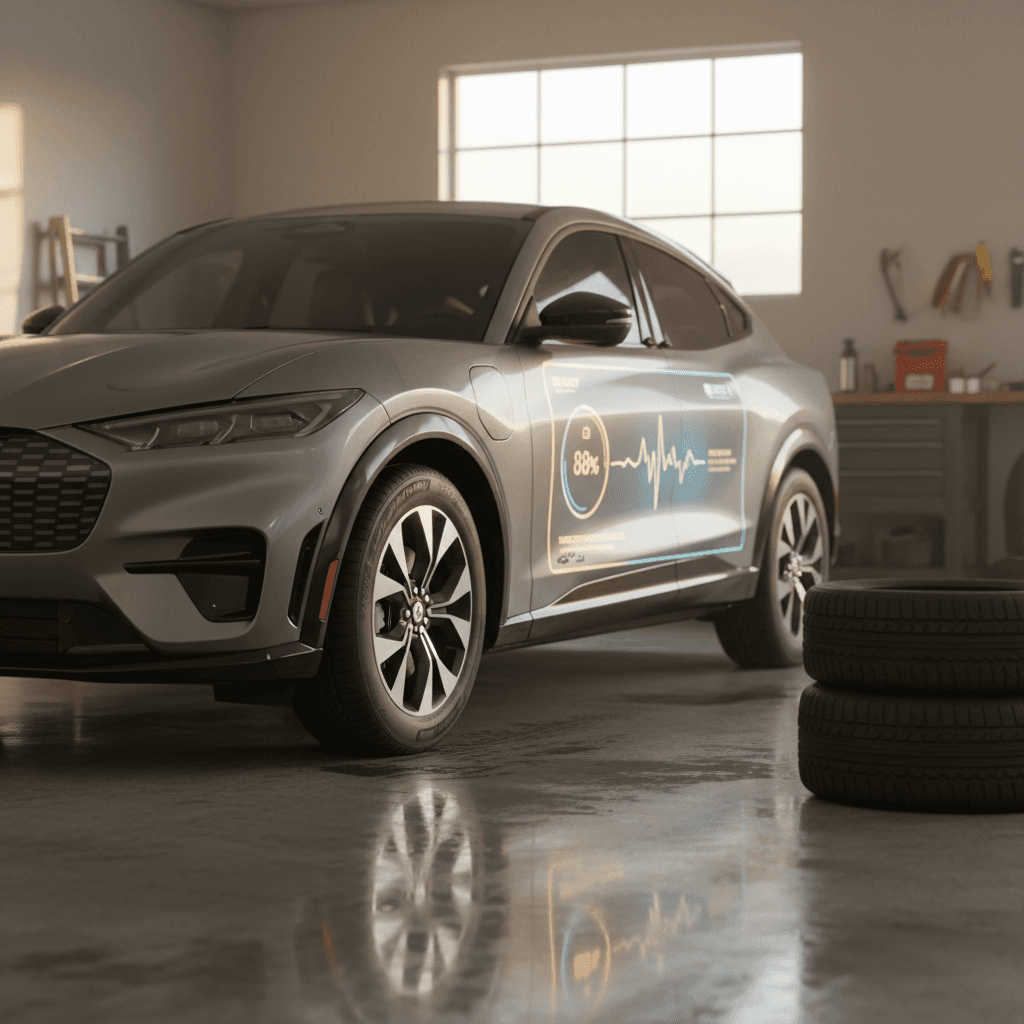
Battery health and range: what really matters
When you’re comparing best years to buy a used Mustang Mach-E, don’t stop at model year and trim badge. Two 2022 Premium AWD extended-range SUVs can drive very differently if one has lived on DC fast charging and the other mostly trickle-charged at home.
Mustang Mach-E range and value context
Standard vs. extended-range: which is right for you?
Standard-range battery
- Lower purchase price, especially on older 2021–2022 models.
- Good for short commutes and city driving.
- EPA ranges typically in the 230–260 mile ballpark, trim-dependent.
- Less weight, slightly snappier feel in some configurations.
Extended-range battery
- Higher upfront cost but more flexibility for road trips.
- EPA ranges that can crest 300 miles on some RWD trims.
- Often paired with better equipment packages and AWD, which hold value well.
- Especially attractive in 2022–2024 model years as a long-term keeper.
How Recharged helps you shop range, not just hype
Reliability, recalls, and what to avoid
The Mustang Mach-E doesn’t have the wild reliability swings you see in some first-generation EVs, but there are a few model-year and build-window details you absolutely should know before you write a check.
Key reliability and recall checkpoints
1. 2021–2022 battery junction-box recall
Certain extended-range and GT models built through spring 2022 had high-voltage contactors that could overheat during repeated DC fast charging or hard acceleration. Verify that recall repairs and software updates are complete on any 2021–2022 you’re considering.
2. OTA software history
The Mach-E relies heavily on software for battery management, charging behavior, and driver-assistance systems. Ask the seller, or your Recharged specialist, whether the car has been kept up to date with over-the-air updates or dealer flash campaigns.
3. DC fast-charging usage
Heavy fast-charging use isn’t automatically a deal-breaker, but it’s worth factoring in. A detailed battery health test (like the Recharged Score diagnostic) tells you whether that usage has meaningfully affected pack health.
4. Driver-assistance sensors
Test BlueCruise and standard driver-assistance features on a route with good lane markings. Glitches can stem from camera or radar alignment issues that may require calibration.
5. Body and water intrusion checks
As with any crossover, check liftgate seals, panoramic roof areas, and door weatherstripping for leaks or past repairs, especially on early years that may have lived outdoors.
Walk-away warning signs
Features, tech, and charging differences by year
Ford has treated the Mach-E almost like a smartphone, layering in new features and tweaks over time. Those differences can push you toward one year or another, especially if you care about charging speed, driver-assistance, or creature comforts.
How Mach-E tech evolved across early years
These patterns are general, always confirm exact specs on the VIN you’re buying.
Charging & hardware
- All years support DC fast charging, typically up to 150 kW when conditions are right.
- Later years tend to manage heat better, keeping charging speeds more consistent on long trips.
- 2025+ packaging changes (like the heat pump and smaller frunk) prioritize efficiency over storage space.
Driver-assistance
- BlueCruise and Co-Pilot360 features refined via OTA updates.
- Later years often ship with newer BlueCruise versions from the factory.
- On used cars, software update history matters as much as the model year on the window sticker.
Infotainment & comfort
- Big central touchscreen and digital cluster across all years.
- Software refinements over time improve responsiveness and usability.
- Option packages (sound systems, seats, appearance) can matter more than year alone.
Good news for used buyers
Pricing and depreciation: where the real deals are
On paper, the average Mustang Mach-E is projected to lose a bit more than half its original value over five years. In the real world, that depreciation isn’t evenly shared, some years and trims are softer than others, which is exactly what you want as a used buyer.
Depreciation patterns that favor used buyers
Broad patterns you’ll see shopping nationwide; local markets will vary.
| Model year (example) | General used-price position | Who should target it? |
|---|---|---|
| 2021 | Lowest prices; often thousands below comparable 2022s with similar equipment. | Value hunters willing to do recall and battery-health homework. |
| 2022 | Sweet spot; solid discounts from new but not bottom-of-the-barrel. | Most buyers who want a mix of price, features, and remaining warranty. |
| 2023 | Moderate discount from new; trims with strong demand retain value better. | Drivers who want newer hardware and plan to keep the car long-term. |
| 2024 | Light discount; feels almost new, sometimes CPO-priced. | Buyers prioritizing warranty length and latest features over lowest price. |
| 2025 | Just entering the used market; prices usually very close to brand new. | Only makes sense if a specific build or immediate availability matters more than value. |
These are directional, not VIN-specific numbers. Always compare real asking prices in your area or on Recharged.
How Recharged can tilt depreciation in your favor
How to shop smart for a used Mustang Mach-E
Once you’ve narrowed down the best Mustang Mach-E years for your needs, it’s time to get tactical. Here’s how to stack the deck in your favor whether you’re shopping locally or online.
Used Mach-E buying checklist
1. Decide on battery and drivetrain first
Start with standard vs. extended-range, then RWD vs. AWD. Those choices affect range, performance, and resale more than paint color or wheel design.
2. Shortlist your model years
If you’re budget-heavy, focus on 2021–2022. If you plan to keep the car for 8–10 years, test-drive 2022–2024 and compare total cost of ownership, not just the monthly payment.
3. Pull recall and service history by VIN
Use Ford’s VIN lookup and ask for service records. You want proof of completed high-voltage battery recalls, software updates, and routine maintenance.
4. Demand real battery health data
A generic "passed inspection" line isn’t enough on an EV. At Recharged, every Mach-E includes a <strong>Recharged Score battery health report</strong> so you can compare cars apples-to-apples.
5. Test-drive your exact use case
If you commute on the highway, do a highway-heavy test. If you rely on fast charging, try a DC fast-charge session nearby to see how the car behaves.
6. Compare financing and total cost
Factor in interest rates, taxes, insurance, and potential incentives for used EVs in your state. A slightly newer year with better financing can sometimes cost less to own over five years.
If you’d rather not juggle all of that yourself, Recharged pairs you with an EV specialist who lives and breathes this stuff. They’ll walk you through battery reports, feature differences, and pricing logic, then handle paperwork, trade-ins, and delivery while you plan your first road trip.
Frequently asked questions about used Mustang Mach-E models
Used Ford Mustang Mach-E FAQ
Bottom line: which used Mach-E is right for you?
If you’re after the best year to buy a used Ford Mustang Mach-E, the answer isn’t a single number, it’s the overlap between your budget, your daily driving, and the specific car’s battery health. For many buyers, 2022 hits the bullseye, 2023 adds extra polish and range, and 2021 delivers bargain pricing if you’re willing to do a bit more homework.
The common thread is simple: buy the right car, not just the right year. Look for clean history, documented recall work, and verified battery health. If you’d like help sorting the keepers from the question marks, Recharged was built for exactly this moment, curated used EVs, transparent Recharged Score Reports, financing, trade-ins, and delivery, all wrapped in EV-savvy guidance from your first search to the first time you plug in at home.