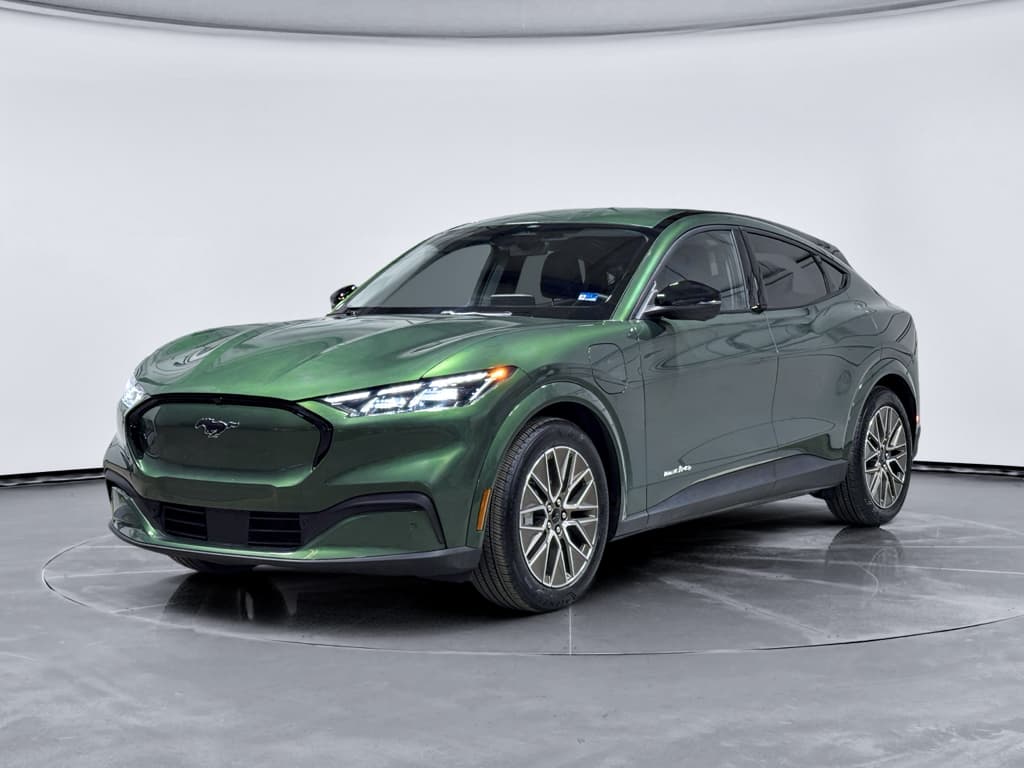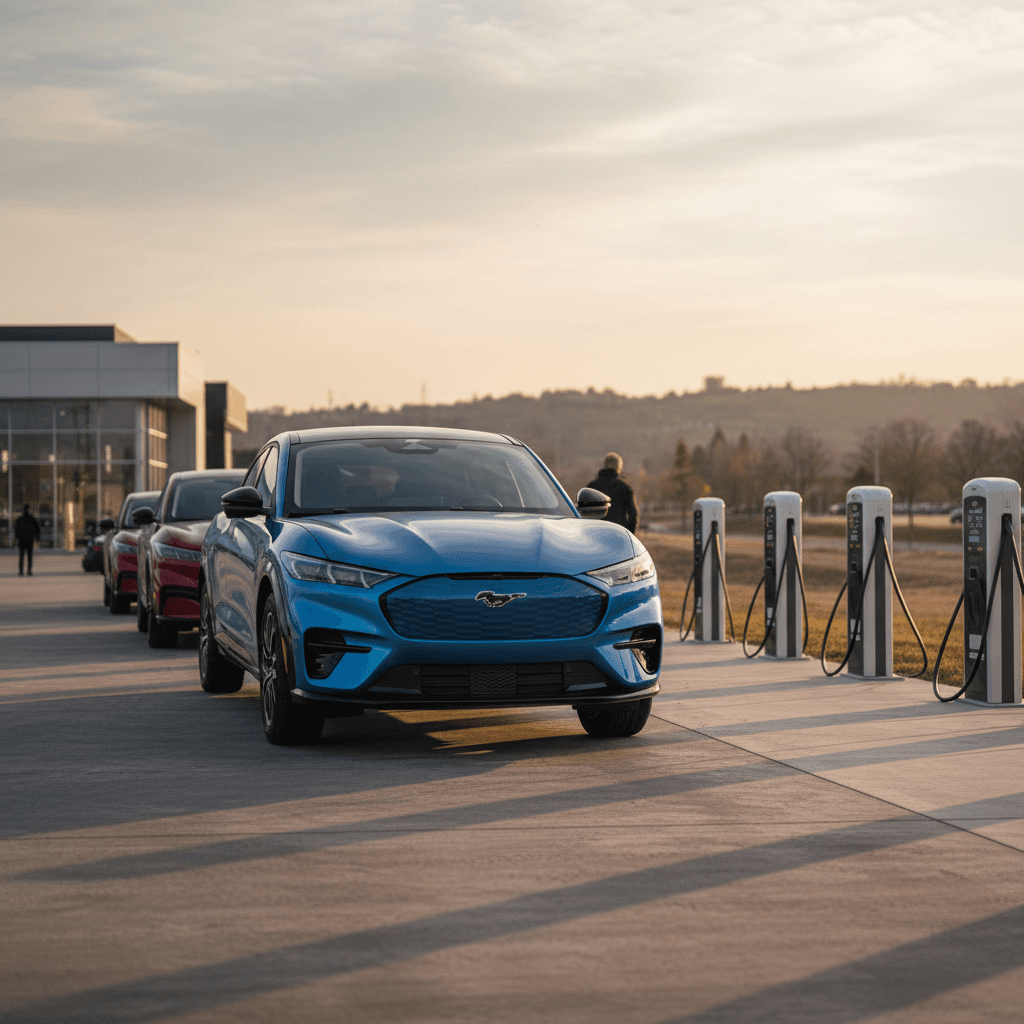
The 2025 Ford Mustang Mach-E sits in a sweet spot: it’s one of the most established electric crossovers on the market, but Ford keeps updating the formula with better range, quicker charging and more tech. If you’re trying to decide which 2025 Mach‑E to buy, or whether a used one makes more sense, this guide will walk you through trims, range, charging, options, and the tradeoffs that actually matter in day‑to‑day use.
Quick take
Who this 2025 Mustang Mach-E buying guide is for
- Drivers comparing the 2025 Mustang Mach-E to other electric crossovers like the Tesla Model Y, Hyundai Ioniq 5, Kia EV6 and Volkswagen ID.4.
- Shoppers debating standard range vs. extended range batteries and RWD vs. eAWD performance.
- Buyers trying to decide between a new 2025 Mach‑E and a lower-priced used 2021‑2024 example.
- Owners of gas Mustangs or compact SUVs wondering if the Mach‑E is practical enough as a family vehicle.
- Anyone worried about battery health, long‑term costs, and how to evaluate a used Mach‑E’s pack.
How to use this guide
2025 Mustang Mach-E: What’s new and what it competes with
By 2025, the Mustang Mach‑E is a known quantity. Ford has refined it rather than reinvented it, building on big updates that arrived for 2024: more power, better DC fast‑charging performance, and an off‑road‑flavored Rally trim. The 2025 lineup keeps those gains and adds detail tweaks like appearance packages and wider availability of features like BlueCruise on higher trims.
Where the 2025 Mustang Mach-E fits in the EV market
2025 Mustang Mach-E key competitors
What you’ll likely cross‑shop against
Tesla Model Y
Still the sales benchmark for electric crossovers. Strong range and access to the Supercharger network, but ride quality, build consistency, and interior feel may turn some buyers toward the Mach‑E.
Hyundai Ioniq 5 / Kia EV6
Ultrafast 800‑volt charging and roomy interiors. The Mach‑E counters with sportier steering feel and more familiar dealer/service infrastructure.
VW ID.4 & others
Value‑oriented alternatives with comfortable rides. The Mach‑E typically offers sharper performance and more engaging design.
2025 Mustang Mach-E trims, batteries and pricing
The 2025 Mustang Mach‑E lineup is built around two battery sizes and either rear‑wheel drive (single motor) or eAWD (dual motor). In the U.S., most shoppers will encounter Select and Premium trims, with performance‑oriented GT and Rally versions at the top.
2025 Ford Mustang Mach-E trims at a glance
Approximate starting MSRPs are for the U.S. before destination charges, taxes or incentives. Always check a live build tool or dealer for current pricing.
| Trim | Drivetrain | Battery | Approx. Starting Price (USD) | Core Personality |
|---|---|---|---|---|
| Select | RWD or eAWD | Standard Range | $37,995–$40,995 | Entry model with solid range, best price; value choice for commuters. |
| Premium | RWD or eAWD | Standard or Extended Range | $42,000+ | Adds nicer interior, more tech and options; sweet spot for many buyers. |
| Extended Range RWD | RWD | Extended Range | $46,745+ | Maximizes range; good for long‑distance drivers who don’t need AWD. |
| Extended Range eAWD | eAWD | Extended Range | $49,745+ | Strong acceleration with long range; all‑weather and all‑rounder choice. |
| GT | eAWD | Extended Range | $54,495+ | High‑performance model with much quicker acceleration and sport tuning. |
| Rally | eAWD | Extended Range | $58,000+ | GT power with a rally‑inspired look and light off‑pavement focus. |
Use this table as a starting point, then verify local pricing and available packages.
Battery basics
Range and battery choices: How much do you really need?
Ford’s exact EPA figures can vary slightly by wheel size and options, but the pattern is consistent: rear‑wheel drive goes farther than eAWD, and Extended Range beats Standard Range. The question isn’t just “what’s the biggest number,” it’s how much range you’ll actually use, and what you’re paying for it.
Typical 2025 Mach-E EPA range estimates
Approximate figures to guide your decision, not official labels
Standard Range battery (daily drivers)
- RWD: roughly mid‑200s miles EPA range.
- eAWD: typically 10–20 miles less than SR RWD.
- Best for: commuters with reliable home or workplace charging who rarely exceed 150–180 miles in a day.
Extended Range battery (max flexibility)
- RWD: around 300–320 miles EPA range in ideal trims.
- eAWD: usually in the high‑200s to ~300 miles.
- Best for: frequent road‑trippers, rural drivers, or anyone facing harsh winters or limited charging infrastructure.
When Extended Range is worth the money
Urban / Suburban commuter
If most of your life is within a 20–40‑mile radius and you can charge at home overnight, a Standard Range RWD or eAWD Mach‑E is usually plenty. You’ll leave the house every morning effectively “full,” and you may rarely see public chargers.
Road‑trip or rural driver
If your drives frequently stretch beyond 150–200 miles, or you live where chargers are sparse, the Extended Range battery is cheap insurance. You’ll stop less often and spend less time at DC fast‑chargers, which matters a lot on long days behind the wheel.
Real‑world range is not the sticker number
Charging experience: Home, public and road trips
Charging performance is one of the Mustang Mach‑E’s stronger suits after Ford’s 2024 updates. The 2025 models inherit quicker DC fast‑charging, while still relying on the usual Level 2 home charging for daily use. Your experience will depend as much on where and how you charge as on the car itself.
Three charging scenarios to think about
Match the Mach‑E’s capabilities to your reality
Home charging (Level 2)
With a 240‑volt Level 2 charger at home, most Mach‑E trims can recover 20–30+ miles of range per hour. That’s usually enough to go from near‑empty to full overnight.
Public Level 2
Workplace and destination chargers are slower but great for topping up while you’re parked anyway. Think in terms of "miles added while you eat/shop," not full charges.
DC fast‑charging
On a capable DC fast‑charger, the Mach‑E can charge at up to roughly 150 kW, adding a big chunk of range in 30–40 minutes when the battery is warm and at a low state of charge.
Connector standards and networks
If you buy a 2025 Mach‑E, assume you’ll want a dedicated Level 2 charger at home unless you drive very little. 120‑volt Level 1 charging is viable only for light, low‑mileage use. When shopping used, ask the seller how they charged; consistent Level 2 home charging is usually a sign of low stress on both the car and the owner.
Fast‑charging etiquette and battery health
Tech features, BlueCruise and driver-assistance
One of the Mach‑E’s calling cards is BlueCruise, Ford’s hands‑free highway assist. By 2025, Ford has rolled out multiple software generations of BlueCruise and broadened its availability across trim levels and markets, though exact hardware and software versions vary by build date and region.
BlueCruise on the 2025 Mach-E: What to know
Hands‑free is great, if you understand the fine print
Hardware & software
- Many Mach‑Es are built with the hardware needed for BlueCruise.
- Software versions (1.0, 1.2, 1.3, etc.) roll out via over‑the‑air updates.
- Availability can vary by market; always verify with a VIN‑specific build sheet or Ford account.
Trials, subscriptions & one‑time purchase
- New 2025 Mach‑Es often include a trial period of BlueCruise.
- After the trial, you can typically continue via subscription or a one‑time purchase through your Ford account.
- Process details can change; don’t assume the dealer has the latest info, check Ford’s official support pages.
Shopping tip: verify BlueCruise before you sign
- Standard driver‑assistance features typically include automatic emergency braking, lane‑keeping assist, blind‑spot monitoring and adaptive cruise control on most trims.
- Higher trims and option packages may layer on a 360‑degree camera, parking assists and enhanced lane‑centering.
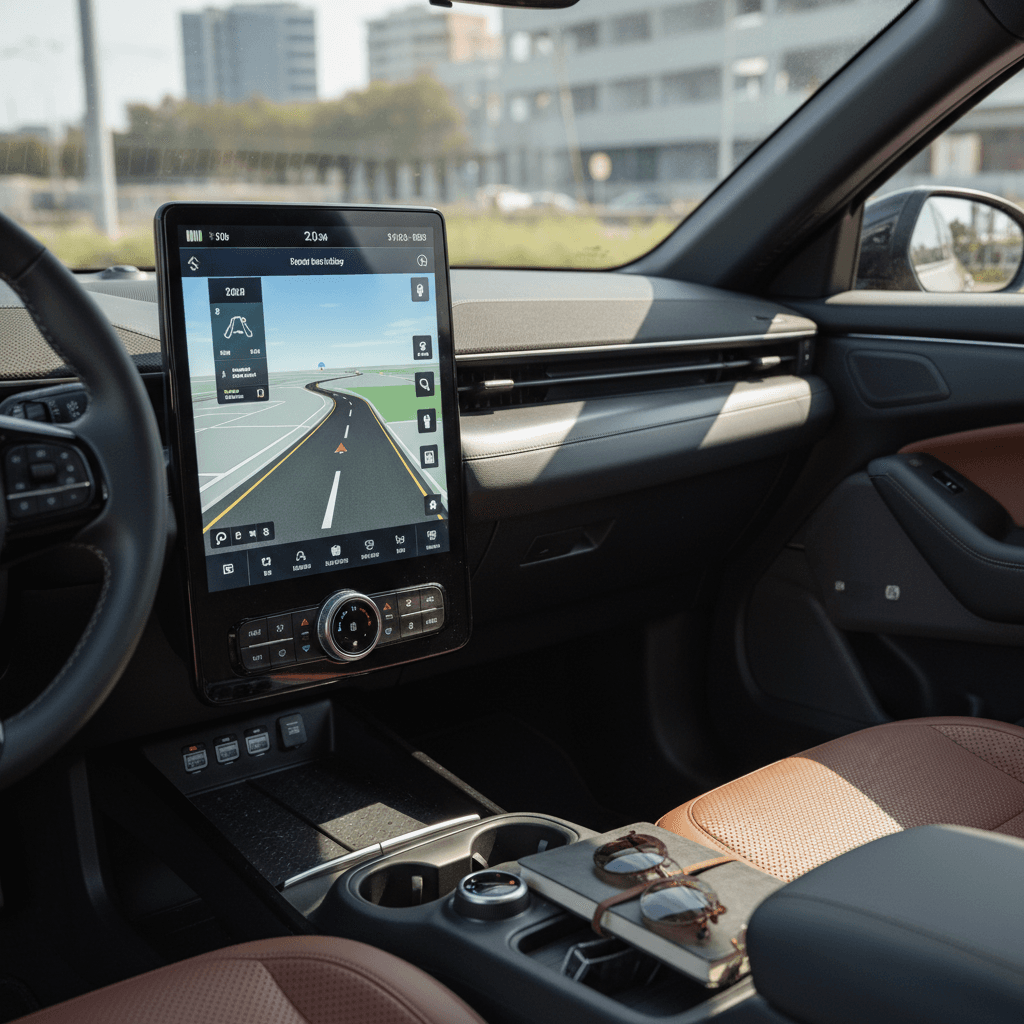
- The large portrait touchscreen runs Ford’s Sync software with over‑the‑air update support; expect incremental tweaks over the life of the vehicle.
Interior space, practicality and ride feel
Despite the Mustang badge, the Mach‑E is a practical compact SUV at its core. The sloping roofline eats into rear headroom a bit compared to boxier rivals, but passenger space is competitive and cargo room is usable for family duty. The driving experience leans sportier than most crossovers, especially in GT and Rally trims.
Space and comfort
- Comfortable for four adults; the fifth seat is fine for short trips.
- Flat EV floor helps rear‑seat foot room.
- Cargo space is ample for weekly errands, though some rivals offer slightly boxier, easier‑to‑pack shapes.
- Earlier Mach‑Es included a front trunk (“frunk”) as standard; Ford has since experimented with making this optional on later model years, so confirm configuration on any specific car.
Ride and handling
- RWD and standard eAWD trims balance comfort with a slightly firm, controlled ride.
- GT and Rally models feel noticeably quicker and tighter, but you’ll feel more of broken pavement.
- Instant EV torque makes the Mach‑E feel responsive even in non‑GT trims.
Who tends to love the Mach-E
2025 Mach-E vs 2024 model and key rivals
The 2024 model year brought the most meaningful recent updates, more power, better efficiency and the new Rally trim. The 2025 Mach‑E mostly carries those gains forward, with small adjustments to packaging, pricing and options. That means you should weigh 2024 and 2025 models together, especially if you’re open to used or leftover inventory.
2025 Mach-E vs 2024 Mach-E vs key competitors
Broad comparison to show where the 2025 Mach‑E stands. Always confirm exact specs for the configuration you’re considering.
| Model | Max EPA Range (approx.) | DC Fast Charge Peak | 0–60 mph (quickest trim) | Notable Strength |
|---|---|---|---|---|
| 2024 Mach-E | Low‑ to mid‑300s mi | Up to ~150 kW | ≈3.8 s (GT) | Big 2024 efficiency and charging improvements. |
| 2025 Mach-E | Similar to 2024 | Up to ~150 kW | ≈3.8 s (GT/Rally) | Carries 2024 gains forward; fresh inventory and updated options. |
| Tesla Model Y | High‑200s to mid‑300s mi | Varies by pack | ≈3.5 s (Performance) | Supercharger network access and minimalist interior. |
| Hyundai Ioniq 5 | High‑200s to low‑300s mi | Up to 230+ kW | ≈4.5 s | Very fast charging, roomy interior, retro‑futuristic design. |
| Kia EV6 | High‑200s to low‑300s mi | Up to 230+ kW | ≈3.4 s (GT) | Sporty styling with ultrafast charging. |
Use this as a directional comparison, not a spec sheet.
New 2025 vs slightly used 2024
Buying new vs. used Mustang Mach-E
The Mach‑E has now been on sale long enough that you can choose between new inventory, certified pre‑owned, and independent used EV retailers. Each path has its own pros and cons, especially around pricing, battery confidence and incentives.
Buying new (including 2025)
- Full factory warranty and the latest software and hardware configuration.
- Easier to spec exactly the trim, color and options you want, if you’re willing to wait for allocation.
- May qualify for federal or state EV incentives depending on evolving rules; check current IRS and state guidance.
- Typically higher upfront price but simpler financing through traditional dealers or online retailers.
Buying used (2021–2024, early 2025)
- Lower purchase price, especially for Standard Range or early‑build models.
- More variability in battery chemistry, feature content and BlueCruise hardware between years, VIN details matter.
- Condition and charging history become critical. A car that lived on DC fast‑chargers will not age like one that charged gently at home.
- Ideal if you shop through a platform that can independently verify battery health rather than just showing odometer and Carfax.
How Recharged fits into the picture
Inspection checklist before you buy a Mach-E
Whether you’re at a Ford dealer, shopping private‑party, or browsing a digital marketplace, you should evaluate a Mustang Mach‑E differently than a gas SUV. Here’s a focused checklist to run through before you commit.
Mustang Mach-E pre-purchase checklist
1. Confirm battery size and chemistry
Use the window sticker, Ford’s build sheet or a trusted listing to confirm whether the car has Standard Range or Extended Range, and note the battery chemistry where possible (newer Standard Range packs use LFP). This affects range, charging behavior and long‑term degradation.
2. Review charging history and usage
Ask how the owner charged (home Level 2 vs. fast‑charging), look for clues in the infotainment charging stats, and inspect the charge port for wear or damage. Frequent DC fast‑charging isn’t a deal breaker, but it warrants a closer look at battery health.
3. Check battery health with data, not guesses
Whenever possible, use a detailed battery health report, like the Recharged Score, to see actual usable capacity and any imbalance between modules. This tells you far more than range estimates on a single test drive.
4. Verify software and BlueCruise status
From the driver’s seat, check the car’s software version, map update status and whether BlueCruise (if equipped) is active, in trial, or expired. Confirm what it will cost to keep using it and that you can enroll via your Ford account.
5. Inspect tires, brakes and suspension
EVs are heavy and can be hard on these wear items. Uneven tire wear can reveal alignment or suspension issues. On GT and Rally trims with stickier tires, budget for more frequent replacements.
6. Test drive at city and highway speeds
Confirm that acceleration feels consistent, there are no unusual whines or vibrations, driver‑assist systems behave as expected, and the car tracks straight under both acceleration and regen. Try a short DC fast‑charge stop if the seller agrees, watching how quickly the car ramps up and holds power.
Don’t skip the battery report on a used EV
2025 Ford Mustang Mach-E FAQ
Common 2025 Mustang Mach-E questions
Bottom line: Is the 2025 Mustang Mach-E right for you?
If you want an electric crossover that still feels like a driver’s car, the 2025 Ford Mustang Mach‑E deserves a spot near the top of your list. It blends engaging performance, competitive range and increasingly mature tech in a package that’s now well‑understood and widely supported in the real world. The key is choosing the right battery, drivetrain and trim for how you actually drive, and, if you’re going used, insisting on real battery health data instead of guesses.
For many shoppers, a Premium trim with Standard or Extended Range will deliver the best blend of comfort, range and price. If you crave more power, GT and Rally variants are genuinely quick without abandoning practicality. And if you’re leaning used, working with an EV‑specialist retailer like Recharged can simplify everything from battery diagnostics to financing and delivery, so you spend less time worrying about what you don’t know and more time enjoying your first electric Mustang.