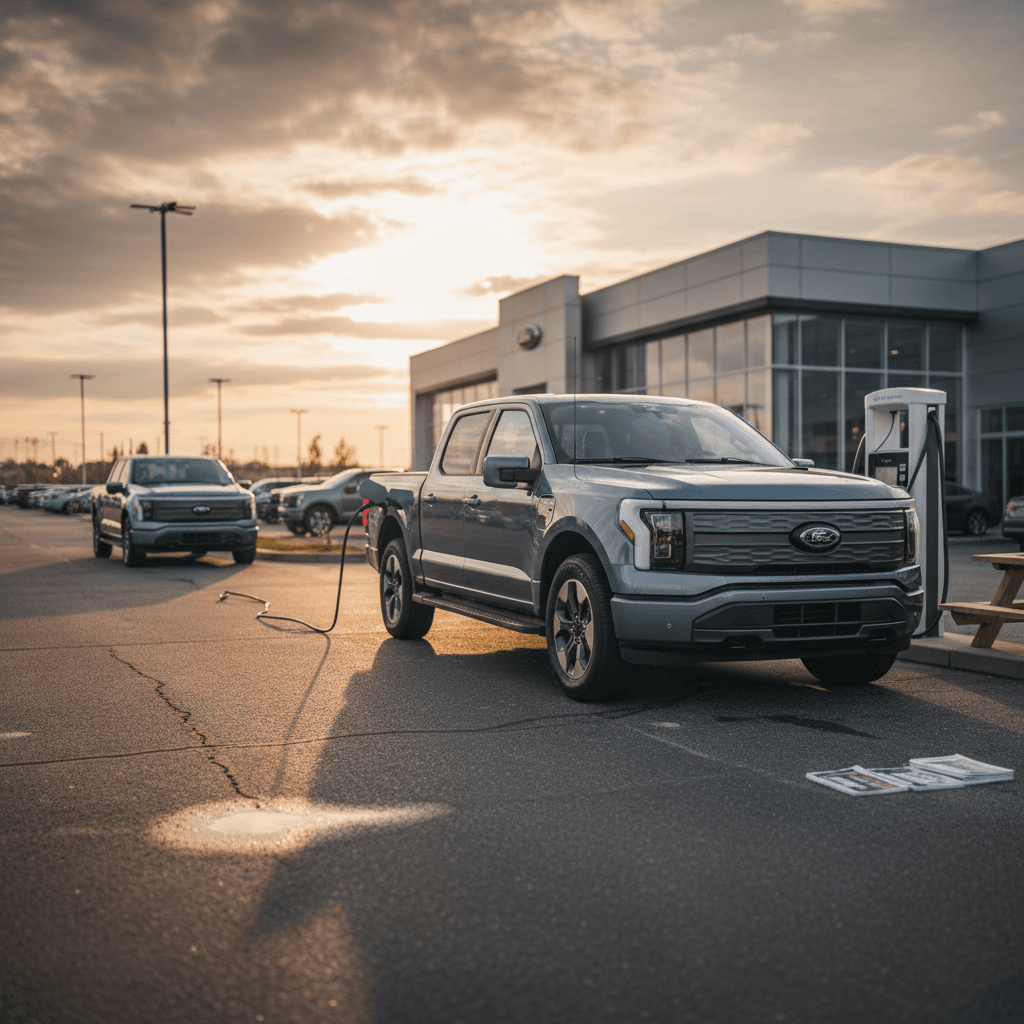
If you’re shopping for an electric pickup, the 2024 Ford F-150 Lightning sits in an unusual spot in 2026. Production of the fully electric Lightning has ended, but the truck is still quite new in the market, and used examples are priced far below what early adopters paid. This buying guide walks you through trims, range, towing, pricing, incentives, and used-market realities so you can decide whether a 2024 Lightning fits your life, and your budget.
Quick context: discontinued, not obsolete
Why the 2024 F-150 Lightning Still Matters in 2026
2024 F-150 Lightning market snapshot
For EV truck buyers, that combination, high capability, recent tech, and falling resale values, is unusual. The 2024 Lightning gives you a quiet, quick, all-electric F-150 with blue-chip brand recognition, but you’re not paying 2022 launch premiums anymore. If you’re realistic about range and towing, it can be a strong value play versus new Rivian R1T, Tesla Cybertruck, or a gas F-150.
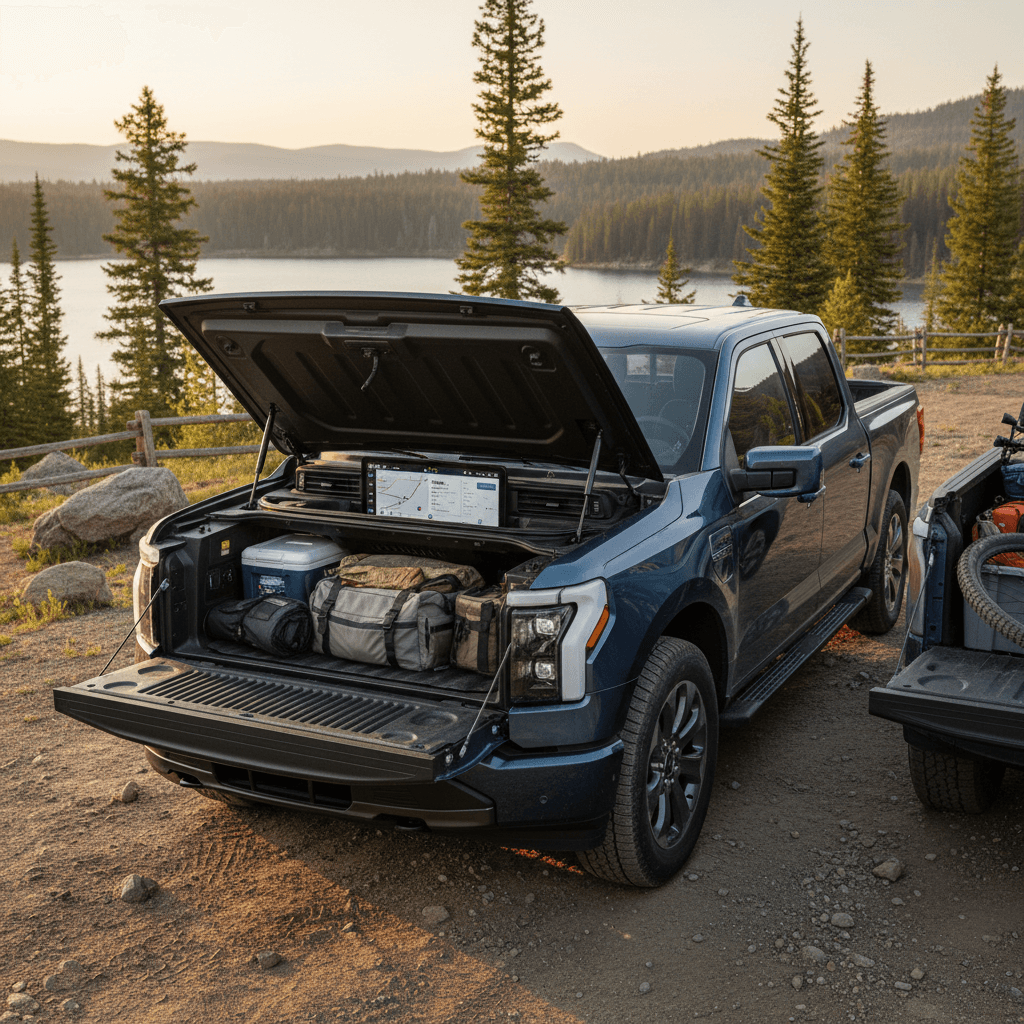
2024 Ford F-150 Lightning trims and key specs
By 2024, Ford had simplified the Lightning lineup. The earlier Pro work-truck trim was limited and often allocated to fleets, while XLT became the mainstream entry point. Higher trims bundled the extended-range battery and most comfort tech by default. Here’s how the major trims break down for the 2024 model year.
2024 F-150 Lightning trims at a glance
Approximate positioning of 2024 Lightning trims. Exact features and pricing vary by options and region, especially in the used market.
| Trim | Battery | Approx. EPA Range | Drivetrain | Highlights |
|---|---|---|---|---|
| XLT | Standard-range (~98 kWh usable) | ~230 mi | Dual-motor AWD | Cloth interior, basic driver aids, strong value for work and light family duty. |
| Flash | Extended-range (~131 kWh usable) | ~320 mi (best-case) | Dual-motor AWD | Value sweet spot: more range, larger infotainment, better audio, extra comfort and tech. |
| Lariat | Extended-range | ~300–320 mi (depending on wheels/tires) | Dual-motor AWD | Leather, full suite of driver assists, upgraded interior, more luxury features. |
| Platinum | Extended-range | ~280–300 mi | Dual-motor AWD (higher output) | Top trim: max power, premium interior, 22-inch wheels that slightly cut range. |
Use this as a starting point, then verify exact equipment on any truck you’re considering.
Sweet spot trim for most buyers
Range, towing, and payload: what you really get
Real-world range
On paper, a 2024 F-150 Lightning with the extended-range battery can reach around 300–320 miles of EPA-rated range, depending on trim and wheel choice. Standard-range trucks sit closer to 220–240 miles. In the real world, expect:
- Standard-range: 170–210 miles on the highway in mild weather.
- Extended-range: 230–270 miles on the highway, again assuming moderate temps and light loads.
- Winter or heavy towing: Range can drop 30–50% when it’s very cold or you’re pulling a large trailer at highway speeds.
Towing and payload realities
The Lightning’s dual-motor setup and instant torque make it a confident tow vehicle, but range drops quickly under load. Key points:
- Max towing: Around 8,500 lbs when properly equipped.
- Payload: Typically in the 1,500–1,800 lb range depending on trim.
- Planning: For a 6,000–7,500 lb camper or car trailer, think in terms of 80–120 miles between DC fast charges in many conditions.
If you frequently tow long distances, you’ll need to be deliberate about route planning, and you may want a plug-in hybrid or gas truck instead.
Don’t buy on EPA range alone
Charging experience: home and on the road
How you’ll actually charge a 2024 Lightning
Home Level 2 is where the ownership experience really clicks.
Home Level 2 (most important)
For most owners, a 240-volt Level 2 charger at home is non-negotiable. The Lightning’s large battery can take a long time on a standard 120-volt outlet. With a 40–48 amp Level 2 unit, overnight charging from 10–80% is straightforward and cheap compared to gas.
DC fast charging
The Lightning can fast charge at up to roughly 150 kW on compatible public stations. That means a 10–80% charge in around 40–45 minutes in good conditions. Speeds taper as the battery fills, and peak rates depend heavily on battery temperature and the specific charger.
Networks and adapters
Public charging is a mix of CCS and newer NACS (Tesla-style) connectors. Many Lightnings use CCS from the factory; check if your truck includes a NACS adapter or is eligible for one. Access to the Tesla Supercharger network can make road trips much easier.
Think about your real weekly routine
Should you buy new or used 2024 F-150 Lightning?
Because Ford cut prices after launch and the market cooled, used F-150 Lightning values have dropped faster than many expected. That’s painful for early buyers but helpful if you’re entering the market now. Many 2024 trucks are coming off short-term leases or early trade-ins, often with low miles and significant warranty coverage left.
Reasons to consider new (or nearly new)
- Latest software and hardware: Later 2024 builds may have small running changes or updated software from the factory.
- Full factory warranty: You’ll get maximum remaining coverage, especially on the high-voltage battery and drive units.
- Targeted incentives: Some dealers still discount remaining inventory aggressively as Ford’s strategy shifts toward hybrids and extended-range trucks.
Why used 2024 trucks are compelling
- Big depreciation already priced in: You’re not paying launch-era MSRPs; used 2024 trucks can undercut comparable new EV pickups by tens of thousands of dollars.
- Plenty of lightly used examples: Many were leased or used as secondary vehicles, so mileage can be modest.
- Battery coverage remains: The Lightning’s battery warranty extends well beyond year two, so a 2024 with proper documentation still has long protection ahead.
Given current market conditions, a used or CPO 2024 Lightning with strong battery health can be a standout value.
How Recharged fits in
Ready to find your next EV?
Browse VehiclesPricing, incentives, and total cost of ownership
Pricing on 2024 F-150 Lightnings has been a moving target. Ford dropped MSRPs more than once as competition arrived and demand normalized, and the used market has followed. While exact numbers change month to month, there are a few patterns that help frame your decision.
- Used 2024 XLT and Flash models often land in the high-$30,000s to mid-$40,000s depending on miles, options, and region.
- Lariat and Platinum trims command more, but depreciation has still been steeper than a comparable gas F-150.
- Some buyers may still qualify for state or local EV incentives on used purchases, especially if the sale price falls under certain caps, check your state program details.
- Electricity costs per mile are typically lower than gas, especially if you can charge off-peak at home, but DC fast charging can be closer to gas pricing on an energy-equivalent basis.
Run the math on your commute
Battery health, reliability, and what to inspect
The 2024 F-150 Lightning uses large, liquid-cooled battery packs paired with dual motors and standard all-wheel drive. Early data suggests modest degradation in the first few years when the truck is used normally and software is up to date. Still, battery condition is the single most important variable in any used EV purchase.
Battery and high-voltage checklist for a 2024 Lightning
1. Check battery warranty start and end dates
Confirm the in-service date and remaining coverage on the high-voltage battery and drive units. Be sure you understand mileage limits and what’s actually covered if capacity drops.
2. Review DC fast charging history if available
Frequent DC fast charging isn’t automatically bad, but it does add heat and stress. Ask for service history or telematics reports if the seller has them, and prefer trucks that mix home Level 2 with occasional fast charging.
3. Compare actual range to expectations
On a test drive, note the state of charge, miles driven, and projected remaining range. Large gaps between real-world performance and the EPA rating can hint at heavy use, large tires, or other factors you’ll want explained.
4. Inspect for software and recall updates
Ask a Ford dealer or EV-specialist retailer to confirm that <strong>all recalls and campaigns</strong> have been performed, especially those related to charging, high-voltage components, or battery management software.
5. Look underneath for corrosion or impact damage
Check the battery enclosure and underbody for scrapes, dents, or rust. Any impact to the battery pack area deserves a professional inspection before you sign anything.
6. Get independent battery health data
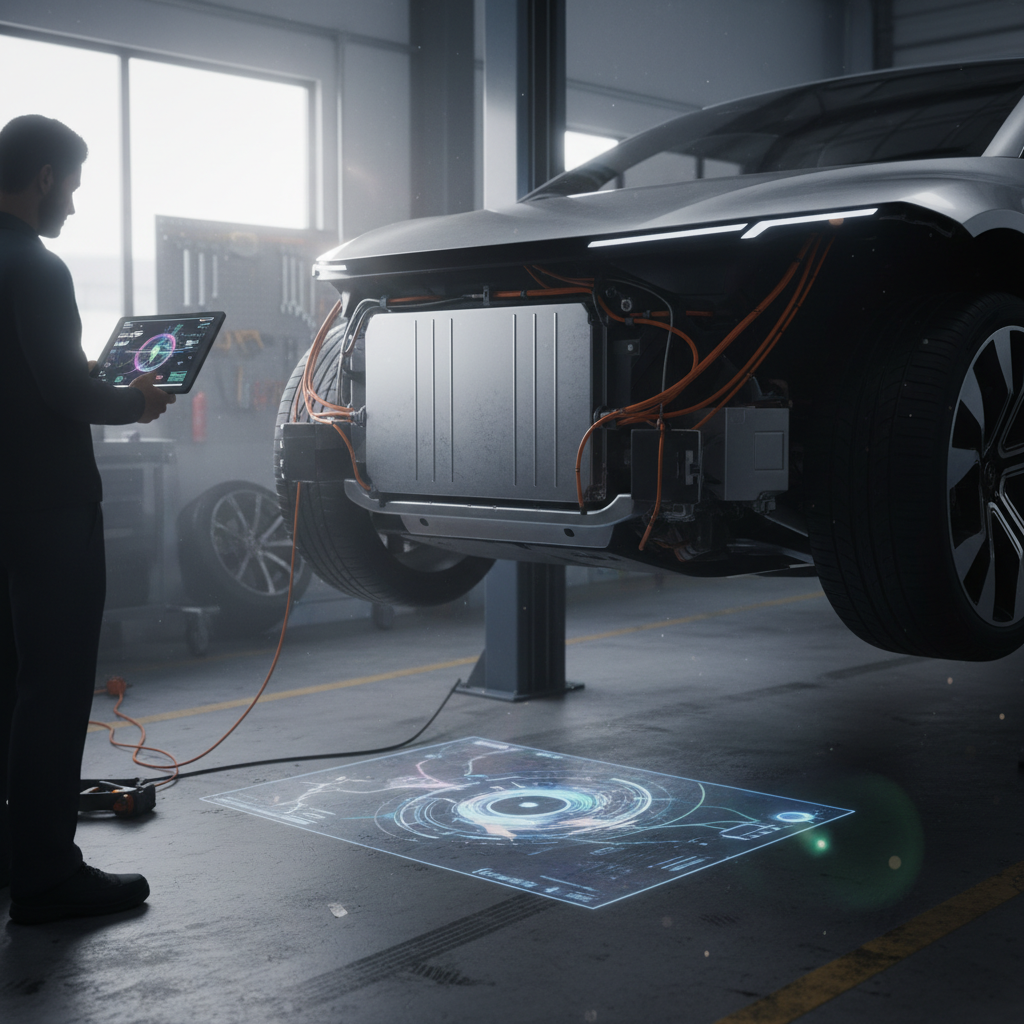
Whenever possible, use a third-party diagnostic tool or a retailer like <strong>Recharged</strong> that runs a dedicated <strong>battery health assessment</strong>. A structured report is more reliable than a seller’s guess about “feels like new.”
Avoid guessing on battery health
Who the 2024 F-150 Lightning is (and isn’t) for
Is a 2024 F-150 Lightning right for your life?
Match the truck’s strengths to your actual use case, not a hypothetical one.
Great fit if…
- You can install or already have a Level 2 home charger.
- Your daily driving is mostly under 150 miles, even in winter.
- You tow or haul heavily only a few times a year.
- You value quiet, quick acceleration and modern tech features.
- You like the idea of fueling at home and spending less time at gas stations.
Probably not ideal if…
- You routinely tow 5,000+ lbs over long highway stretches.
- You can’t reliably charge at home or at work.
- Your region has sparse fast-charging coverage and harsh winters.
- You need maximum range every single day with no flexibility.
- You prefer proven long-haul truck infrastructure and overnight fueling at truck stops.
How to shop a 2024 F-150 Lightning like a pro
Once you’ve decided the Lightning might work for you, it’s time to narrow down specific trucks. Use the checklist below whether you’re browsing dealer lots, private-party listings, or a digital marketplace like Recharged.
Step-by-step 2024 Lightning shopping checklist
1. Define your must-haves
Decide where you won’t compromise: extended-range battery vs. price, trim level (XLT vs. Flash vs. Lariat vs. Platinum), bed length, max towing, and must-have tech features like BlueCruise or a particular infotainment system.
2. Verify trim, battery, and options
Don’t rely on badges alone. Use the VIN and build sheet (or a trusted seller’s spec sheet) to confirm which battery the truck has, what tow packages are installed, and whether you’re getting the driver-assistance and comfort features you’re paying for.
3. Check charging flexibility
Confirm which charging ports the truck has (CCS or also NACS-compatible) and whether any OEM adapters are included. If you’ll road-trip, access to <strong>Tesla Superchargers</strong> via an adapter is a major plus.
4. Evaluate total ownership cost
Look past the sticker: add sales tax, insurance, home charger installation, and projected electricity costs. Compare this to your current gas bill over 3–5 years, and factor in likely depreciation given Ford’s strategic shift away from this specific EV configuration.
5. Demand transparent reconditioning
On a used truck, ask for documentation on any <strong>collision repairs, flood history, or major component replacements</strong>. Avoid branded titles unless the discount is massive and you fully understand the risk.
6. Use expert help when possible
If you’re new to EVs, consider buying through an EV-focused retailer. At Recharged, for example, EV specialists walk you through battery health reports, real-world range expectations, and how the Lightning will actually fit your life, not just your driveway.
FAQ: 2024 Ford F-150 Lightning buying guide
Frequently asked questions about the 2024 F-150 Lightning
Bottom line: is a 2024 F-150 Lightning a smart buy?
The 2024 Ford F-150 Lightning is a capable, comfortable, and now dramatically more affordable way into a full-size electric pickup. Ford’s decision to end production of the current all-electric version doesn’t erase what the truck does well: it hauls, tows within reason, and tackles daily driving with calm, quiet confidence. As long as you understand its range and towing limits, and buy with clear battery health information and realistic pricing, it can be one of the best values in the EV truck market right now.
If you’re ready to explore specific trucks, Recharged can help you compare used 2024 F-150 Lightnings side by side with other electric pickups, see verified battery health in a Recharged Score Report, line up financing, and arrange nationwide delivery, from your couch, not a crowded showroom. For the right buyer, this truck is less a risky experiment and more a smart, well-timed move into electric pickup ownership.