If you’re shopping for an electric car, you’re probably thinking about range, charging and price. But there’s a fourth column on the spreadsheet that can blow up your budget: insurance. The good news is that some models are much cheaper to insure than others, especially if you’re open to buying used. This guide walks through the cheapest electric cars to insure today, what drives those premiums, and how to keep your total ownership costs in check.
Quick reality check
Why electric car insurance is different (and often higher)
Insurers don’t price policies based on headlines, they price based on data. For electric cars, that data has been evolving quickly. Recent industry reports show EVs can cost roughly a quarter more to insure than gas cars with similar drivers and coverage because of expensive battery packs, complex electronics and limited repair capacity in many markets.
- High repair costs: Battery packs, aluminum body panels and advanced sensors make many EVs pricier to fix after a crash.
- Specialized labor: Fewer body shops and technicians are certified to repair EVs, which can lengthen repair times and increase claim payouts.
- Vehicle price and tech: Higher MSRPs, big touchscreens and driver‑assist systems raise the value at risk for insurers.
- Claim patterns: Some popular EVs (especially certain Teslas) have higher claim severity and frequency, which pushes premiums up across that model line.
Don’t generalize from Tesla
Cheapest electric cars to insure right now
Different studies slice the data different ways, but several familiar nameplates keep reappearing near the top of “cheapest EVs to insure” rankings in the U.S. These figures are recent national averages for full‑coverage policies on new models with a clean driver profile. Your quote will vary based on state, age, credit, mileage and coverage limits, but the relative ranking of models tends to hold.
New electric cars with relatively low average insurance premiums
Average annual premiums for full coverage on popular EVs, based on recent national data. Figures rounded to the nearest dollar.
| Model (new) | Average annual premium | Approx. monthly | Notes |
|---|---|---|---|
| Mini Cooper Electric | $2,099 | $175 | Small, city‑focused EV; one of the cheapest electric cars to insure in recent surveys. |
| Kia Niro EV | $2,239 | $187 | Practical crossover with solid safety ratings and moderate repair costs. |
| Hyundai Kona Electric | $2,276 | $190 | Compact SUV; simple packaging and good safety performance help keep premiums in check. |
| Volkswagen ID.4 | $2,318 | $193 | Mainstream family crossover; not the cheapest, but below many rival EVs. |
| Nissan Leaf (new) | $2,396 | $200 | Long‑running EV nameplate; conservative performance and strong safety record. |
| Chevrolet Silverado EV | $2,452 | $204 | One of the cheaper electric pickups to insure, though trucks are still pricier overall. |
| Subaru Solterra | $2,647 | $221 | AWD crossover with typical Subaru safety focus. |
| Toyota bZ4X | $2,699 | $225 | Toyota’s compact EV SUV; insurance often tracks closely with Solterra. |
| Hyundai Ioniq 5 | $2,721 | $227 | Stylish, capable EV; still cheaper to insure than many luxury competitors. |
| Ford F‑150 Lightning | $2,743 | $229 | Among the lowest‑cost electric trucks to insure relative to peers. |
Use these numbers as a comparison tool, not a guarantee, local quotes can differ substantially.
How to use this table
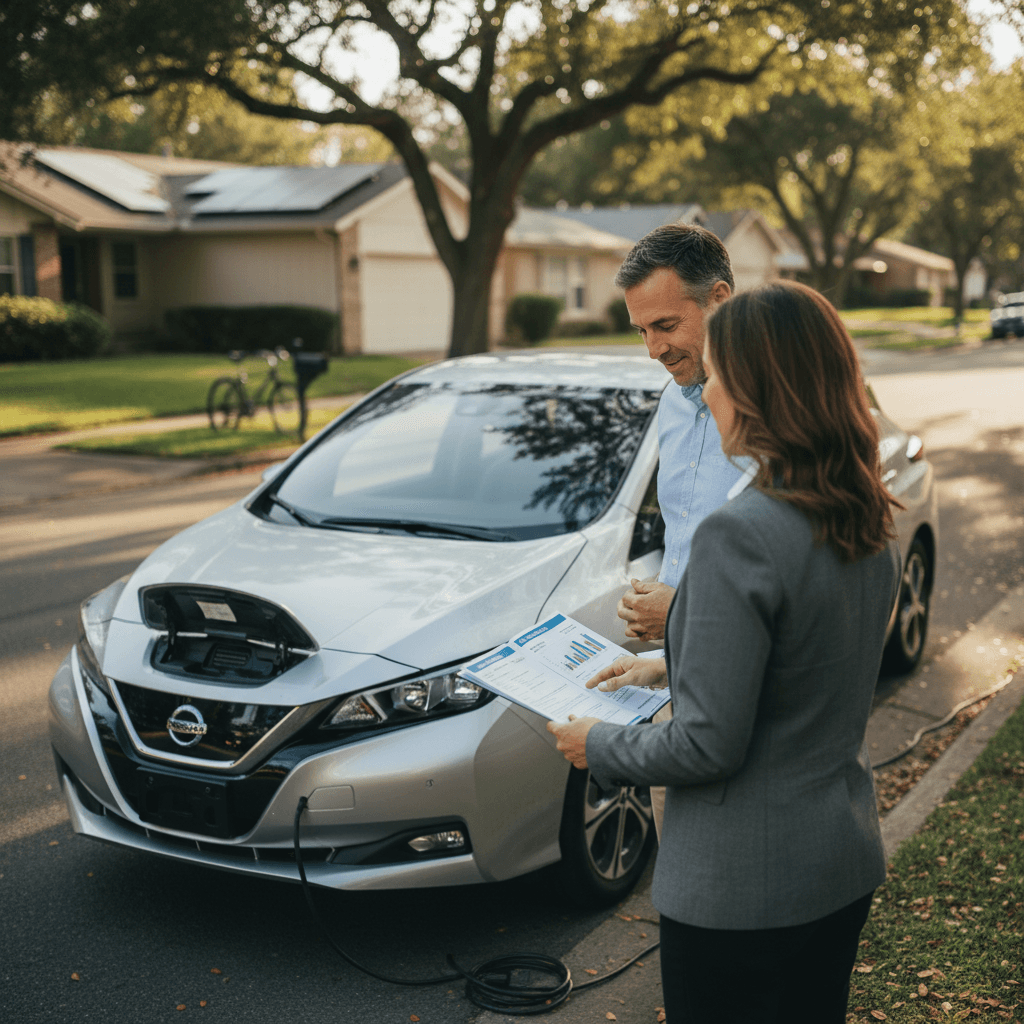
Used EVs that tend to be cheaper to insure
If you really want to tame your insurance bill, look at the used EV market. Two things work in your favor: lower vehicle values and a growing repair ecosystem. For many drivers, the sweet spot is a 3–6‑year‑old mainstream EV with good safety ratings and modest power.
Used EVs that are often inexpensive to insure
These models routinely appear near the bottom of EV insurance cost rankings and are common on the used market.
Nissan Leaf (2018–2024)
The Leaf has been the workhorse of the EV world for more than a decade. It isn’t fast and range isn’t class‑leading, but insurers like its conservative performance and long safety record.
- Plenty of supply keeps purchase prices low.
- Earlier cars use a simpler air‑cooled battery, which can be cheaper to diagnose and repair but needs careful health checks.
Hyundai Kona Electric (2019–2023)
A compact crossover with decent range and relatively simple hardware. Repairs are generally cheaper than on luxury EVs, which helps premiums.
- Strong safety scores.
- Lower MSRP than many rivals when new.
Mini Cooper SE / Mini Cooper Electric (2020–2024)
A small city car with a small battery. Less mass and lower power output can translate into fewer severe claims.
- Shorter range but ideal for urban commuters.
- Frequently tops charts for lowest EV insurance costs.
Kia Niro EV (2019–2024)
Practical crossover that slots between subcompact hatchbacks and larger SUVs. Not a performance model, which insurers appreciate.
- Common family‑car duty cycle.
- Shared parts with hybrid siblings helps repairability.
Chevrolet Bolt EV/EUV (2017–2023)
Historically one of the most affordable EVs to insure and operate, with low energy costs and a modest footprint.
- Battery recall history makes a professional health report essential on used examples.
- Compact size and mainstream pricing help with premiums.
Mainstream crossovers (ID.4, Ioniq 5, etc.)
Not the absolute cheapest, but still significantly less to insure than many luxury EVs and performance models.
- Look for strong crash‑test ratings.
- Avoid high‑performance variants if premiums are a priority.
Where used EVs really shine
What actually makes an electric car cheap to insure?
Insurers don’t care whether you love the styling or the infotainment. They care whether they’ll pay out big claims. When you’re trying to pick the cheapest electric cars to insure, focus on the ingredients underwriters actually use.
Key traits of EVs with lower insurance premiums
1. Reasonable purchase price
All else equal, a $28,000 hatchback costs less to insure than a $60,000 luxury SUV. Value at risk is the starting point for every quote.
2. Strong safety and crash‑test ratings
Vehicles that protect occupants well, and pack advanced driver‑assist tech that actually reduces crashes, often earn lower premiums over time.
3. Modest performance, not track toys
High‑horsepower EVs hit 60 mph in a blink. They’re fun, but they also show up more often in severe claims data. Mild‑mannered commuters look better to an actuary.
4. Common body styles and parts
Mainstream crossovers and hatchbacks share parts across gas and hybrid siblings. Luxury one‑offs with exotic panels and huge wheels are much harder (and pricier) to fix.
5. Repair‑friendly design and support
Insurers look at real repair invoices. When more shops in your area are comfortable repairing a model, and parts are easy to get, claims get cheaper, and so do renewals.
6. Driver profile and use pattern
Your age, driving history, commute length and garaging location matter as much as the badge on the trunk. A safe driver in a modest EV often beats a riskier profile in a cheaper car.
EVs that usually cost more to insure
How to cut your EV insurance bill
You can’t control every variable, but you have more leverage than you might think. Before you sign on for a new or used EV, build insurance shopping into your process the same way you’d compare monthly payments or charging options.
1. Get quotes before you buy
Don’t wait until delivery day to call your insurer. As you narrow your shortlist, run real quotes on each candidate with the same driver profile and coverage limits. If one model is $800 a year cheaper to insure than another, that’s worth weighing just as heavily as a slightly nicer interior.
2. Adjust coverage smartly, not recklessly
Raising deductibles can lower premiums, but don’t underinsure an expensive EV just to save a few bucks. Instead, make sure you’re not paying for duplicative roadside add‑ons and check whether you’re comfortable self‑insuring small dings and glass claims.
- Ask about EV or alternative‑fuel discounts, safe‑driver programs and telematics‑based policies that reward low annual mileage.
- Bundle your EV with homeowners or renters insurance; the multi‑policy discount can be significant.
- Consider dropping collision/comprehensive on a very old, low‑value EV, though many EVs hold value longer, so run the math carefully.
- Garage the car if possible; overnight street parking in dense urban areas can raise rates.
- Shop your policy at renewal, especially after a clean driving year or when you move to a new ZIP code.
Use total cost, not just premium size
Where insurance fits into EV total cost of ownership
In 2025, average U.S. full‑coverage car insurance is hovering in the mid‑$2,000s per year, and many EVs run higher than that. At the same time, EV drivers often save on fuel, oil changes and some maintenance items. When you’re comparing a used electric car to a similarly priced gas model, you want to think in monthly ownership cost, not just the purchase price.
How insurance fits into your EV budget
When you’re staring at a quote, it can feel like insurance is the only story. In reality, the cheapest electric cars to insure are also the ones that behave like normal, sensible compact cars in every other respect: modest price, solid reliability and predictable repair bills. That’s exactly the slice of the market where used EVs are now piling up, and where you can find genuine bargains.
How Recharged helps you shop with insurance costs in mind
When you’re buying used, the right information can make the difference between an EV that’s affordable to own and one that keeps surprising you. Recharged was built around that idea.
Shopping for a used EV with Recharged
Reduce surprises, insurance included, by starting with the right car.
Battery health transparency
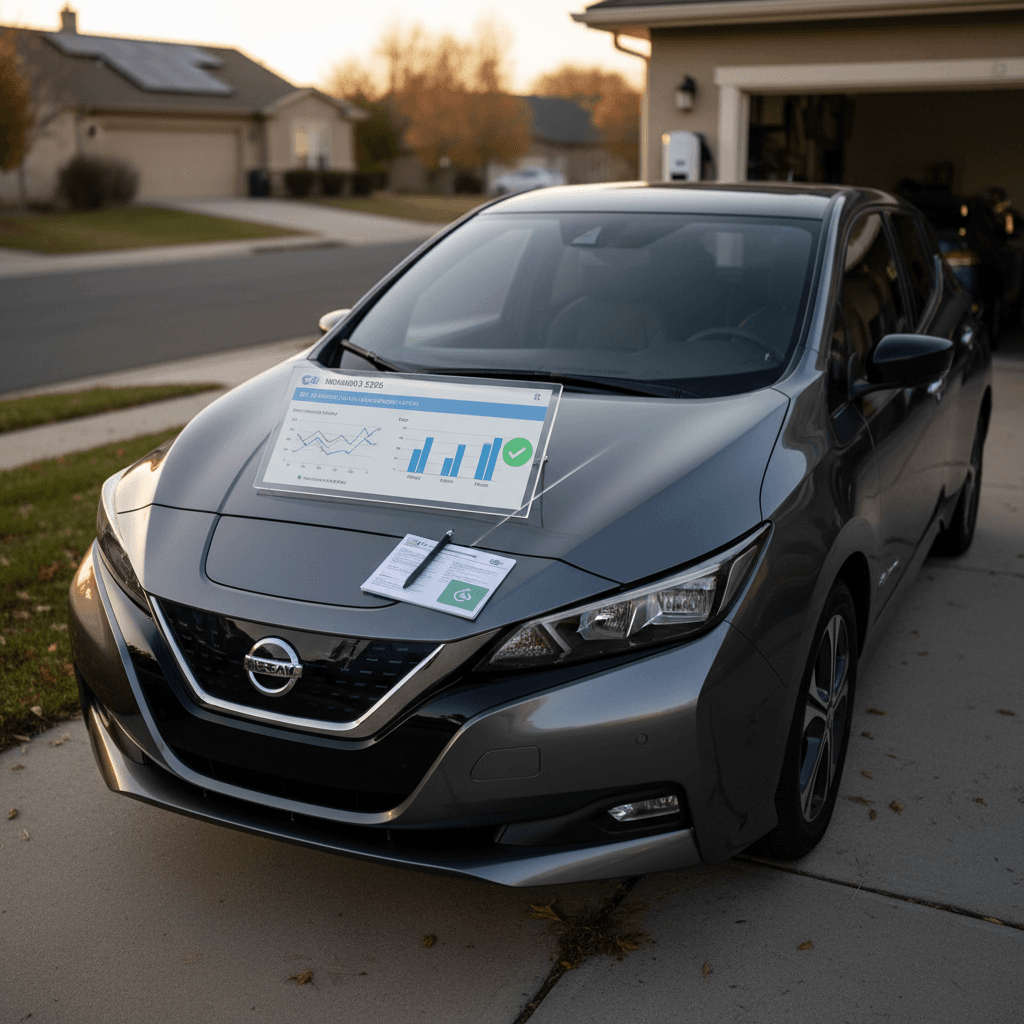
Every vehicle on Recharged comes with a Recharged Score Report that includes verified battery diagnostics. A healthier pack can support the vehicle’s value and insurability over time.
Model‑by‑model guidance
Our EV specialists can walk you through which trims of popular models like the Nissan Leaf, Kona Electric or Niro EV tend to play nicest with insurers, based on safety tech and repair history.
Financing and trade‑in in one place
You can line up financing, get an instant offer on your trade‑in or consign your current car, all while we help you think through monthly costs, including insurance.
Nationwide, digital, and EV‑focused
Frequently asked questions about EV insurance costs
EV insurance: your questions answered
The bottom line: the cheapest electric cars to insure are the ones that look boring on paper, in the best possible way. Sensible hatchbacks and crossovers like the Mini Cooper Electric, Nissan Leaf, Kona Electric and Niro EV won’t win many drag races, but they tend to keep both premiums and repair bills in check. If you pair one of those models with strong battery health, a fair used‑EV price and smart insurance shopping, you can build an electric‑car budget that surprises you for the right reasons. And if you want help finding that sweet‑spot EV, Recharged is built to walk you through every step, from battery diagnostics to financing to delivery.