If you like Subaru’s outdoorsy image and all-wheel-drive confidence but want to go electric, the 2023 Subaru Solterra is probably on your shortlist. This 2023 Subaru Solterra review focuses on what actually matters in day-to-day ownership: real-world range, charging performance, reliability, and whether it makes sense as a used EV SUV today.
Shared DNA with Toyota
2023 Subaru Solterra review: quick take
What the Solterra does well
- Standard dual-motor AWD on every trim, unusual in the compact EV SUV class.
- Confident, Subaru-like ride and handling with good grip and a planted feel.
- Respectable EPA range for early-model EVs: up to 228 miles depending on trim.
- Strong standard safety tech, including lane-keeping and automatic emergency braking.
- Decent ground clearance and light off-road traction modes for dirt roads and snow.
Where it falls behind
- Slow AC charging: 6.6 kW onboard charger means long home charging times.
- Underwhelming DC fast charging: peak of 100 kW and conservative charge curves compared to newer rivals.
- Range trails newer compact EV SUVs, many of which now clear 250–280 miles.
- Quirky interior choices (no glove box, no rear wiper) may annoy some owners.
- Recent recall for HVAC/defroster software adds one more item to verify was fixed.
Headline numbers for the 2023 Subaru Solterra
Key specs: battery, range, and charging
2023 Subaru Solterra core specs
All trims share the same dual-motor AWD powertrain and battery; equipment and range differ slightly by trim.
| Spec | Premium | Limited | Touring |
|---|---|---|---|
| Drivetrain | Dual-motor AWD | Dual-motor AWD | Dual-motor AWD |
| Battery (gross) | 72.8 kWh | 72.8 kWh | 72.8 kWh |
| Usable capacity (est.) | ~64 kWh | ~64 kWh | ~64 kWh |
| EPA range | ~228 miles | ~222 miles | ~222 miles |
| Onboard AC charger | 6.6 kW | 6.6 kW | 6.6 kW |
| Max DC fast charge | 100 kW | 100 kW | 100 kW |
| Horsepower | 215 hp | 215 hp | 215 hp |
Specifications for U.S.-market 2023 Subaru Solterra models.
On paper, the Solterra’s specs were competitive when it launched, but the market has moved quickly. A usable capacity around 64 kWh and roughly 222–228 miles of EPA range are fine for commuting and weekend trips. But when you compare it to newer rivals, many pushing 250+ miles from similar or larger batteries, you can see how quickly expectations have changed.
Rule of thumb on range
Driving experience and AWD capability
Subaru’s brand promise is all-weather confidence, and the Solterra largely delivers on that. The dual-motor setup provides standard AWD on every trim, with smooth and predictable power delivery rather than neck-snapping acceleration. At 215 hp, it’s slower than many rivals but feels adequate in normal city and highway driving.
- Steering is light but accurate, making the Solterra easy to place in traffic and on narrow roads.
- The low-mounted battery pack keeps the center of gravity down, so body roll is well controlled for a tall-ish SUV.
- X‑Mode traction settings and hill-descent control give extra confidence on gravel, mud, or snowy driveways.
- Ride quality is generally comfortable, with only sharper bumps reminding you of the heavy EV curb weight.
Where the Solterra feels most at home
Interior, space, and tech
Inside, the 2023 Solterra offers a practical, if slightly quirky, small-SUV cabin. There’s good headroom and legroom for four adults, an upright driving position, and a large center screen for infotainment. Materials are more functional than luxurious, and the design clearly prioritizes utility over flash.
Interior highlights and oddities
Practical space with a few head-scratching decisions.
Space & seating
- Two-row layout with seating for five.
- Competitive cargo area for a compact SUV, with split-folding rear seats.
- Flat floor helps with foot room in the back.
Infotainment & controls
- Large central touchscreen with smartphone integration.
- Physical controls for key climate functions.
- Digital instrument cluster can feel far away for some drivers due to steering wheel position.
Quirks to know
- No traditional glove box, which surprises many owners.
- No rear wiper, unusual for a crossover expected to handle bad weather.
- Some drivers never quite love the steering wheel / gauge cluster ergonomics.
Real-world charging performance: where the Solterra lags
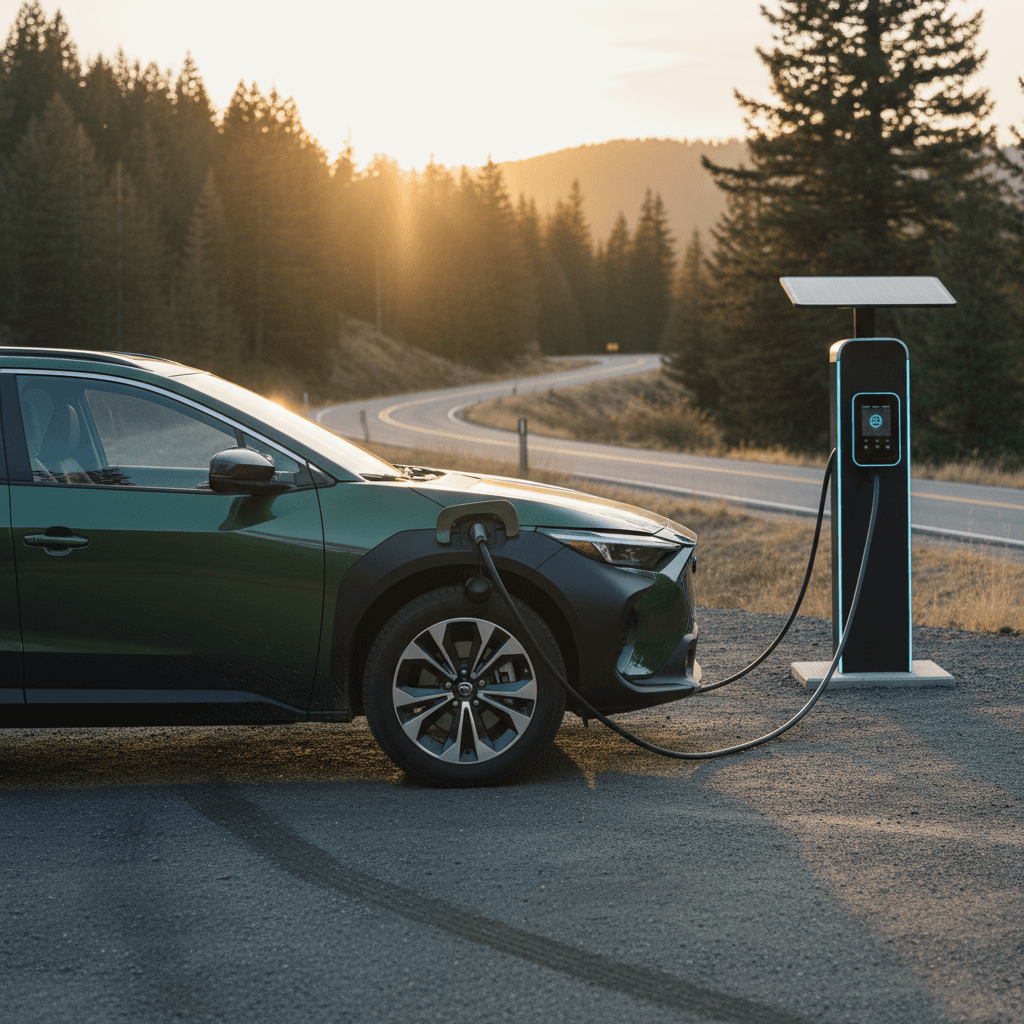
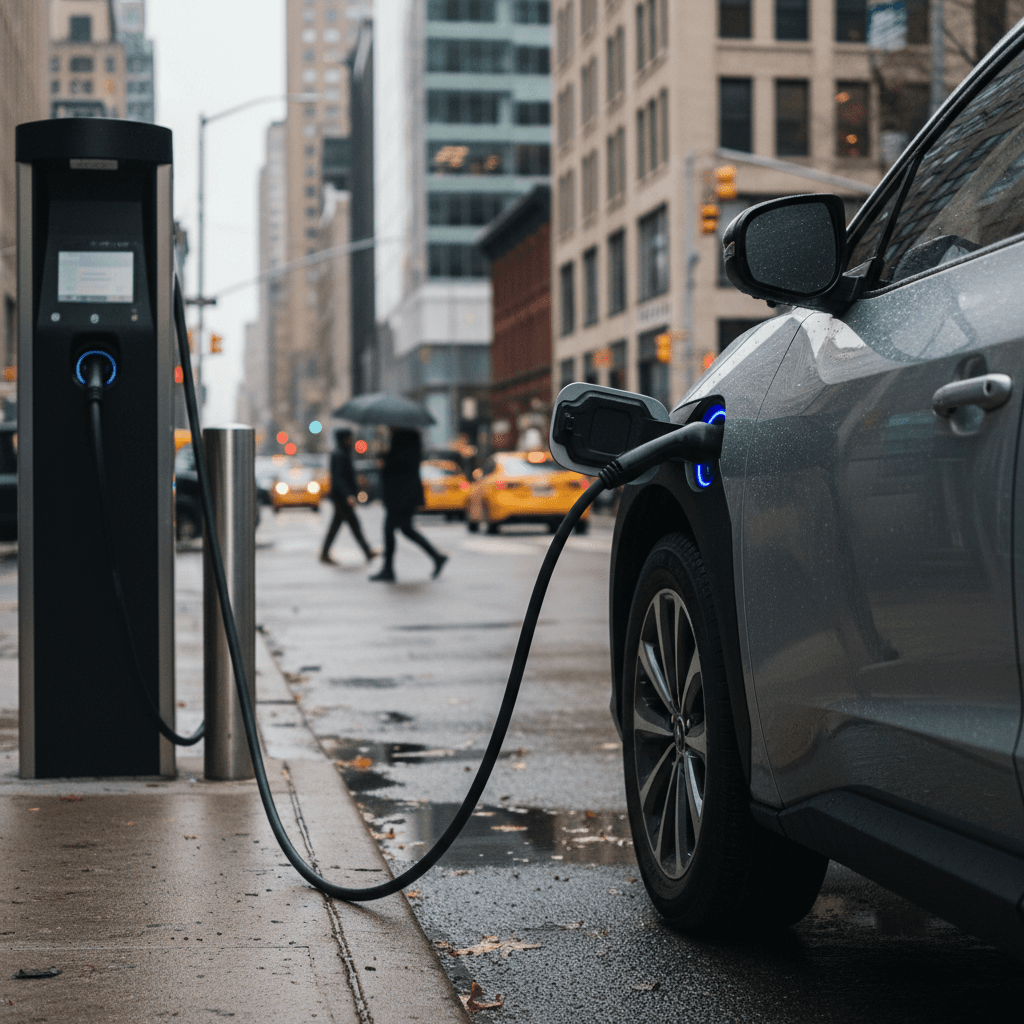
Charging is the 2023 Solterra’s biggest weakness relative to the wider EV market. On AC, the car is limited to a 6.6 kW onboard charger. On DC fast charging, it tops out at 100 kW, and owners commonly report conservative charge curves with speeds dropping quickly once the battery passes roughly 50–60%.
Typical 2023 Solterra charging times (approximate)
Real-world charging times vary with temperature and station quality, but these estimates illustrate what to expect.
| Charging type | Power | From–to | Approx. time |
|---|---|---|---|
| Level 2 home/work | 6.6 kW | 0–100% | ~10–11 hours |
| Public DC fast | Up to 100 kW | 10–80% | ~45–60 minutes in ideal conditions |
| Public DC fast | Real-world average | 20–80% | Often closer to ~60 minutes, especially in cold weather |
Estimated AC and DC charging times for the 2023 Subaru Solterra from low state of charge.
Plan conservatively for road trips
If you mainly charge overnight at home and only occasionally hit a DC fast charger, this may not bother you. But if you’re dreaming of frequent 400–600 mile days, you’ll notice the difference compared with newer 150–350 kW EVs. It’s one of the main reasons some early Solterra buyers have traded into newer models or different brands.
Reliability, recalls, and known issues
Because the Solterra is still a relatively new model, long-term reliability data is limited. However, a few themes have emerged that you should understand before buying a 2023 example.
- Early production cars were subject to a well-publicized wheel hub/bolt issue (addressed before customer deliveries in most cases).
- There has been a more recent recall on 2023–2025 Solterras, shared with the Toyota bZ4X and Lexus RZ, related to HVAC software that can cause the heater and defroster to stop working, reducing windshield defogging performance.
- Some owners report inconsistent DC fast-charging behavior, especially in cold weather or on certain networks, including abrupt drops to low charging speeds.
- As with many first-generation EVs, software updates have played a big role in refining charging and thermal-management behavior over time.
Make sure recall work is done
The Solterra’s underlying hardware, motors, battery, and AWD system, is shared with Toyota, which has a long history of conservative engineering. That’s reassuring, but it doesn’t eliminate the importance of checking software history, recall completion, and how the specific vehicle has been used and charged.
Used 2023 Solterra pricing and value
Depreciation has been steep for many first-wave EVs, and the 2023 Solterra is no exception. Data from used-car pricing guides shows a typical 2023 Solterra retaining around 78% of its original value after roughly three years, with resale values in the high-teens to low-$20,000 range depending on mileage, condition, and trim.
What depreciation means for you
Why this can be a smart used buy
2023 Solterra vs. key competitors
If you’re cross-shopping the 2023 Solterra as a used EV SUV, you’re probably also looking at options like the Hyundai Ioniq 5, Kia EV6, Volkswagen ID.4, Ford Mustang Mach‑E, and perhaps its Toyota twin, the bZ4X. Here’s how the Subaru broadly stacks up.
How the 2023 Solterra compares
Broad strokes, not full spec sheets, enough to clarify where Subaru shines and where it lags.
Versus Hyundai Ioniq 5
- Ioniq 5 offers significantly faster DC charging (up to 350 kW) and higher range in many trims.
- Solterra counters with standard AWD and more rugged image.
- If you road-trip a lot, the Hyundai is the better choice; if you prioritize bad‑weather traction, Subaru has appeal.
Versus Kia EV6
- EV6 is sportier, more efficient, and also charges much faster.
- Solterra feels more like a traditional small SUV, with simpler styling and Subaru-esque dynamics.
- Enthusiastic drivers will lean Kia; conservative, outdoorsy buyers may prefer Subaru’s vibe.
Versus VW ID.4 & Mach‑E
- ID.4 and Mustang Mach‑E generally offer similar or better range.
- Charging speeds vary by trim but are often more competitive than Solterra’s.
- Subaru’s differentiator remains standard AWD and brand loyalty among existing Subaru owners.
Don’t over-focus on 0–60 times
Who the 2023 Subaru Solterra is (and isn’t) for
You’re a good fit for a 2023 Solterra if…
1. You primarily charge at home
If most of your miles start from a full battery in the driveway or garage, the slow 6.6 kW onboard charger is less painful. Overnight, you’ll still wake up full.
2. You value all-weather AWD more than max range
You care more about sure-footed traction on snow, rain, and dirt roads than about having the longest possible range number on a spec sheet.
3. Your typical drives are under 150 miles
Daily commutes, errands, and weekend trips within a couple of hours of home fit nicely within the Solterra’s real-world range envelope.
4. You’re price-sensitive but want a modern EV
Steeper depreciation means you can get into a relatively new electric Subaru for less money than many rivals of the same age.
You might want to look elsewhere if…
How Recharged can help if you’re considering a used Solterra
Because the 2023 Subaru Solterra lives or dies on how it’s been charged, updated, and maintained, a transparent view of battery health and history is crucial. That’s exactly what Recharged is built for. Every EV we list comes with a Recharged Score Report that includes verified battery diagnostics, fair market pricing data, and a clear rundown of features and equipment.
Shopping a used Solterra with Recharged
What we bring to the table if you’re looking at any compact EV SUV, including the Solterra.
Battery health transparency
Flexible ways to buy or sell
EV‑specialist support
Ready to find your next EV?
Browse VehiclesFAQ: 2023 Subaru Solterra
Frequently asked questions about the 2023 Solterra
Bottom line: should you buy a 2023 Solterra?
The 2023 Subaru Solterra isn’t the flashiest or fastest‑charging EV SUV on the market, and it arrived just as the competitive set was leveling up range and DC charging speeds. But if you’re shopping used, that timing and its compromises have a silver lining: meaningful discounts compared with many rivals, standard AWD, and a straightforward, practical cabin.
If your daily driving fits comfortably within about 150 miles, you primarily charge at home, and you value Subaru’s all‑weather confidence more than ultimate charging performance, a well‑vetted 2023 Solterra can be a smart, budget‑friendly entry into EV ownership. If fast road‑trip charging, the latest infotainment, or easy Tesla Supercharger access are top priorities, you’ll likely be happier in a different used EV, and that’s where comparing options side by side with transparent battery data really matters.
Either way, going electric is a big shift in how you fuel, maintain, and think about your vehicle. Taking the time to understand models like the Solterra, strengths, tradeoffs, and long‑term economics, puts you in control of that transition instead of letting the spec sheet or the latest hype cycle decide for you.