If you’re hunting for the best used EV for towing, you’ve probably discovered that the rules change once batteries and fast chargers enter the picture. Tow ratings only tell part of the story; battery size, charging speed, and real-world range matter just as much as the number on the hitch receiver.
EV towing in one sentence
Why used EVs for towing are different from gas trucks
On paper, many electric trucks can match or beat their gas counterparts on tow rating. A Ford F‑150 Lightning or Rivian R1T will yank a boat up a ramp with zero drama. The difference is energy density and refueling: gasoline stores a lot of energy in a small tank and can be replenished in minutes, while today’s batteries are heavier, store less energy per pound, and take longer to recharge.
- Weight and aero penalties from the trailer hit EV range harder, because aerodynamic drag and rolling resistance eat into a finite battery pack.
- DC fast chargers aren’t everywhere, especially near campgrounds, boat ramps, or rural race tracks, so route planning matters more.
- High, sustained loads heat the battery and power electronics, making thermal management and fast‑charge capability more important than peak horsepower.
Don’t over‑index on the tow number
How much can an EV really tow? Ratings vs reality
Automakers certify a maximum tow rating under controlled conditions, grade, temperature, trailer setup, and payload are all defined. You absolutely should respect that rating, but you shouldn’t assume it’s a comfortable everyday limit for your situation, especially with a used EV whose battery has some miles on it.
Headline EV tow ratings vs real‑world comfort zone
Typical factory tow ratings and a more conservative “comfortable” range many owners find practical for regular use. Always defer to the manufacturer’s official limits for safety.
| Model | Factory max tow rating (approx.) | Comfortable real‑world range for most owners* |
|---|---|---|
| Ford F-150 Lightning | 10,000 lbs (with Max Trailer Tow Package) | 5,000–7,000 lbs |
| Rivian R1T | 11,000 lbs | 5,000–8,000 lbs |
| Tesla Model Y | 3,500 lbs | 1,500–3,000 lbs |
| Audi Q8 e-tron | 4,000 lbs | 2,000–3,500 lbs |
| Hyundai Ioniq 5 / Kia EV6 | 2,300–3,500 lbs (market dependent) | 1,500–2,500 lbs |
These numbers describe representative trims; check the exact rating for the specific used EV you’re considering.
Never exceed the lowest limit
Best used electric trucks for towing
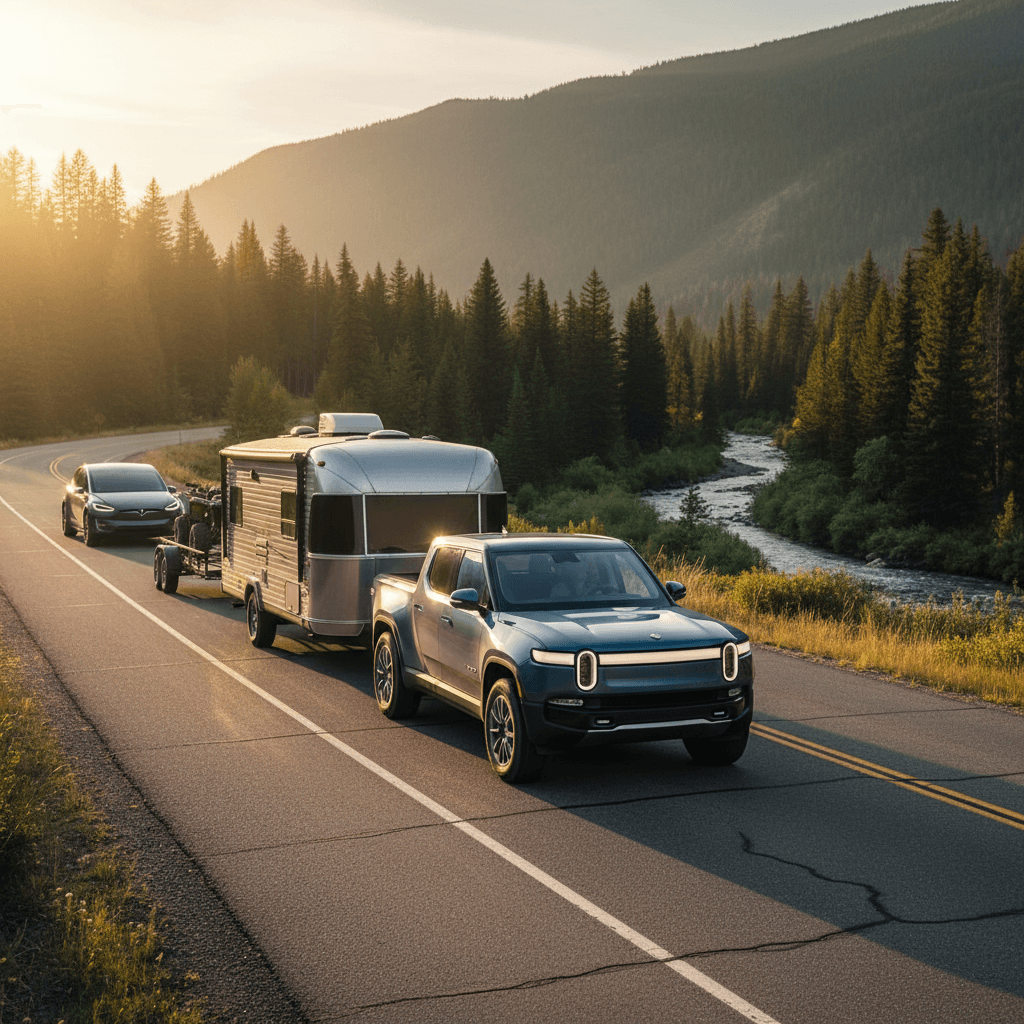
If you’re serious about towing, campers, car haulers, big boats, the best used EV for towing is almost always a pickup. Larger battery packs, robust cooling, and truck‑grade frames make a huge difference once you add aerodynamic drag and hills.
Top used electric trucks for towing
These models consistently stand out as capable tow vehicles on the used market.
Ford F‑150 Lightning
Why it’s great: Familiar F‑150 platform, strong tow ratings, and a massive battery make the Lightning one of the most capable used EV tow rigs.
- Max tow rating: up to 10,000 lbs with the Max Trailer Tow Package.
- Best for: 4,000–7,000 lb campers, boats, and work trailers.
- Battery sizes: Standard and Extended Range packs; the bigger pack is far better for towing.
- Upside used: Early depreciation means you can often buy capability far below original MSRP.
Rivian R1T
Why it’s great: The R1T was engineered from day one as an adventure truck, and that shows when you hitch up.
- Max tow rating: around 11,000 lbs across most trims.
- Best for: 4,000–8,000 lb travel trailers, enclosed haulers, and toy haulers.
- Pros: Excellent power, clever bed features, strong off‑road capability, and solid fast‑charging on major corridors.
- Watch for: Options and tire choice; aggressive off‑road tires can further cut towing range.
Other electric trucks to consider
- Chevy Silverado EV / GMC Sierra EV (when they appear used): Ultium trucks promise competitive tow ratings and large battery packs; they’ll start trickling into the used market behind early fleet and retail sales.
- Ram 1500 REV (future used candidate): Another up‑and‑coming option that may offer strong tow figures and large packs once it’s old enough to show up used.
Because these trucks are newer, used inventory will be thinner and prices higher than early F‑150 Lightnings and Rivians, but they’re worth watching if you’re shopping a year or two out.
When a truck might be overkill
If your trailer is a small utility trailer, teardrop camper, or pair of jet skis, a full‑size electric truck may be more capability than you need. You’ll pay more upfront, and you’ll haul around mass and frontal area you don’t use the other 95% of the time. In those cases, a strong electric SUV or crossover can be the smarter used‑EV choice.
Best used electric SUVs for light towing
Not everyone needs to pull a fifth‑wheel. If you’re towing a small camper, utility trailer, or pair of motorcycles, the best used EV for towing might be a crossover or SUV that tops out around 3,500–4,000 lbs but offers better efficiency when you’re not hitched up.
Standout used electric SUVs and crossovers for towing
Representative factory ratings for popular electric SUVs that have meaningful tow capability. Always verify the exact rating and equipment on the specific vehicle you’re buying.
| Model | Type | Approx. max tow rating | Why it’s compelling used |
|---|---|---|---|
| Tesla Model Y | Compact crossover | 3,500 lbs (with factory hitch) | Efficient, widely available used, strong charging network for road‑trip towing. |
| Audi Q8 e-tron (formerly e-tron SUV) | Midsize luxury SUV | 4,000 lbs | Comfortable highway cruiser with decent tow capacity for small to midsize campers. |
| Hyundai Ioniq 5 / Kia EV6 | Compact crossover | 2,300–3,500 lbs (market dependent) | Excellent 800V fast‑charging and good efficiency; great for lighter trailers. |
| Genesis Electrified GV70 | Compact luxury SUV | 3,500 lbs | Premium cabin with ICE‑like tow rating and all‑weather capability. |
| Mercedes‑Benz EQS SUV | Large luxury SUV | Up to ~3,500 lbs | High comfort and space, suitable for lighter campers and boats. |
Tow ratings vary by trim, wheels, and whether a factory tow package is installed.
Think in payload as well as tow rating
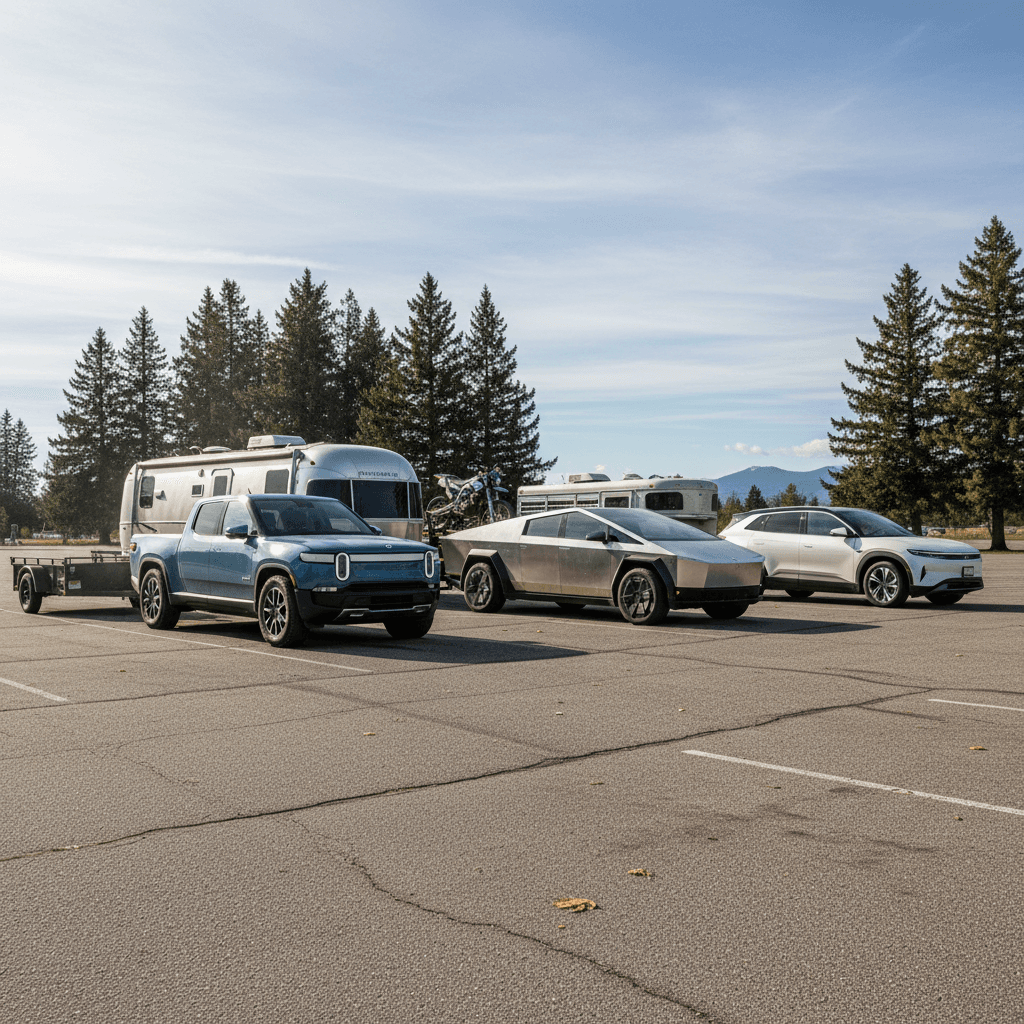
EV towing range: what to really expect
Here’s the uncomfortable truth: the same physics that punish gas trucks when towing hit EVs even harder. Most owners see roughly 30–50% range loss once they hitch up, and it can be worse with tall, boxy campers, headwinds, high speeds, or cold weather.
How towing usually impacts EV range
A simple mental model
Charging and route planning while towing
On a gas truck, the refueling strategy is simple: pull into almost any station. With an EV trailer rig, you’re thinking about charger locations, access, and connector types, ideally long before you hook up.
Smart charging strategies for EV towing
Build your plan around vehicle capability and charging infrastructure, not just the tow rating.
1. Map chargers that work with trailers
Look for stations that:
- Have pull‑through or end spots where you can stay hitched.
- Are near highway exits with easy in‑and‑out traffic flow.
- Use charging apps that show recent check‑ins and photos.
In some cases you’ll still need to briefly unhook, but you can often avoid the worst contortions with a little planning.
2. Know your connector and networks
Most newer EVs in North America are moving to NACS (Tesla‑style connector), while many used models still rely on CCS. Make sure:
- You have any required adapters for Tesla Superchargers or CCS sites.
- Your trailer route runs along corridors with compatible, reliable chargers.
- You’ve tested at least one fast‑charge session before towing day.
3. Charge often, not empty‑to‑full
EVs charge fastest from low state‑of‑charge up to about 60–80%. When towing, it’s often quicker in total trip time to:
- Arrive around 10–20%.
- Charge only to 60–70%.
- Drive the next 80–120 miles and repeat.
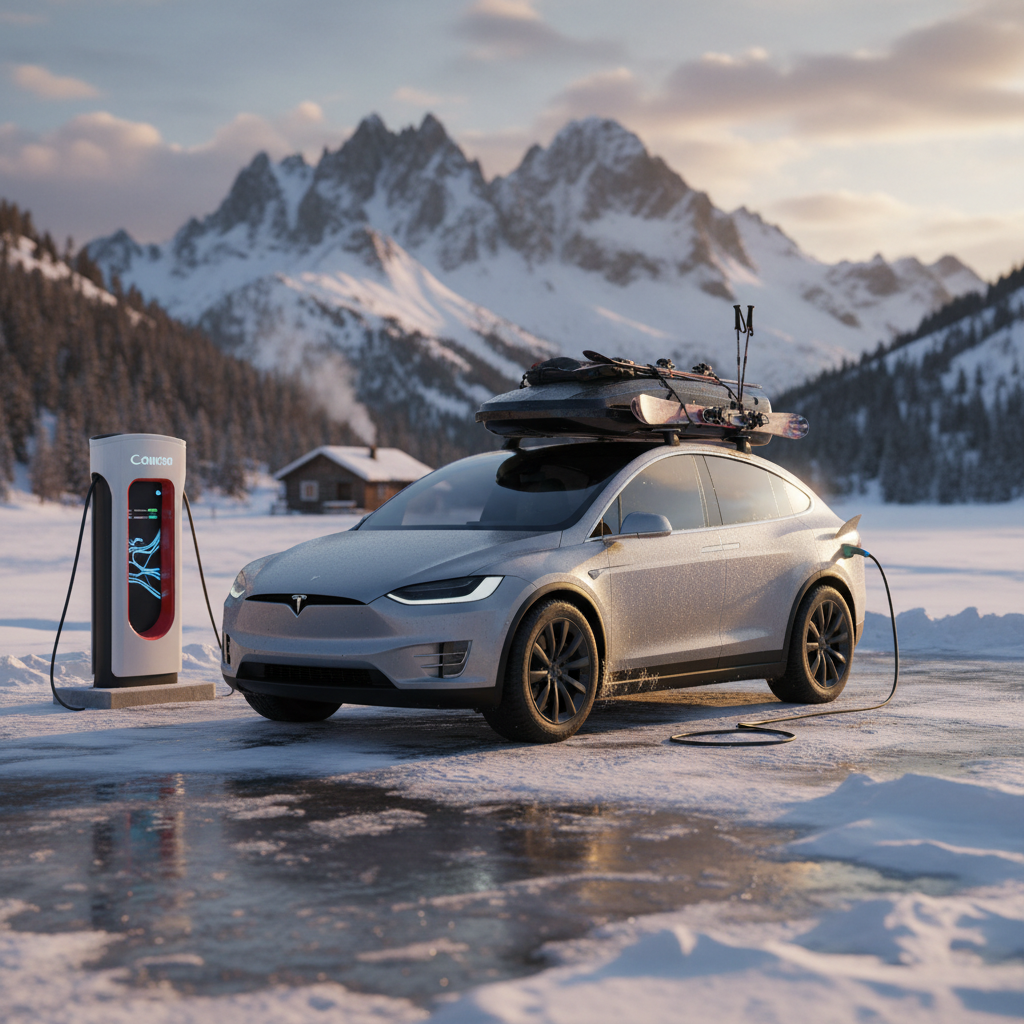
Cold weather is a double whammy
Used EV towing buying checklist
Once you know roughly how heavy your trailer is and where you’ll tow, you can start evaluating specific used EVs. Here’s a structured way to separate solid tow vehicles from future headaches.
Checklist: choosing the best used EV for towing
1. Match tow rating to your real trailer weight
Look up the trailer’s <strong>GVWR</strong> (not just empty weight) and make sure it’s comfortably under the EV’s tow rating and hitch rating. If you’re within 10–15%, step up to a more capable tow vehicle or downsize the trailer.
2. Prioritize larger batteries and stronger fast‑charging
For towing, a bigger battery pack and 200 kW‑class DC fast‑charging are worth more than a few tenths in 0–60. When comparing used EVs, look at both pack size (kWh) and peak DC rate (kW).
3. Check battery health, not just mileage
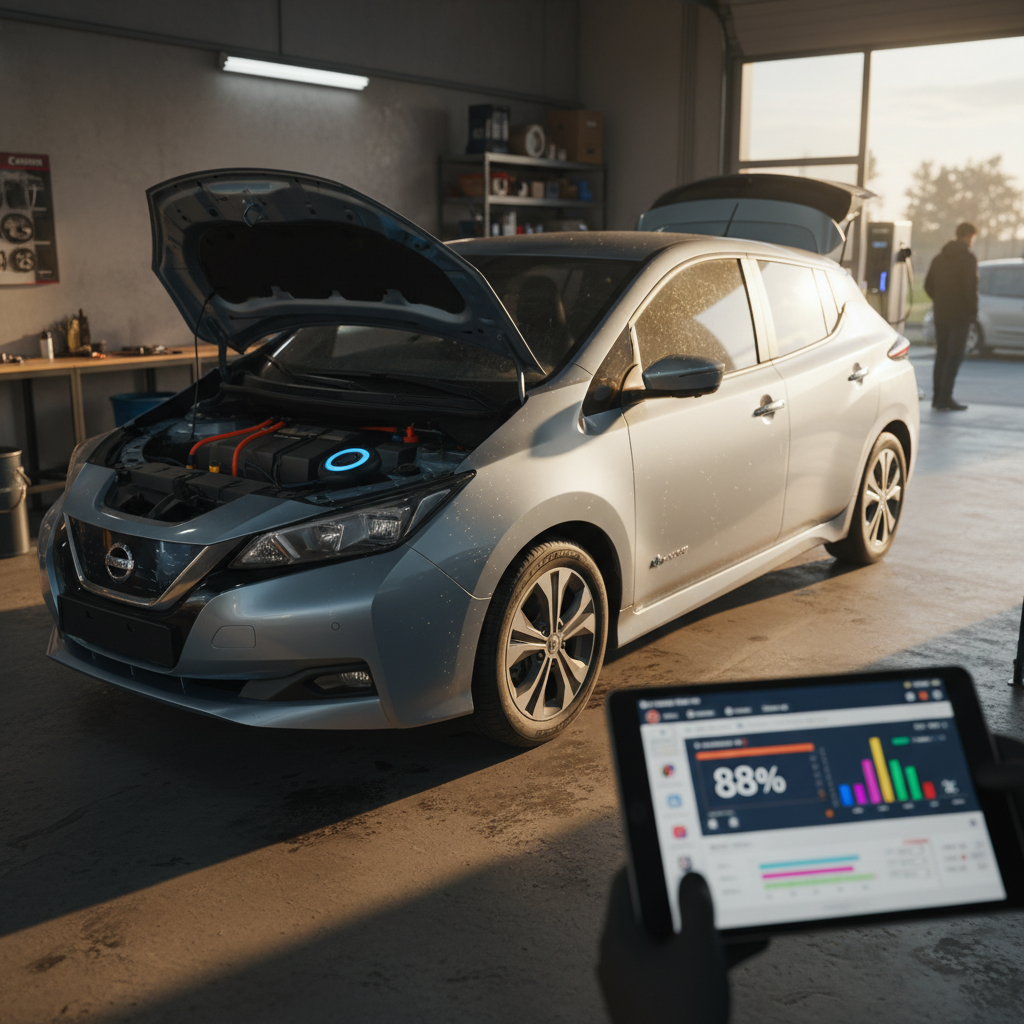
Two identical EVs with the same odometer can have very different usable range left. A <strong>battery health report</strong>, like the Recharged Score on vehicles listed on Recharged, helps you see how much capacity the pack still has before you buy.
4. Confirm factory tow package and wiring
Not every EV can be easily retrofitted to tow safely. Verify that the used EV has the official tow package, proper hitch class, 7‑pin wiring, and trailer brake controller support if your trailer needs it.
5. Inspect tires, brakes, and suspension
Heavy trailers stress tires and brakes. On a test drive, listen for suspension noise, check for uneven tire wear, and budget for a fresh set of tow‑appropriate tires if the current ones are at the end of their life.
6. Test‑drive at highway speed
If possible, do a highway drive that mimics your towing use case: higher speeds, on‑ramps, and hills. You’re looking for stability, steering feel, and how the EV manages power at sustained load, before adding a trailer on the back.
Where Recharged fits in
How Recharged helps you shop if you plan to tow
Towing with a used EV isn’t just about buying the biggest number on a spec sheet. It’s about matching a specific vehicle, battery health, charging speed, tow equipment, to your trailer and routes. That’s exactly where a focused used‑EV marketplace like Recharged can tilt the odds in your favor.
Buying a tow‑capable used EV with Recharged
Tools and services that matter when you’re planning to tow.
Battery health you can see
Every vehicle on Recharged comes with a Recharged Score battery health diagnostic, so you’re not guessing how much real‑world range is left, critical when you know towing will cut range further.
Financing and trade‑in help
If you’re moving from a gas tow rig to an EV truck or SUV, Recharged offers financing, trade‑in, and instant offers so you can roll your existing vehicle value into a more capable electric tow vehicle.
Nationwide inventory & delivery
Tow‑capable EVs are still relatively niche. Recharged’s nationwide delivery and digital buying experience make it easier to find the right truck or SUV, even if it’s not local.
If you line up the right trailer, route, and vehicle, a used EV can be a phenomenal tow partner, quiet, powerful, and cheaper to run than a thirsty gas truck. The best used EV for towing is the one that honestly fits your weight, range, and charging reality, not just the glossy brochure. Take the time to work through the checklist above, lean on objective battery‑health data like the Recharged Score, and you’ll be in a much better position to enjoy electric towing instead of worrying about it.