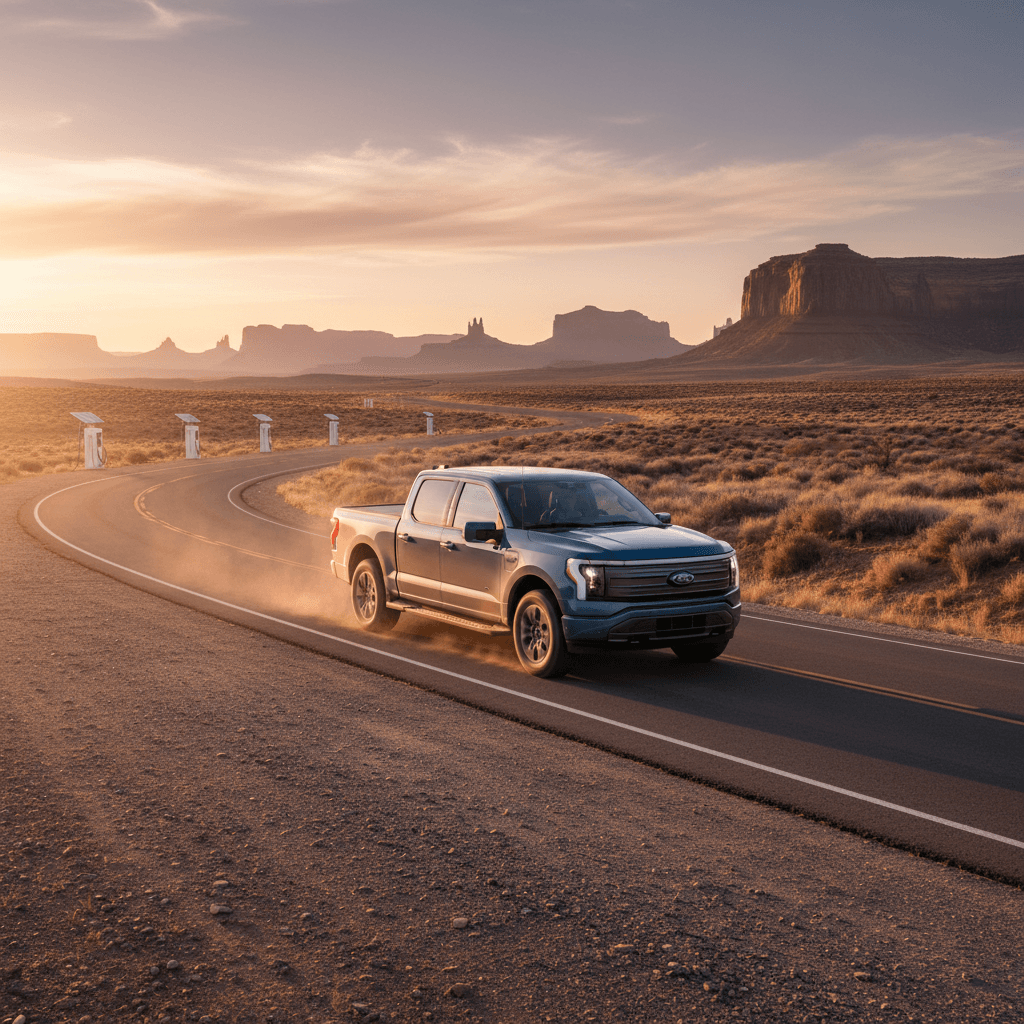
You don’t buy a 2023 Ford F-150 Lightning because you’re a rational spreadsheet person. You buy it because you like the idea of a silent, 6,000‑pound freight train that can roast a Mustang away from a stoplight. But sooner or later, reality taps you on the shoulder: what’s the **real‑world range** of this truck, and how fast does it fall apart when you tow, drive 70 mph, or head out in February? This guide pulls together the best independent **2023 F-150 Lightning range tests** and explains what they mean if you’re shopping new or used.
Quick takeaway
2023 F-150 Lightning range at a glance
2023 F-150 Lightning range snapshots
On paper, the Lightning looks solid: up to 320 miles EPA combined range for extended‑range trucks, and around 240 miles for standard‑range versions. In reality, your result depends brutally on how you use the truck. City speeds? It’s fine. Interstate at 75 mph into a headwind with a 7,000‑pound trailer? You’re suddenly living life a Supercharger at a time.
Electric trucks play by different rules
Battery options and EPA range ratings
2023 F-150 Lightning batteries and EPA range (U.S. figures)
Approximate EPA combined range ratings for popular 2023 trims. Exact numbers can vary slightly with wheel size and equipment.
| Trim / Battery | Battery (usable) | EPA Range (combined) | Drive |
|---|---|---|---|
| Pro SR | ~98 kWh | ~230–240 mi | Dual‑motor AWD |
| XLT SR | ~98 kWh | ~230–240 mi | Dual‑motor AWD |
| XLT ER | ~131 kWh | ~300 mi | Dual‑motor AWD |
| Lariat ER | ~131 kWh | ~320 mi | Dual‑motor AWD |
| Platinum ER | ~131 kWh | ~300 mi | Dual‑motor AWD |
Extended‑range trucks stretch to the low 300s in ideal conditions; standard‑range versions target the low‑ to mid‑200s.
The 2023 Lightning launched with two battery packs: a Standard‑Range pack around 98 kWh usable and an Extended‑Range pack around 131 kWh usable. EPA combined ratings cluster near 240 miles for SR trucks and up to 320 miles for the most efficient ER trims. Those numbers come from a gentle lab cycle, not from you running I‑95 with a bed full of mulch and Spotify at full send.
How to translate EPA range into real life
City and suburban range test: best‑case scenario
Electric trucks are happiest doing the unglamorous stuff: stop‑and‑go errands, school runs, and commuting. At those speeds, the Lightning’s weight is less of a villain, and you get plenty of regeneration when you lift off the throttle or brake. Independent testers have reported that **extended‑range 2023 Lightnings can slightly beat their 300–320‑mile ratings** when driven mostly below 50 mph in mild weather, thanks to efficient motors and strong regen.
- Extended‑range Lightning in 65–75°F temps, mostly surface streets: ~2.3–2.5 mi/kWh is achievable if you’re gentle, which pencils out to roughly 300–320 miles from a full charge.
- Standard‑range trucks in the same conditions usually land closer to ~2.2–2.4 mi/kWh, for a realistic 210–230 miles.
- One‑pedal driving in town helps a lot; every red light becomes recycled energy instead of wasted heat in the brake rotors.
Where the Lightning shines
Highway range test at 70 mph
Highway driving is where the range gods come to collect. The 2023 Lightning pushes a lot of air; at 70 mph, aerodynamic drag is the enemy, and there’s no turbo‑diesel efficiency fairy to bail you out. Independent 70‑mph range loops, typically done on mild days with a mix of out‑and‑back highway running, tell a consistent story: **the Lightning’s real‑world highway range is materially lower than its EPA number**.
Typical 70 mph highway range results
What reviewers tend to see on a calm day, flat-ish route, 70 mph cruise control.
Extended‑Range (131 kWh)
Realistic 70 mph range: roughly 220–260 miles from 100% to near empty.
That’s about 70–80% of the 300–320‑mile EPA figure. Many testers report the truck "just about" matching or slightly undershooting its rating in mixed 50/50 city‑highway driving, but falling short at sustained freeway speeds.
Standard‑Range (98 kWh)
Realistic 70 mph range: roughly 160–190 miles.
Owners who commute primarily on freeways typically plan around 150–170 usable miles to avoid running the pack too low or having to charge to 100% daily.
Speed & wind sensitivity
Jumping from 65 to 75 mph or adding a stiff headwind can easily drop efficiency to ~1.6–1.8 mi/kWh.
On an ER truck, that’s suddenly 200 miles or less from a full charge.
If you’re coming out of a gas F‑150 that would comfortably run 450–550 miles on a tank, this is where the adjustment happens. With the Lightning, a **realistic comfort envelope for long‑distance interstate travel is 160–220 miles between fast‑charges**, depending on which battery you have and how conservative you are.
Plan around range, not the theoretical maximum
Towing range tests: what actually happens with a trailer
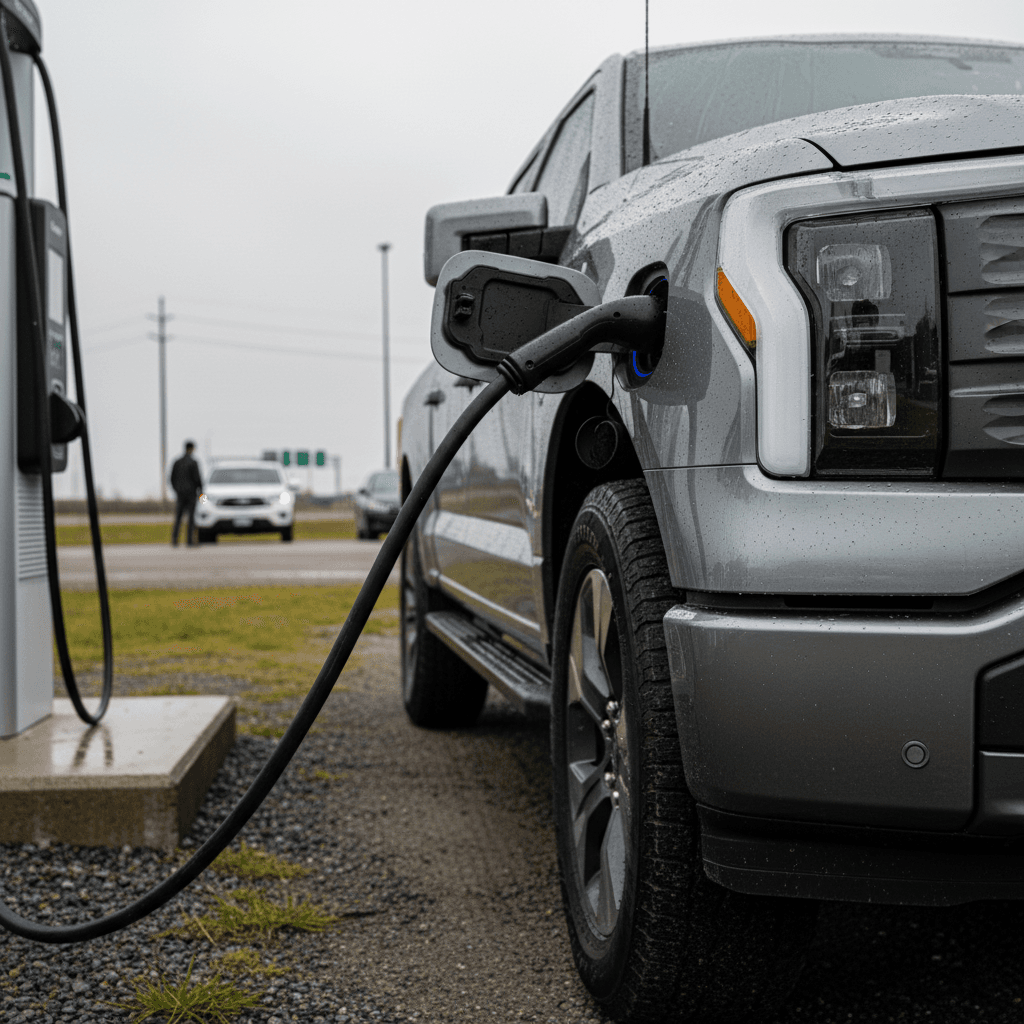
Ford advertises up to 10,000 pounds of towing capacity for properly equipped 2023 Lightning trims. The truck will absolutely pull that weight, it’s torque‑rich, stable, and eerily composed. What it will not do is keep its EPA range while it’s dragging your cabin cruiser through a crosswind.
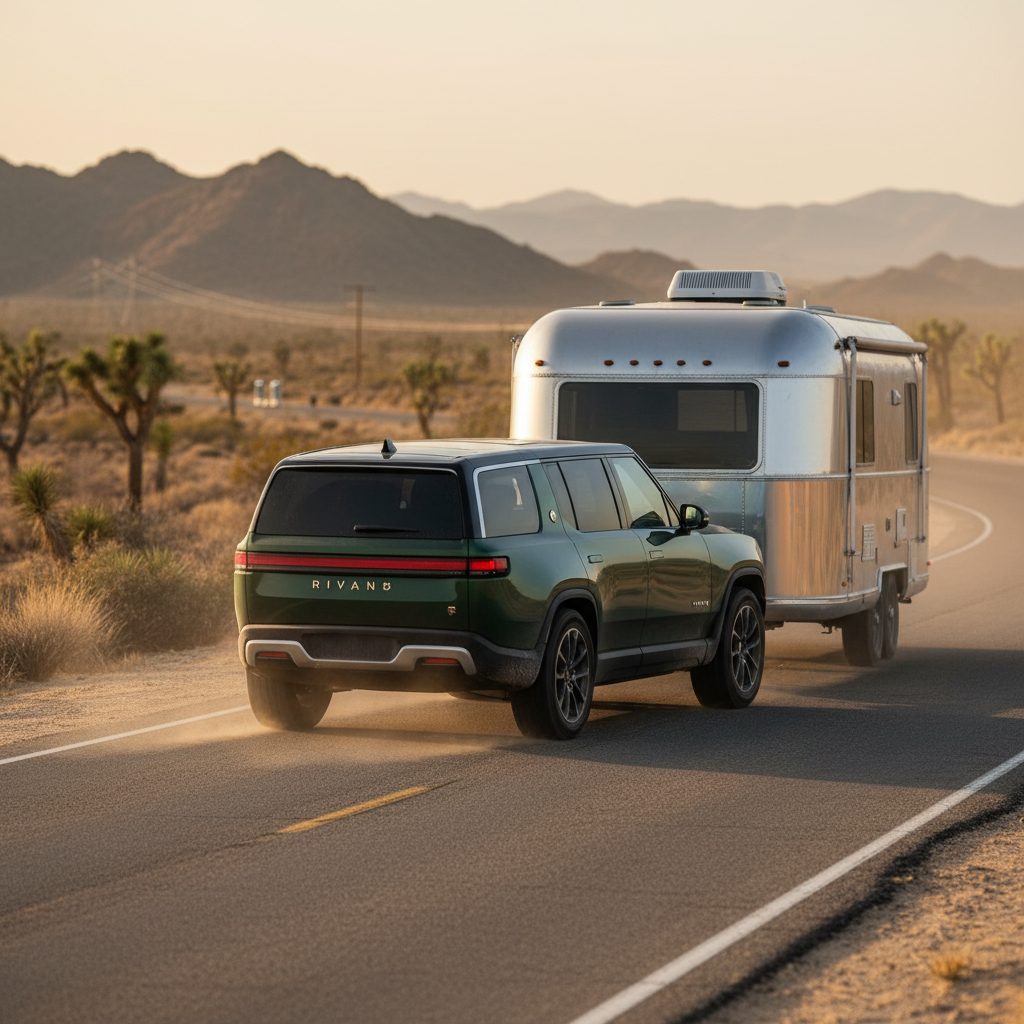
In one widely shared test with a roughly 7,000‑pound trailer, a Lightning that started at 100% charge with an indicated 288 miles of range dropped to 164 miles the moment the driver entered the trailer data. Once on the road, real‑time calculations settled closer to 120–130 miles of towing range, less than half the unloaded estimate. That pattern lines up with what many owners and testers report.
Real‑world towing range: what most drivers see
1. Mid‑size RV or cargo trailer
With a 5,000–7,000 lb boxy trailer at 60–65 mph, expect roughly 0.9–1.3 mi/kWh. On an ER truck, that’s often 100–150 miles from full to nearly empty, practically, 80–120 miles between fast charges.
2. Light utility or landscape trailer
With 2,000–3,500 lbs and a lower frontal area, owners often report 1.3–1.7 mi/kWh. That makes 130–190 miles theoretically possible, but most people still treat 100–140 miles as the safe window.
3. Boats and tall toy haulers
High frontal area is the killer. A bluff‑front camper or wake boat on a trailer can drag efficiency down to ~0.8–1.1 mi/kWh, especially at 70+ mph, meaning 80–120 miles per charge is common.
4. Terrain, weather, and speed
Steep grades, headwinds, cold temperatures, and speeds above 65 mph all stack penalties. Towing an EV truck is where you feel every bad decision in your planning app.
If you tow cross‑country, read this twice
Cold weather and winter range performance
Every EV takes a hit in the cold; the Lightning just has more mass and frontal area for the cold to bully. Below freezing, the battery is less eager to give up energy, tires are stiffer, and you’re asking the pack to heat a gigantic cabin. The result is predictable: **winter range is shorter, especially on the highway.**
How winter affects 2023 Lightning range
Approximate penalties compared with mild 65–75°F weather.
City & suburban use
- Expect about 10–25% less range on short‑trip, low‑speed driving.
- Seat and steering‑wheel heaters are efficient; use them instead of blasting cabin heat.
- Pre‑conditioning while plugged in can claw back a lot of lost miles.
Highway & towing in cold
- 20–40% range loss is common at freeway speeds in winter.
- Add a trailer and you can be looking at half your usual summer towing range, or worse.
- You may also see slower DC fast‑charge speeds until the pack warms up.
Winter range survival kit
Payload, driving style, and other hidden range killers
You don’t have to be towing a fifth‑wheel to murder your range. The Lightning is sensitive to all the usual suspects: weight, aerodynamics, speed, and your right foot. The difference is that you feel those penalties sooner because the fuel tank is a battery pack and charging takes time.
- Payload: Fill the bed with pavers or tools and you’ll see a noticeable efficiency dip, especially if you’re also on the highway.
- Big wheels and all‑terrain tires: Great for Instagram; not great for range. They add drag and rotating mass, which the EPA number doesn’t fully capture.
- Roof racks and bed racks: Anything that messes up the aero profile costs miles. A tall rack with gear can be worth a 5–10% hit by itself at speed.
- Driving style: The Lightning’s instant torque is addictive. If every stoplight is a drag race, you’ll live in the low‑2s mi/kWh instead of the mid‑2s. It adds up.
Watch the energy screen, seriously
Charging speed and trip planning with the Lightning
Range is only half the story; the other half is how quickly you can replace it. The 2023 F‑150 Lightning uses a 400‑volt architecture and supports up to 170 kW DC fast charging. That’s fine, but not class‑leading, and it shapes how you plan road trips.
What to expect at a DC fast charger
- On a good 150+ kW station with a warm battery, you can often charge from ~15% to ~80% in about 35–45 minutes.
- Charging is quickest between 15–60% state of charge; after that, the curve tapers.
- Cold weather or arriving with a cold pack can noticeably slow the first part of the session.
How that pairs with range
- Extended‑Range: think of it as adding roughly 140–190 highway miles in a well‑timed 30–40 minute stop.
- Standard‑Range: more like 100–140 miles added in that same window.
- Compared with a gas F‑150, your refueling stops are longer, so planning around food, rest stops, and kids is key.
Trip‑planning reality check
Buying a used 2023 Lightning: what range you should plan for
By 2026, many 2023 F‑150 Lightnings are already filtering into the used market. That’s both opportunity and caution sign. Early buyers often paid luxury‑truck money for their Lightnings; depreciation and today’s softer EV demand mean you can now get a lot of truck, frunk, onboard power, and all, for substantially less. But you still need to go in with realistic range expectations and a clear picture of battery health.
How to think about range on a used Lightning
Realistic planning numbers for everyday use, assuming a healthy battery.
Daily commuting & errands
Extended‑Range: Treat it as a 220–280‑mile truck between charges if most of your driving is under 60 mph.
Standard‑Range: Plan on 170–210 miles.
Regular highway use
At 65–75 mph, assume:
- ER: 180–230 miles between full charges.
- SR: 140–180 miles.
Most owners charge more frequently than that to stay in the fast‑charging sweet spot.
Local towing life
For 50–100‑mile towing days, boats, campers to nearby parks, the Lightning works well if you can charge at home or near your destination.
For 250‑mile towing days with sparse charging, you’re in compromise territory.
Where Recharged fits in
Ready to find your next EV?
Browse VehiclesUsed 2023 Lightning range checklist
1. Confirm which battery you’re getting
Extended‑Range vs. Standard‑Range is the single biggest range determinant. Don’t assume, verify from the window sticker, VIN‑based build sheet, or a knowledgeable seller.
2. Look at real‑world consumption
Ask for trip‑computer photos or logs showing lifetime mi/kWh. A truck that’s lived at 1.7 mi/kWh has been driven hard or towed a lot; that’s not a dealbreaker, but it informs expectations.
3. Check DC fast‑charge history
Heavy exclusive fast‑charging isn’t ideal long‑term. Occasional road‑trip use is fine; a truck that fast‑charged every day on a commercial route deserves extra scrutiny of its battery health.
4. Match range to your lifestyle
If your regular day fits within 60% of the truck’s realistic range, you’ll love it. If you’re leaning on 90–100% of its range all the time, or beyond, it’s probably the wrong truck for you.
5. Get an independent battery health report
With Recharged, that comes standard as the Recharged Score. If you’re buying elsewhere, consider a third‑party inspection that can read pack health and error codes.
2023 F-150 Lightning range FAQ
Frequently asked questions about 2023 Lightning range
Bottom line: should Lightning’s range stop you?
The 2023 Ford F-150 Lightning is not the universal replacement for every gas F‑150 ever built. It is, instead, a spectacularly capable electric truck with a very specific sweet spot: homeowners who can charge at home, do most of their driving inside a 150‑mile daily bubble, and tow mostly on their own turf rather than across the continent. For them, the combination of silent thrust, onboard power, and low running costs makes its **real‑world range limits** much easier to live with.
If you’re considering a used 2023 Lightning, the key is aligning expectations. Think of the extended‑range truck as a roughly 220–280‑mile EV in daily life, less in winter, and a 90–150‑mile truck when you hitch up something large and crank the cruise control. If that sounds like it fits your world, the Lightning can be a revelation. And if you want someone to sanity‑check the numbers for your exact commute, routes, and towing plans, Recharged’s EV specialists and Recharged Score battery reports are built to do exactly that before you ever sign on the digital line.